

Best Retainers After Braces: What to Pick for Your Smile
The best retainer after braces is the one you will reliably wear. For most adults, that means a clear removable retainer for appearance and day-to-day comfort, a bonded (fixed) lingual wire when you want set-it-and-forget-it stability, or a Hawley when durability and minor adjustability matter more than invisibility. The American Association of Orthodontists puts it plainly: non-compliance is the single biggest cause of relapse, so the “best” retainer is always the one that fits your life well enough to actually use.
Quick match by priority:
- Appearance and comfort → clear removable retainer (Essix or Vivera-style)
- You know you’ll forget to wear it → fixed/bonded lingual wire
- Durability, adjustability, or certain clinical cases → Hawley wire retainer
Your orthodontist’s recommendation still overrides any general guide. Tooth-specific relapse risk, bite mechanics, and your history with compliance all shift the answer.
Key Takeaways
The best retainer after braces is always the one you’ll wear consistently, matched to your relapse risk, lifestyle, and cleaning habits.
| Point | Details |
|---|---|
| Compliance drives results | The AAO confirms non-compliance is the top cause of relapse; pick the retainer you’ll actually wear every night. |
| Match type to your life | Clear removable for appearance; fixed/bonded for compliance struggles; Hawley for durability and adjustability. |
| First year is highest-risk | Supracrestal fibers retain elastic memory, making the first 12 months the most relapse-prone period. |
| Replace quickly, budget ahead | Clear trays cost ~$100–$300 per arch and typically need replacement every 1–3 years; FSA/HSA funds usually apply. |
| Clearretain for affordable reorders | Clearretain offers FDA-approved custom clear retainers direct-to-consumer, with stored impressions for fast reorders. |
Table of Contents
- What are the three main types of retainers after braces?
- How do the three retainer types compare side by side?
- How long do you need to wear a retainer after braces?
- How to clean, store, and protect your retainer
- What does a replacement retainer cost, and when do you need one?
- How do you decide which retainer is right for you?
- How Clearretain’s custom clear retainers work
- Clearretain makes custom retainers affordable and easy to reorder
- Sources
What are the three main types of retainers after braces?
Understanding how each retainer works makes the trade-offs in later sections much easier to weigh.
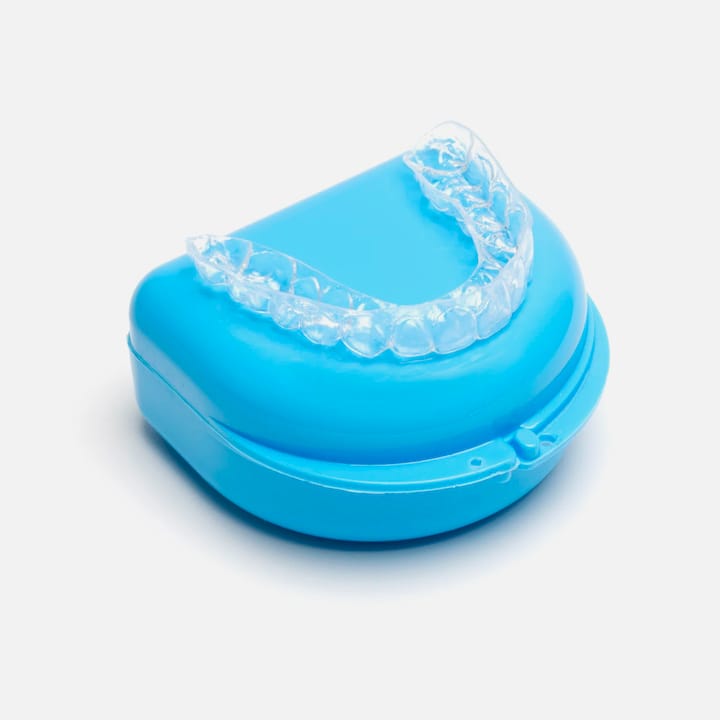
- Clear removable retainers (Essix, Vivera-style, Zendura) are vacuum-formed thermoplastic trays that fit snugly over your teeth like a thin aligner. They’re nearly invisible and easy to remove for eating and cleaning. Some branded materials, such as Vivera, are marketed as more durable than standard clear trays, though all clear retainers are susceptible to heat damage and gradual wear.
- Hawley retainers combine an acrylic palate (or lingual plate for lower teeth) with a labial wire that runs across the front teeth. The wire can be adjusted by a clinician, which makes Hawley retainers useful when minor tooth position corrections are still needed post-treatment. They’re bulkier and more visible than clear trays, but they tend to last longer with proper care.
- Fixed/bonded lingual retainers are thin custom wires bonded directly behind the anterior (front) teeth with dental adhesive. Because they’re permanently in place, they require no daily compliance decision. They’re common on lower front teeth, where relapse risk tends to be highest, and are often paired with a removable upper retainer.
Pro Tip: Ask your orthodontist whether you’ll receive a backup set of clear retainers at the end of treatment. Some offices include one or two extras; others charge per arch. Knowing this upfront saves a scramble if one cracks.
For a deeper look at how these options compare, the types of dental retainers guide on Clearretain’s blog walks through each type with clinical context.
How do the three retainer types compare side by side?
The table below covers the dimensions that matter most when choosing between your options.
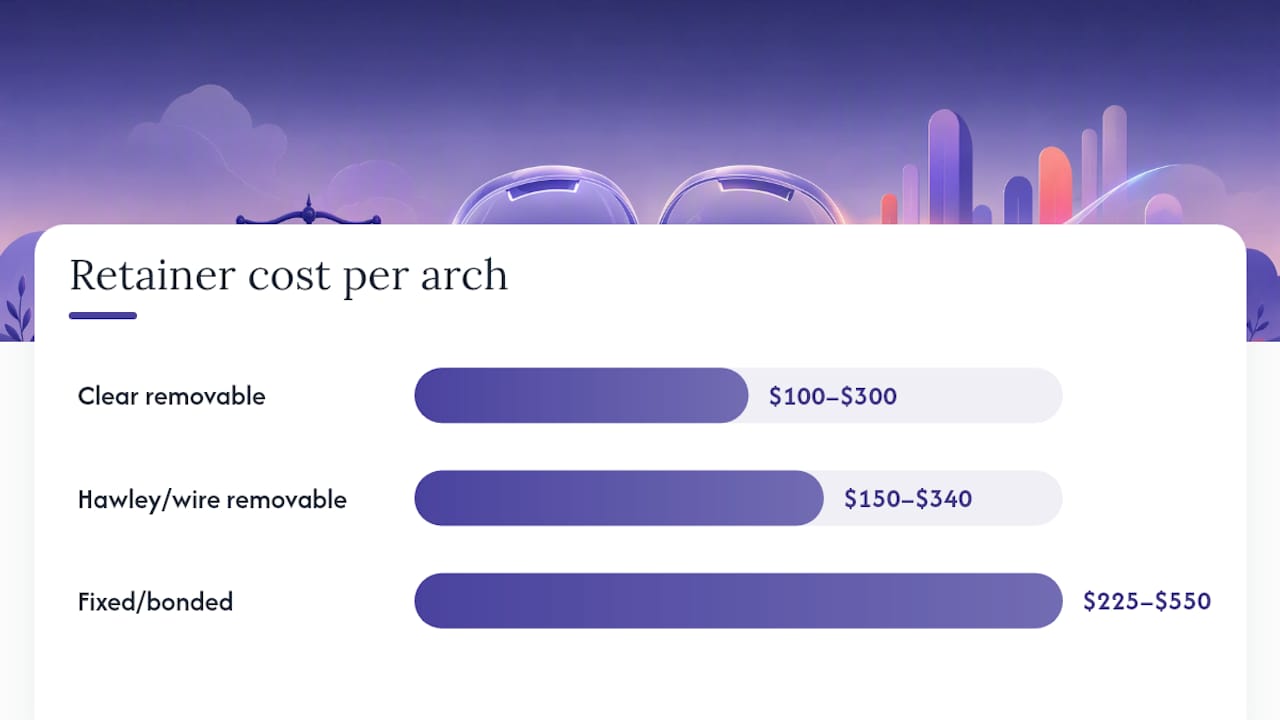
| Dimension | Clear removable | Hawley/wire removable | Fixed/bonded |
|---|---|---|---|
| Visibility/aesthetics | Nearly invisible | Visible wire across front teeth | Invisible (behind teeth) |
| Durability/lifespan | 1–3 years typical; heat-sensitive | 5–10+ years with care | Many years; wire can debond |
| Comfort | Smooth, snug fit | Bulkier; tongue may feel wire | No daily sensation after adjustment |
| Oral hygiene | Easy: remove and brush normally | Easy to remove; standard brushing | Harder: needs floss threader or water flosser |
| Cost per arch | ~$100–$300 | ~$150–$340 | ~$225–$550 |
| Replacement frequency | Often annually or when worn | Every few years | Repairs as needed; rebonding if wire loosens |
| Compliance required | Yes: must be worn 20–22 hrs/day initially | Yes: same schedule | No: always in place |
| Best use-case | Appearance-conscious adults; mild relapse risk | Adjustable cases; active lifestyles; durability priority | High relapse risk; patients who struggle with compliance |
Cost ranges sourced from Verywell Health’s retainer cost overview.
A few scenarios worth calling out specifically:
- Dual retention (bonded lower wire plus a removable upper clear tray) is a common clinical choice for adults with a history of crowding or rotation. It combines continuous lower stability with upper flexibility.
- Bruxism (teeth grinding): Harder clear-retainer materials or a custom hard-acrylic night guard can double as protection. Standard thin Essix trays wear through faster under grinding pressure.
- High relapse risk (severe prior rotation, midline diastema): Bonded retainers are increasingly preferred because they provide continuous stabilization without relying on patient behavior.
The Hawley vs. clear retainer comparison on Clearretain’s blog goes deeper on the visibility and durability trade-offs if you’re deciding between those two.
Clinician judgment and your own compliance habits usually decide the final choice more than any feature comparison.
How long do you need to wear a retainer after braces?
The short answer: full-time at first, then nightly for the rest of your life. The AAO’s retention guidance describes the typical protocol as full-time wear for the first several months, followed by a gradual transition to nighttime-only use, with many patients wearing retainers nightly indefinitely to prevent age-related shifting.
Here’s what that looks like in practice:
- Months 1–6: Wear your retainer 20–22 hours per day. Remove only for eating, drinking anything other than water, and brushing.
- Months 6–12: Most orthodontists transition patients to nighttime-only wear, though this varies by case complexity.
- Year 1 and beyond: Nightly wear, long-term. Many adults wear retainers every night for life.
The biology behind this schedule matters. Supracrestal gingival fibers remodel slowly and retain an elastic memory after tooth rotation, which is why the first year after active treatment carries the highest relapse risk. Your teeth aren’t “set” the day your braces come off.
If you skip several days and your retainer feels tight when you try to wear it again, don’t force it. A tight retainer signals that teeth have already shifted. Contact your orthodontist for an assessment rather than trying to push through the discomfort, since forcing a poorly fitting tray can damage teeth or gums. Replacing a retainer quickly is far cheaper than retreatment.
Pro Tip: Set a nightly phone reminder for the first three months. The habit is harder to break once it’s automatic, and those early months are when relapse risk is highest.
The nighttime retainer wear rationale article on Clearretain explains the physiological reasons behind long-term nightly use in plain language.
How to clean, store, and protect your retainer
Good care habits extend retainer life and protect your oral health. The routine differs slightly by type.
For removable retainers (clear or Hawley):
- Rinse your retainer under cool water immediately after removing it. Warm or hot water warps thermoplastic trays permanently.
- Brush gently with a soft toothbrush and a small amount of mild, unscented dish soap or a retainer-specific cleaner. Avoid toothpaste, which is abrasive enough to scratch clear plastic and create grooves where bacteria settle.
- Rinse thoroughly and let it air dry briefly before storing in a ventilated case. A closed, damp case breeds bacteria.
- Bring your retainer to every dental check-up so your dentist can inspect fit and condition.
For fixed/bonded retainers:
Fixed wires make standard flossing nearly impossible without help. Clinical evidence confirms that fixed retainers increase plaque control difficulty and require dedicated hygiene tools. Use a floss threader, interdental brushes, or a water flosser daily to clean around and beneath the wire. Plaque buildup at the bonding points is the most common hygiene problem with fixed retainers.
Pro Tip: Keep your retainer case in the same spot every night, not in your pocket or wrapped in a napkin at restaurants. Pets are attracted to the saliva on retainers and will chew them. Most retainer losses happen at tables and in bathrooms.
For a complete step-by-step cleaning walkthrough, the retainer cleaning guide on Clearretain covers every retainer type with specific product recommendations.
What does a replacement retainer cost, and when do you need one?
Knowing the numbers upfront prevents sticker shock and helps you budget for the long term.
- Clear removable retainers: ~$100–$300 per arch through an orthodontist’s office; direct-to-consumer options like Clearretain cost significantly less. Plan to replace every 1–3 years, or sooner if the tray cracks, warps, or no longer fits snugly.
- Hawley retainers: ~$150–$340 per arch. With proper care, a Hawley can last 5–10 years or longer. Repairs (wire adjustments, acrylic cracks) add occasional costs.
- Fixed/bonded retainers: ~$225–$550 per arch for initial placement. The wire itself can last many years, but debonding (the wire coming loose from one or more teeth) requires prompt repair. A loose wire that goes unnoticed can allow teeth to shift significantly.
Insurance typically covers retainers only as part of the initial orthodontic treatment package. Replacement retainers are usually out-of-pocket. The good news: FSA and HSA funds can generally be used for orthodontic retainers, so check your plan before paying out of pocket.
Replace a lost or broken retainer as fast as possible. AAO guidance is direct on this point: the longer you go without a retainer, the greater the chance of permanent relapse that requires retreatment at far greater cost.
How do you decide which retainer is right for you?
Use this checklist before your final orthodontic appointment or when ordering a replacement.
Match your situation to a retainer type:
- Appearance is your top priority → Clear removable retainer. Nearly invisible and comfortable for daily wear.
- You’ve struggled with compliance in the past → Fixed/bonded retainer, at least for the lower arch.
- You grind your teeth at night → Thicker clear material or a hard-acrylic night guard retainer. Standard thin trays wear through faster under grinding.
- You play contact sports → A removable retainer you can swap for a mouthguard during practice, or a bonded lower wire with a removable upper.
- You have allergies to acrylic or metal → Discuss material options with your orthodontist before committing. Clear thermoplastic trays avoid the metal wire issue; acrylic-free options exist for Hawley-style retainers.
- You have dental restorations (crowns, bridges, implants) → Your orthodontist needs to assess fit carefully; standard tray impressions may need modification.
Questions to ask your orthodontist:
- What is my personal relapse risk, and which retainer type do you recommend for it?
- Do you advise dual retention (fixed lower plus removable upper) for my case?
- What is the expected lifespan of the retainer you’re prescribing?
- What is your repair or replacement policy if the retainer breaks within the first year?
- Can I reorder a replacement retainer using stored impressions?
On combination approaches: Dual retention is not just for high-risk cases. Research on orthodontic relapse notes that clinicians frequently bond a fixed wire behind lower anterior teeth and provide a removable tray for nighttime wear over it, combining continuous stability with a backup layer of protection. If your orthodontist suggests this, it’s a sign they’re taking your long-term result seriously.
How Clearretain’s custom clear retainers work
Clearretain offers a direct-to-consumer route to custom clear retainers that skips the office markup without sacrificing material quality.
The ordering process:
- Order a self-impression kit from Clearretain’s website. The kit includes detailed instructions and all materials needed to take accurate dental impressions at home.
- Mail your impressions back. Clearretain’s lab fabricates your retainers using FDA-approved thermoplastic materials under the supervision of experienced orthodontic technicians.
- Receive your custom retainers by mail, along with fit-check guidance. Clearretain stores your digital impression on file, so reorders are faster and don’t require a new impression kit.
Quality and safety:
- FDA-approved materials throughout
- Orthodontic technician oversight at every fabrication step
- Stored impressions for easy reorders, which matters when a retainer cracks or is lost mid-cycle
When to go in-office instead:
- Complex relapse requiring clinical evaluation or wire adjustment
- A debonded fixed retainer (this requires in-person rebonding)
- Any situation where your orthodontist requires in-person follow-up as part of your treatment plan
- Urgent repairs needed within 24–48 hours
Pro Tip: Order a backup set when you place your first Clearretain order. The cost per arch is lower when ordered together, and having a spare means a cracked retainer doesn’t turn into a week without protection.
For readers interested in the material science behind why retainer plastic quality matters, the professional-grade retainer plastic article on Clearretain’s blog explains the durability differences between standard and premium thermoplastics.
The compliance-first rule is the one thing most retainer guides bury
Every retainer comparison eventually comes down to features: visibility, cost, durability. Those things matter, but they’re secondary to a simpler question: will you actually wear it?
The AAO’s position is unambiguous. The best retainer is the one the patient will consistently use. A clear tray that sits in a drawer because it feels uncomfortable is worse than a Hawley worn faithfully every night. A bonded wire that gets ignored at hygiene appointments until it debonds silently is worse than a removable tray the patient checks weekly.
What gets underestimated is how much small personal preferences compound over time. If you hate the way a Hawley feels against your tongue, you’ll find reasons not to wear it. If a clear tray feels tight and you skip two nights, then three, the habit breaks faster than you’d expect. Choosing the retainer you’ll tolerate best, and then building a consistent routine around it, produces better long-term results than choosing the “clinically superior” option you’ll resent.
The other thing worth saying: talk to your orthodontist about your actual lifestyle, not the idealized version. If you travel frequently, grind at night, or have a history of losing small objects, say so. That context changes the recommendation more than any feature comparison chart.
Clearretain makes custom retainers affordable and easy to reorder
Clearretain was built around a straightforward idea: custom, clinician-grade retainers shouldn’t cost hundreds of dollars per arch every time one cracks or gets lost. By selling direct to consumers and eliminating office visit markups, Clearretain offers FDA-approved custom retainers at a fraction of typical orthodontic office prices, with the same thermoplastic quality and technician oversight you’d expect from an in-office order.
You can order an upper retainer, a lower retainer, or an upper and lower retainer set directly from Clearretain’s website. If you’ve ordered before, stored impressions make reorders fast. For readers who want to combine retention with whitening, Clearretain also offers a tooth whitening serum designed to use with your clear retainer or night guard, teeth bleaching trays, and a teeth whitening gel 3-pack for a complete at-home whitening routine.
If your situation involves a debonded fixed retainer, complex relapse, or a case your orthodontist is actively managing, schedule an in-office visit first. For straightforward replacements and reorders, start your order at Clearretain.com.
Sources
For deeper reading and clinician-level guidance on retainer choices and retention science:
- Retainers — American Association of Orthodontists
- Orthodontic relapse: Why teeth move after braces — HCMC Dental
- Orthodontic retention and fiber biology — textbook chapter
Your orthodontist’s personalized recommendation always takes priority over any general guide, including this one. Use these resources to ask better questions at your next appointment, not to replace the conversation.
This article is general information, not a substitute for advice from a qualified doctor. Consult a qualified healthcare professional about your own circumstances before acting on anything here.