

How to Clean a Retainer Properly: Your 2026 Guide
Proper retainer cleaning is defined as a daily and weekly hygiene practice that removes bacteria, plaque, and debris from dental retainers to protect both the appliance and your oral health. Skip this routine and your retainer becomes a breeding ground for harmful bacteria, leading to bad breath, gum irritation, and even gum disease. The 2026 oral hygiene standards for plaque control with fixed and removable retainers reinforce that consistent cleaning is not optional. Whether you wear a clear retainer, a Hawley wire retainer, or a fixed bonded retainer, the right tools and methods make all the difference. This clean retainer properly guide covers everything from daily rinsing to weekly deep cleaning, common mistakes, and storage tips for adults and parents managing children’s dental care.
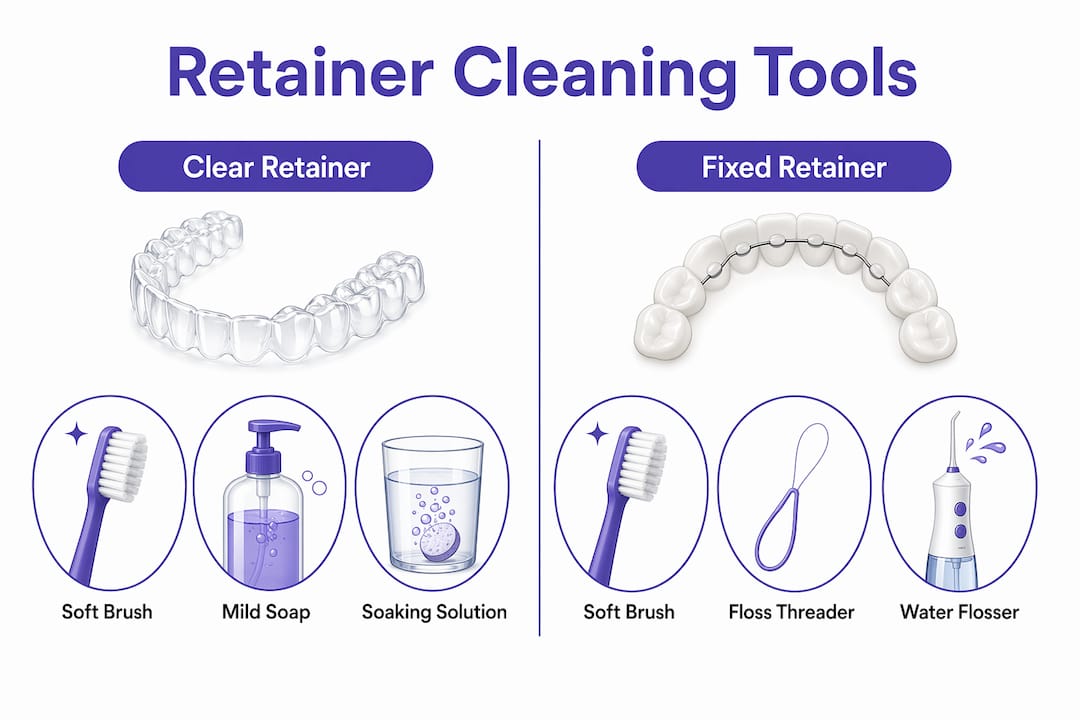
How to clean a retainer properly: tools and materials you need
The right tools determine whether your cleaning routine actually works. Using the wrong products can scratch the retainer surface, warp the material, or leave behind residue that feeds bacteria.
For removable retainers (clear or Hawley), gather these basics:
- A soft-bristled toothbrush reserved only for retainer cleaning
- Mild, unscented liquid soap or dish soap (not antibacterial with harsh additives)
- Lukewarm water (never hot)
- Retainer or denture cleaning tablets for weekly soaking
- A clean container or cup for soaking
For fixed (bonded) retainers, add these specialized tools:
- Floss threaders to guide dental floss beneath the wire
- Interdental brushes (also called proxy brushes) sized to fit between teeth and under the wire
- A water flosser as a complement to manual flossing
Gentle brushing with a soft toothbrush and mild, unscented soap cleans retainers effectively without causing surface scratches that trap bacteria. Regular toothpaste is abrasive. It creates tiny grooves in the retainer surface where bacteria settle and multiply.
Pro Tip: Label your retainer toothbrush with a piece of tape so no one in the household accidentally uses it for teeth. This is especially useful in families with children wearing retainers.
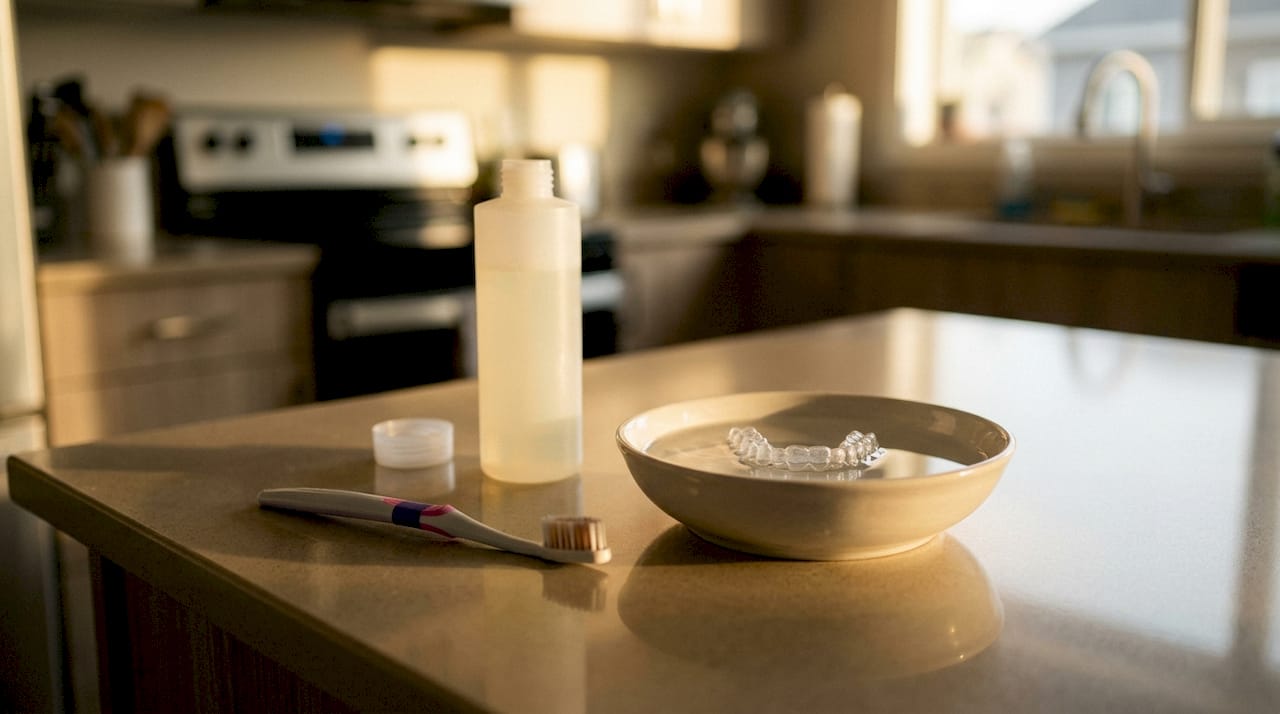
The table below compares cleaning tools by retainer type to help you pick the right combination.
| Tool | Clear retainer | Hawley retainer | Fixed retainer |
|---|---|---|---|
| Soft toothbrush + mild soap | Yes | Yes | Yes (around wire) |
| Retainer cleaning tablets | Yes | Yes | Not applicable |
| Floss threader | Not needed | Not needed | Required |
| Interdental brush | Not needed | Optional | Required |
| Water flosser | Optional | Optional | Highly recommended |
What does a daily and weekly retainer cleaning routine look like?
Consistency matters more than intensity. A short daily routine combined with a weekly deep clean keeps retainers fresh and extends their lifespan significantly.
Daily cleaning steps
- Remove your retainer and rinse immediately with lukewarm water to flush away saliva and loose debris.
- Apply a small drop of mild, unscented soap to your soft retainer toothbrush.
- Brush all surfaces gently, including the inside, outside, and any grooves or ridges.
- Rinse thoroughly under lukewarm water until no soap remains.
- Store the retainer in its protective case until you need it again.
Rinsing immediately after removal is a simple but critical step. Saliva dries quickly and leaves behind a sticky film that hardens into plaque if left untreated.
Weekly deep cleaning steps
- Fill a clean cup with lukewarm water.
- Drop in one retainer or denture cleaning tablet and let it dissolve fully.
- Submerge the retainer and soak for the time listed on the tablet packaging (usually 15–20 minutes).
- Remove the retainer and brush lightly with your soft toothbrush to dislodge any loosened deposits.
- Rinse well under lukewarm water before wearing.
Soaking retainers weekly in denture or retainer cleaning solutions removes stubborn deposits and bacteria. Over-soaking, however, can degrade the retainer material. Stick to the recommended soak time on the product label.
Pro Tip: Schedule your weekly soak on the same day each week, such as Sunday evening, so it becomes automatic. For parents, tie it to a child’s bath night to build the habit alongside other hygiene routines.
For fixed retainers, the daily routine requires extra steps. Brush around and beneath the wire twice daily, then use a floss threader to work dental floss under the wire between each tooth. Finish with an interdental brush to clear any remaining debris.
What cleaning mistakes damage retainers most?
Most retainer damage comes from well-meaning but harmful habits. Knowing what to avoid protects both the appliance and your oral health.
The most common mistakes include:
- Using hot water. Hot water warps retainers and creates microscopic scratches where bacteria accumulate, reducing the retainer’s lifespan. Always use lukewarm water.
- Scrubbing with regular toothpaste. Toothpaste contains abrasive particles designed to polish tooth enamel. Those same particles scratch retainer plastic and create grooves that trap bacteria.
- Soaking in mouthwash. Mouthwashes containing dyes or harsh chemicals can discolor or damage retainers. Mouthwash is designed for rinsing your mouth, not soaking appliances.
- Skipping the rinse after removal. Skipping this step lets saliva and food particles dry onto the surface, making them harder to remove and accelerating plaque buildup.
- Over-soaking in cleaning tablets. Leaving a retainer in a cleaning solution for hours instead of the recommended 15–20 minutes weakens the material over time.
- Wrapping the retainer in a tissue. This is one of the most common ways retainers get thrown away accidentally, especially in school cafeterias or restaurants.
“Inspect your retainer every week under good lighting. Look for cracks, yellowing, white mineral deposits, or areas where the plastic feels rough. Catching these signs early means you can address the issue before the retainer fails completely. A retainer showing cracks, discoloration, or poor fit should be replaced promptly to prevent oral health problems.”
Pro Tip: If your retainer smells even after cleaning, soak it in a mixture of equal parts white vinegar and lukewarm water for 15 minutes, then brush and rinse. This is a simple homemade retainer cleaner that neutralizes odor-causing bacteria without harsh chemicals.
How do you clean a fixed (bonded) retainer effectively?
Fixed retainers, also called bonded or permanent retainers, are glued directly to the back of your teeth. They cannot be removed for cleaning, which makes proper oral hygiene around them more demanding than with removable types.
The 2026 oral hygiene standards specify that fixed retainers require brushing and flossing at least twice daily using floss threaders or interdental brushes to effectively remove plaque beneath the wire. Plaque that builds up under the wire hardens into tartar within 24–48 hours, and tartar can only be removed by a dental professional.
Using floss threaders correctly
Thread the floss through the loop of the threader, then guide the rigid end of the threader under the wire between two teeth. Once the floss is through, slide it gently up and down against each tooth surface. Repeat this process for every gap along the wire. Floss threaders and interdental brushes enable effective plaque removal from underneath wires where normal brushing cannot reach.
Adding a water flosser
A water flosser uses a pressurized stream of water to flush debris from around the wire and between teeth. It does not replace flossing but works well as a finishing step after manual flossing. Aim the tip at the gumline and along the wire, moving slowly from tooth to tooth.
Electric toothbrushes and fixed retainers
Electric toothbrushes can be used safely with fixed retainers and enhance plaque removal around the wire. They do not replace the flossing tools needed to clean beneath the wire. Use a round-head electric brush and angle the bristles toward the gumline and under the wire for best results.
Pro Tip: For children with fixed retainers, supervise flossing until they can thread the floss independently and consistently. Most children under 10 lack the fine motor control to use floss threaders without help.
How to keep a spare retainer ready and prevent warping
Every retainer wearer should have a spare. Retainers get lost, cracked, or left behind on trips, and going without one for even a few days can allow teeth to shift. Knowing how to keep a spare retainer ready is as important as knowing how to clean the one you wear daily.
Storing retainers in protective cases away from heat sources prevents warping and accidental damage. A retainer left on a car dashboard or near a bathroom heater can warp within minutes. Once warped, it no longer fits correctly and cannot be reshaped.
Storage and spare retainer best practices:
- Clean the spare retainer with the same daily routine before storing it, even if it has not been worn.
- Store it in a hard-shell protective case, not a soft pouch or tissue.
- Keep the case away from direct sunlight, heat vents, and hot water.
- Re-clean the spare before wearing it if it has been stored for more than a week.
- Label the case with the wearer’s name if multiple people in the household wear retainers.
The table below compares correct storage habits against common mistakes.
| Storage habit | Correct approach | Common mistake |
|---|---|---|
| Container type | Hard-shell protective case | Tissue, napkin, or plastic bag |
| Location | Cool, dry, shaded area | Car dashboard, bathroom counter near hot water |
| Cleaning before storage | Yes, clean and dry fully | Storing wet or uncleaned |
| Re-cleaning before use | Yes, if stored over one week | Wearing directly from storage |
For parents, keeping a labeled spare retainer at school or in a child’s bag prevents the panic of a lost retainer derailing orthodontic progress. Check the spare every two weeks to confirm it is clean and undamaged. You can learn more about removable retainer options to find the best fit for your child’s needs.
Key Takeaways
Cleaning your retainer properly every day with mild soap, a soft brush, and lukewarm water is the single most effective way to prevent bacteria buildup and protect your orthodontic results.
| Point | Details |
|---|---|
| Daily cleaning is non-negotiable | Rinse immediately after removal, then brush gently with mild soap and lukewarm water. |
| Weekly soaking removes stubborn deposits | Use retainer or denture cleaning tablets for 15–20 minutes; never over-soak. |
| Hot water and toothpaste cause damage | Both warp or scratch retainer surfaces, creating grooves where bacteria thrive. |
| Fixed retainers need specialized tools | Use floss threaders and interdental brushes twice daily to clean beneath the wire. |
| Spare retainers need regular care too | Clean and store spares in a hard-shell case away from heat to keep them ready. |
What consistent retainer care has taught me
The patients who struggle most with retainer hygiene are not the ones who lack knowledge. They are the ones who treat cleaning as an occasional task rather than a fixed habit. A retainer worn every night but cleaned only once a week will still accumulate enough bacteria to cause bad breath and gum irritation. The frequency matters as much as the method.
One thing I have seen repeatedly is that people reach for whatever cleaning product is nearby, often regular toothpaste or a strong mouthwash, because it feels thorough. The reality is that gentler products do a better job. Mild soap and lukewarm water, used consistently, outperform abrasive toothpaste used sporadically. The goal is not to sterilize the retainer. The goal is to remove the daily film of bacteria and debris before it hardens.
For parents, the challenge is building the habit in a child who does not yet feel the consequences of skipping. Tying retainer cleaning to an existing routine, such as brushing teeth before bed, removes the decision-making entirely. When it becomes automatic, it gets done. And when it gets done consistently, retainers last longer, fit better, and cause fewer problems at dental checkups.
Schedule a retainer check with your orthodontist or dentist at least once a year. A professional can spot early signs of wear, poor fit, or tartar buildup that home cleaning cannot address. Catching these issues early is far less costly than replacing a retainer that failed because of neglect.
— Clear
Clearretain retainers built for easy daily care
Keeping your retainer clean starts with having a retainer worth caring for. Clearretain designs custom upper and lower retainers using FDA-approved materials under the supervision of experienced orthodontic technicians, so the fit is precise and the surface stays smooth and easy to clean.
Clearretain’s direct-to-consumer model means you skip the office markups and order from home using a detailed self-impression kit. Customers report savings of up to 80% compared to standard orthodontic prices. Whether you need a single retainer or a complete upper and lower set, Clearretain offers a straightforward path to maintaining your smile without the expense of repeated clinic visits.
FAQ
How often should I clean my retainer?
Clean your retainer every day by rinsing it immediately after removal and brushing it with mild soap and a soft toothbrush. Perform a deeper soak with retainer cleaning tablets once a week.
Can I use toothpaste to clean my retainer?
Regular toothpaste is too abrasive for retainers. It scratches the surface and creates grooves where bacteria accumulate, shortening the retainer’s lifespan.
What is a safe homemade retainer cleaner?
A mixture of equal parts white vinegar and lukewarm water works as a safe homemade retainer cleaner. Soak for 15 minutes, then brush gently and rinse thoroughly before wearing.
How do I clean a fixed retainer at home?
Brush around and beneath the wire twice daily with a soft toothbrush, then use a floss threader to guide dental floss under the wire between each tooth. An interdental brush clears any remaining debris.
When should I replace my retainer instead of cleaning it?
Replace your retainer when it shows cracks, persistent discoloration, white mineral deposits that do not clean off, or a poor fit. A retainer that no longer fits correctly cannot maintain your orthodontic results.