

7 Signs Your Retainer Needs Replacement
A retainer that no longer fits or functions correctly is defined as a failed retainer, and wearing one puts your teeth at real risk of shifting back to their pre-treatment positions. The signs retainer needs replacement are often visible, physical, and easy to check at home. Recognizing them early protects the investment you made in orthodontic treatment and prevents far more expensive corrections later. This guide covers the seven clearest warning signs, explains what causes each one, and tells you exactly what to do about it.
1. Signs your retainer needs replacement: visible cracks and chips
Physical damage is the most obvious signal that a retainer has reached the end of its life. Visible cracks or chips indicate material failure and mean the retainer can no longer hold your teeth in position reliably. Even small stress fractures matter. They create pockets where bacteria collect, which raises your risk of oral infection and accelerates the breakdown of the plastic itself.
Inspect your retainer under good light at least once a week. Hold it up and look for white stress lines, chips along the edges, or any point where the material feels thin or flexible when it should be rigid. A retainer that flexes when you press it gently has already lost structural integrity.
- Check edges and corners first. These areas take the most stress during insertion and removal.
- Run your fingernail lightly across the surface. Any snag or rough patch signals a crack.
- Look for discoloration concentrated in one spot. That often marks where a fracture has started.
Pro Tip: Store your retainer in its case every time you remove it. Retainers left on tables or wrapped in napkins get stepped on or thrown away, and accidental drops are the leading cause of chips.
2. Loose or tight fit that feels wrong
A properly fitting retainer snaps into place with gentle resistance. If it slides on easily or feels loose, it is no longer doing its job. A loose retainer provides little to no orthodontic resistance, which means your teeth can drift freely while you sleep.
The opposite problem is equally telling. A retainer that suddenly feels tight or painful after a break in wear means your teeth have already shifted. Forcing it back in can damage both the retainer and your teeth. Neither scenario is a reason to push through discomfort.
- Put the retainer in and press gently with one finger. It should seat firmly without rocking.
- Try speaking a few words. Excessive clicking or movement signals a poor fit.
- Notice whether it feels tighter on one side than the other. Uneven pressure means the shape no longer matches your arch.
- Check whether it leaves red marks or soreness on your gums after normal wear. That indicates pressure in the wrong places.
Jaw growth is a major driver of fit changes, particularly in teenagers and young adults. How retainer fit changes as child grows is a common concern for parents. A retainer fitted at age 13 may fit poorly by age 15 simply because the jaw has widened. Understanding types of dental retainers helps you choose a replacement that accounts for current jaw dimensions.
3. Persistent bad odor or taste despite cleaning
A retainer that smells bad after thorough cleaning is a retainer that has been colonized by bacteria at a level no surface cleaning can fix. Persistent bad smell or taste despite proper cleaning signals bacterial infiltration deep within the plastic material itself. That bacteria transfers directly to your mouth every time you wear the retainer.
The plastic in clear retainers is slightly porous. Over time, bacteria, food particles, and saliva proteins work their way into the material. Once that happens, soaking in retainer cleaner or brushing with a soft toothbrush will not fully eliminate the odor.
- Soak your retainer in a diluted white vinegar solution for 15 minutes, then rinse. If the smell returns within hours, the material is compromised.
- Avoid toothpaste for cleaning. Its abrasive particles scratch the plastic and create more surface area for bacteria to grip.
- Use retainer cleaning tablets designed for clear plastic appliances. They are gentler and more effective than toothpaste.
Pro Tip: Rinse your retainer with cool water immediately after removing it. Letting saliva dry on the surface speeds up bacterial buildup and discoloration.
Proper cleaning and regular inspections can extend retainer lifespan, but they cannot prevent eventual replacement. Maintenance slows degradation. It does not stop it.
4. Cloudiness, yellowing, or heavy staining
Cloudiness and yellowing are signs of plastic breakdown, not just cosmetic issues. A clear retainer that has turned yellow or opaque has undergone chemical changes in the material that affect its flexibility and strength. That change in material properties means it no longer holds its shape as precisely as it did when new.
Heavy staining from coffee, tea, or wine is often reversible with proper cleaning. Cloudiness that does not clear after soaking is not. The difference matters because cloudy plastic has degraded at a molecular level. It will continue to weaken and may eventually crack under normal biting pressure.
Check your retainer against a white background in natural light. A new clear retainer is nearly invisible against white. If yours looks noticeably yellow or milky, the material has broken down beyond recovery.
5. Warping and shape distortion
Retainer warping caused by heat or misuse is one of the most damaging things that can happen to a clear appliance. Warped retainers create uneven pressure that can actively push teeth in the wrong direction rather than holding them in place. That is worse than wearing no retainer at all.
Heat is the primary cause. Leaving a retainer in a hot car, rinsing it with hot water, or placing it near a heat source will distort the plastic permanently. Even a small warp changes the pressure map across your entire arch.
| Cause of warping | Effect on teeth | Action required |
|---|---|---|
| Left in hot car | Arch shape distorted | Replace immediately |
| Rinsed with hot water | Subtle flattening of cusps | Inspect and replace if fit changes |
| Stored without case | Pressure deformation | Replace if retainer rocks on teeth |
| Worn during teeth grinding | Stress fractures and thinning | Replace and consider a night guard |
Compare your retainer to a photo taken when it was new, or simply place it on a flat surface. A warped retainer will rock or show a visible gap between the plastic and the surface. That gap tells you the arch no longer matches your teeth.
6. Feeling your teeth have shifted
Feeling that teeth are different upon waking or noticing small gaps that were not there before is a direct sign that your retainer has stopped working. Teeth move faster than most people expect. Even a few weeks without an effective retainer can produce visible changes. Early replacement prevents the need for costly retreatment.
Run your tongue across your front teeth after removing your retainer in the morning. If anything feels different from six months ago, that is a warning sign worth acting on. Take a close-up photo of your smile every few months and compare them. Small shifts are much easier to spot in photos than in a mirror.
Nighttime retainer use is the most effective way to maintain alignment long term. If your retainer no longer fits well enough to wear comfortably at night, replacement is not optional.
7. How age and jaw growth affect retainer fit in children
Jaw growth in children naturally changes retainer fit, and children may need new retainers every 12–24 months due to growth alone. This is one of the most commonly missed signs child needs retainer replacement. Parents often assume a retainer is fine because the child is not complaining. Children frequently adapt to discomfort without reporting it.
Pediatric retainer fit signs to watch for include:
- The retainer takes noticeably longer to seat than it used to.
- Your child avoids wearing it or makes excuses to skip nights.
- You can see the retainer sitting slightly above the gum line instead of flush against the teeth.
- Your child reports soreness in a specific tooth or area after wearing it.
How growing jaws affect retainer fit is straightforward. The jaw widens and lengthens during growth spurts, and a retainer molded to a smaller arch simply cannot adapt. Knowing how to know when a child needs a new retainer comes down to watching these behavioral and physical cues, not waiting for a scheduled appointment. Schedule a retainer check every six months for children in active growth phases.
Key takeaways
Replacing a retainer based on physical signs rather than a fixed calendar date is the most reliable way to protect your orthodontic results.
| Point | Details |
|---|---|
| Physical damage requires immediate action | Cracks and chips create bacterial pockets and weaken the retainer’s structure. |
| Fit changes signal failure | A loose or tight retainer no longer holds teeth in position and must be replaced. |
| Odor that persists after cleaning | Bacterial infiltration in the plastic cannot be cleaned away and signals replacement time. |
| Children need more frequent checks | Jaw growth can make a retainer ineffective within 12–24 months, even without visible damage. |
| Signs override schedules | Replacement intervals are guidelines. Visible damage or fit changes require action regardless of timing. |
What I’ve learned about retainer replacement after years in dental care
Most people wait too long. They see a small crack and decide it is probably fine. They notice the retainer feels a little loose and assume their teeth just need to “settle.” That hesitation is exactly how orthodontic relapse happens, and fixing shifted teeth costs far more than a replacement retainer ever would.
The single most useful habit I can recommend is a monthly retainer inspection. Take it out, hold it under a bright light, and look at it the way you would look at a cracked phone screen. You would not ignore a crack in something you paid hundreds of dollars for. Your retainer deserves the same attention.
Replacement intervals for clear retainers typically run 1–2 years, but signs like a loose fit or visible cracks override any calendar guideline. I have seen retainers fail at eight months and others last three years with careful handling. The difference is almost always how the person stores and cleans it.
For parents, the advice is simple. Ask your child to show you their retainer every month. Look for the signs listed in this article. Children rarely volunteer that something feels off, especially if they associate the complaint with more dental appointments. Catching a poor fit early is the kindest thing you can do for their long-term dental health.
— Clear
Clearretain makes replacing your retainer simple
Waiting on a dental appointment to replace a worn or damaged retainer is not your only option. Clearretain offers premium upper and lower retainer sets made from FDA-approved materials, crafted under the supervision of experienced orthodontic technicians, and delivered directly to your door.
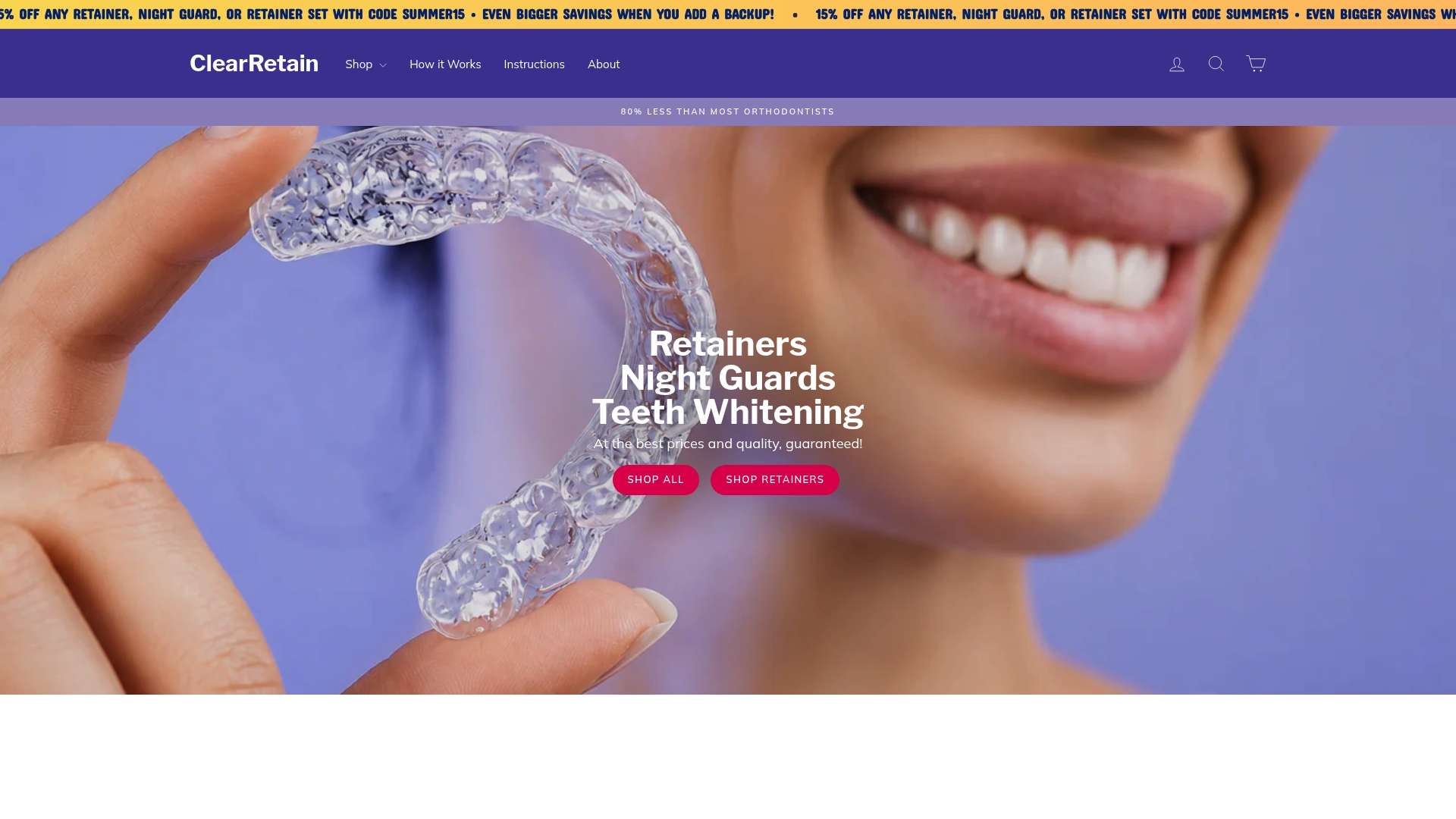
The ordering process uses a detailed self-impression kit, so you get a custom fit without the office visit markup. Clearretain customers report savings of up to 80% compared to standard orthodontic pricing. If the signs in this article sound familiar, a replacement retainer from Clearretain is a fast, affordable way to protect the alignment you worked hard to achieve.
FAQ
How often should I replace my retainer?
Clear retainers typically last 1–2 years, but visible damage, a loose fit, or persistent odor are signs to replace sooner regardless of age.
Can a cracked retainer still work?
A cracked retainer cannot reliably hold teeth in position. Cracks also harbor bacteria, which raises your risk of oral infection.
What are the signs a child needs a new retainer?
Key signs include a retainer that no longer seats flush, soreness after wear, or a child who avoids wearing it. Children in active growth phases may need replacement every 12–24 months.
Does a tight retainer mean my teeth have shifted?
A retainer that suddenly feels tight after a break in wear usually means teeth have moved. See your orthodontist before forcing it back in, as pressure in the wrong places can cause damage.
Can cleaning fix a bad-smelling retainer?
Cleaning can reduce surface odor, but a persistent smell after thorough cleaning means bacteria have penetrated the plastic. At that point, replacement is the only effective solution.