

Types of Dental Retainers: Your 2026 Comparison Guide
A dental retainer is a custom-made oral device worn after orthodontic treatment to hold teeth in their corrected positions. Retention strategies fall into two categories: removable retainers and fixed (bonded) retainers. Each type serves the same core purpose but works differently depending on your teeth, lifestyle, and how committed you are to wearing something every night. Understanding the types of dental retainers before your orthodontist brings it up gives you real leverage in that conversation.
1. hawley retainers: the classic removable option
The Hawley retainer is the original removable retainer, built from an acrylic base that sits against the roof of your mouth or along your lower teeth, with a metal wire that wraps across the front teeth. Orthodontists have used this design for decades because it is adjustable. If minor tooth movement occurs, the wire can be bent back into position without replacing the entire device.
The main drawback is visibility. The wire is noticeable when you smile, which pushes many adults toward clear alternatives. Hawley retainers are, however, among the most durable options available. With proper care, they can last 5–10 years, making the upfront cost more manageable over time.
- Best for: Patients who need minor post-treatment adjustments
- Durability: High, with proper storage and cleaning
- Visibility: Noticeable wire across front teeth
- Cost range: Typically $150–$300 per arch
Pro Tip: Soak your Hawley retainer in a denture-cleaning solution like Efferdent or Polident once a week. This removes calcium buildup that daily brushing misses and extends the retainer’s lifespan significantly.
2. clear thermoplastic retainers: the aesthetic choice
Clear thermoplastic retainers, often called Essix-style retainers, are molded from a thin sheet of plastic that fits snugly over the entire arch of teeth. They are nearly invisible when worn, which makes them the most popular choice among adults and teens finishing braces or clear aligner treatment.
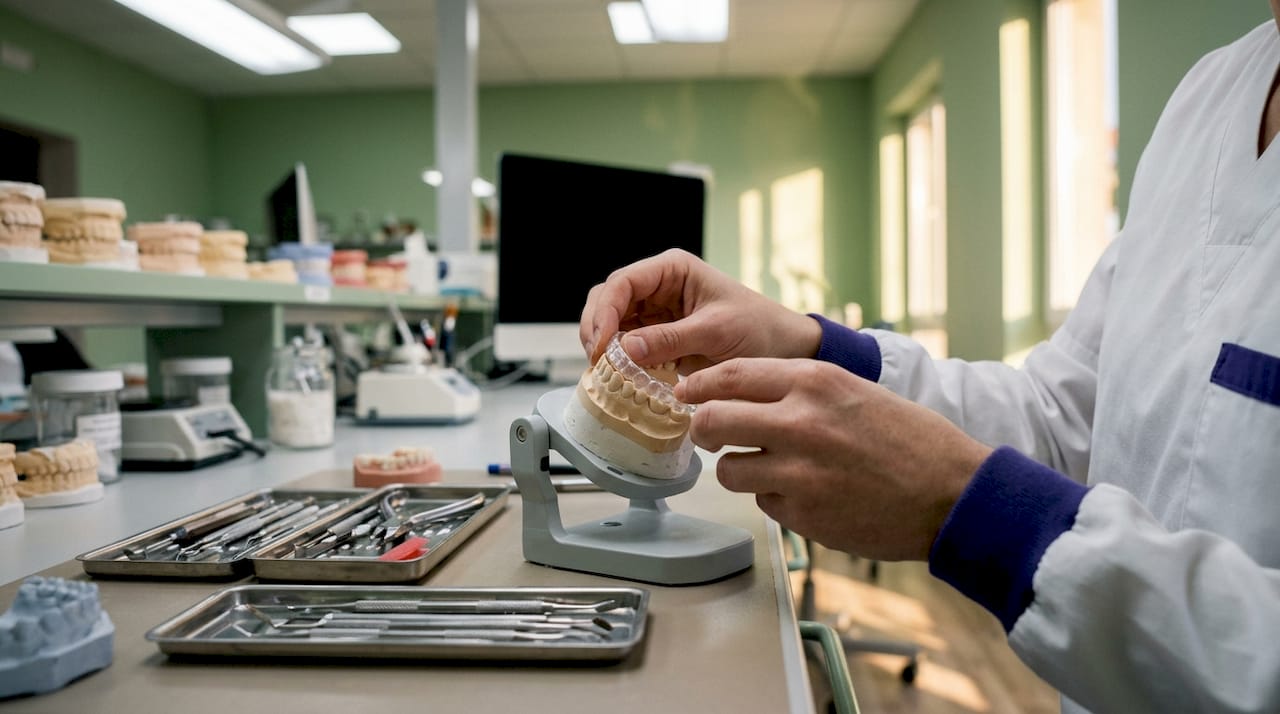
Clear thermoplastic retainers are preferred for aesthetics and comfort, but compliance drops significantly after the first year. That is the critical weakness. Because they are easy to remove and store, many patients simply stop wearing them consistently. Teeth can shift within weeks of stopping.
The material matters more than most patients realize. PETG sheets are common and easy to form, while polyurethane sheets offer more flexibility and wear resistance. Multilayer sheets combine both properties for better long-term performance. The role of retainer thickness in durability is real: thicker sheets resist cracking and warping but can feel bulkier. Most retainers are made at 0.030–0.040 inches thick, with thicker versions recommended for patients who grind their teeth.
- Best for: Adults and teens prioritizing a discreet look
- Durability: Moderate, typically 1–3 years with nightly use
- Visibility: Nearly invisible
- Cost range: $100–$250 per arch
Pro Tip: Never rinse a clear retainer under hot water. Heat warps the plastic and changes the fit permanently. Use cool or lukewarm water only, and store it in its case when not in your mouth.
3. direct-printed retainers: the newer technology
Direct-printed retainers are manufactured using 3D printing rather than traditional thermoforming over a physical model. A digital scan of your teeth is used to print the retainer layer by layer, producing a more precise fit than many thermoformed versions.
Research comparing direct-printed versus thermoformed clear retainers shows differences in how each type maintains occlusal contact over time. Direct-printed retainers tend to hold their shape more consistently after intraoral aging, which is the gradual change a retainer undergoes from saliva, chewing forces, and temperature shifts in the mouth.
This technology is still expanding in availability. Not every orthodontic practice or direct-to-consumer provider offers it yet, but it represents the direction the industry is heading. If your provider offers a digital scan option, it is worth asking whether direct-printed retainers are available.
4. fixed (bonded) retainers: the compliance-free solution
A fixed retainer, also called a bonded or permanent retainer, is a thin wire cemented directly to the back surfaces of your front teeth. You cannot remove it. You do not have to remember to wear it. It works continuously without any effort on your part.
Fixed retainers are especially effective at preventing relapse in the lower front teeth and require zero patient compliance. That is a significant advantage. Lower front teeth are among the most likely to shift after braces, and a bonded wire holds them in place around the clock.
The trade-off is hygiene. Flossing around a bonded wire requires a floss threader or a water flosser like the Waterpik. Plaque accumulates more easily around the wire, raising the risk of tartar buildup and gum irritation if cleaning is inconsistent.
- Best for: Lower front teeth, patients with high relapse risk
- Durability: Can last 10+ years if properly maintained
- Visibility: Hidden behind teeth, completely invisible from the front
- Compliance required: None
Pro Tip: Use a Waterpik or an orthodontic floss threader every day around a bonded retainer. Skipping this step for even a few weeks allows calculus to build up, which only a professional cleaning can remove.
5. PEEK fixed retainers: the modern bonded option
Traditional bonded retainers use a stainless steel wire. A newer alternative uses PEEK (polyether ether ketone), a high-performance polymer. Digitally manufactured PEEK retainers bonded with composite resin cement are strong, flexible, and tooth-colored, making them far less visible than metal wire versions.
PEEK retainers are still relatively new in orthodontic practice, but they address one of the main complaints about traditional bonded retainers: the metallic appearance visible when patients open their mouths wide. For patients who want the compliance-free benefit of a fixed retainer without the metal wire, PEEK is worth discussing with your orthodontist.
6. combination retention: the gold standard strategy
Using one retainer type alone is rarely the most effective long-term approach. A bonded lower retainer combined with a removable upper retainer worn nightly is the most widely recommended strategy for maintaining orthodontic results over time.
This combination works because it addresses the two biggest risks simultaneously. The fixed lower retainer handles the teeth most prone to shifting without relying on patient behavior. The removable upper retainer protects the upper arch while allowing for normal eating and cleaning. Together, they cover both arches with minimal lifestyle disruption.
Many patients who experience teeth shifting after braces did not use a combination approach or stopped wearing their removable retainer too soon. The combination strategy significantly reduces that risk.
7. retainer types compared: cost, durability, and insurance
Choosing between retainer types is partly a clinical decision and partly a financial one. Replacement costs range from $100 to $500 depending on retainer type, and most dental insurance plans have a lifetime orthodontic maximum between $1,000 and $3,000 that covers all orthodontic treatment, not just retainers.
| Retainer Type | Durability | Aesthetics | Avg. Cost Per Arch | Compliance Needed |
|---|---|---|---|---|
| Hawley | 5–10 years | Visible wire | $150–$300 | Yes, nightly |
| Clear Thermoplastic | 1–3 years | Nearly invisible | $100–$250 | Yes, nightly |
| Fixed (Bonded) | 10+ years | Hidden | $250–$500 | None |
| PEEK Fixed | 10+ years | Tooth-colored | $300–$600 | None |
Insurance generally distinguishes between initial retainer placement and replacement retainers. Replacements often face lower coverage and require out-of-pocket payments. Patients should budget for at least one or two replacements over a decade of retention. For fixed vs. removable retainer decisions, cost over time often favors fixed options despite higher upfront prices.
8. children’s retainer types: what parents should know
Children finishing orthodontic treatment need retainers just as much as adults, but their needs differ. Growing jaws mean that retainer fit can change faster, requiring more frequent replacements or adjustments. Hawley retainers are often preferred for younger patients because the wire is adjustable and the acrylic base can accommodate minor jaw growth.
Clear thermoplastic retainers work well for older teens who are nearly done growing and prioritize aesthetics. Fixed retainers are used more selectively in children because the teeth are still developing and the wire can interfere with natural growth patterns in some cases.
The most important factor for children is supervision. Patient compliance is the primary driver of removable retainer success, and younger patients need consistent reminders and accountability from parents to build the habit.
9. how to choose the right retainer type
No single retainer fits every patient. The right choice depends on your specific tooth movement history, your likelihood of wearing a removable device consistently, your budget, and your orthodontist’s assessment of your relapse risk.
Retention planning should start at the beginning of orthodontic treatment, not at the end. When your orthodontist knows from day one which teeth are most at risk of shifting, they can match the retainer type to the specific movements being corrected. This is a conversation worth having early.
Key questions to ask your orthodontist:
- Which teeth are at the highest risk of shifting after treatment?
- Would a fixed retainer on my lower teeth be appropriate?
- What material do you recommend for my clear retainer, and why?
- How often should I expect to replace my retainer?
- Does my insurance cover replacement retainers, or only the initial placement?
Pro Tip: Before your final orthodontic appointment, ask for a digital scan of your corrected teeth. If your retainer is ever lost or damaged, that scan allows a replacement to be made without a new impression, saving time and money.
Key takeaways
The most effective long-term retention strategy combines a fixed bonded retainer on the lower arch with a removable retainer worn nightly on the upper arch.
| Point | Details |
|---|---|
| Two main categories | Retainers are either removable (Hawley, clear thermoplastic) or fixed (bonded wire, PEEK). |
| Compliance is the key variable | Clear retainers require nightly wear; fixed retainers work without any patient effort. |
| Material affects durability | Polyurethane and multilayer sheets outlast standard PETG in clear retainers. |
| Insurance rarely covers replacements fully | Budget $100–$500 out of pocket for replacement retainers over time. |
| Plan retention early | Discuss retainer type at the start of orthodontic treatment, not the final appointment. |
Why lifelong retention is not optional
Most patients assume retainers are a short-term requirement after braces. That assumption is the single most common reason teeth shift back. Experts advocate for nighttime retainer use indefinitely to maintain orthodontic results, and that recommendation is not an overstatement.
Teeth are held in place by the periodontal ligament, a network of fibers that has memory. After braces come off, those fibers pull teeth back toward their original positions. The only thing stopping that movement is consistent retainer wear. Stopping after one or two years is not a finish line. It is a risk.
What I have seen repeatedly is that patients who choose a retainer type that fits their actual lifestyle do far better than those who pick the “best” option on paper. A clear retainer you wear every night beats a fixed retainer you neglect to clean. A Hawley retainer you actually use beats a clear one sitting in a drawer. The best retainer is the one you commit to.
The other thing worth saying plainly: the cost of replacing a retainer is far lower than the cost of retreatment. Protecting that investment with a $150 retainer every few years is one of the most straightforward decisions in dental care.
— Clear
Get your custom retainer from Clearretain
Clearretain makes it easy to protect your orthodontic results without the cost of repeated office visits. Their custom clear upper retainer and custom clear lower retainer are made from FDA-approved materials under the supervision of experienced orthodontic technicians. The entire process happens online with a detailed self-impression kit, cutting out the overhead that drives up prices at traditional practices.
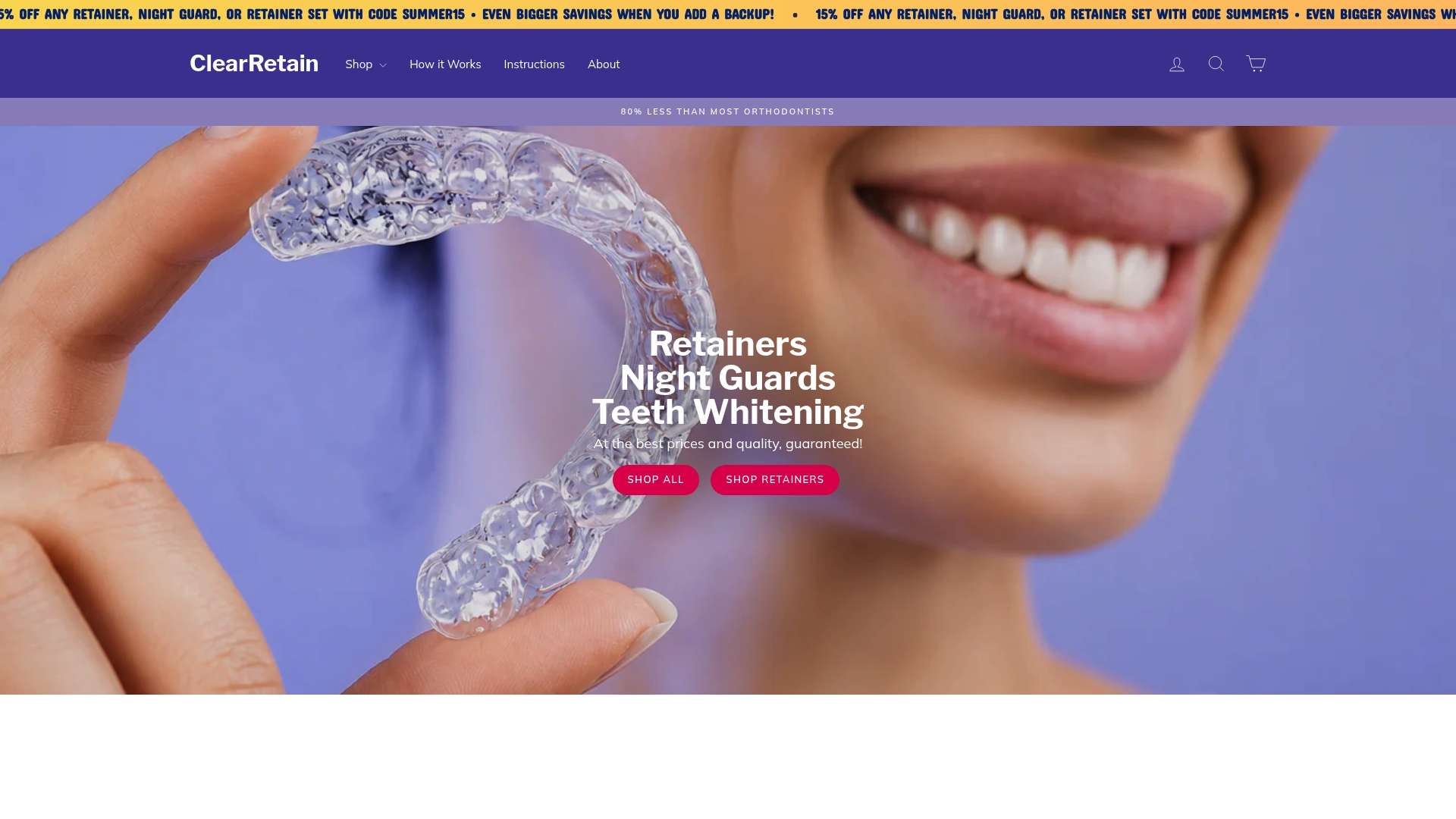
For patients who need both arches covered, the upper and lower retainer set offers the most value. Clearretain customers report savings of up to 80% compared to standard orthodontic pricing, with the same quality and fit. Order directly at Clearretain and keep your smile exactly where it belongs.
FAQ
What is a dental retainer?
A dental retainer is a custom-made device worn after orthodontic treatment to hold teeth in their corrected positions. Retainers are either removable or permanently bonded to the back of the teeth.
How long do you have to wear a retainer after braces?
Orthodontic experts recommend wearing a retainer indefinitely, with nightly use for life being the standard guidance to prevent teeth from shifting back. Stopping after one or two years significantly increases relapse risk.
What is the most durable type of retainer?
Fixed bonded retainers are the most durable option, lasting 10 or more years with proper hygiene. Among removable types, Hawley retainers outlast clear thermoplastic versions, typically lasting 5–10 years.
Does dental insurance cover retainer replacement?
Most dental insurance plans have a lifetime orthodontic maximum between $1,000 and $3,000 that covers all orthodontic care, and replacement retainers often receive limited or no coverage. Patients should expect to pay $100–$500 out of pocket per replacement.
Which retainer type is best for children?
Hawley retainers are often preferred for younger patients because the wire is adjustable and can accommodate minor jaw growth. Clear thermoplastic retainers work well for older teens who are nearly done growing and want a less visible option.