

Clear Retainer Benefits: Your Complete 2026 Guide
Clear retainers are transparent, custom-fitted orthodontic devices that prevent teeth from shifting after braces or clear aligner treatment. Known clinically as Essix retainers, they combine near invisibility with practical advantages that traditional wire-based Hawley retainers simply cannot match. Whether you just finished treatment or you’re planning ahead, understanding the benefits of clear retainers helps you protect your results for life.
1. What are the main benefits of clear retainers?
Clear retainers deliver three core advantages at once: they hold your teeth in place, stay nearly invisible while you wear them, and come out for eating and cleaning. That combination is why orthodontists and patients alike favor them over fixed or wire alternatives. Brands like Essix and Vivera have refined the thermoplastic materials used, producing retainers that fit snugly and stay clear longer. They also cover the entire biting surface, which gives mild protection against teeth grinding that a wire retainer cannot offer.
2. Why are clear retainers more comfortable than traditional retainers?
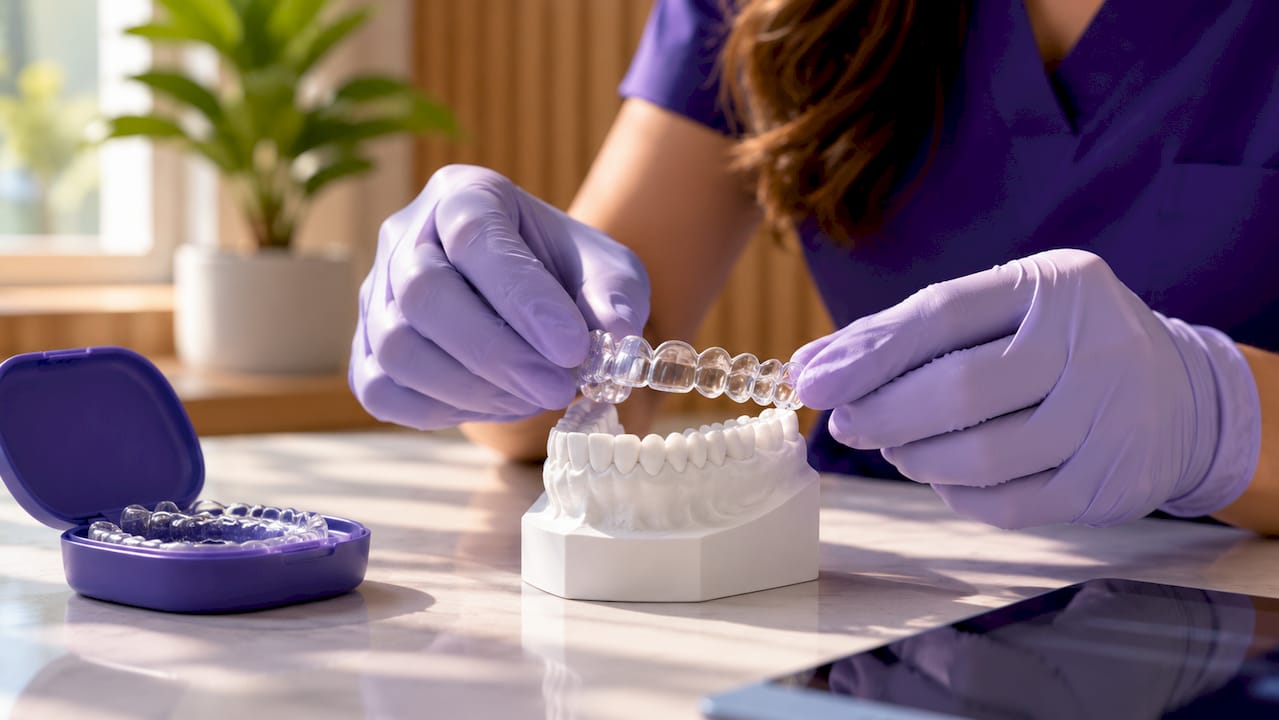
Clear retainers are made from smooth thermoplastic material with no metal wires, brackets, or clasps. That means nothing presses against your tongue or scrapes the inside of your cheeks. The fit is custom-molded to your exact bite, so the retainer feels like a natural extension of your teeth rather than a foreign object.
Compared to a Hawley retainer, which uses a visible metal wire across the front teeth and an acrylic plate against the roof of your mouth, a clear retainer is low-profile and lightweight. Most people adapt to wearing one within a day or two. The absence of metal also means no sharp edges to irritate soft tissue over time.
- No metal wires or clasps pressing on gum tissue
- Smooth edges that do not scratch the tongue or cheeks
- Thin, lightweight profile that fits close to the teeth
- Custom shape that distributes pressure evenly across all teeth
- Faster adaptation period compared to Hawley retainers
Pro Tip: Ask your orthodontist to check the fit of your retainer at your first follow-up. A retainer that feels tight in one spot can usually be adjusted before it causes discomfort.
3. How do clear retainers enhance your appearance?
Clear retainers are nearly invisible due to their transparent thermoplastic construction. When you smile or speak, most people around you will not notice you are wearing one. That level of discretion matters enormously to adults in professional settings and to teens navigating social situations.
Wire retainers, by contrast, place a visible metal bar across the front teeth. That bar is noticeable in photos, during conversations, and in close-up interactions. Clear retainers eliminate that concern entirely.
- Transparent material blends with natural tooth color
- No visible metal across the front of the smile
- Minimal impact on speech compared to bulkier retainer styles
- Confidence to smile, laugh, and speak without self-consciousness
- Compatible with discreet orthodontic solutions that prioritize aesthetics
Digital manufacturing has also improved the clarity and precision of modern clear retainers. Better-fitting retainers sit flatter against the teeth, which makes them even harder to detect.
4. Why are clear retainers better for oral hygiene?
Clear retainers allow normal brushing and flossing because you remove them before oral care. Fixed retainers, by contrast, trap food debris and plaque around the bonding wire, making thorough cleaning much harder. Removability is one of the clearest hygiene advantages clear retainers hold over their fixed counterparts.
You also remove clear retainers before eating and drinking anything other than water. That habit protects both your teeth and the retainer itself.
- Remove the retainer before every meal to prevent food buildup
- Brush and floss normally without working around wires
- Rinse the retainer with cool water after removal
- Clean the retainer daily with a specialized retainer cleaner rather than toothpaste
- Avoid hot water, which warps the thermoplastic material
Abrasive toothpaste creates micro-scratches on clear retainer surfaces. Those scratches trap bacteria and dull the transparency of the material over time. Specialized cleaners, such as retainer cleaning tablets or non-abrasive solutions, reduce bacterial buildup and keep the retainer clear longer.
Pro Tip: Soak your retainer in a specialized cleaning solution for 15–20 minutes each morning while you eat breakfast. That daily habit prevents staining and bacterial buildup without any extra effort.
5. What protective benefits do clear retainers offer beyond retention?
Clear retainers do more than hold teeth in place. Their full-coverage design provides a layer of protection that wire retainers cannot replicate.
- Bruxism buffer. Clear retainers cover all biting surfaces, absorbing some of the force from nighttime grinding. For mild grinders, this can reduce enamel wear between orthodontic appointments.
- Bite surface protection. The thermoplastic layer acts as a thin barrier between upper and lower teeth, reducing direct enamel-to-enamel contact during sleep.
- Jaw position maintenance. Keeping teeth in their corrected positions reduces strain on the temporomandibular joint caused by bite misalignment.
- Early shift detection. If your retainer feels tight after a short break, that tightness signals minor shifting has begun. Catching it early prevents larger relapse.
One critical limitation: clear retainers cannot actively move teeth once relapse is established. Forcing a retainer over noticeably shifted teeth risks damaging both the appliance and your dental health. If your retainer no longer fits, contact your orthodontist before wearing it again.
6. How does wearing clear retainers long-term protect your results?
Relapse risk is highest in the first 12 months after braces removal. The standard wear schedule is 20–22 hours daily for the first 3–6 months, then nightly wear indefinitely. That schedule exists because teeth shift throughout life due to aging and muscular forces, not just immediately after treatment.
Orthodontic experts define retention as an ongoing treatment phase, not a final step. Patients who stop wearing retainers too early are the most common cause of orthodontic relapse. Clear retainers make long-term compliance easier because they are comfortable enough to wear every night without disrupting sleep.
The best retainer choice aligns with your lifestyle and compliance habits. Clear removable retainers suit disciplined adults who value flexibility and hygiene. For extra security, some orthodontists recommend pairing a clear retainer with a fixed lingual wire on the lower incisors, which are the teeth most prone to rotation.
7. What are the benefits of retainer sets and having a backup?
Purchasing multi-set clear retainer bundles lowers long-term cost per retainer and provides immediate replacements when one is lost or damaged. Rapid relapse can begin within days of retainer loss without a replacement on hand. A backup set eliminates that gap entirely.
| Option | Cost per retainer | Backup available | Relapse risk during wait |
|---|---|---|---|
| Single retainer purchase | Higher per unit | No | High if lost |
| Multi-set bundle | Lower per unit | Yes | Minimal |
| Replacement after loss | Full price again | Delayed | Moderate to high |
Buying a second retainer set upfront is one of the most practical decisions you can make after orthodontic treatment. The second retainer set advantages go beyond cost savings. You maintain continuity of wear, which is the single most important factor in preventing relapse. Services like Clearretain offer upper and lower retainer sets with bundled pricing that makes this approach genuinely affordable.
8. How do clear retainers compare to metal retainers?
Clear retainers and Hawley retainers each have a place in orthodontic care, but they serve different patient needs. The table below captures the key differences.
| Feature | Clear retainer | Hawley retainer |
|---|---|---|
| Visibility | Nearly invisible | Visible metal wire |
| Comfort | Smooth, no metal | Can irritate tongue |
| Oral hygiene | Easy, fully removable | Harder to clean around |
| Durability | Moderate, heat-sensitive | More durable |
| Bruxism protection | Covers full bite surface | Partial coverage only |
| Cost | Generally lower | Generally higher |
For most adults and teens who prioritize aesthetics and hygiene, clear retainers are the stronger choice. Hawley retainers remain useful for patients who need minor tooth position adjustments built into the wire, or for those who tend to lose or damage appliances frequently. Explore a full types of dental retainers breakdown to see which style fits your situation.
Key takeaways
Clear retainers are the most effective post-orthodontic retention tool for patients who prioritize comfort, aesthetics, and long-term compliance.
| Point | Details |
|---|---|
| Comfort advantage | Smooth thermoplastic with no metal parts adapts faster than Hawley retainers. |
| Aesthetic appeal | Near invisibility makes clear retainers practical for adults and teens in any social setting. |
| Hygiene benefit | Removability allows normal brushing and flossing, reducing plaque risk around teeth. |
| Long-term compliance | Nightly wear indefinitely prevents relapse, which peaks in the first 12 months post-treatment. |
| Multi-set value | Backup retainer sets lower cost per unit and eliminate relapse risk from loss or damage. |
What I’ve learned from watching patients protect their smiles
Most people finish orthodontic treatment feeling relieved and motivated. Then life gets busy, and the retainer starts spending more nights in its case than in their mouth. I’ve seen this pattern more times than I can count, and the outcome is always the same: gradual shifting that could have been prevented entirely.
The patients who keep their results for decades share one habit. They treat retainer wear as non-negotiable, the same way they treat brushing their teeth. They do not debate whether to wear it. They just do it.
Clear retainers make that habit easier to maintain than any other retention option. They are comfortable enough to sleep in, invisible enough to wear without embarrassment, and simple enough to clean in minutes. The only thing standing between you and a lifetime of straight teeth is consistency.
One practical suggestion: keep your retainer case on your bathroom counter next to your toothbrush. That visual cue alone dramatically improves nightly compliance. And if your retainer ever feels tight after a break, do not force it. Contact your orthodontist or order a replacement through a service like Clearretain before the shift progresses.
Retention is not the end of your orthodontic story. It is the part that determines whether the story has a good ending.
— Clear
Get your clear retainers from Clearretain
Clearretain makes it straightforward to order custom clear retainers from home, without the cost of repeated office visits. Every retainer is made from FDA-approved materials under the supervision of experienced orthodontic technicians, and the self-impression kit walks you through the process step by step.
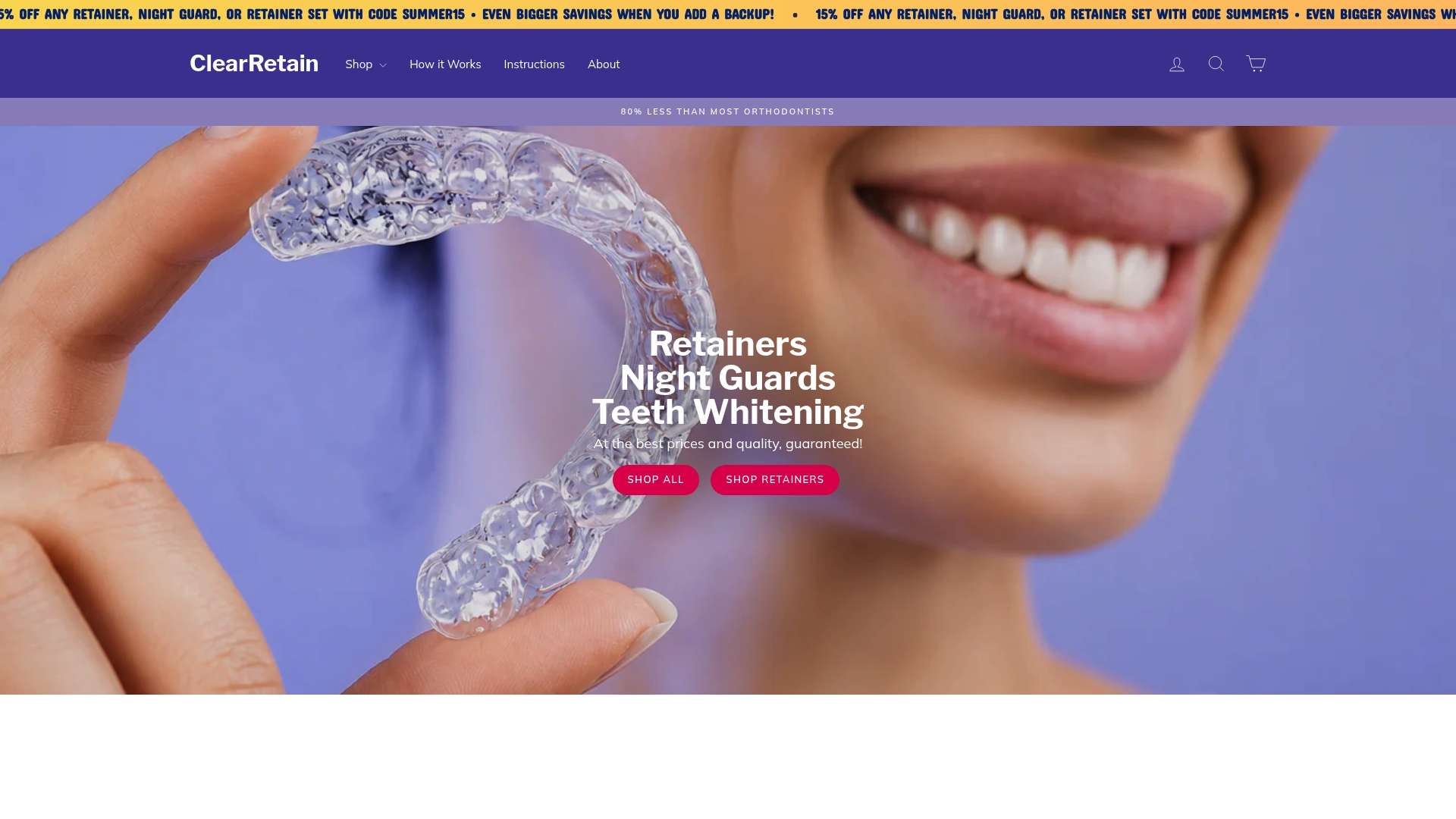
Order a custom upper retainer for targeted upper arch protection, a lower retainer for the lower arch, or save with a combined upper and lower set that includes backup options. Clearretain also carries tooth whitening serum compatible with your retainer, so you can maintain both alignment and brightness at the same time. Customers report savings of up to 80% compared to standard orthodontic pricing.
FAQ
What are the main benefits of clear retainers?
Clear retainers prevent teeth from shifting after orthodontic treatment while staying nearly invisible and fully removable for eating and cleaning. They also cover the full biting surface, offering mild protection against teeth grinding.
How long do you need to wear clear retainers?
The standard schedule is 20–22 hours daily for the first 3–6 months, then nightly wear indefinitely. Teeth shift throughout life, so long-term retainer wear is the only reliable way to prevent relapse.
Can clear retainers straighten teeth?
Clear retainers maintain tooth position but cannot actively move teeth. If noticeable shifting has occurred, forcing the retainer can damage both the appliance and your teeth. Contact your orthodontist before wearing a retainer that no longer fits.
How should I clean my clear retainer?
Use a specialized retainer cleaning solution or non-abrasive tablets rather than toothpaste. Toothpaste creates micro-scratches that trap bacteria and dull the retainer’s transparency over time.
Why should I buy a second retainer set?
A backup retainer set prevents relapse during the days or weeks it takes to replace a lost or broken retainer. Multi-set bundles from providers like Clearretain also lower the cost per retainer compared to single purchases. Explore removable retainer options to find the right fit for your needs.