

Hawley vs. Clear Retainer Differences Explained
A Hawley retainer is defined as an orthodontic appliance made from an acrylic plate and a metal wire that holds teeth in position after braces. A clear retainer, by contrast, is a transparent thermoplastic tray molded to fit over the entire arch. Understanding the hawley vs clear retainer differences matters because the wrong choice can affect your bite, your comfort, and how much you spend over the next decade. These two retainer types share the same goal but take completely different paths to get there.
What are the structural differences between hawley and clear retainers?
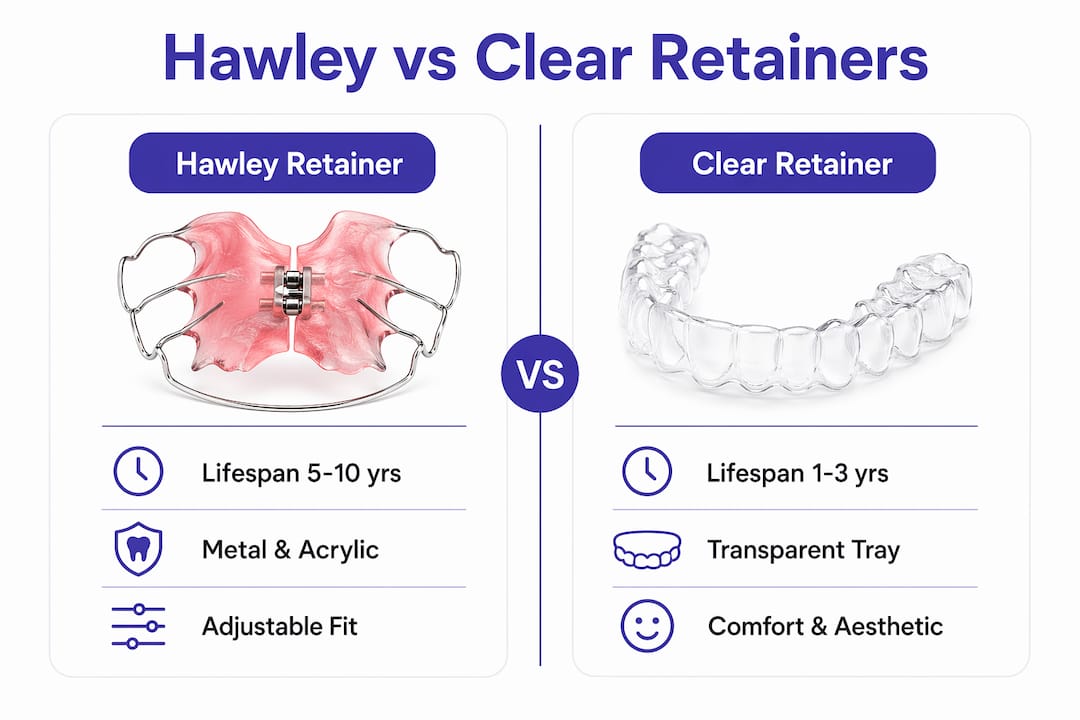
The physical design of each retainer drives every other difference you will notice during daily wear. A Hawley retainer uses an acrylic base that rests against the roof of your mouth or behind your lower teeth, with a stainless steel labial bow running across the front of your teeth. That wire is what holds your teeth in place and what makes the device adjustable. A clear retainer, often called an Essix retainer, is vacuum-formed from a single sheet of thermoplastic that wraps tightly over every tooth surface.
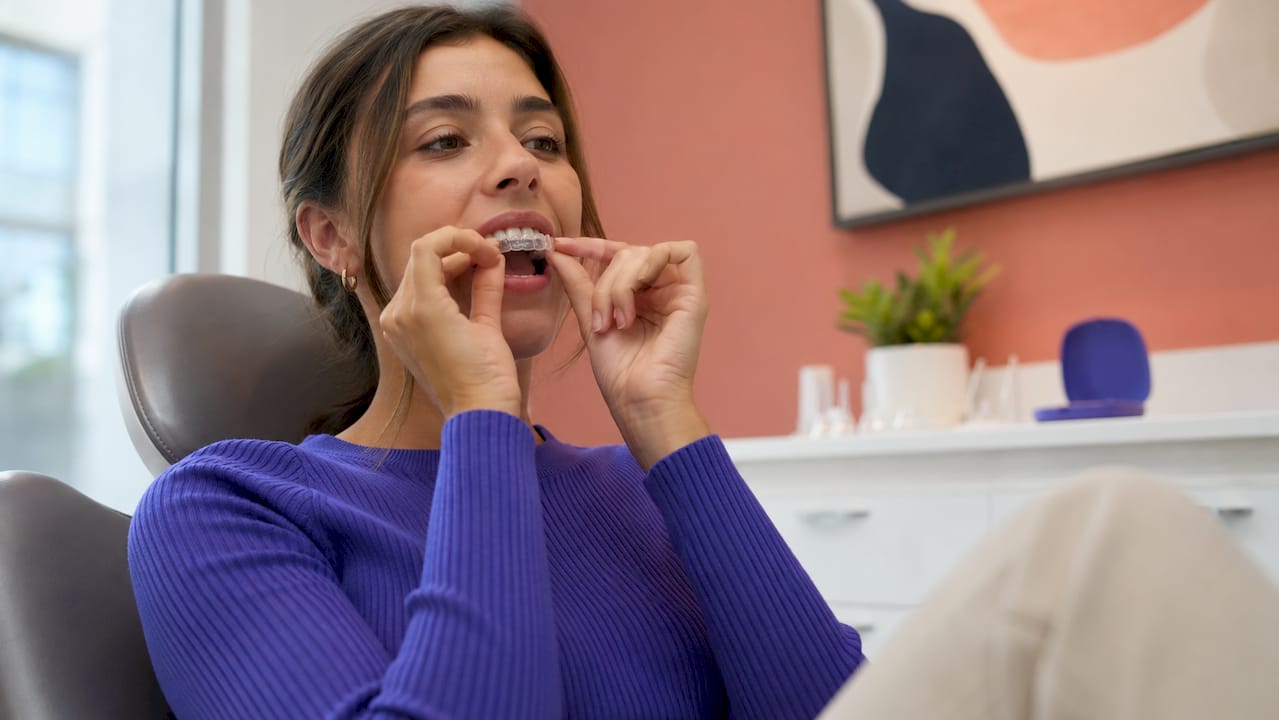
The materials create very different maintenance needs. Cleaning clear retainers requires avoiding abrasive toothpaste, which scratches the plastic and clouds the surface. Hawley retainers should be cleaned carefully over a sink filled with water so the device does not shatter on a hard surface if dropped. Both need daily cleaning, but the methods differ enough that mixing them up can shorten the life of either appliance.
| Feature | Hawley Retainer | Clear Retainer |
|---|---|---|
| Material | Acrylic plate + stainless steel wire | Thermoplastic (Essix-style) |
| Visibility | Metal wire visible when smiling | Nearly invisible |
| Adjustability | Yes, wire can be bent | No |
| Covers biting surfaces | No | Yes |
| Cleaning method | Mild soap and water, avoid drops | Avoid abrasive toothpaste |
- Hawley retainers are bulkier but more repairable
- Clear retainers are slim but cannot be modified after fabrication
- Both are removable, which makes compliance the deciding factor for long-term results
How do fit, comfort, and speech differ between the two?
Clear retainers are nearly invisible with minimal speech impact, while Hawley retainers have a visible wire and may cause a mild lisp at first. That lisp is not permanent. Speech adaptation with Hawley retainers typically takes 3–7 days, while clear retainers usually cause minimal speech changes from day one. For most adults, that one-week adjustment period is manageable. For children or teenagers who are already self-conscious, it can feel like a bigger deal.
Comfort is more nuanced than most people expect. Clear retainers sit flush against the teeth with no extra bulk on the palate, which most wearers find comfortable from the start. Hawley retainers have an acrylic plate that some people find intrusive, especially during the first few weeks. Over time, most wearers adapt to either type, but the initial experience is noticeably different.
- Clear retainers: slim profile, nearly invisible, minimal speech disruption, preferred in professional or social settings
- Hawley retainers: visible wire, acrylic bulk on palate, short adaptation period, easier for orthodontists to monitor wear patterns
Pro Tip: If you wear your retainer mostly at night, the speech difference between Hawley and clear becomes irrelevant. Focus instead on fit, durability, and how well each type holds your specific tooth positions.
Professionals and adults who wear retainers during the day consistently favor clear options for aesthetic retainer preferences. Hawley retainers are more common for children because the metal wire gives orthodontists a visible indicator of how often the device is actually being worn.
How do durability, lifespan, and adjustability compare?
This is where the retainer types comparison gets most practical. Hawley retainers typically last 5–10 years; clear retainers last 1–3 years before replacement. That gap in lifespan has a direct effect on total cost over time. Hawley retainers cost $150–$700 per arch upfront, while clear retainers run $100–$300 per arch. A clear retainer that needs replacing every two years will cost more over a decade than a Hawley retainer that lasts the full ten.
Hawley retainers are adjustable via the metal labial bow, which allows an orthodontist to correct minor tooth relapse without fabricating a new appliance. Clear retainers offer no such option. If your teeth shift even slightly, the only fix is a new tray. That distinction matters most in the first two years after braces, when teeth are most likely to drift.
| Factor | Hawley Retainer | Clear Retainer |
|---|---|---|
| Lifespan | 5–10 years | 1–3 years |
| Cost per arch | $150–$700 | $100–$300 |
| Adjustable | Yes | No |
| Bruxism suitability | High | Low |
| Replacement if teeth shift | Not always needed | Always needed |
For bruxism patients, clear retainers often crack or wear out within months under heavy grinding. Hawley retainers hold up significantly better under those conditions. If you grind your teeth at night, a clear retainer may not be the right primary appliance. A dedicated night guard paired with a clear retainer for daytime use is one practical workaround.
Pro Tip: Ask your orthodontist to note your retainer wear pattern at each checkup. Minor adjustments to a Hawley retainer cost far less than ordering a new clear tray after relapse.
Hawley retainers tend to cost more upfront but deliver better long-term cost efficiency because of their longevity and adjustability. Clear retainers are cheaper initially but may require multiple replacements over the same period.
How do hawley and clear retainers affect bite stabilization?
This is the clinical factor that most online comparisons skip, and it is the one that orthodontists care about most. Hawley retainers promote natural occlusal settling by not covering biting surfaces, which allows the teeth to settle into a more natural bite position after braces come off. Clear retainers cover the full arch, including the chewing surfaces, which can limit that natural refinement process.
Occlusal settling refers to the way your upper and lower teeth find their most stable contact points after orthodontic treatment ends. This process is not cosmetic. It affects how evenly your bite distributes pressure across your teeth, which has long-term implications for jaw comfort and tooth wear. When a clear retainer covers the biting surfaces, it acts as a physical barrier to that settling.
“Clinical experts value Hawley retainers for occlusal settling and long-term stability despite the popularity of clear retainers for aesthetics.” Nordicdens
This does not mean clear retainers are clinically inferior across the board. Many orthodontists use them successfully for patients whose bites are already well-aligned at the end of treatment. The concern applies most to patients who finish braces with a bite that still needs minor refinement. For those patients, a Hawley retainer gives the teeth room to find their natural position without interference. You can explore how retainer types affect bite from a clinical perspective to understand this factor more deeply.
Which lifestyle and usage scenarios fit each retainer type?
No single retainer type is objectively better. The right choice depends on your lifestyle, your bite, and what your orthodontist recommends. That said, clear patterns emerge when you look at who tends to do best with each option.
Clear retainers work best for:
- Adults and professionals who wear retainers in social or work settings
- Patients whose bites are fully stabilized at the end of treatment
- Anyone who prioritizes discretion and a low-profile fit
- Patients who are diligent about replacing appliances on schedule
Hawley retainers work best for:
- Children and teenagers, where the visible wire helps parents and orthodontists monitor compliance
- Patients with bruxism or heavy grinding habits
- Anyone who may need minor bite adjustments after treatment ends
- Patients looking for a longer-lasting appliance with lower long-term replacement costs
Maintenance habits also influence the decision. Clear retainers require gentle cleaning with a soft brush and non-abrasive soap. Hawley retainers can handle slightly more vigorous cleaning but need careful handling to avoid bending the wire. For a full breakdown of removable retainer options by lifestyle and compliance patterns, the comparison goes deeper than most office consultations cover.
Key takeaways
The most durable and clinically flexible retainer is the Hawley, but the clear retainer wins on aesthetics, comfort, and initial cost for most adult patients.
| Point | Details |
|---|---|
| Lifespan gap is significant | Hawley retainers last 5–10 years; clear retainers need replacing every 1–3 years. |
| Adjustability favors Hawley | Only Hawley retainers can be modified to correct minor tooth relapse without replacement. |
| Clear retainers win on aesthetics | Nearly invisible and speech-friendly, clear retainers suit professional and social settings better. |
| Bite settling matters clinically | Hawley retainers allow natural occlusal settling; clear retainers cover biting surfaces and may limit this. |
| Bruxism changes the equation | Heavy grinders should choose Hawley or a dedicated night guard over a standard clear retainer. |
What i’ve learned from watching patients choose the wrong retainer
Most people pick their retainer based on one factor: how it looks. That is understandable. After months or years in braces, the last thing anyone wants is a visible wire across their smile. But aesthetics alone is a narrow lens for a decision that affects your bite stability for the next decade.
What I have seen repeatedly is that patients who choose clear retainers without discussing their grinding habits end up replacing them far sooner than expected. A clear retainer that cracks at month four is not saving anyone money. On the other side, teenagers who get Hawley retainers and hate the look often stop wearing them, which defeats the entire purpose.
The honest answer is that the best retainer is the one you will actually wear consistently. For most adults, that is a clear retainer paired with a night guard if grinding is a concern. For children, a Hawley retainer gives parents and orthodontists better visibility into compliance. For anyone finishing treatment with a bite that still needs settling, a Hawley retainer gives the teeth room to find their natural position.
Consult your orthodontist before deciding. Bring up your grinding habits, your daily schedule, and your budget. The retainer wearing schedule matters as much as the type you choose. A great retainer worn inconsistently will not protect your results.
— Clear
Get a custom clear retainer from Clearretain
If a clear retainer fits your lifestyle, Clearretain makes it easy to get one without the office markup. Clearretain’s FDA-approved retainers are made under the supervision of experienced orthodontic technicians and cost up to 80% less than traditional orthodontic office prices.
Order a custom clear upper retainer or grab the upper and lower retainer set for complete arch coverage. Clearretain ships a detailed self-impression kit directly to your door, so you never need to schedule an office visit. For patients who want to maintain their smile while wearing their retainer, Clearretain also offers a tooth whitening serum designed for use with clear retainers and night guards.
FAQ
What is the main difference between hawley and clear retainers?
A Hawley retainer uses a metal wire and acrylic plate, while a clear retainer is a transparent thermoplastic tray. The key practical differences are adjustability, lifespan, and how each affects bite settling after orthodontic treatment.
What is a hawley retainer best for in children?
Hawley retainers are commonly recommended for children because the visible metal wire helps orthodontists and parents monitor whether the retainer is being worn consistently. They are also more durable under the wear patterns typical of younger patients.
How long do clear retainers last compared to hawley retainers?
Clear retainers last 1–3 years before replacement, while Hawley retainers typically last 5–10 years. Patients who grind their teeth may find clear retainers wear out even faster.
Can a hawley retainer fix minor tooth movement after braces?
Yes. An orthodontist can adjust the metal labial bow on a Hawley retainer to correct minor relapse without fabricating a new appliance. Clear retainers cannot be adjusted and must be replaced if teeth shift.
Which retainer type is better for someone who grinds their teeth?
Hawley retainers are more durable under grinding conditions. Clear retainers often crack or wear through quickly in bruxism patients, sometimes failing within months of regular use.