

How Long Do You Have to Wear a Retainer?
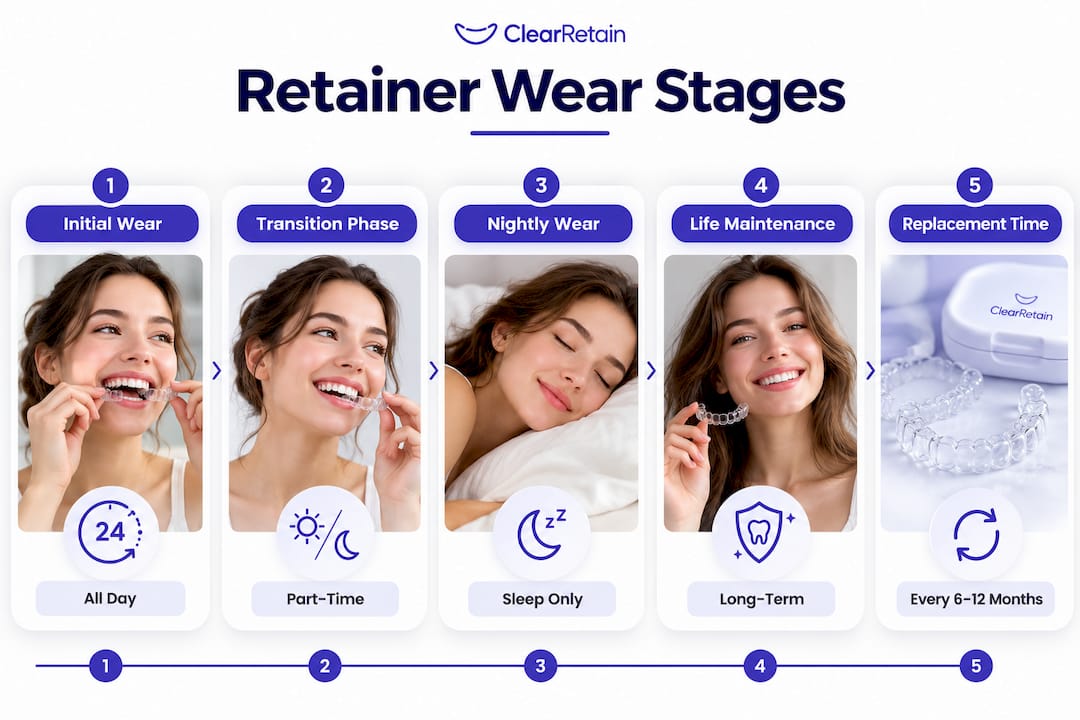
You need to wear a retainer indefinitely after orthodontic treatment. The American Association of Orthodontists is direct about this: retainer wear is a lifelong commitment, although the daily schedule changes significantly over time. Here is what that actually looks like in practice:
- Phase 1 (Full-time wear): Immediately after braces or aligners come off, you wear your retainer all day and night, removing it only to eat, drink anything other than water, and brush. This phase typically lasts 4 to 12 months.
- Phase 2 (Nighttime wear): Once your teeth have stabilized, your orthodontist will transition you to wearing your retainer only while you sleep. This phase often continues for several years, sometimes indefinitely.
- Phase 3 (Long-term maintenance): Many patients settle into nightly wear for life. Some may reduce to a few nights per week, but only with their orthodontist’s approval and only after demonstrating consistent stability.
Your age, the complexity of your original treatment, and how well you comply with your schedule all influence how quickly you move through these phases.
How retainer wear phases work from full-time to nighttime
The transition from full-time to nighttime wear is not arbitrary. Right after treatment ends, the bone and soft tissue around your teeth are still remodeling. The teeth are genuinely unstable during this window, which is why full-time wear for 4–12 months post-treatment is the standard recommendation.
Once that initial stabilization period passes, nighttime-only wear becomes sufficient for most patients. The logic is straightforward: your teeth are under far less force while you sleep, and the retainer simply holds position rather than actively resisting movement. That said, “nighttime only” still means every night, not most nights.
- Phase 1: Full-time wear (except meals and brushing) for 4 to 12 months post-treatment
- Phase 2: Nightly wear for multiple years as bone continues to remodel
- Phase 3: Ongoing nightly or near-nightly wear, often for life
- Adjustments: Your orthodontist may extend Phase 1 if your case involved severe crowding, rotations, or significant bite correction
Retainer wear schedules should be tailored to the movements performed and the patient’s risk profile. Younger patients tend to require stricter schedules because their biology moves faster.
Pro Tip: Set a phone alarm for the same time each night as a retainer reminder. Patients who build it into a bedtime routine, brush, floss, insert retainer, report far better long-term compliance than those who try to remember on their own.

Why you need to wear a retainer for life after braces or Invisalign
Teeth never fully stop moving. That is not a scare tactic; it is biology. Several forces work continuously against your orthodontic results:
- Periodontal ligament memory: The fibers connecting your teeth to the jawbone retain a pull toward pre-treatment positions for months and longer after treatment ends.
- Craniofacial growth: Even in adults, the jaw and facial bones continue making minor changes throughout life, shifting teeth in the process.
- Late mandibular crowding: Age-related crowding of the lower front teeth occurs regardless of whether someone ever had braces. Lifelong retention on the lower arch guards against this.
- Muscle pressure: The tongue, lips, and cheeks exert constant force on teeth. Without a retainer, that pressure gradually wins.
- Relapse is biological, not a failure: Orthodontic relapse is driven by ongoing craniofacial growth, age-related changes, muscle pressure, and periodontal ligament memory, continuing long after active treatment ends.
Think of your retainer as insurance for your smile. You spent real time and money getting your teeth straight. Wearing a retainer at night is a small ongoing cost compared to retreatment.
What happens when you skip or stop wearing your retainer
Teeth start shifting back faster than most people expect. Patients who discontinue retainer use can experience significant tooth movement within a year. The closer you are to your treatment end date, the faster that movement happens.
Here is what the progression typically looks like:
- A few days without wear: Your retainer may feel tight when you reinsert it. That tightness is early-stage shifting.
- One to two weeks: Pressure in specific spots, a slightly different bite, or visible spacing can appear.
- Weeks to months: More noticeable relapse, including rotations, reopened gaps, and bite changes that a retainer alone may no longer correct.
- Extended breaks: You may need a new retainer made to fit the shifted position, or in serious cases, additional orthodontic treatment.
Never force a retainer that feels painful or will not seat properly. Forcing it can crack the appliance or strain your teeth. If yours no longer fits comfortably, contact your orthodontist before wearing it again.
How to care for your retainer so it lasts
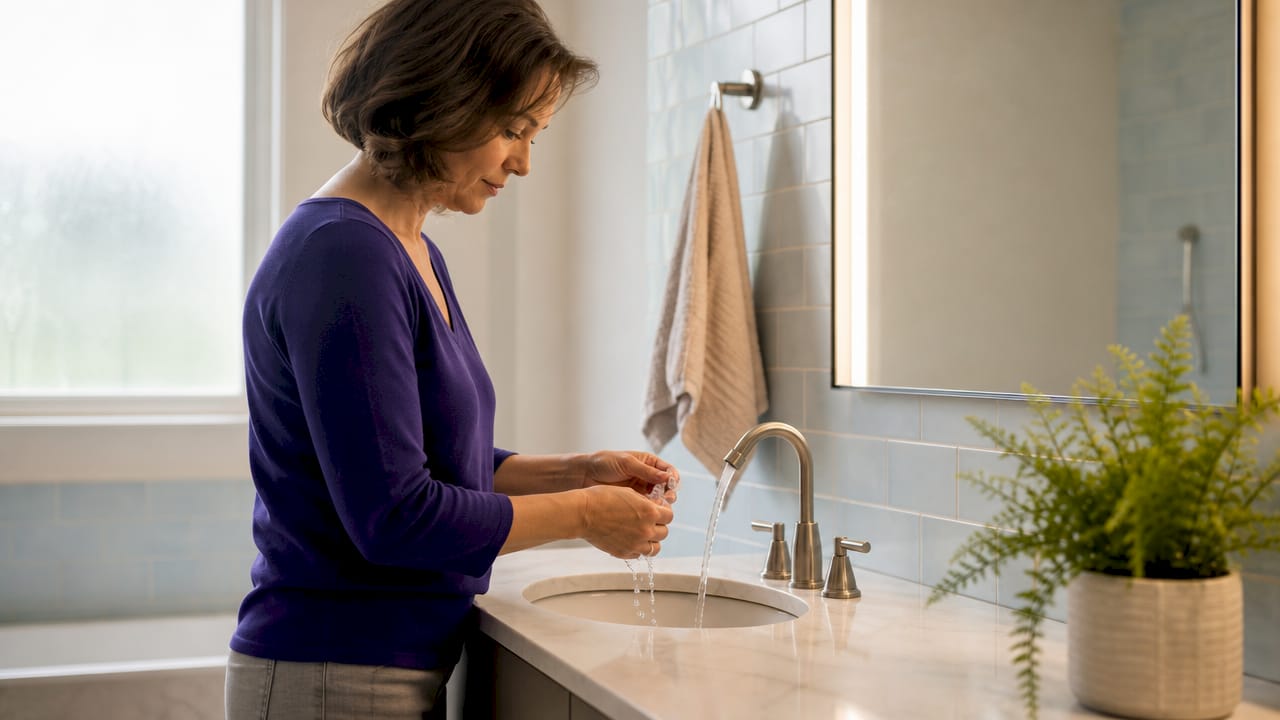
A retainer that is cracked, warped, or coated in buildup does not protect your teeth effectively. Proper care extends the life of your appliance and keeps it comfortable to wear.
- Remove before eating or drinking: Anything other than plain water can warp, stain, or damage the material. Food particles also get trapped under the retainer, accelerating decay.
- Clean daily: Use a soft-bristled toothbrush and water after each wear. Soak periodically in a retainer-cleaning solution for a deeper clean. The AAO recommends gentle cleaning and avoiding harsh chemicals that degrade the plastic.
- Avoid heat: Never leave your retainer in a hot car, rinse it with hot water, or put it near a heat source. Heat warps clear plastic retainers permanently.
- Store in a case: When your retainer is not in your mouth, it belongs in a hard protective case. Retainers left on counters, wrapped in napkins, or dropped in bags get lost, broken, or contaminated.
Pro Tip: Rinse your retainer with cool water immediately after removing it, before the saliva dries. Dried buildup is much harder to remove and contributes to odor over time. For a deeper clean, check out this retainer cleaning guide from Clearretain.
Maintaining your retainer pairs well with keeping up your overall oral aesthetics. If you are also managing teeth whitening after treatment, consistent retainer hygiene makes both easier.
When you should replace your retainer
Retainers do not last forever. Clear plastic retainers are particularly prone to discoloration, cracking, and wear over time because the plastic is porous. Knowing when to replace yours prevents gaps in protection.
- Visible cracks or chips: A cracked retainer can break further in your mouth and no longer holds teeth in position reliably.
- Warping or poor fit: If the retainer does not seat fully or feels loose in spots, it has changed shape and is no longer doing its job.
- After extended non-wear: If your teeth have shifted during a break, replacement retainers may need to be made to fit the new position before any correction can begin.
- Persistent odor or heavy staining: These signal material breakdown that cleaning alone cannot fix.
- Regular check-ups: Periodic orthodontist visits catch fit issues before they become relapse problems.
When you need a replacement, you have options beyond returning to your original orthodontist’s office. Clearretain offers custom upper retainers, lower retainers, and an upper and lower set, all made from FDA-approved materials and delivered directly to you at a fraction of typical office prices. The impression kit walks you through the process at home, and the turnaround is fast enough that you will not lose weeks of wear waiting.
Key Takeaways
Retainer wear is a lifelong commitment that transitions from full-time use immediately after treatment to nightly maintenance, and skipping wear at any stage risks measurable tooth movement.
| Point | Details |
|---|---|
| Wear is lifelong | The AAO states retainers are typically necessary for life, with frequency decreasing over time. |
| Full-time phase lasts 4 to 12 months | Immediately post-treatment, wear all day except during meals and brushing. |
| Nighttime wear follows stabilization | Once teeth settle, nightly wear maintains alignment for years, often indefinitely. |
| Skipping causes fast shifting | Patients who stop wearing retainers can see significant movement within a year. |
| Replace damaged retainers promptly | Cracked, warped, or ill-fitting retainers no longer protect alignment and should be replaced quickly. |