

Retainer Materials Comparison: Which Type Lasts Longest?
A retainer materials comparison evaluates three main categories: Hawley retainers made from acrylic and metal wire, clear thermoplastic retainers using polymers like PET-G, polyurethane, and polypropylene, and permanent bonded wire retainers fixed behind the teeth. Each material type carries distinct trade-offs in durability, comfort, and cost. Brands like Essix, Vivera, and Zendura represent the clear thermoplastic category, while traditional Hawley retainers have remained a clinical standard for decades. Knowing how these materials behave under real-world conditions helps you choose the retainer that fits your lifestyle, not just your budget.
1. What are the main retainer materials and how do they differ scientifically?
Clear thermoplastic retainers use one of three polymers: polypropylene, PET-G, or polyurethane. Each polymer behaves differently under the stress of daily wear, moisture, and temperature changes.
Polypropylene absorbs the most water of the three, reaching 12.5% absorption over six months compared to 5–7.5% for PET-G and polyurethane. Higher water absorption leads to plasticization, which softens the material and causes dimensional changes that reduce how well the retainer holds your teeth in place.
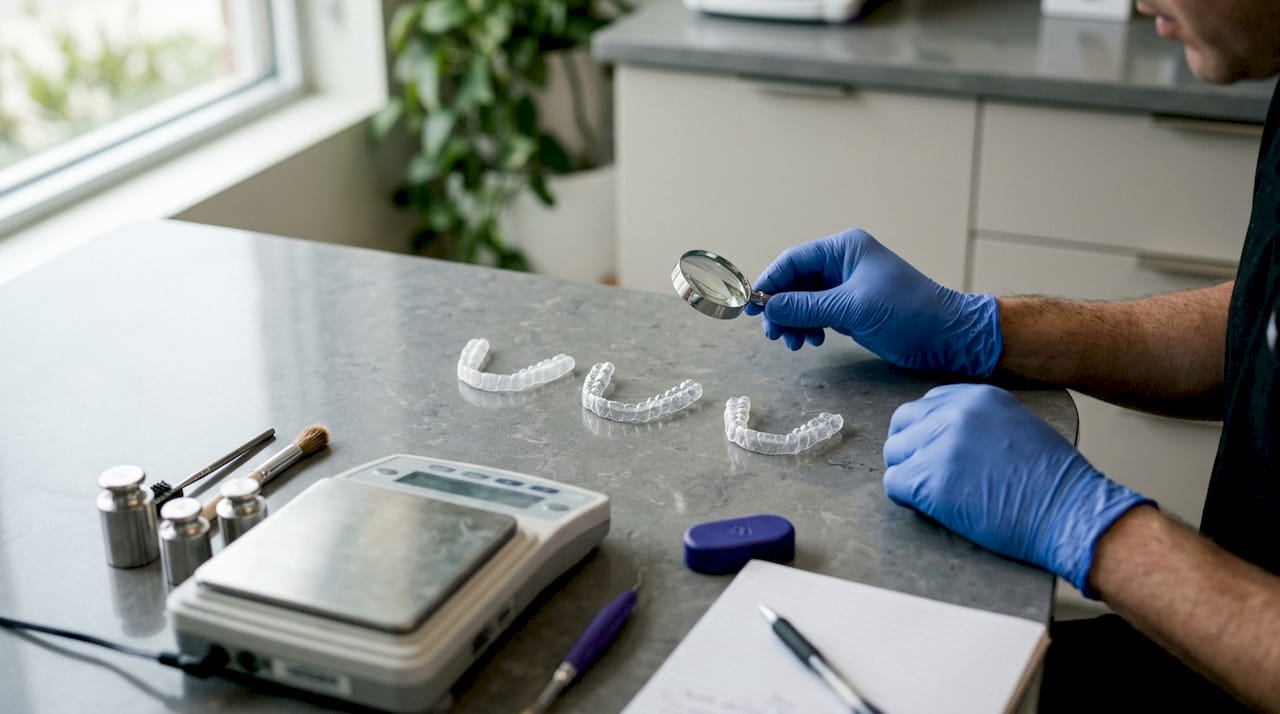
After approximately 2,000 wear cycles, which equals roughly six months of daily use, clear retainers lose 30–60% of their original material thickness at 1mm gauge. That loss of thickness directly reduces the retainer’s rigidity and its ability to maintain tooth position.
Manufacturing differences affect durability even among retainers made from the same polymer type. Two polyurethane retainers from different labs can perform very differently under identical wear conditions. This variability makes it harder to predict lifespan based on polymer name alone.
Hawley retainers use a rigid acrylic plate combined with a stainless steel wire. Acrylic does not absorb water at meaningful rates and does not deform under normal oral temperatures. The metal wire component is inert and highly resistant to mechanical wear.
Permanent bonded retainers use a thin stainless steel wire bonded directly to the back surfaces of the teeth with dental composite. The wire itself does not degrade, but the composite bonding can chip or detach over time, requiring professional repair.
| Material | Polymer/Construction | Water Absorption | Typical Lifespan |
|---|---|---|---|
| Polypropylene clear | Thermoplastic polymer | Highest (12.5% / 6 mo.) | 1–2 years |
| PET-G / Polyurethane clear | Thermoplastic polymer | Moderate (5–7.5%) | 1–3 years |
| Hawley | Acrylic + stainless steel | Negligible | 5–10 years |
| Permanent bonded | Stainless steel wire + composite | None (wire) | Many years |
Pro Tip: Ask your orthodontist or lab which specific polymer your clear retainer uses. Polyurethane generally outperforms polypropylene in water resistance and dimensional stability.
2. How do retainer materials compare in durability and comfort?
Hawley retainers last 5–10 years with proper care, while clear thermoplastic retainers typically need replacement every 1–3 years. Permanent bonded retainers can last many years but require professional maintenance when the bonding fails.
Clear retainers fail in a way that catches many patients off guard. Clear retainers commonly fail by gradual deformation and micro-cracks rather than sudden breakage. The retainer loses its fit before any visible damage appears, which means your teeth can shift without you realizing the retainer has stopped working.
On comfort and aesthetics, the three types sit at opposite ends of the spectrum:
- Clear thermoplastic retainers (Essix, Vivera, Zendura) are nearly invisible when worn. They cover the full tooth surface, which some patients find bulky but most prefer for social situations.
- Hawley retainers have a visible metal wire across the front teeth. The acrylic plate sits on the palate or floor of the mouth, which takes longer to get used to.
- Permanent bonded retainers are completely hidden behind the teeth. They require no daily insertion or removal, which eliminates the compliance problem entirely.
Hawley retainers can be adjusted in-office for minor tooth movement or relapse, while clear retainers have no adjustability. If a clear retainer no longer fits due to even minor shifting, it must be remade from scratch.
Pro Tip: If you grind your teeth at night, a standard clear retainer will wear through faster than expected. Ask about thicker gauge thermoplastic options or consider a Hawley retainer for nighttime use.
Hot beverages and heat exposure distort clear plastic retainers and cause staining, shortening their lifespan significantly. Hawley retainers are unaffected by heat at normal oral temperatures.
3. What are the cost considerations for each retainer material?
Retainer pricing varies by provider, region, and whether the first set is included in your orthodontic treatment fee. Understanding the full cost picture requires looking beyond the sticker price.
Hawley retainers cost approximately $150–$300 per arch, clear retainers run $100–$300 per arch, and permanent bonded retainers cost $250–$500 per arch due to the bonding procedure. First sets are often included in the original orthodontic treatment fee, so replacement cost is the more relevant number for most patients.
The real cost difference shows up over time:
- Hawley retainers cost more upfront but last 5–10 years. Adjustments can be made chairside, avoiding the cost of a full remake.
- Clear retainers cost less per unit but need replacement every 1–3 years. Frequent replacements add up quickly, especially if wear or heat damage accelerates the timeline.
- Permanent bonded retainers have higher initial placement costs. Repair costs apply when bonding fails, but there are no replacement fees for the wire itself.
Cost-effectiveness depends on replacement frequency and adjustability. A clear retainer that costs $150 but needs replacing every 18 months costs more over a decade than a Hawley retainer at $250 that lasts eight years.
Insurance coverage for retainers varies widely. Some orthodontic plans include one replacement set; others cover nothing after the initial appliance. Direct-to-consumer providers like Clearretain offer clear retainers at a fraction of traditional office pricing, which changes the long-term math considerably for patients who need frequent replacements.
Pro Tip: If you are budget-conscious and need clear retainers, ordering through a direct-to-consumer provider cuts replacement costs significantly without sacrificing material quality.
4. Which retainer material suits your lifestyle and needs?
Patient habits like bruxism and heat exposure affect retainer lifespan more than polymer type alone. Choosing the right material means matching the retainer to your actual daily behavior, not just your aesthetic preference.
Here is a practical breakdown by lifestyle scenario:
- Heavy grinders (bruxism): Bruxism accelerates failure of clear thermoplastic retainers, often requiring thicker materials or a switch to Hawley retainers. A Hawley retainer’s metal wire and acrylic construction handles grinding forces far better than any thermoplastic.
- Aesthetics-first patients: Clear retainers from brands like Essix or Vivera are the right choice. They are nearly invisible and work well for patients with light to moderate wear habits.
- Forgetful patients or high relapse risk: Permanent bonded retainers eliminate compliance concerns by staying fixed behind the teeth. They are the best option for anyone who has a history of not wearing removable retainers consistently.
- Athletes: Clear retainers are thinner and less bulky during sports. Hawley retainers with their metal wire can be uncomfortable under a mouthguard.
- Patients with heat exposure habits: Anyone who regularly drinks hot coffee or tea while wearing their retainer should avoid clear thermoplastics entirely. Hawley retainers or permanent bonded options are better fits.
Orthodontists recommend Hawley retainers for patients needing durability or adjustability and clear retainers for those who prioritize invisibility. The right choice is rarely universal. A full assessment of your wear habits, relapse risk, and budget gives you a clearer answer than material type alone.
Pro Tip: If you are unsure about your grinding habits, ask your dentist to check for wear facets on your teeth. Visible wear is a strong signal that a Hawley retainer or a night guard is a better long-term choice than a standard clear retainer.
For patients who want a detailed breakdown of removable retainer options by lifestyle, Clearretain’s resource library covers specific scenarios with practical guidance.
Key Takeaways
The best retainer material is determined by your wear habits, relapse risk, and budget, not by aesthetics alone.
| Point | Details |
|---|---|
| Polymer type drives water absorption | Polypropylene absorbs the most water; polyurethane and PET-G perform better over time. |
| Clear retainers fail gradually | Fit loss from micro-cracks and deformation happens before visible damage appears. |
| Hawley retainers last longest | With a 5–10 year lifespan and in-office adjustability, Hawley retainers offer the best durability. |
| Bruxism changes the equation | Heavy grinders should avoid standard clear thermoplastics and consider Hawley or thicker-gauge options. |
| Long-term cost favors durability | Frequent clear retainer replacements often exceed the total cost of a single durable Hawley retainer. |
What I have learned from years of watching patients choose retainer materials
The most common mistake I see is choosing a retainer based on how it looks in the first week rather than how it will perform in year two. Clear retainers win on aesthetics every time. But aesthetics do not hold your teeth in place once the material has thinned past the point of rigidity.
The second mistake is ignoring the manufacturing variability problem. Two clear retainers labeled “polyurethane” can behave very differently depending on the lab that made them. This is not a minor footnote. It means that a retainer from a high-quality provider using consistent materials will outlast a cheaper version made from nominally the same polymer. The label is not the whole story.
What I have found actually works is this: match the material to the behavior, not the preference. If you grind, go Hawley or go thicker gauge. If you are forgetful, go permanent. If you are disciplined and care about invisibility, a quality clear retainer from a reputable source will serve you well for 2–3 years before replacement. Plan for that replacement cycle and budget accordingly.
The patients who get the most out of their retainers are the ones who treat replacement as a scheduled maintenance task, not a surprise expense. Set a reminder at 18 months. Check the fit. Do not wait until your teeth have shifted to notice the retainer stopped working.
— Clear
Clearretain’s premium retainers: built for real-world durability
Clearretain offers custom clear upper retainers and clear lower retainers made from durable thermoplastic materials, fabricated under the supervision of experienced orthodontic technicians. Every retainer is FDA-approved and designed to meet the durability standards discussed throughout this article.
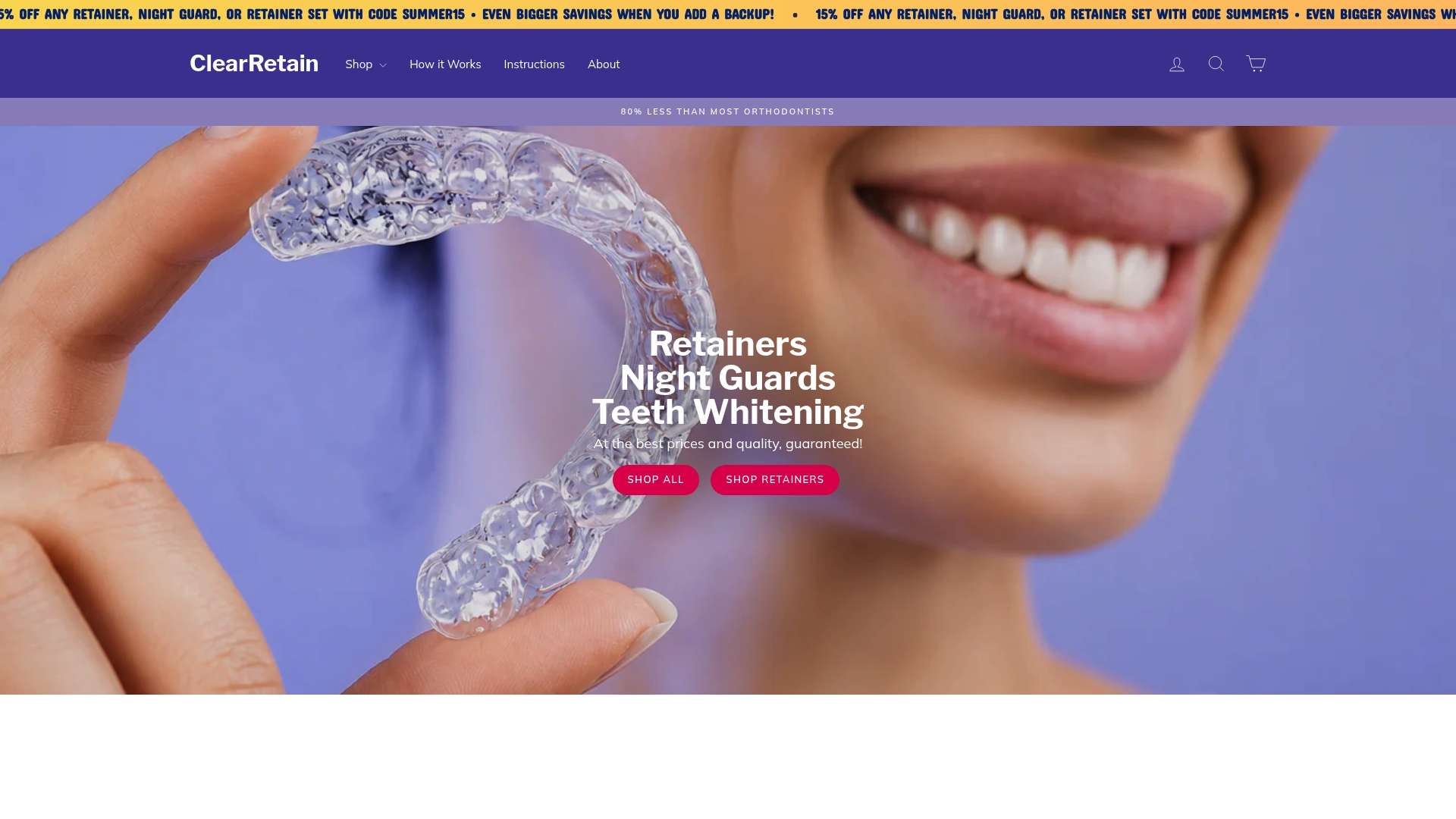
Ordering is straightforward. Clearretain ships a self-impression kit directly to you, and you return it for professional fabrication. Patients save up to 80% compared to traditional office pricing, which makes planned replacement cycles genuinely affordable. For patients who need both arches, the upper and lower retainer set offers the most convenient and cost-effective option.
FAQ
What is the most durable retainer material?
Hawley retainers, made from acrylic and stainless steel, are the most durable option, lasting 5–10 years with proper care. Clear thermoplastic retainers typically last 1–3 years before needing replacement.
Which retainer material is best for teeth grinders?
Patients with bruxism should use Hawley retainers or thicker-gauge thermoplastic options. Standard clear retainers fail faster under grinding forces, often requiring more frequent replacement.
How often do clear retainers need to be replaced?
Clear retainers typically need replacement every 1–3 years. Wear, heat exposure, and grinding can shorten that interval significantly.
Do permanent bonded retainers require special maintenance?
Permanent bonded retainers require special flossing techniques to clean beneath the wire. The bonding composite can chip over time and needs professional repair when it does.
Does retainer material affect how well teeth are held in place?
Yes. As clear retainers lose material thickness through wear, they lose rigidity and retention force. A retainer that looks intact can still fail to hold tooth position if the material has thinned or deformed.