



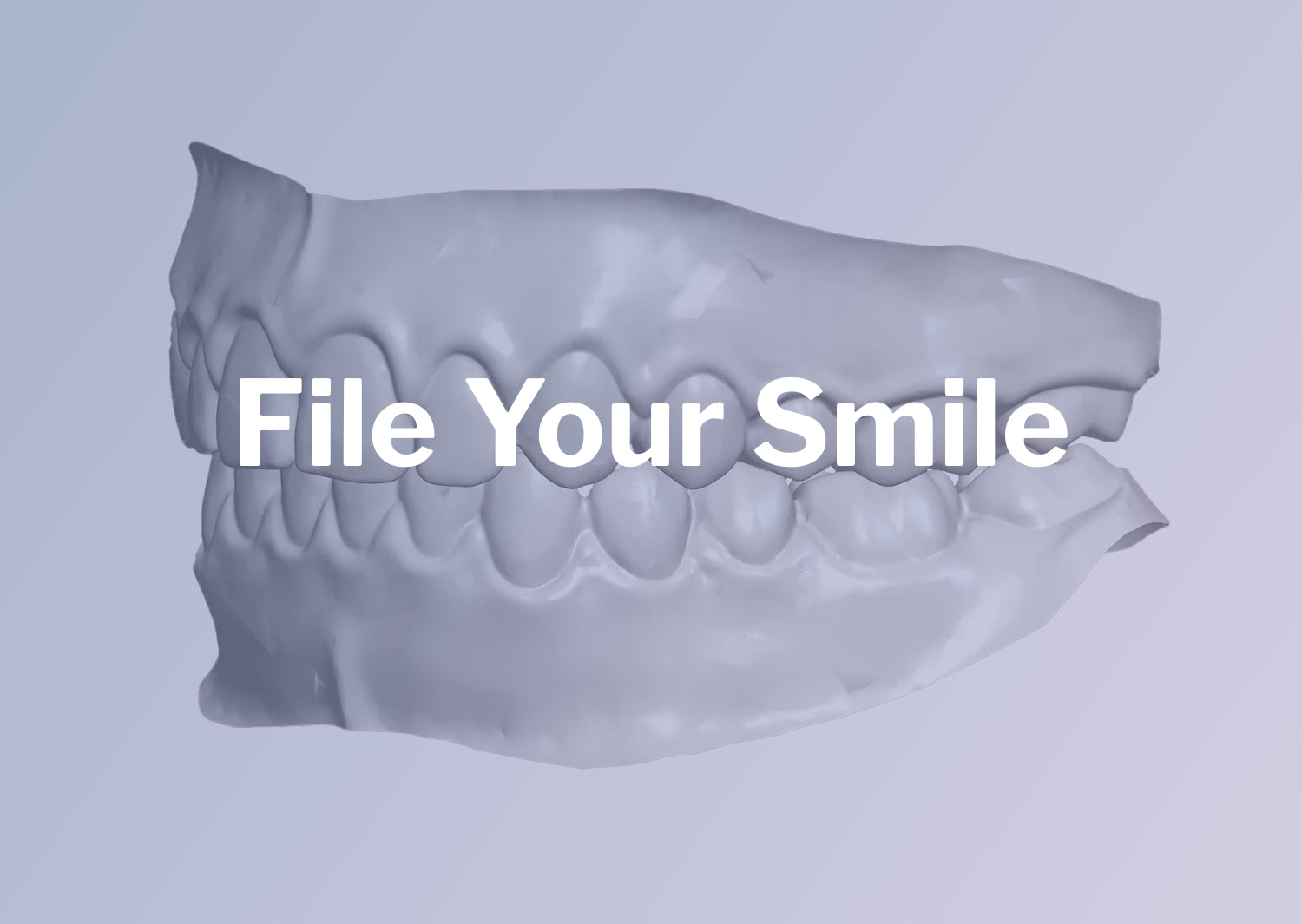
Bring Your Retainer to the Checkup: Safe Restart, Fast Replacement
Most people pause a removable retainer for several days after wisdom tooth extraction. Resume only once bleeding is controlled, swelling has started to improve, the retainer seats without any force, and your oral surgeon or orthodontist has actually cleared you. Skip that clearance step and you risk irritating a healing extraction site or disturbing the blood clot underneath it.
TL;DR:
- The timing for resuming retainer use after wisdom tooth extraction varies from one to several days, depending on individual healing and the surgeon’s instructions.
- A proper fit is indicated by a retainer that “snaps” into place with light pressure without causing pain, sharp sensations, or bleeding.
- Bonded retainers require specialist inspection before wear, while removable retainers covering extraction sites need personalized guidance from clinicians.
- Avoid vigorous activity, suction, or smoking during initial healing, and handle retainer fitting with caution to prevent dislodging the blood clot.
- If the retainer doesn’t fit or causes pain, stop using it immediately and consult your orthodontist or surgeon for assessment.
Table of Contents
- How Long Do You Wait to Wear a Retainer After Wisdom Teeth Removal?
- How Do You Test Retainer Fit Without Hurting Yourself?
- Do Bonded and Removable Retainers Need Different Restart Plans?
- What Protects the Extraction Site While You’re Not Wearing a Retainer?
- What Should You Do if the Retainer Doesn’t Fit or Hurts?
- Why Coordinating Two Clinicians Beats Guessing on Your Own
- Need a Replacement Retainer While You Heal?
- Sources
- FAQ
How Long Do You Wait to Wear a Retainer After Wisdom Teeth Removal?
There’s no single safe number, and that’s not a dodge. The oral surgeon who pulled your teeth has the final say, because timing depends on your own healing, not a chart. The AAOMS is direct about this: there’s no universally safe fixed waiting period, and individualized instructions from your surgeon override any general rule you read online.
That said, three windows show up over and over in recovery guidance:
- At least one to several days. The initial pause nearly all patients need, mainly to protect the clot and let early swelling peak and start subsiding.
- 3 to 7 days. Many patients resume wear here if things feel normal and comfortable.
- A week or longer. Reserved for impacted extractions, multiple teeth pulled at once, or sutured sites needing more time.
Why the spread? Swelling varies wildly from person to person. An impacted wisdom tooth pulled through bone heals differently than one that erupted normally. Sutures change the calculus too, and so does your retainer’s own design.
Before you even try seating it, run through a quick checklist:
- Bleeding has stopped or is down to faint pink in your saliva.
- Swelling is trending down, not up.
- Insertion doesn’t cause sharp or shooting pain.
- The appliance doesn’t press directly against extraction wounds.
- Your clinician has actually said yes.
Miss any one of those, and it’s not time yet.
How Do You Test Retainer Fit Without Hurting Yourself?
Test it once, gently, and pay attention to what you feel. A properly fitting retainer should “snap” into place with light pressure, according to the AAO — not require you to force, wiggle, or grind it into position.
- Wash your hands and rinse the retainer under cool water first.
- Position it over your teeth without pressing near the extraction site.
- Apply gentle, even pressure. It should seat with a soft click.
- Stop immediately if you feel sharp or stabbing pain, not just mild pressure.
- Remove it right away if you notice fresh bleeding, a foul taste, or anything that looks like exposed bone.
Mild snugness is normal, especially if you haven’t worn the retainer in a few days. Sharp pain, increased bleeding, a bad odor, or visible bone are red flags that mean stop and call your surgeon, full stop. Those symptoms line up with warning signs the AAOMS flags for dry socket and other complications.
Don’t test it repeatedly hoping it’ll feel better on the third or fourth try. Repeated in-and-out attempts on day zero can destabilize the healing clot and raise your risk of complications, which defeats the entire point of waiting.
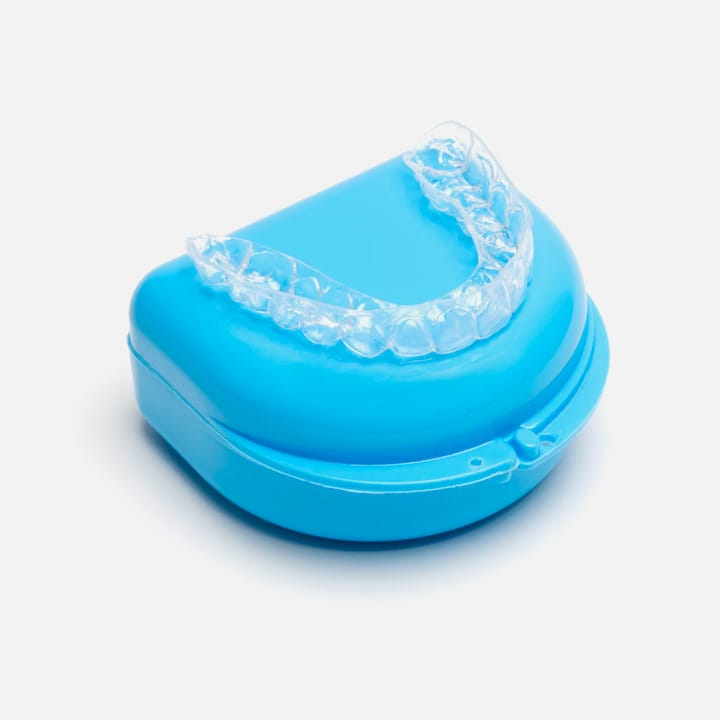
Pro Tip: Give the retainer one honest try per checkup, not five per hour. If it doesn’t seat cleanly the first time, put it back in its case and try again the next day instead of forcing it.
Do Bonded and Removable Retainers Need Different Restart Plans?
Appliance type changes the whole equation. A fixed retainer bonded behind your front teeth isn’t something you pause and resume the way you would a removable one, because it’s already there, attached to your teeth around the clock.
- Bonded retainers: Never try to remove, bend, or adjust the wire yourself. If your extraction happened near a bonded retainer, ask your orthodontist to inspect it, since the AAO notes that nearby surgery can loosen a bonded wire without you noticing.
- Removable retainers with posterior coverage: Designs that extend back to cover your molars sit closer to extraction sites and usually need a longer pause than a simple front-teeth retainer.
- Retainers covering the extraction site directly: These need input from both your surgeon and orthodontist together before you try wearing them again.
If your case involves any of these situations, don’t guess. Ask.
What Protects the Extraction Site While You’re Not Wearing a Retainer?
The days you spend without your retainer aren’t wasted downtime. They’re active healing, and what you do during them affects how fast you get back into your normal retention routine.
- Skip straws, smoking, and vigorous exercise for the first few days. Suction and heavy exertion can dislodge the clot protecting the socket.
- Use cold packs on the outside of your face during the first day to control swelling, and keep your head elevated when resting.
- Brush gently, staying away from the sockets themselves, and hold off on vigorous rinsing for 24 to 48 hours before switching to salt-water rinses as your surgeon directs.
- Store your retainer in its case, cleaned and dry, rather than leaving it loose in a pocket or on a bathroom counter where it collects bacteria.
Sockets often show early tissue regrowth around one week, though full healing can stretch past a month, according to the Cleveland Clinic. Feeling fine by day five doesn’t mean the socket is fully closed underneath. It means you’re on track, not that you’re finished.
What Should You Do if the Retainer Doesn’t Fit or Hurts?
Stop wearing it immediately and don’t force it back in.
- Call your orthodontist or oral surgeon the same day if you notice pain, unexpected bleeding, a bad smell, or anything resembling exposed bone.
- Resist the urge to bend, trim, or adjust the appliance yourself. A DIY fix on a retainer is how a minor fit issue turns into a bigger orthodontic problem.
- Expect one of a few outcomes once you’re seen: a new retainer, a minor adjustment to correct slight tooth movement, or simply more time before trying again.
None of those outcomes are emergencies. They’re normal parts of coordinating recovery with retention.
Why Coordinating Two Clinicians Beats Guessing on Your Own
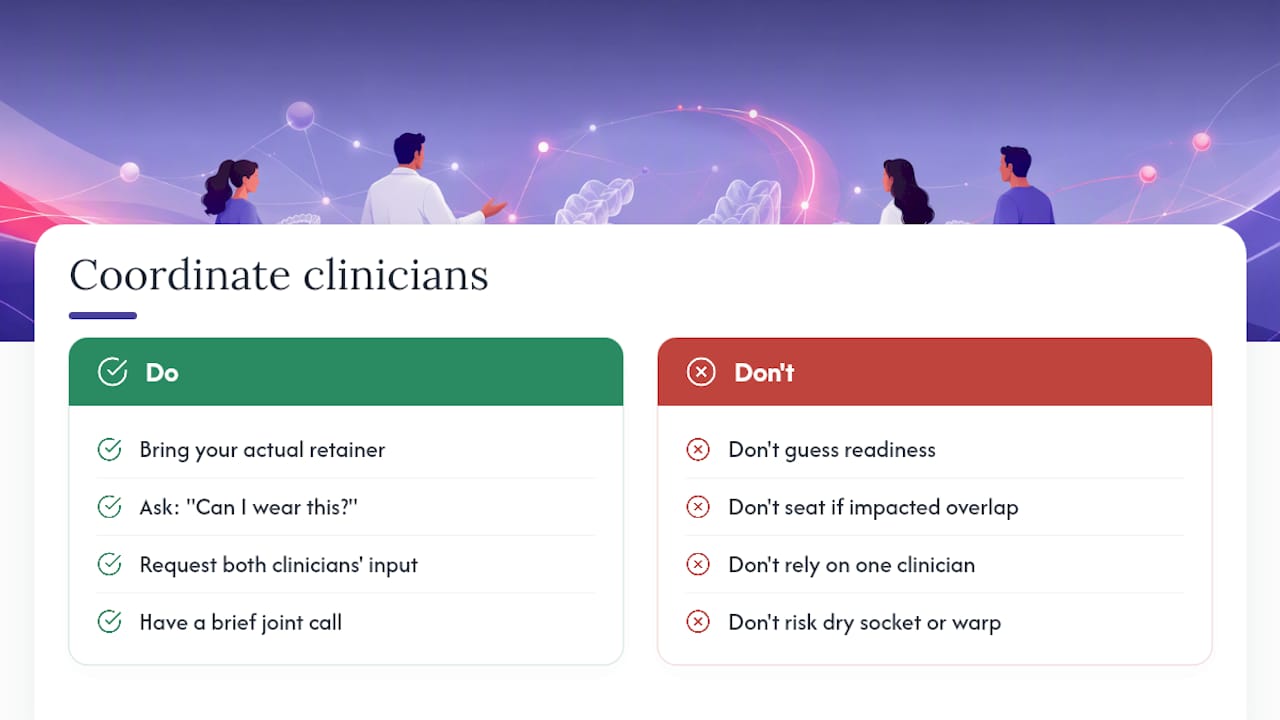
Your oral surgeon and your orthodontist are looking at two different things, and neither one alone has the full picture. The surgeon tracks wound healing. The orthodontist tracks fit, tooth position, and whether your retention plan still holds. Both the AAOMS and AAO recommend individualized, coordinated care rather than a one-size-timeline.
Bring the actual retainer to your post-op checkup and ask directly: is this cleared to wear yet? If your case involves impacted teeth or an appliance that overlaps the extraction area, request that both clinicians weigh in before you try seating it again. A two-minute conversation beats a guess that costs you a dry socket or a warped appliance.
— Clear
Need a Replacement Retainer While You Heal?
Some companies build custom clear retainers using FDA-approved materials supervised by experienced orthodontic technicians. If your old appliance no longer fits comfortably after surgery, or you simply want a spare on hand before your next checkup, that’s exactly the gap Clearretain fills without an office visit markup.
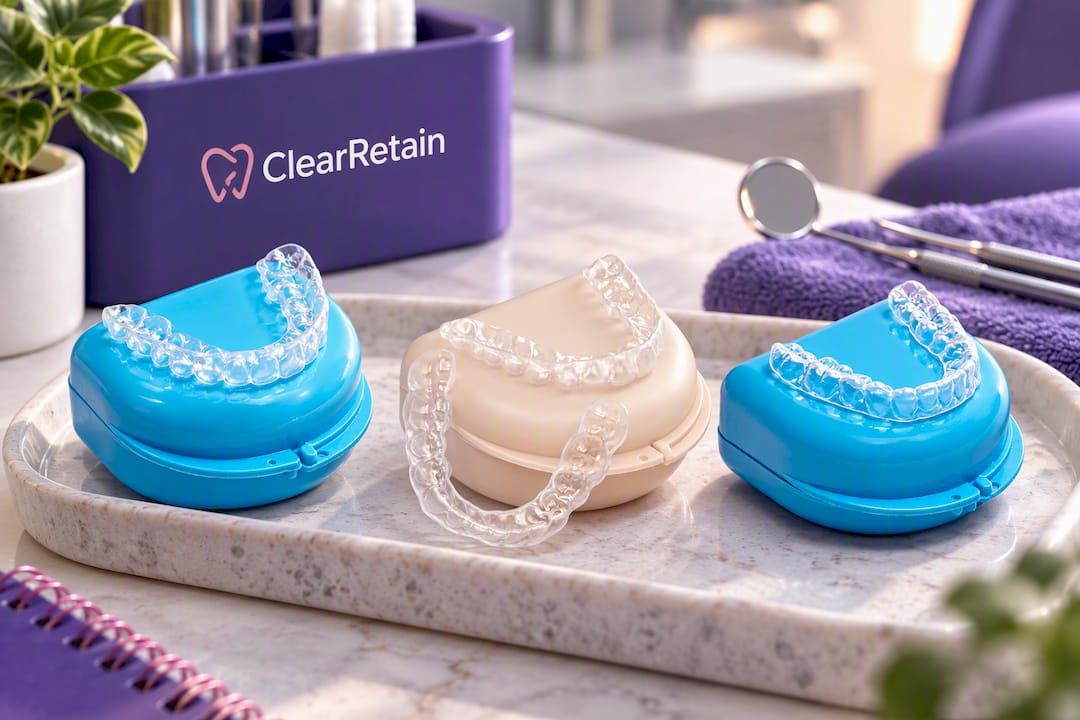
Orders typically ship fast, and some services allow reordering from stored digital impressions instead of taking a new mold. The lineup covers the Upper Teeth Retainer and Lower Teeth Retainer individually, or the combined Retainer-Night Guard set if you also grind your teeth and want both covered in one order. None of that replaces your clinician’s clearance. Get the green light from your oral surgeon or orthodontist first, then head to Clearretain’s retainer collection to place your order and get a new appliance on the way.
Sources
- What it means when your retainer feels tight - AAO
- Potential complications of wisdom teeth extractions - AAOMS
- Wisdom teeth removal: procedure & recovery - Cleveland Clinic
This article is general information, not a substitute for advice from a qualified doctor. Consult a qualified healthcare professional about your own circumstances before acting on anything here.
FAQ
Will Wearing My Retainer Cause a Dry Socket?
Wearing a retainer itself doesn’t cause dry socket, but seating it too early or forcing it against a healing site can disturb the clot that protects the socket. Dry socket happens in roughly 4% of extractions and shows up as severe pain, foul taste, or odor a few days after surgery.
Can I Go a Week Without Wearing My Retainer?
Yes. A short, clinician-directed pause of several days to a week is generally considered safe for your bite, since a 2023 systematic review found no clear link between wisdom tooth removal and post-treatment crowding relapse. Longer gaps without any clinician input are a different story, so check in if you’re unsure.
How Long Should I Wait Before Wearing a Retainer After Extraction?
Most people pause retainer use for at least one to several days before trying again, and some wait a full week or longer depending on how the extraction went. The only reliable answer comes from your oral surgeon, since healing speed and extraction complexity vary person to person.
How Fast Will My Teeth Shift Without a Retainer?
Noticeable shifting typically takes longer than the few days most people spend recovering from wisdom teeth removal, so a short clinician-approved pause is unlikely to undo your progress. If you’re worried about long-term retention timelines beyond recovery, our guide on retainer wear duration covers what ongoing compliance actually requires.