

Protect Your Retainer When Eating: 5 Step Eat, Clean, Reinsert Routine
Take out any removable retainer before you eat. Fixed, bonded retainers stay put through every meal. If you forget once and chew a few bites with a clear tray in, rinse it, check for cracks, and move on. Damage comes from habit, not from one slip.
TL;DR:
- Removable retainers like Essix and Hawley must be taken out before eating to prevent damage and bacterial buildup; fixed retainers are designed to stay in during meals.
- Hard, crunchy, sticky, seeded foods, and hot or sugary drinks can chip, warp, or stain removable retainers, increasing the risk of damage and decay.
- Always rinse and clean your retainer with cool water and a mild soap after meals, storing it in a ventilated case away from heat or pets to prevent warping and loss.
- For fixed retainers, use a floss threader or water flosser daily to remove debris and check for loose wires to avoid shifting teeth or further treatment.
- Replacing or backing up a lost or damaged retainer is straightforward with online DIY kits, offering a cheaper, quicker alternative to office visits.
Table of Contents
- Can You Eat With a Retainer in? It Depends on the Type
- Foods and Drinks That Damage a Removable Retainer
- A Simple Eat, Clean, Reinsert Routine That Actually Works
- After-Meal Cleaning and Storage: What to Do and What to Avoid
- Eating With a Fixed Retainer: What Changes
- Why the “Never Take It Out” Advice Misses the Point
- Replacing or Backing Up Your Retainer Without the Office Visit
- Sources
- FAQ
Can You Eat With a Retainer in? It Depends on the Type
The rule changes depending on what kind of retainer you’re wearing.
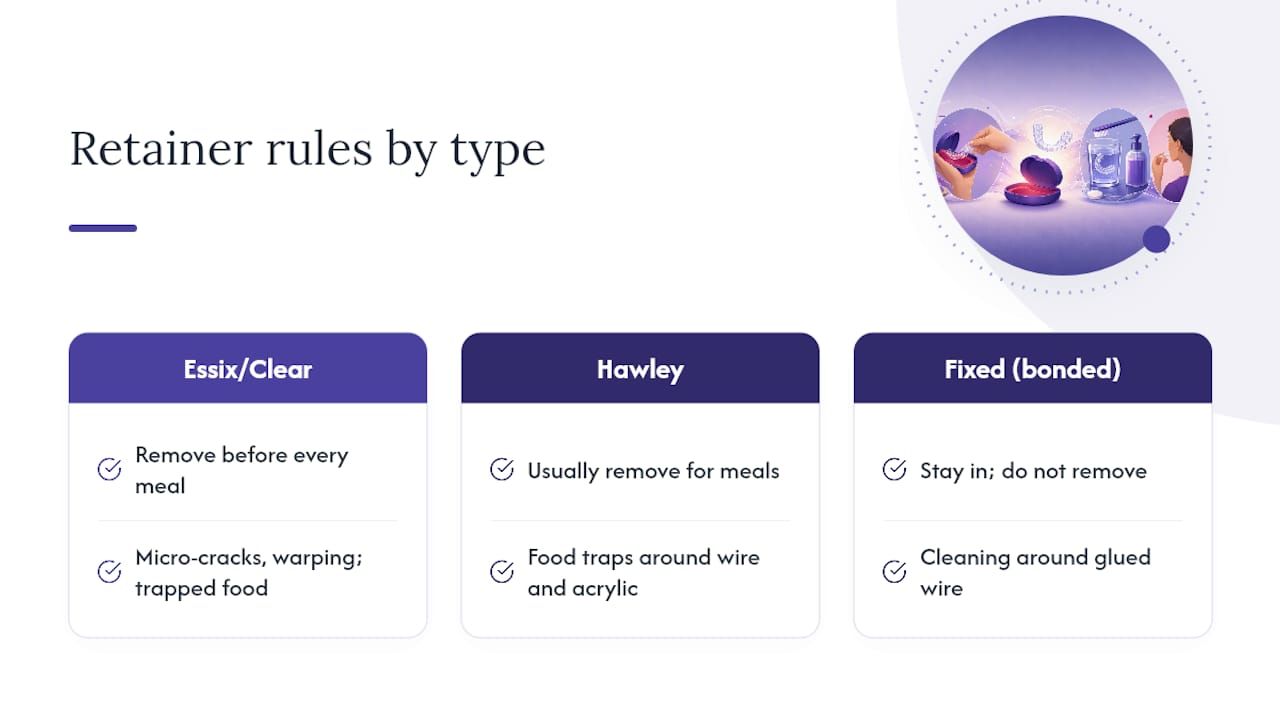
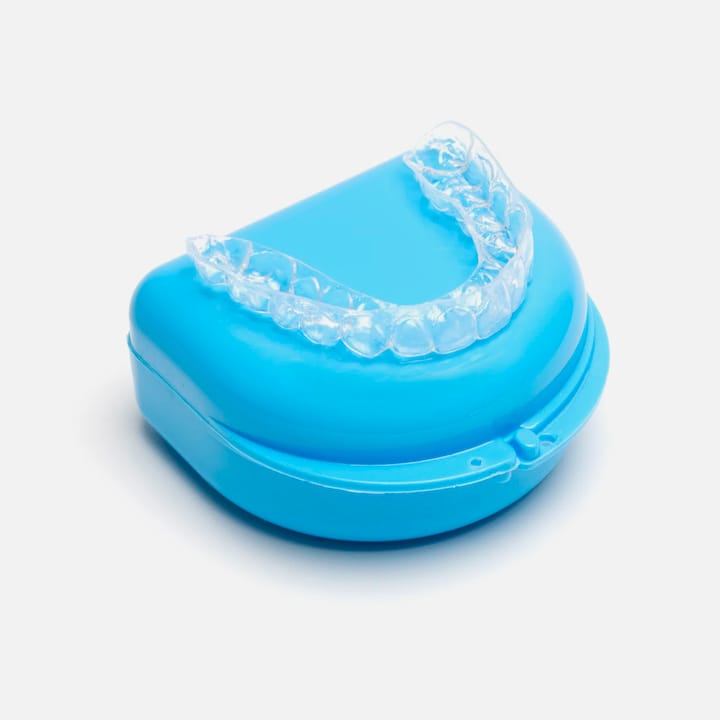
Essix or clear retainers (the thin, clear plastic trays most people get after braces) need to come out before every meal. They’re molded thermoplastic, not built to absorb chewing pressure. Bite down repeatedly and you risk micro-cracks, warping, and a tray that no longer seats the way it should, according to Jawology. Food particles also get trapped between the tray and your teeth, which raises your risk of decay the longer they sit there.
Hawley retainers, the ones with the wire and acrylic base, hold up better structurally. They can survive an accidental bite better than an Essix tray can. Hygiene is still the sticking point. Food gets caught around the wire and under the acrylic, so most orthodontists ask you to remove Hawleys for meals too, per Cleveland Clinic.
Fixed (bonded) retainers, the thin wire glued behind your front teeth, are designed to stay in permanently. Eating with them is normal and expected. The challenge shifts entirely to cleaning around the wire, which we’ll cover below.
If you’re managing a retainer for a teenager or child, follow whatever schedule your orthodontist gave at the fitting. Some clinicians allow brief exceptions for very soft foods; others don’t. When in doubt, ask rather than guess.
Foods and Drinks That Damage a Removable Retainer
Certain foods and drinks do outsized damage if you eat or drink them with a removable retainer in.
- Hard foods (nuts, ice, hard candy) create pressure that cracks or chips the plastic.
- Crunchy foods (chips, raw carrots, tough bread crusts) can flex or warp a thin tray.
- Sticky foods (caramel, gum, taffy) pull at the plastic and can distort its shape.
- Seeded foods (berries, sesame-topped bread) wedge debris into the space between tray and teeth.
- Hot drinks (coffee, tea) soften and warp thermoplastic almost as fast as hot water does.
- Acidic or sugary drinks (soda, juice, wine) sit against your enamel under the tray for far longer than a normal sip would, which raises decay risk according to Jawology.
Water is the one drink that’s genuinely safe with a retainer in, which is why orthodontists tend to repeat that instruction more than any other.
Pro Tip: If you’re at a party and can’t step away to remove your retainer, plain water is your only safe option. Anything with sugar, acid, or color needs the tray out first, even for a quick sip.
A Simple Eat, Clean, Reinsert Routine That Actually Works
Build this into muscle memory and you’ll rarely think twice about it.
- Remove and store. Take the retainer out, rinse it under cool water, and put it straight into its case. Never wrap it in a napkin or drop it in a pocket. Napkins get thrown away with the retainer inside, and pockets crush thin plastic.
- Eat normally. If you genuinely can’t remove it (some fixed-partial situations, for instance), stick to soft foods only.
- Clean your mouth. Rinse, then brush and floss like you normally would.
- Clean the retainer. Use cool water and a mild soap, or an effervescent cleaning tablet if your provider approves one, before it goes back in your mouth, following guidance from WebMD.
- Reinsert. If it feels tight, loose, or off in any way, that’s your cue to call your orthodontist rather than force it.
Pack a small kit for eating out: retainer case, a travel toothbrush, and a floss pick. It takes up less room than a phone charger.
Pro Tip: Keep a spare case in your bag or car. Most “lost retainer” stories start with someone who had nowhere to put it.
After-Meal Cleaning and Storage: What to Do and What to Avoid
Cleaning right after a meal matters more than an elaborate nightly routine. A quick rinse and wipe-down cuts down on odor, staining, and bacterial buildup far more effectively than skipping it and doing a deep clean later, based on findings from WebMD.
Do this:
- Rinse with cool or lukewarm water after every meal.
- Use mild soap or a manufacturer-approved cleaning tablet.
- Store in a ventilated case away from heat, sunlight, and pets.
Avoid this:
- Hot water, which permanently warps thermoplastic trays.
- Abrasive toothpaste, which scratches the surface and creates tiny grooves where bacteria collect.
- Leaving the case in a hot car or near a heater.
Common mistakes, like tucking a retainer into a napkin or a jacket pocket, are how most retainers end up lost, cracked, or thrown in the trash by accident, according to Torres Orthodontics. A warped or scratched retainer doesn’t just look worse. It fits worse, and a poor fit undercuts the entire reason you’re wearing one.
Eating With a Fixed Retainer: What Changes
Eating with a bonded wire behind your teeth is normal. You’re not removing anything, so the focus shifts to protecting the wire and keeping the area under it clean.
Skip anything that requires tearing with your front teeth (whole apples, corn on the cob) since that’s where bent wires usually happen. For cleaning, a floss threader or a water flosser gets under the wire far more reliably than regular floss, per WebMD. Do this once a day at minimum. If the wire ever feels loose, twisted, or detached from a tooth, book an appointment. A bent wire won’t fix itself, and it can shift teeth in the wrong direction if it sits that way for weeks.
Why the “Never Take It Out” Advice Misses the Point
Plenty of retainer advice treats every removal like a countdown to disaster. That’s backwards. A single meal eaten with a clear retainer in usually won’t ruin it. What actually shortens a retainer’s life is the daily habit of leaving it in through every snack, coffee, and soda for months on end.
The real priority is nightly wear compliance, since that’s what holds your teeth in position long term, alongside understanding why teeth shift after braces in the first place. Daytime removal for meals costs you nothing there. Having a backup retainer on hand also takes the panic out of a cracked or lost tray, since you’re not stuck wearing nothing while you wait on a replacement. If something feels off with fit after eating, that’s a conversation for your orthodontist, not a guessing game.
— Clear
Replacing or Backing Up Your Retainer Without the Office Visit
If a meal (or a napkin mishap) already cost you a retainer, Clearretain gets you a replacement without a trip back to the orthodontist’s chair or the markup that comes with it. Ordering online with a self-impression kit costs a fraction of what most practices charge for the same appliance.
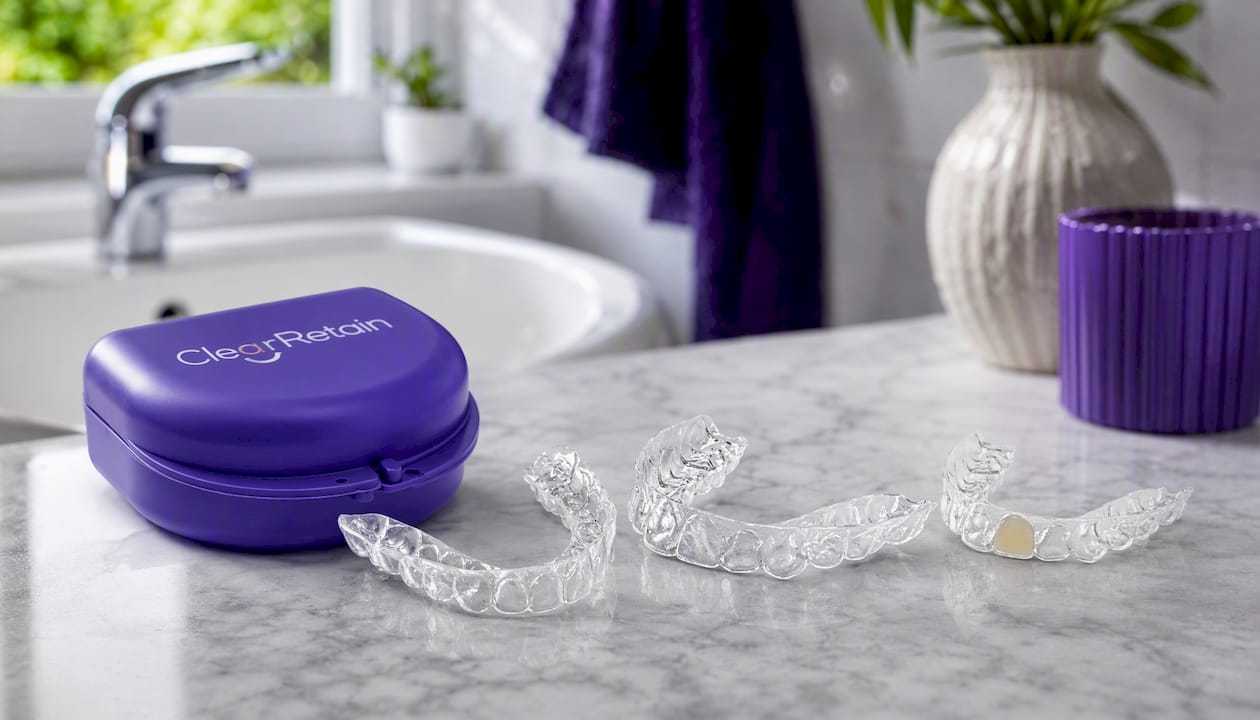
Clearretain offers FDA-approved retainers and provides instructions for taking your own impressions at home. If you wear a clear tray on top, the Upper Teeth Retainer covers that. Need a bottom replacement, the Lower Teeth Retainer fits the same way your original did. For a single missing tooth, the Upper Partial Denture Retainer handles that specific case without the cost of a full appliance. Order your impression kit today and have a backup on the way before your next retainer mishap turns into a bigger problem.
Sources
- What Is a Teeth Retainer? — Cleveland Clinic
- Clear Retainers: How Can I Keep Them Clean? — WebMD
- Can You Eat With Your Retainer In? — Jawology
This article is general information, not a substitute for advice from a qualified doctor. Consult a qualified healthcare professional about your own circumstances before acting on anything here.
FAQ
What Happens if You Eat With a Retainer In?
A single meal usually won’t destroy a clear retainer, but repeated chewing can crack, warp, or stain it and trap food against your teeth, raising your risk of decay.
What Should You Not Do While Wearing Retainers?
Don’t eat hard, sticky, or crunchy foods with a removable retainer in, don’t clean it with hot water or abrasive toothpaste, and don’t store it in a napkin or pocket.
Do I Have to Remove My Retainer When Eating?
Yes, if it’s removable. Essix and Hawley retainers both come out for meals; only fixed, bonded retainers are designed to stay in while you eat.
Why Can You Only Drink Water With Retainers In?
Water is the only drink that doesn’t stain, warp, or feed bacteria trapped against your teeth. Hot drinks soften plastic, and sugary or acidic drinks sit against enamel far longer than a normal sip would.