

Retainer Cleaning Products: Best Methods for 2026
Retainer cleaning products are specialized dental hygiene solutions designed to remove bacteria, plaque, stains, and odor from orthodontic retainers. The best options kill between 99% and 99.99% of bacteria with a single soak, making them far more effective than rinsing alone. Whether you wear a Hawley retainer, a clear Essix retainer, or a fixed wire retainer, the right cleaning method protects both your oral health and the lifespan of your appliance. This guide covers every major product category, how to use each one correctly, and the habits that keep your retainer in good shape for years.
1. What are the most effective types of retainer cleaning products?
Retainer cleaning products fall into three main categories: soak tablets, ultrasonic cleaners, and sprays. Each works differently, and the best choice depends on your schedule and lifestyle.
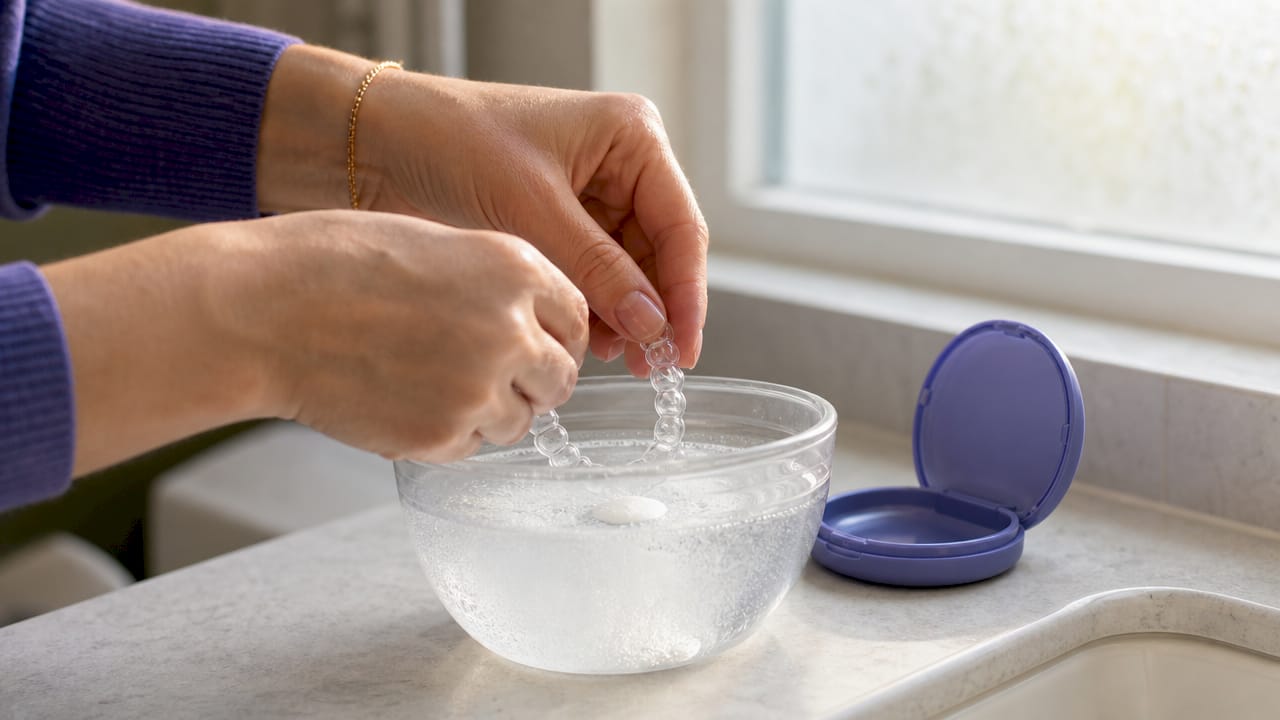
Soak tablets and solutions dissolve in water to create an antibacterial bath. You drop your retainer in, wait 15–30 minutes, and rinse. They are affordable, widely available, and effective against odor, stains, and bacteria. The main drawback is time. You cannot use your retainer while it soaks.
Ultrasonic cleaners use high-frequency sound waves to agitate water and break up debris. They work in 3–10 minutes and require no scrubbing. They cost more upfront but deliver a deeper clean with less effort. Some models include UV sterilization for an added layer of bacterial removal.
Cleaning sprays apply directly to the retainer surface without soaking. They are the fastest option and ideal for travel or mid-day freshening. They do not replace a full soak but work well as a daily maintenance tool.
Pro Tip: Match the product to your routine. If you clean your retainer every night before bed, soak tablets fit naturally. If you travel frequently or have a tight schedule, keep a spray in your bag and use tablets on weekends.
| Product Type | Cleaning Time | Bacteria Kill Rate | Best For |
|---|---|---|---|
| Soak tablets | 15–30 minutes | 99%–99.99% | Daily or deep cleaning at home |
| Ultrasonic cleaner | 3–10 minutes | 99.9% | Fast, thorough home cleaning |
| Cleaning spray | Under 1 minute | Up to 99.999% | On-the-go maintenance |
2. How to use retainer cleaning tablets correctly
Soak tablets are the most common retainer sanitizer on the market, and most people use them slightly wrong. Getting the method right makes a real difference in how clean your retainer actually gets.
Start by filling a clean cup or the included soak container with cool or lukewarm water. Hot water warps plastic retainers, so temperature matters. Drop one tablet in and let it fully dissolve before placing your retainer in the solution. Soak for 15–30 minutes, then rinse the retainer thoroughly under cool running water before wearing it.
For daily maintenance, a 15-minute soak is enough. For a deeper clean after illness or a long break from wearing the retainer, extend the soak to the full 30 minutes. Some people soak nightly; others do it every other day. Either schedule works as long as you rinse the retainer with water after every wear.
Pro Tip: Never soak your retainer in mouthwash. Many mouthwashes contain alcohol, which dries out and weakens plastic over time. Stick to purpose-made cleaning tablets.
The most common mistake is using toothpaste instead of a tablet. Toothpaste creates micro-scratches on clear retainers that trap bacteria and accelerate discoloration. Those scratches are permanent. Mild liquid soap is a safe backup if you run out of tablets, but specialized soak solutions remain the gold standard.
3. Why ultrasonic cleaners outperform manual scrubbing
An ultrasonic cleaner is the most thorough retainer cleaning method available for home use. It works by generating vibrations at 42,000–45,000Hz, which create microscopic bubbles in the water. Those bubbles collapse against the retainer surface and dislodge debris from crevices that a brush cannot reach.
A standard cycle runs 3–6 minutes. That is faster than any soak tablet and requires zero scrubbing. Most devices have stainless steel tanks holding 180–250ml of water, which is enough to fully submerge a retainer, aligner, or night guard. Many models include digital timers and non-slip feet for stable countertop use.
The best ultrasonic cleaners also include UV sterilization. UV light kills bacteria that survive the vibration cycle, pushing bacterial removal to 99.9%. That combination of mechanical cleaning and UV sterilization is the closest thing to a clinical-grade clean you can get at home.
Pro Tip: Add a drop of mild dish soap or a crushed cleaning tablet to the ultrasonic tank for better results. Plain water works, but a small amount of cleaning solution boosts the device’s effectiveness.
Ultrasonic cleaners are also portable. Many models run on USB power, making them practical for travel. They work on all retainer types, including Hawley retainers, clear aligners, and removable retainers of every style.
| Feature | Basic Ultrasonic | UV Ultrasonic |
|---|---|---|
| Cycle time | 3–6 minutes | 5–10 minutes |
| Bacteria removal | High | 99.9% |
| Tank capacity | 180–250ml | 180–250ml |
| Best for | Daily cleaning | Deep sterilization |
4. Can sprays keep your retainer fresh on the go?
Cleaning sprays are the fastest option in the retainer cleaning methods explained category. They apply directly to the retainer surface, require no water, and take under a minute. That makes them ideal for school, work, or travel when a full soak is not practical.
The most effective sprays use hydrogen peroxide-based formulas. These kill up to 99.999% of bacteria on contact, which is a higher claimed rate than most soak tablets. Some formulas also whiten teeth gradually while the retainer is worn, adding a cosmetic benefit to the antibacterial function.
Sprays have real limitations, though. They do not remove heavy staining, mineral buildup, or the kind of biofilm that accumulates over several days. Think of a spray as a daily rinse, not a deep clean. The best routine combines a spray for daily freshness with a weekly soak or ultrasonic session for thorough cleaning.
- Apply the spray directly to both sides of the retainer
- Let it sit for 30–60 seconds before wearing
- Do not rinse off the spray unless the label instructs you to
- Replace your spray bottle every 4–6 weeks to maintain potency
Good oral health supplements can also support the overall bacterial environment in your mouth, reducing the load your retainer cleaning routine has to handle.
5. Retainer case hygiene and storage habits that protect your appliance
The retainer case is the most overlooked part of a kids retainer cleaning routine and adult care alike. A dirty case recontaminates a freshly cleaned retainer within minutes. Rinse your case with cool water daily and let it air dry completely before closing it. Deep clean the case with a soak tablet solution once a week.
Retainers wrapped in napkins get thrown away constantly. This is one of the most common causes of retainer loss, especially for school-age children. The rule is simple: a retainer goes either in your mouth or in its case. There is no third option.
Heat is the other major threat. Boiling water and dishwashers warp plastic retainers permanently. A warped retainer no longer fits correctly and cannot be adjusted back into shape. It requires full replacement. Always use cool or lukewarm water for every cleaning step.
Pro Tip: Label your retainer case with your name if you are a student or frequently in shared spaces. A labeled case is far less likely to be discarded or confused with someone else’s.
Check your retainer monthly for cracks, chips, or rough edges. A damaged retainer harbors bacteria in ways that no cleaning product can fully address. If the fit feels off or the surface looks cloudy despite regular cleaning, it may be time to consider a replacement. Understanding the types of dental retainers available helps you make a confident decision when that time comes.
6. Building a consistent retainer cleaning schedule
A consistent schedule matters more than any single product. Irregular cleaning allows biofilm to harden into calculus, which no home product removes effectively. The goal is to clean before buildup has a chance to set.
A practical daily schedule looks like this:
- Rinse the retainer under cool water immediately after removing it
- Soak in a cleaning tablet solution for 15–30 minutes each evening
- Rinse again before reinserting
- Store in a clean, dry case whenever not in use
Once a week, substitute the tablet soak with an ultrasonic cleaning session. This removes any residue the tablets missed and resets the retainer to a near-new level of cleanliness. If you own a UV ultrasonic device, run the UV cycle at the same time.
Retainer habits for school-age children benefit from the same schedule, simplified. A rinse after school and a soak before bed covers the basics. Parents who build this into the evening routine alongside toothbrushing report far fewer hygiene problems and fewer replacement costs. For anyone wearing a retainer at night, nighttime retainer use already creates a natural window for the cleaning soak to happen.
Key Takeaways
The most effective retainer care combines specialized soak tablets, ultrasonic cleaning, and proper storage habits to remove bacteria, prevent damage, and extend appliance life.
| Point | Details |
|---|---|
| Soak tablets kill most bacteria | Specialized tablets remove 99%–99.99% of bacteria in a 15–30 minute soak. |
| Ultrasonic cleaners go deeper | High-frequency vibration at 42,000–45,000Hz cleans crevices no brush can reach. |
| Toothpaste damages retainers | Abrasive toothpaste creates micro-scratches that trap bacteria permanently. |
| Heat warps plastic retainers | Always use cool or lukewarm water; dishwashers and boiling water ruin the fit. |
| Storage prevents loss and recontamination | Keep retainers in a clean case or in your mouth. Never wrap them in napkins. |
What I have learned from watching people clean retainers the wrong way
Most retainer problems are not about the retainer itself. They are about the cleaning routine, or the lack of one.
The single most common mistake I see is toothpaste. People assume that if it cleans teeth, it cleans retainers. It does not. It scratches the surface and creates a rough texture that bacteria love. Once those scratches form, no amount of soaking fully reverses the damage. The retainer looks cloudy, smells faster, and needs replacing sooner.
The second mistake is inconsistency. Someone cleans their retainer perfectly for a week, then skips four days, then wonders why it smells. Biofilm does not take days off. A 15-minute soak every evening costs almost nothing in time or money. Skipping it costs you a replacement retainer.
The third thing most articles miss is the case. A retainer case that never gets cleaned becomes a petri dish. You clean the retainer, drop it into a contaminated case, and undo all your work. Rinse the case every day. It takes ten seconds.
My honest recommendation: start with soak tablets for daily cleaning and add an ultrasonic cleaner when your budget allows. That combination covers everything. And if your retainer is cracked, warped, or no longer fits, no cleaning product will fix that. Recognize when it is time for a new one.
— Clear
Clearretain retainers built for easy, lasting care
Keeping your retainer clean is only half the equation. The retainer itself needs to be made from materials that hold up to regular cleaning without degrading.
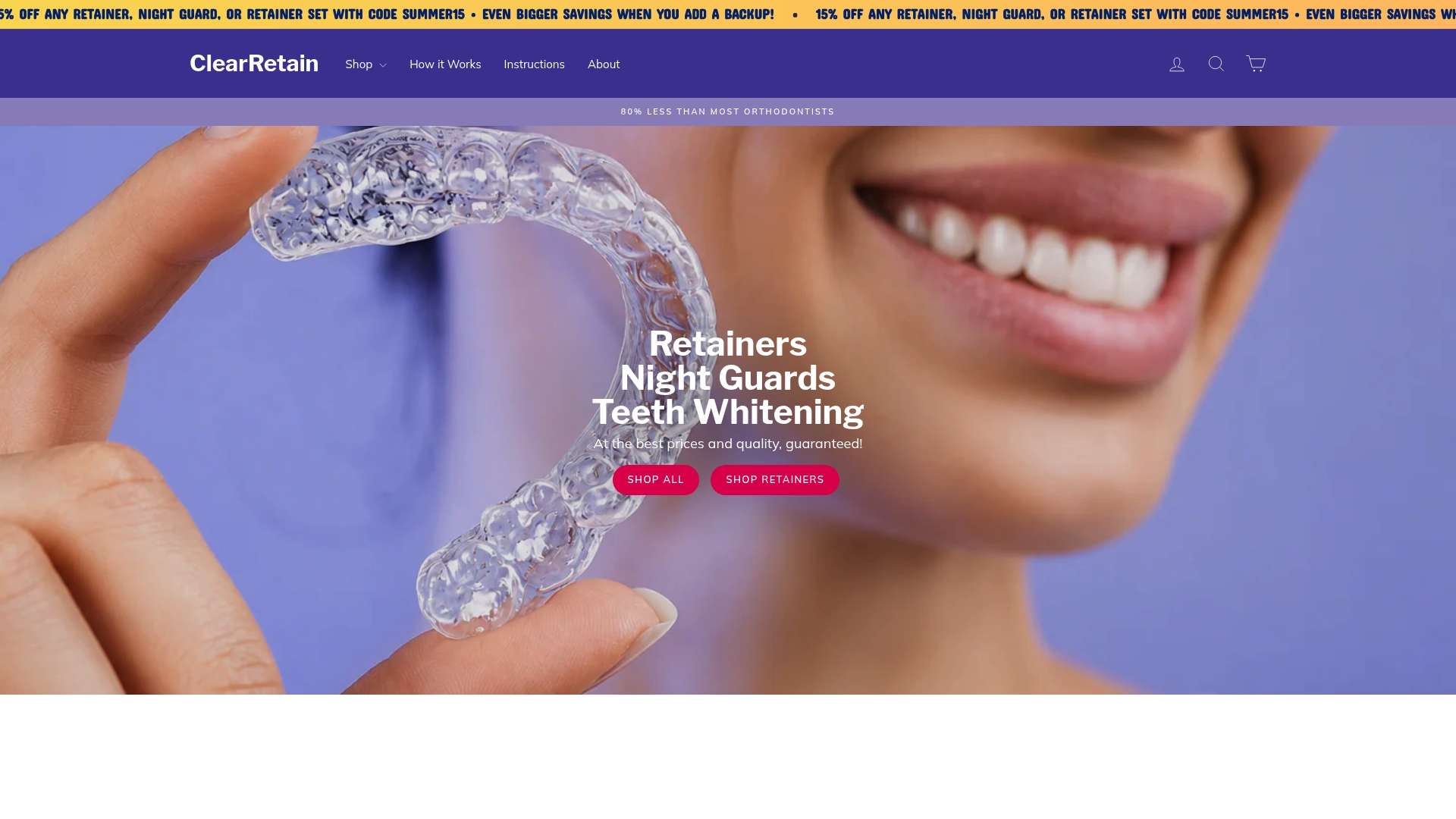
Clearretain makes premium clear retainers from FDA-approved materials, supervised by experienced orthodontic technicians. Every retainer is built to withstand a consistent cleaning routine without warping, cracking, or discoloring. You can also order a complete upper and lower retainer set directly online, with no office visit required, at up to 80% less than traditional orthodontic pricing. If you want to pair your retainer care with a brighter smile, Clearretain’s tooth whitening serum is formulated specifically for use with clear retainers.
FAQ
What is the best retainer cleaning product for daily use?
Specialized soak tablets are the best daily option. They kill 99%–99.99% of bacteria in 15–30 minutes and are safe for all retainer types.
Can I use mouthwash to clean my retainer?
No. Most mouthwashes contain alcohol, which dries out and weakens plastic retainers over time. Use purpose-made cleaning tablets or a mild liquid soap instead.
How often should I use an ultrasonic cleaner?
Once a week is enough for most people. Use it alongside your daily tablet soak routine for a thorough clean that removes buildup the tablets miss.
Why does my retainer still smell after cleaning?
Persistent odor usually means biofilm has hardened in surface scratches, often caused by toothpaste use. Switch to a non-abrasive soak tablet and consider an ultrasonic cleaner to break up the buildup.
How do I keep my child’s retainer from getting lost at school?
Store the retainer only in its labeled case when not in the mouth. Never wrap it in a napkin. A labeled case is the single most effective way to prevent loss in shared spaces.