

Why Retainers Feel Tight: Causes and Relief Tips
A tight retainer is defined as a device applying gentle, sustained pressure to hold your teeth in their corrected position. That snug sensation is not a malfunction. It is the retainer doing exactly what it was designed to do. Understanding why retainers feel tight separates normal post-orthodontic experience from situations that need professional attention. The distinction matters because the wrong response, like forcing an ill-fitting device or ignoring persistent sharp pain, can cause real harm. This guide covers the biology behind the pressure, a clear checklist for spotting trouble, and practical steps to fix retainer discomfort at home.
Why retainers feel tight: the biology behind the pressure
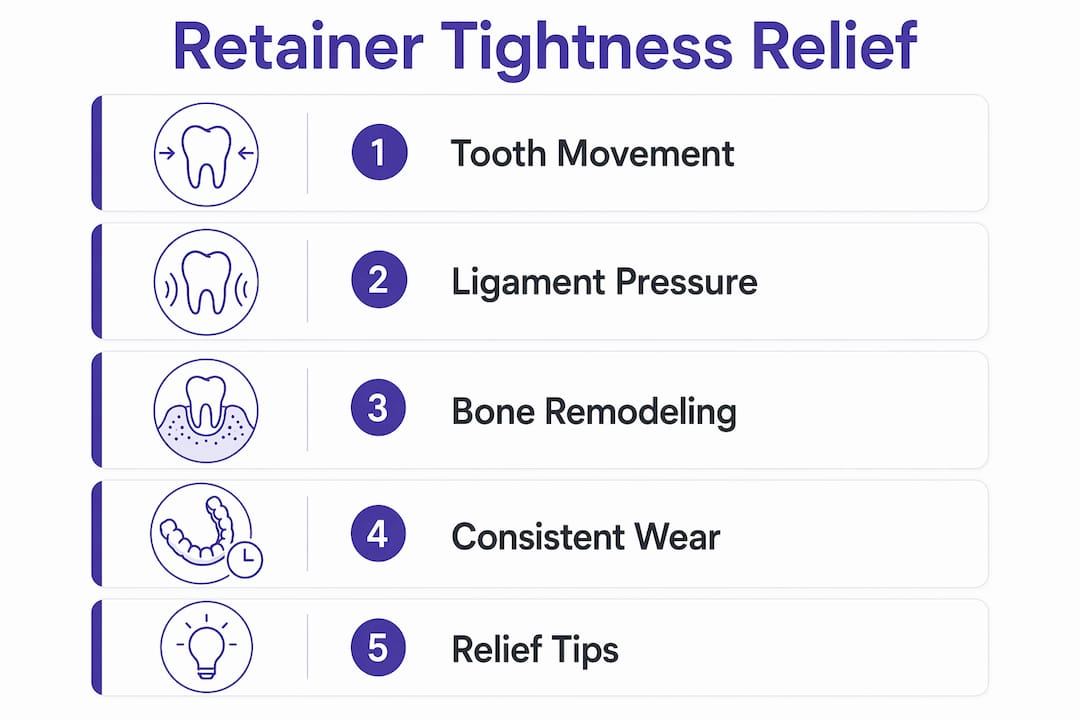
Retainer tightness is caused by the periodontal ligament, the connective tissue anchoring each tooth to the jawbone. After braces or clear aligners finish treatment, this ligament retains a kind of elastic memory. It pulls teeth back toward their original positions. The periodontal ligament requires consistent, gentle counter-pressure to remodel the surrounding bone and keep teeth stable. That counter-pressure is exactly what your retainer delivers.
Bone remodeling is not a one-time event. It is an ongoing biological process that continues for years after orthodontic treatment ends. Every time you wear your retainer, it resists the ligament’s pull and signals the bone to maintain its current shape. The snug feeling you notice is physical proof that this process is active.
The most common misconception is that a tight retainer is broken or the wrong size. Tightness actually signals the retainer functioning correctly to resist natural tooth movement. Thinking of tightness as a warning sign leads people to stop wearing their retainer, which makes the problem worse.
Here is what drives the sensation on a practical level:
- Tooth drift during sleep. Teeth shift slightly overnight, especially in the first years after treatment. Morning insertion feels snugger than evening removal.
- Breaks in wear schedule. Even a single skipped night allows measurable micro-movement. Inconsistent wear leads to increased pressure when the retainer is reinserted.
- Seasonal or stress-related clenching. Jaw soreness can increase due to nighttime clenching triggered by wearing a tight retainer, because the mouth treats it as a foreign object and responds with subconscious muscle tension.
- Long-term retention needs. Retainer wear is a lifelong commitment because teeth remain susceptible to shifting well beyond the immediate post-treatment phase.
Pro Tip: Put your retainer in at the same time every night. Consistent wear keeps the pressure low and predictable, so tightness stays mild rather than building up over missed days.
How to tell normal tightness from a real problem
Normal retainer adjustment discomfort feels like dull, steady pressure. It typically eases within two to four days of consistent wear. The sensation is similar to the soreness after a new set of aligners: noticeable but manageable. This is the body’s response to bone remodeling, not injury.
Problematic pain looks different. Watch for these warning signs:
- Sharp or stabbing pain when inserting or wearing the retainer. Dull pressure is normal; sharp pain is not.
- Retainer that will not fully seat. A retainer should slide into place with mild resistance, not require force. Forcing a retainer that does not fully seat can cause inflammation, gum recession, and alignment issues worse than the original relapse.
- Tightness persisting beyond 14 days. Seek professional evaluation if sharp pain occurs, the retainer cannot be fully seated, or tightness continues beyond 14 days despite consistent wear.
- Visible damage to the retainer. Cracks, warping, or bent wires change how pressure distributes across your teeth and can create uneven force.
- Soft tissue injury. Sores, cuts, or bleeding along the gumline or cheek indicate a hardware problem, not normal adjustment.
Patients should differentiate between dull, constant pressure indicating active tooth retention and sharp pain caused by retainer defects. The first is a sign of success. The second is a reason to call your orthodontist.
Pro Tip: Take a photo of your retainer under good lighting once a month. Spotting a hairline crack or bent wire early prevents the kind of discomfort that sends people to emergency dental appointments.
How to fix retainer discomfort at home
Mild tightness responds well to simple home care. None of these steps require special equipment, and most cost nothing.
- Warm compress on the jaw. Applying warm compresses for 10–15 minutes improves local circulation and relaxes muscle tension around the jaw. Do this before inserting your retainer at night to reduce the initial pressure sensation.
- Soft foods for 48–72 hours. Soft diets for 2–3 days minimize chewing pain during the adjustment period. Think yogurt, scrambled eggs, and mashed potatoes rather than raw carrots or crusty bread.
- Over-the-counter pain relief. Ibuprofen or acetaminophen taken as directed on the label reduces inflammation and soreness during the first few days of wearing a retainer after a break.
- Orthodontic wax for wire irritation. Sharp pain from rough edges or bent wires responds well to orthodontic wax pressed over the offending area. This is a short-term fix. Replace the retainer or see your orthodontist if the irritation continues.
- Consistent wear schedule. Wearing the retainer as prescribed is the single most effective way to eliminate tightness caused by tooth movement. The more consistently you wear it, the less pressure builds between sessions.
- Good hygiene. A dirty retainer introduces bacteria to the gumline, causing inflammation that amplifies soreness. Clean your retainer daily with a soft brush and mild soap.
Pro Tip: Insert your retainer right after brushing at night, while your jaw muscles are still relaxed from the warm water. The timing makes a noticeable difference in how tight it feels going in.
Why retainers feel snug after a break and how to prevent it
Teeth shift rapidly when retainers are not worn as prescribed. Even a few days without wear creates enough micro-movement to make reinsertion noticeably tighter. A week off can produce significant pressure. A month or more can result in a retainer that no longer fits at all.
“The retainer should feel like a gentle reminder, not a punishment. If it feels like a punishment, you have probably given your teeth too much time to wander.”
The difference between short-break tightness and long-gap fit failure is important. After a night or two off, the retainer will feel snug but should seat fully. After several weeks, it may not seat at all, which means the teeth have moved beyond what the retainer can correct on its own. At that point, a new impression and a replacement retainer are the only safe options.
For gradual reintroduction after an extended break, start by wearing the retainer for a few hours during the day rather than forcing a full night of wear immediately. This lets the teeth adjust slowly and reduces the risk of tissue injury from sudden, prolonged pressure. Check out nighttime retainer use guidelines to understand the full schedule your teeth need for long-term stability.
The best prevention is simple: do not skip nights. Set a phone reminder if needed. Treat retainer wear the same way you treat brushing. Missing one night occasionally is recoverable. Missing weeks is not.
How retainer type and material affect tightness
Not all retainers create tightness the same way. The design and material of your retainer directly influence how pressure is distributed and how much discomfort you feel.

| Retainer type | How tightness shows up | Key comfort consideration |
|---|---|---|
| Clear plastic (Essix) | Uniform pressure across all teeth during insertion | Can warp slightly over time, reducing fit accuracy and increasing irritation |
| Hawley (wire and acrylic) | Pressure concentrated at wire contact points | Wire can be adjusted by an orthodontist; bent wires cause localized soreness |
| Fixed bonded retainer | No insertion pressure; discomfort from constant contact | Fixed retainers cause ongoing tongue irritation rather than tight-fit pressure |
Clear plastic retainers are the most common choice for post-orthodontic retention, and they deliver even, predictable pressure when the fit is accurate. The trade-off is material sensitivity. Heat warps them. Age thins them. A warped clear retainer does not just feel tighter; it applies uneven force that can actually move teeth in the wrong direction. Replacing a worn clear retainer on schedule prevents this problem entirely. For a full breakdown of removable retainer options, material choice is one of the most important decisions in long-term comfort.
Retainer tightness is a signal worth listening to
The most consistent pattern I have seen is that people interpret tightness as failure. They assume the retainer no longer fits, or that their teeth are “too far gone” to bother. Both conclusions are almost always wrong. Tightness is the retainer doing its job under resistance. It is the biological equivalent of a seatbelt holding you in place during a sudden stop.
The patients who struggle most are the ones who stop wearing their retainer the moment it feels uncomfortable. That decision turns a two-day adjustment into a months-long problem. The patients who do best treat mild tightness as confirmation that the retainer is still relevant and still needed.
What I tell people is this: if it hurts dully and eases after a few days, keep going. If it hurts sharply, does not seat, or causes visible tissue damage, stop and call your orthodontist. Those two categories cover almost every situation you will encounter. The gray area is smaller than most people think.
Patience and consistency are not just good advice. They are the mechanism by which retention actually works. The pressure you feel is the process.
— Clear
Clearretain custom retainers for a better fit
Tightness caused by a poorly made or aging retainer is avoidable. Clearretain offers clear upper retainers and clear lower retainers made from FDA-approved materials under the supervision of experienced orthodontic technicians. Each retainer is custom-fitted from a self-impression kit you complete at home, which eliminates the office visit markup and delivers a precise fit at a fraction of the typical cost.
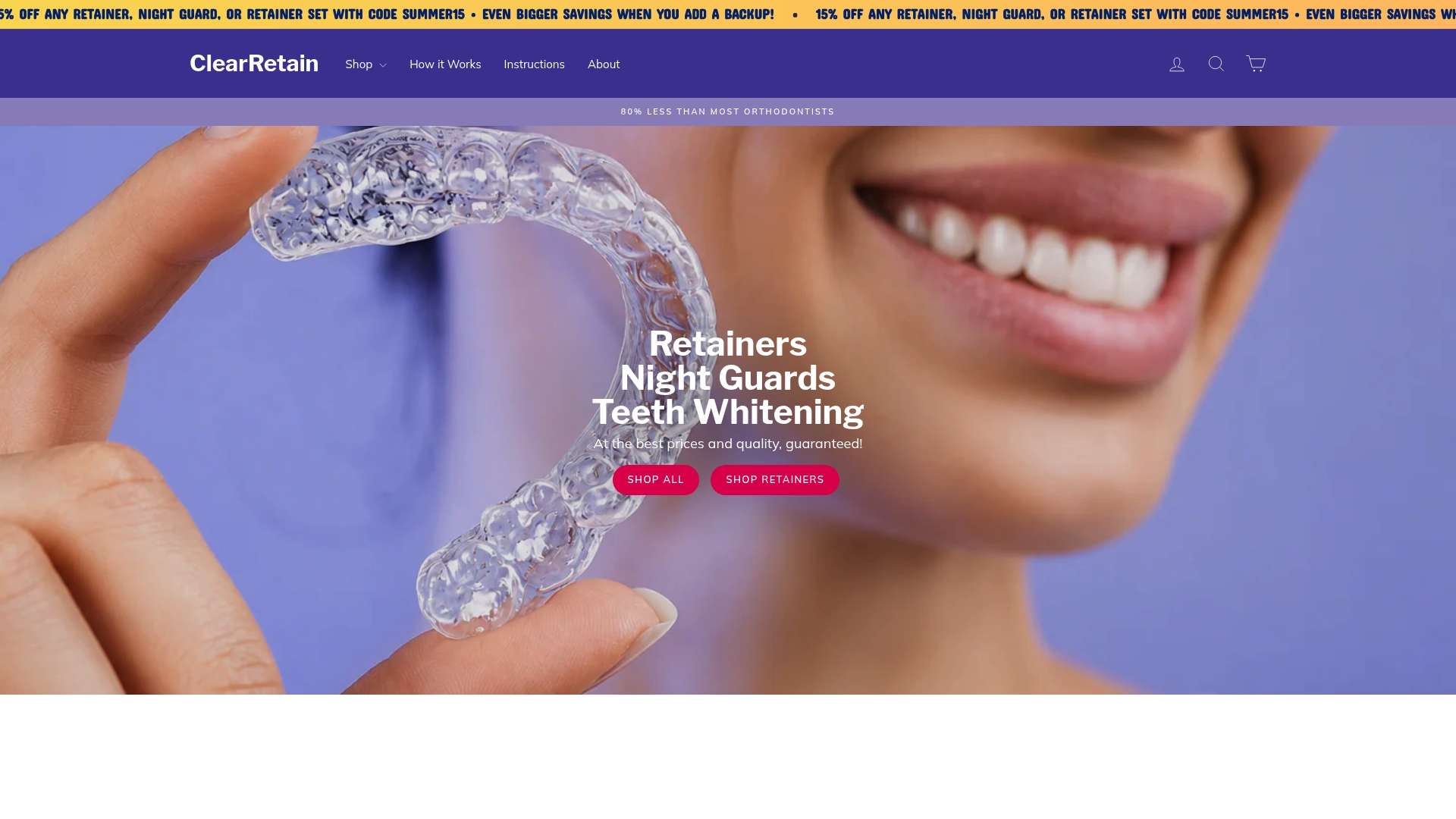
For complete coverage, the upper and lower retainer set combines both arches with premium materials designed for durability and consistent pressure distribution. If your current retainer is warped, cracked, or simply no longer seating comfortably, replacing it with a properly fitted device is the fastest way to bring tightness back to a manageable level. Clearretain’s customer support team is available to guide you through the process from impression to delivery.
FAQ
Why do retainers feel tight in the morning?
Teeth drift slightly overnight due to periodontal ligament tension. Morning insertion applies pressure to move them back, which is why the retainer feels snugger at the start of the day than at the end.
Is it normal for a retainer to feel tight after one missed night?
Yes. Even a single skipped night allows micro-movement that increases pressure on reinsertion. Consistent daily wear keeps this tightness minimal and predictable.
How long does retainer tightness last after a break?
Mild tightness from a short break typically eases within two to four days of consistent wear. Tightness that persists beyond 14 days despite regular use warrants a professional evaluation.
Can a tight retainer move teeth back into place?
A retainer can correct very minor drift if worn consistently after a short break. It is not designed to move teeth the way braces or aligners do. Significant relapse requires a new orthodontic appliance.
When should I stop wearing a tight retainer?
Stop wearing it if it causes sharp pain, will not fully seat, or shows visible damage like cracks or bent wires. Forcing an ill-fitting retainer can cause gum recession and worsen alignment issues.
Key takeaways
Retainer tightness is a normal, expected sign that the device is actively resisting tooth movement. Ignoring it or stopping wear makes the problem significantly worse.
| Point | Details |
|---|---|
| Tightness signals function | A snug retainer is applying the pressure needed to prevent teeth from shifting back. |
| Breaks cause extra pressure | Even one skipped night allows tooth drift that increases tightness on reinsertion. |
| Sharp pain needs attention | Dull pressure is normal; sharp pain, incomplete seating, or soreness beyond 14 days requires professional evaluation. |
| Home relief works for mild cases | Warm compresses, soft foods, and consistent wear resolve most adjustment discomfort within a few days. |
| Material and fit matter | Warped or damaged retainers distribute pressure unevenly; replacing them on schedule prevents avoidable discomfort. |