



What Is a Distal Retainer Extension? A Clear Guide
What is a distal retainer extension in orthodontics?
A distal retainer extension is the portion of an orthodontic retainer that reaches back to cover the terminal molars, typically the second molars at the rear of the dental arch. Its job is straightforward: keep those back teeth from drifting, tipping, or erupting upward after orthodontic treatment ends.
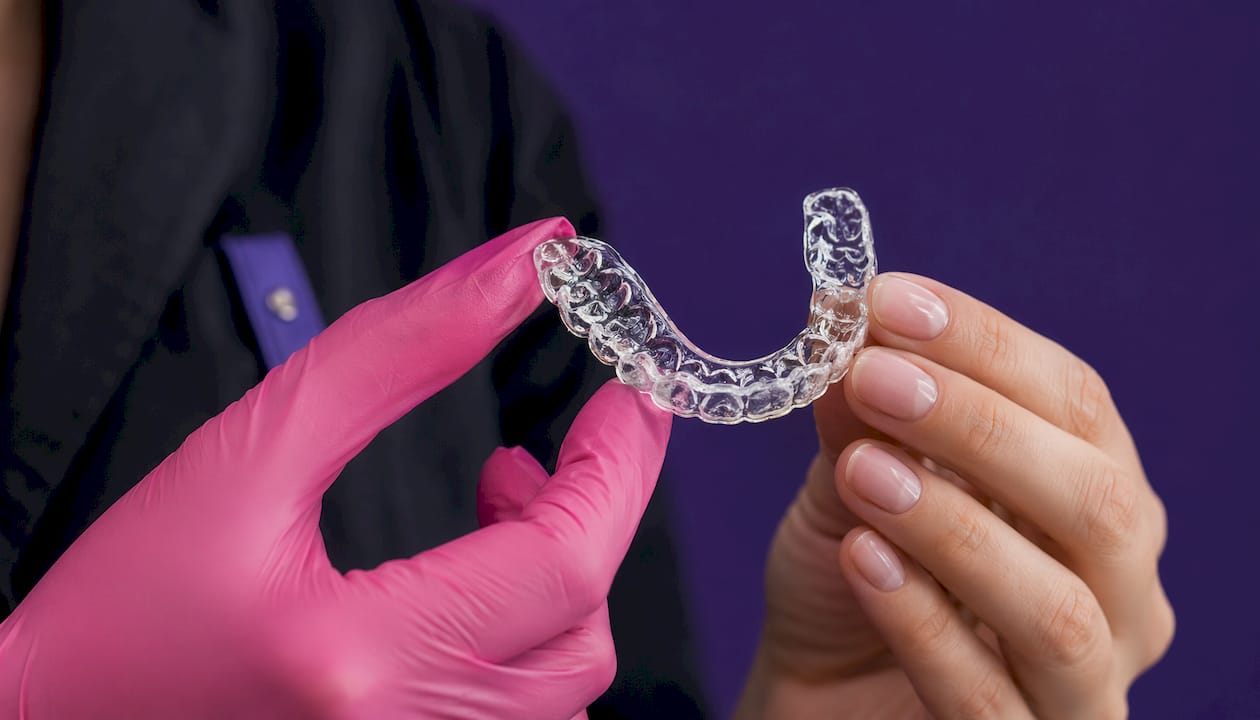
Most people picture a retainer as a wire that runs across the front six teeth. That image is accurate for some designs, but it is incomplete. Many retainers, particularly Hawley-style appliances, extend further back precisely because the posterior teeth need stabilization too.
Key characteristics of a distal retainer extension:
- It covers the terminal molars (usually the second molar) to prevent unwanted movement
- The distal area of the acrylic plate is thinned and contoured so it merges comfortably with the palatal mucosa
- Wire components in some designs, like a modified Begg retainer, wrap around the distal aspect of the last molar
- Extension length varies by treatment plan; not every patient needs coverage to the second molar
- The design is customized based on which teeth were moved during active orthodontic treatment
Why distal extensions matter for long-term orthodontic stability
Skipping posterior coverage is one of the more common reasons orthodontic results unravel over time, which is why understanding why gaps between teeth get fixed cosmetically is important for retaining the stability of the entire dental arch including last molars. Clinical guidelines make clear that retainers omitting distal coverage risk relapse, especially when posterior teeth were repositioned during treatment.
The back molars face constant pressure from the cheek muscles (the buccinators) and from opposing teeth. Without a retainer that holds them in place, they can tip, rotate, or erupt. Supra-eruption, where a molar drifts upward because its opposing tooth is missing, is a specific risk that distal extensions address directly. A modified wire extension using stainless steel can create an occlusal stop on the terminal molar, physically blocking that upward drift until a prosthetic replacement is placed.
“Regardless of whether there was upper dental expansion or palatal disjunction, the posterior teeth must be retained in this new position, to avoid relapse due to pressure from the buccinator muscles. In this case, retention with acrylic extension partially covering the palatal surface of the teeth is recommended.”
Clinical benefits of including distal extensions:
- Prevents supra-eruption of molars when opposing teeth are absent
- Maintains arch width by resisting buccinator muscle pressure
- Preserves space for future implants or prosthetic work
- Stabilizes extraction sites when premolars were removed during treatment
Common misconceptions patients have about distal extensions
The most persistent myth is that all retainers end at the canines. Canine-to-canine designs do exist and work well for specific cases, but aesthetic-focused retainers that stop short of the posterior teeth lack the coverage needed to stabilize back molars, which can compromise long-term results.
Another common concern is bulk. Patients sometimes feel the distal extension makes the retainer uncomfortable, and that perception drives some to request shorter appliances. The discomfort usually fades within a few days as the mouth adapts. Choosing a shorter retainer to avoid that initial adjustment period can mean undoing months of orthodontic work.
Misunderstanding retainer length is also a frequent error when patients reorder appliances online. Knowing whether your treatment plan included stabilization of the second molars is not optional information; it is the deciding factor in which retainer design you actually need.
Common misconceptions, clarified:
- “All retainers look the same” — Coverage varies significantly based on individual treatment history
- “Distal extensions are only for complex cases” — Any patient whose posterior teeth were moved may need them
- “Bulky means bad” — Slight bulk at the back is a design feature, not a flaw
- “Front teeth are the only relapse risk” — Back molars shift too, often without the patient noticing until bite problems develop
Pro Tip: Before ordering a replacement retainer, pull out your original treatment records or ask your orthodontist whether your plan included posterior molar coverage. That single detail determines whether a canine-to-canine design is safe for you.
How orthodontic distal extensions differ from prosthodontic ones
The term “distal extension” appears in two very different dental contexts, and mixing them up leads to real confusion, especially when talking to different specialists.
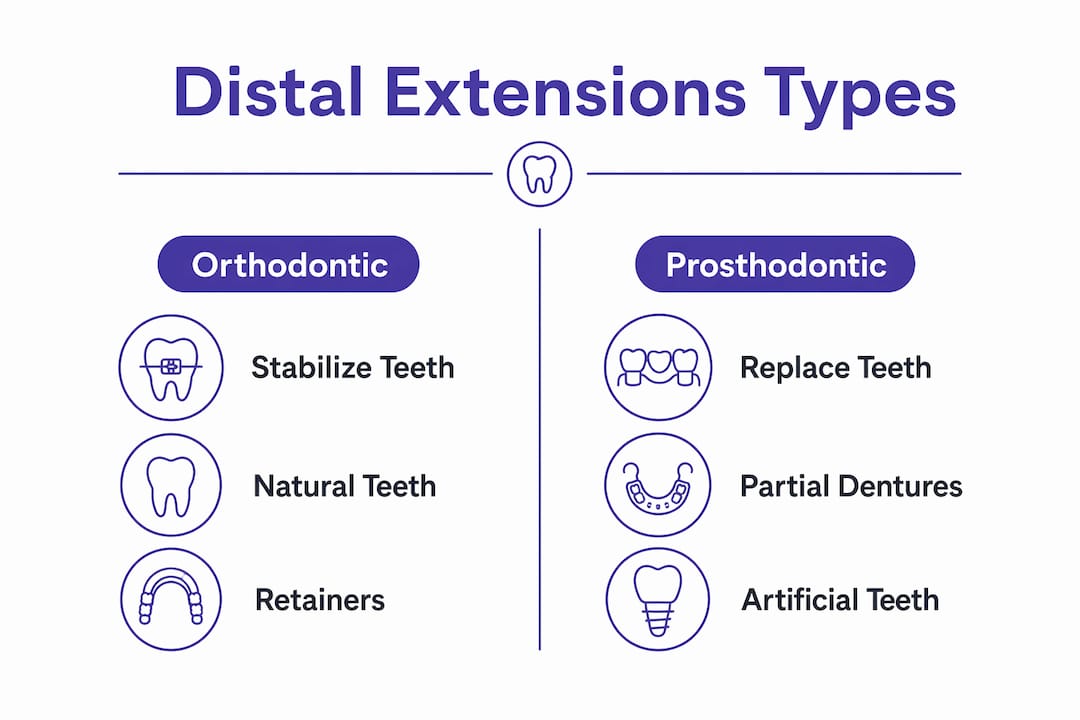
In prosthodontics, a distal extension refers to a removable partial denture base that replaces missing back teeth where no abutment tooth exists behind the gap. Because there is no tooth at the end of the arch to anchor the denture, the appliance tends to rotate away from the tissue under load. Indirect retainers are placed on the opposite side of the arch to counteract that rotation through lever action. The mechanics are complex and entirely different from orthodontic retention.
In orthodontics, a distal retainer extension stabilizes natural teeth that are already present. There is no missing tooth, no free-end saddle, and no rotational dislodgment problem. The extension simply holds existing molars in their corrected positions.
Key distinctions at a glance:
| Feature | Orthodontic distal extension | Prosthodontic distal extension |
|---|---|---|
| Purpose | Stabilize natural molars | Replace missing posterior teeth |
| Teeth involved | Present, corrected teeth | Absent teeth (edentulous ridge) |
| Retention need | Holds teeth in position | Requires indirect retainers for leverage |
| Appliance type | Retainer (Hawley, Begg, etc.) | Removable partial denture |
If your dentist mentions a “distal extension” and you are not sure which context applies, ask directly whether they mean a retainer for existing teeth or a denture base for missing ones. The types of dental retainers available online are orthodontic appliances, not prosthodontic ones.
What online retainer buyers need to know about distal extensions
Buying a retainer online is genuinely convenient and far more affordable than going through a dental office. Clearretain customers save up to 80% compared to standard orthodontic prices, using FDA-approved materials made under the supervision of experienced orthodontic technicians. But that convenience only pays off when you order the right appliance.
The most common mistake direct-to-consumer buyers make is choosing a canine-to-canine retainer when their treatment plan required posterior coverage. Failing to capture terminal molars in your impression, or selecting a design that stops at the canines, risks relapse and unwanted tooth movement in the back of the arch. Clearretain’s self-impression kits are designed to capture the full arch, including the terminal molars, so the lab has what it needs to fabricate the correct coverage.
Key considerations before ordering:
- Check your original retainer to see how far back it extends
- Review your treatment summary for any notes on posterior tooth movement
- Choose full-arch impressions so distal coverage can be built in if needed
- Ask about material options — acrylic and wire combinations support distal extensions better than thin clear aligners in some cases
Clearretain’s clear upper retainer and clear lower retainer are built for full-arch coverage, and the ordering process is designed to make that easy. For patients who need a partial denture rather than an orthodontic retainer, the upper partial denture retainer is a separate product entirely, reflecting the distinction covered earlier.
Pro Tip: If you are unsure whether your retainer should include distal coverage, a quick call or message to your original orthodontist is worth it. Most offices will confirm your treatment details at no charge.

Caring for a retainer with distal extensions
Distal extensions add a small amount of surface area to the retainer, and that extra coverage at the back of the mouth is exactly where food debris and bacteria tend to collect. Cleaning the full length of the appliance matters more than most patients realize.
Rinse the retainer under cool water immediately after removing it. Brush the entire surface, including the distal extension area, with a soft toothbrush and non-abrasive soap. Avoid hot water, which can warp the acrylic and distort the distal fit. Soaking in a retainer-specific cleaning tablet a few times per week keeps odor and buildup under control.
The distal extension itself can become a pressure point if the retainer warps or if the acrylic thins unevenly over time. Check periodically that the back of the retainer still sits flush against the palate without rocking. A retainer that lifts at the distal end is no longer doing its job, and long-term stability depends on consistent, proper fit throughout the appliance.
Key Takeaways
A distal retainer extension is the clinically necessary portion of a retainer that stabilizes terminal molars, and skipping it when your treatment plan requires it is the most common cause of posterior relapse.
| Point | Details |
|---|---|
| Definition | A distal retainer extension covers the terminal molars to prevent movement and supra-eruption. |
| Clinical necessity | Retainers that omit distal coverage risk relapse, especially when posterior teeth were moved during treatment. |
| Prosthodontic distinction | Orthodontic distal extensions stabilize natural teeth; prosthodontic ones replace missing posterior teeth with different mechanics. |
| Online buying risk | Choosing a canine-to-canine retainer without checking your treatment plan can cause unwanted tooth movement in the back arch. |
| Maintenance | Clean the full retainer length including the distal extension, and replace the appliance if it lifts or rocks at the back. |