


Clear Removable Appliance: A Complete Patient Guide
A clear removable appliance is a transparent, custom-fitted orthodontic device worn over the teeth to move them gradually or hold them in place after treatment. The industry standard term is “clear aligner” for active tooth movement and “clear retainer” for post-treatment stability, though both fall under the broader category of removable orthodontic appliances. These devices combine a nearly invisible appearance with the freedom to remove them for eating, brushing, and flossing. For parents and patients weighing orthodontic options, understanding how these appliances work, what types exist, and what they demand from you is the most practical place to start.
What is a clear removable appliance and what types are available?
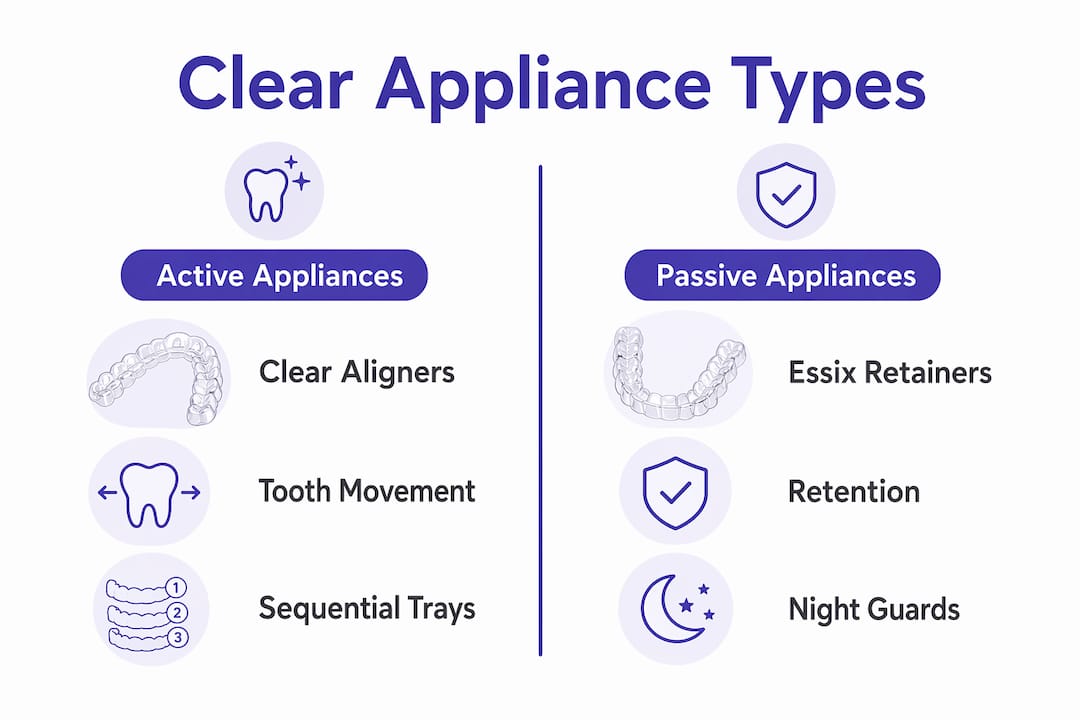
Clear removable appliances divide into two main categories: active and passive. Active appliances, commonly called clear aligners, apply controlled force to move teeth into a new position. Passive appliances, such as Essix retainers, hold teeth in their corrected position after active treatment ends. Both are made from BPA-free, medical-grade plastic that fits snugly over the teeth and can be removed for meals and oral hygiene.
Beyond aligners and retainers, the category also includes night guards. Night guards are clear removable appliances worn during sleep to protect teeth from grinding and clenching, a condition called bruxism. Functional appliances for jaw growth correction in children represent a fourth type, though these are less common and typically prescribed by a specialist orthodontist.
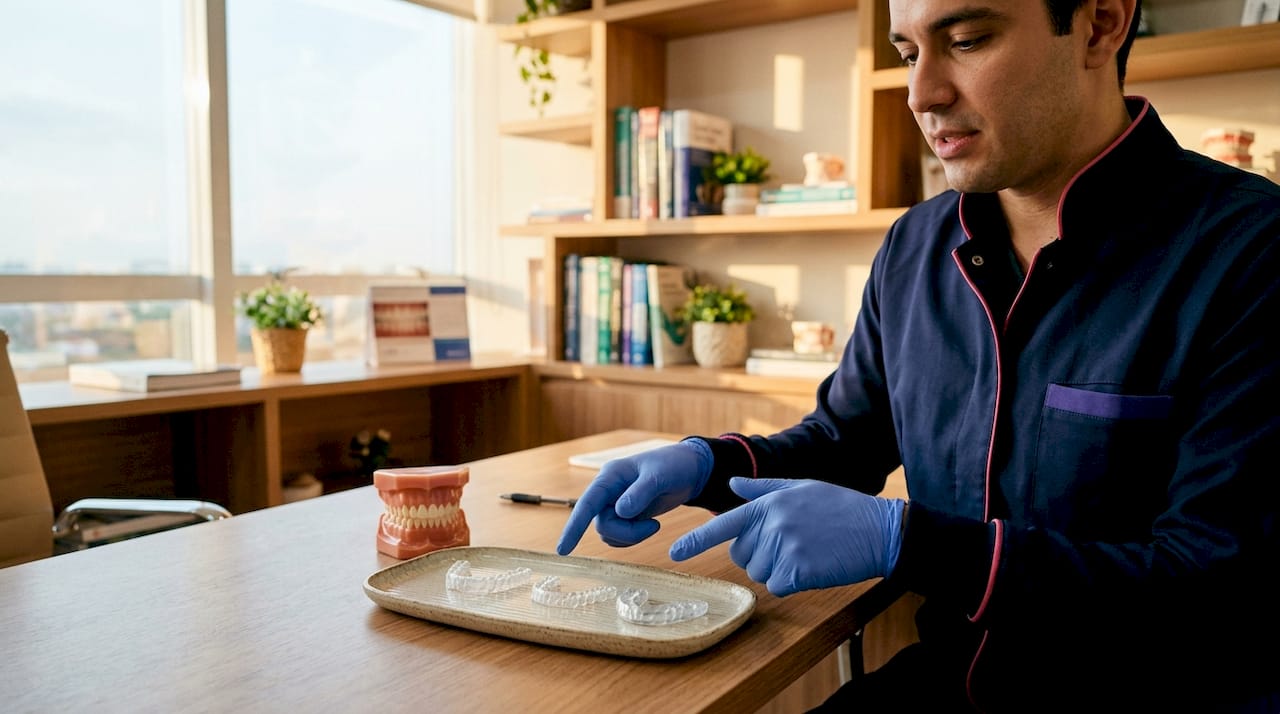
The table below summarizes the main types, their purpose, and typical use case.
| Appliance type | Primary purpose | Typical patient |
|---|---|---|
| Clear aligner | Active tooth movement | Mild to moderate crowding or spacing |
| Essix retainer | Post-treatment stability | Completed orthodontic patients |
| Night guard | Bruxism protection | Teeth grinders, jaw pain sufferers |
| Functional appliance | Jaw growth correction | Growing children with skeletal issues |
Essix retainers are the most widely used clear retainer type. They are preferred over Hawley retainers for their invisibility and comfort, and their BPA-free plastic construction makes them durable and stain-resistant. Patients can eat normally with all of these devices because they are removed before meals.
How do clear removable appliances work to move or retain teeth?
Clear aligners move teeth through a series of sequential plastic trays, each slightly different from the last. Each tray applies a small, controlled force to specific teeth, nudging them toward the target position. When that tray has done its job, typically after 7–14 days, the patient switches to the next one in the series. An international consensus from 2025 confirmed 87% expert agreement on this tray change interval.
The force comes from the shape of the tray itself. The tray is fabricated to a position slightly ahead of where your teeth currently sit. Your teeth resist, and that resistance creates the movement force. This is biomechanically different from fixed braces, which use wires and brackets to apply continuous force around the clock.
Wearing time is the single biggest variable in whether clear aligners work. The required wear time is 20–22 hours per day, leaving only 2–4 hours for eating and oral hygiene. Falling short of this consistently will slow treatment or produce poor results.
Here is the basic sequence of how a clear aligner treatment works:
- Your orthodontist takes impressions or digital scans of your teeth.
- A treatment plan is mapped out using software showing each planned tooth movement.
- A full series of custom trays is fabricated.
- You wear each tray for the prescribed interval, then advance to the next.
- You attend follow-up appointments so your orthodontist can verify progress.
- Active treatment ends and you transition to a retainer to hold results.
Pro Tip: Set a daily phone alarm as a reminder to reinsert your tray after meals. Patients who track their wear time consistently report better outcomes and fewer extended treatment timelines.
Clear removable appliances vs. traditional braces: benefits and limits
Clear removable appliances deliver measurable clinical advantages over fixed braces in specific areas. Meta-analyses show better periodontal health, including lower plaque scores and healthier gum tissue, in patients using clear aligners compared to those in fixed braces. The reason is straightforward: you can remove the tray to brush and floss normally, so plaque does not accumulate around brackets and wires.
Pain is another area where clear appliances win. Patients report less irritation and pain in the first month of treatment compared to fixed braces. This comfort advantage drives early compliance and patient satisfaction. For teenagers especially, a less painful start makes a real difference in whether they stick with treatment.
The aesthetic benefit is significant. Clear aligners are nearly invisible in daily life, which matters to adults and self-conscious teens. Dietary freedom is also real: you remove the tray before eating, so there are no food restrictions.
The limitations are equally real and worth knowing before you commit. Clear aligners excel at crown tipping and mild crowding but struggle with complex tooth movements. Severe rotations, large vertical movements, and skeletal corrections typically require fixed braces or surgical intervention. An international expert consensus in 2025 found 91% agreement that clear aligners are best suited for mild to moderate malocclusion and Class I non-extraction cases.
Auxiliary attachments, small tooth-colored buttons bonded to the teeth, can improve biomechanical control for harder movements. However, these attachments reduce the invisible appearance that many patients expect. Your orthodontist should discuss this possibility before treatment begins.
The table below compares key clinical factors between clear removable appliances and fixed braces.
| Factor | Clear removable appliances | Fixed braces |
|---|---|---|
| Aesthetics | Nearly invisible | Visible metal or ceramic |
| Oral hygiene | Normal brushing and flossing | Restricted by brackets and wires |
| Pain level | Lower, especially early in treatment | Higher, particularly after adjustments |
| Complex cases | Limited effectiveness | Better suited |
| Dietary restrictions | None (remove to eat) | Multiple restrictions |
| Patient compliance required | High (20–22 hours daily wear) | Low (fixed in place) |
Removability is genuinely a double-edged situation. The freedom it provides is also the responsibility it demands. Experts note that compliance is the critical variable separating good outcomes from poor ones.
How to care for and maintain your clear removable appliance
Cleaning your appliance before reinserting it is not optional. Trapping food sugars or acids against your enamel under a tight-fitting tray accelerates decay significantly. Improper hygiene practices increase the risk for rapid enamel damage and staining, making a consistent cleaning routine the most protective habit you can build.
Follow these steps to keep your appliance clean and your teeth healthy:
- Rinse your tray with cool water every time you remove it.
- Brush the tray gently with a soft toothbrush and mild, clear dish soap. Avoid toothpaste, which is abrasive and will scratch the plastic.
- Soak the tray daily in a retainer cleaning solution or diluted white vinegar for 15–20 minutes to prevent bacterial buildup.
- Never use hot water. Heat warps the plastic and destroys the custom fit.
- Store the tray in its case when not in your mouth. Wrapped in a napkin, it ends up in the trash more often than you would expect.
- Avoid leaving the tray in direct sunlight or a hot car.
Plaque control around your teeth matters just as much as cleaning the tray. Using a plaque-removing mouthwash as part of your daily routine adds a layer of protection, especially for patients wearing trays for extended periods.
Pro Tip: Keep a travel toothbrush, floss, and a small tray case in your bag or backpack. Brushing after lunch before reinserting your tray takes two minutes and prevents the majority of staining and decay issues patients encounter.
What to expect during treatment and key patient considerations
Treatment timelines for clear aligner therapy typically run 12–18 months, though mild cases can finish faster and complex ones take longer. Tray changes happen every 7–14 days depending on your plan. Follow-up visits with your orthodontist are scheduled every 6–10 weeks to confirm teeth are tracking correctly.
The first few days with a new tray feel tight and slightly uncomfortable. This is normal and signals that the tray is working. The discomfort fades within 48–72 hours as your teeth adjust. Patients who have worn fixed braces describe the pressure as noticeably milder.
Key things to keep in mind throughout treatment:
- Non-compliance directly impacts results. Skipping wear time does not just slow treatment. It can cause teeth to drift back and require additional trays.
- Speech may be slightly affected in the first week. Most patients adapt quickly.
- Attachments, if prescribed, may be noticeable up close. Ask your orthodontist which movements require them.
- Retainers are not optional after active treatment ends. Teeth move back without them.
- Contact your orthodontist if a tray cracks, feels dramatically different from expected, or if you notice unexpected tooth movement.
Oral health-related quality of life improves significantly with clear removable appliances during treatment, particularly because of their comfort and aesthetics. That improvement is most pronounced when patients follow the protocol consistently.
Key Takeaways
Clear removable appliances work best when patients commit to the wear schedule, maintain strict oral hygiene, and choose the right appliance type for their clinical needs.
| Point | Details |
|---|---|
| Two main categories | Active aligners move teeth; passive retainers hold them after treatment ends. |
| Wear time is non-negotiable | 20–22 hours of daily wear is required for clear aligners to deliver results. |
| Hygiene advantage is real | Removability allows normal brushing and flossing, producing better periodontal health than fixed braces. |
| Complex cases have limits | Clear aligners work best for mild to moderate malocclusion; severe cases need fixed braces. |
| Maintenance protects your investment | Clean trays before reinsertion and store them in a case to prevent damage and decay. |
What I have learned from watching patients use clear appliances
The biggest predictor of success with clear removable appliances is not the technology. It is the patient. I have seen well-designed treatment plans fail because someone consistently wore their tray for 16 hours instead of 22. I have also seen patients with genuinely complex cases get excellent results because they were meticulous about every step.
What the research confirms, and what I observe consistently, is that the comfort advantage is most impactful in the first month. Patients who get through that initial period without the pain they feared from braces become believers in the process. That early buy-in translates into better long-term compliance.
The part most articles skip is patient education on hygiene. Handing someone a set of trays without a thorough conversation about cleaning, storage, and what happens when they skip wear time is a setup for disappointment. Clear appliances are a partnership between the device and the person wearing it.
Not every patient is a candidate, and that matters. Pushing clear aligners onto a case that needs fixed braces does not serve the patient. The 2025 expert consensus is clear on this: case selection is where outcomes are won or lost, not in the brand of tray. If your orthodontist recommends fixed braces for your situation, that recommendation deserves respect.
— Clear
Clearretain’s clear retainers and night guards
Clearretain provides custom-fit, BPA-free clear retainers and night guards at a fraction of the cost of traditional orthodontic offices. Their direct-to-consumer model eliminates office visit markups, and the self-impression kit makes ordering from home straightforward.
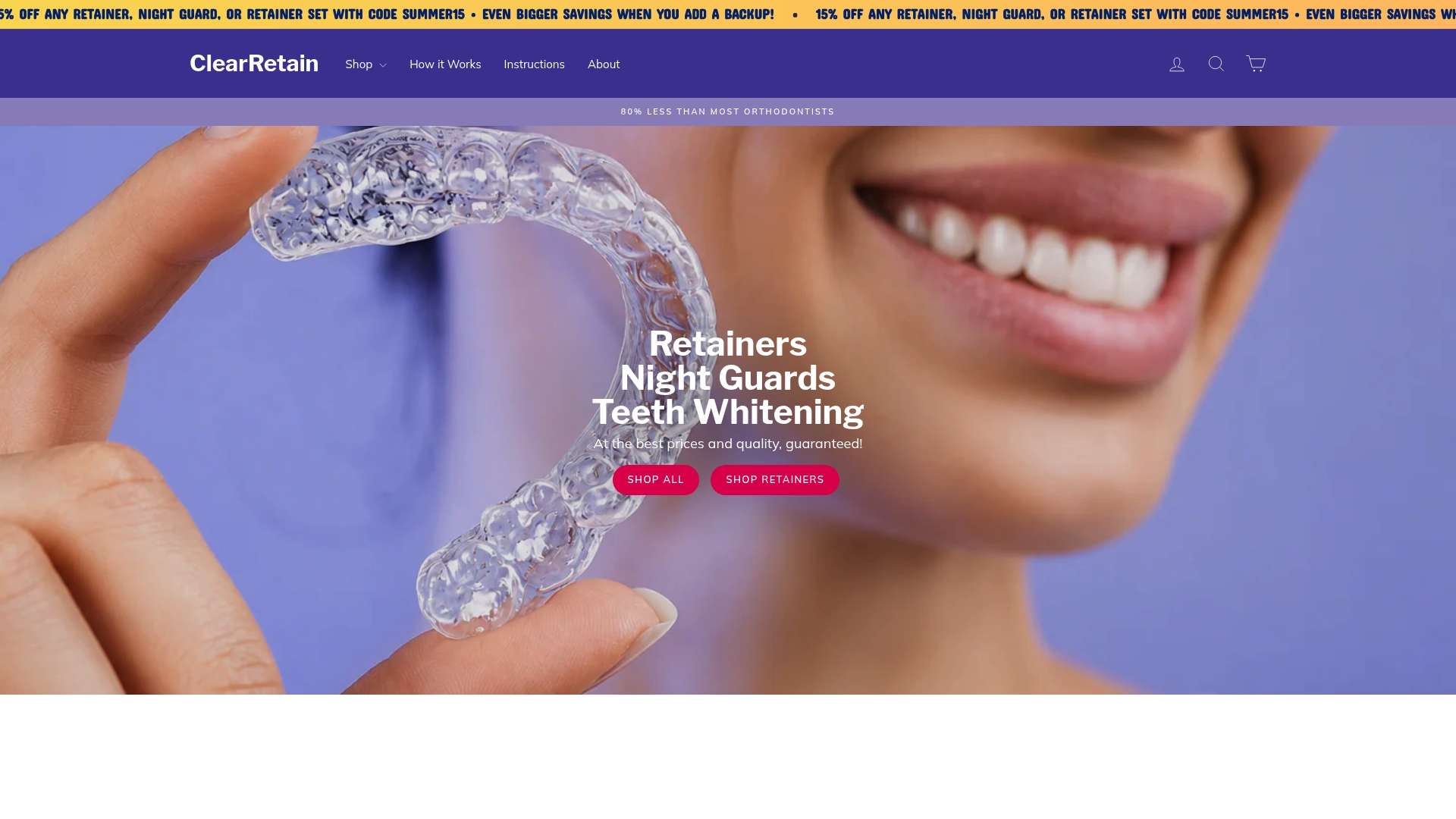
Whether you need an upper retainer, a lower retainer, or a complete upper and lower retainer set, Clearretain’s products are made under the supervision of experienced orthodontic technicians using FDA-approved materials. Patients report savings of up to 80% compared to standard orthodontic pricing. For those who also grind their teeth, Clearretain’s custom night guards offer the same quality and fit in a protective appliance built for overnight wear.
FAQ
What is a clear removable appliance used for?
A clear removable appliance is used either to move teeth gradually through a series of custom trays (clear aligners) or to hold teeth in position after orthodontic treatment (clear retainers and Essix retainers). Night guards are a third type, used to protect teeth from grinding during sleep.
Can I eat with clear aligners in?
No. Clear aligners must be removed before eating or drinking anything other than plain water. Eating with trays in can crack the plastic and trap food against your teeth, increasing decay risk.
How long does clear aligner treatment take?
Treatment typically lasts 12–18 months, depending on case complexity and patient compliance. Mild cases can finish in less time, while more involved tooth movements extend the timeline.
Are clear removable appliances as effective as fixed braces?
Clear aligners are equally effective for mild to moderate malocclusion and Class I non-extraction cases. For complex movements, severe rotations, or skeletal corrections, fixed braces deliver better clinical control.
How do I clean a clear removable appliance?
Rinse the tray with cool water after removal, brush it with a soft toothbrush and mild clear soap, and soak it daily in a retainer cleaning solution. Never use hot water or abrasive toothpaste, as both damage the plastic and compromise the fit.