

Long-Term Retainer Plan: What You Need to Know
A long-term retainer plan is a structured, lifelong orthodontic strategy designed to keep your teeth in their corrected positions after braces or aligner treatment ends. Teeth shift throughout life due to biological forces that never fully stop, making retention a permanent necessity rather than a temporary phase. Standard guidelines call for an initial intensive wear period followed by indefinite nighttime use. Without this ongoing commitment, even perfectly aligned teeth will drift. Understanding what a long-term retainer plan involves, and what it costs to maintain one, is the first step toward protecting your orthodontic results for good.
What is a long-term retainer plan and how is it structured?
A long-term retainer plan is an ongoing retention program with two distinct phases: an intensive initial period and a permanent maintenance phase. Both phases are necessary. Skipping either one puts your results at risk.
The initial wear phase
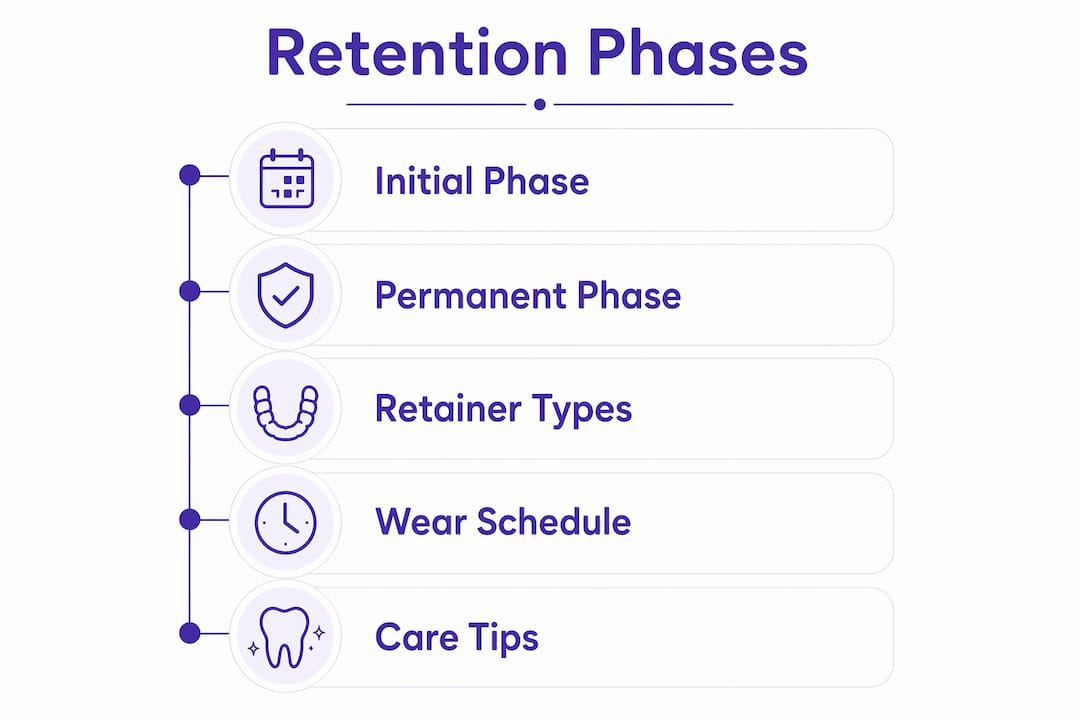
Standard orthodontic guidelines call for wearing your retainer 22 hours per day during the first 3–12 months after treatment. This phase is the most critical because the bone and periodontal fibers surrounding your teeth are still consolidating around their new positions. The most critical window is the first 3–6 months, when supporting tissues are actively hardening. Reducing wear time too early during this phase is the single most common reason teeth shift back.
The permanent maintenance phase
After the initial phase, retention becomes lifelong but far more manageable. Most patients transition to nightly wear only, which they continue indefinitely. This is not an exaggeration or an overly cautious recommendation. Teeth face continuous displacement forces from chewing, speaking, and natural aging, and no biological endpoint exists where those forces stop.
| Phase | Wear Requirement | Typical Duration |
|---|---|---|
| Initial intensive phase | 22 hours per day | 3–12 months |
| Transition phase | Nights plus some daytime | 1–3 months |
| Permanent maintenance | Nightly wear only | Indefinite, lifelong |
Pro Tip: Set a phone alarm labeled “retainer in” for 9 PM every night. Patients who build nightly wear into a consistent bedtime routine report far fewer missed nights than those who rely on memory alone.
What types of retainers are used in long-term plans?
The types of retainers used in long-term plans fall into two broad categories: fixed (bonded) retainers and removable retainers. Each has distinct advantages, and many patients use both at the same time.
Fixed retainers
A fixed retainer is a thin wire bonded directly to the back surfaces of your front teeth by your orthodontist. You cannot remove it yourself. Fixed retainers provide stable tooth position with minimal measurable movement over 24 months, making them an excellent choice for patients at high relapse risk. The trade-off is that they require professional monitoring and can be harder to clean around. A broken or loose bond can go unnoticed and allow teeth to shift without warning.
Removable retainers
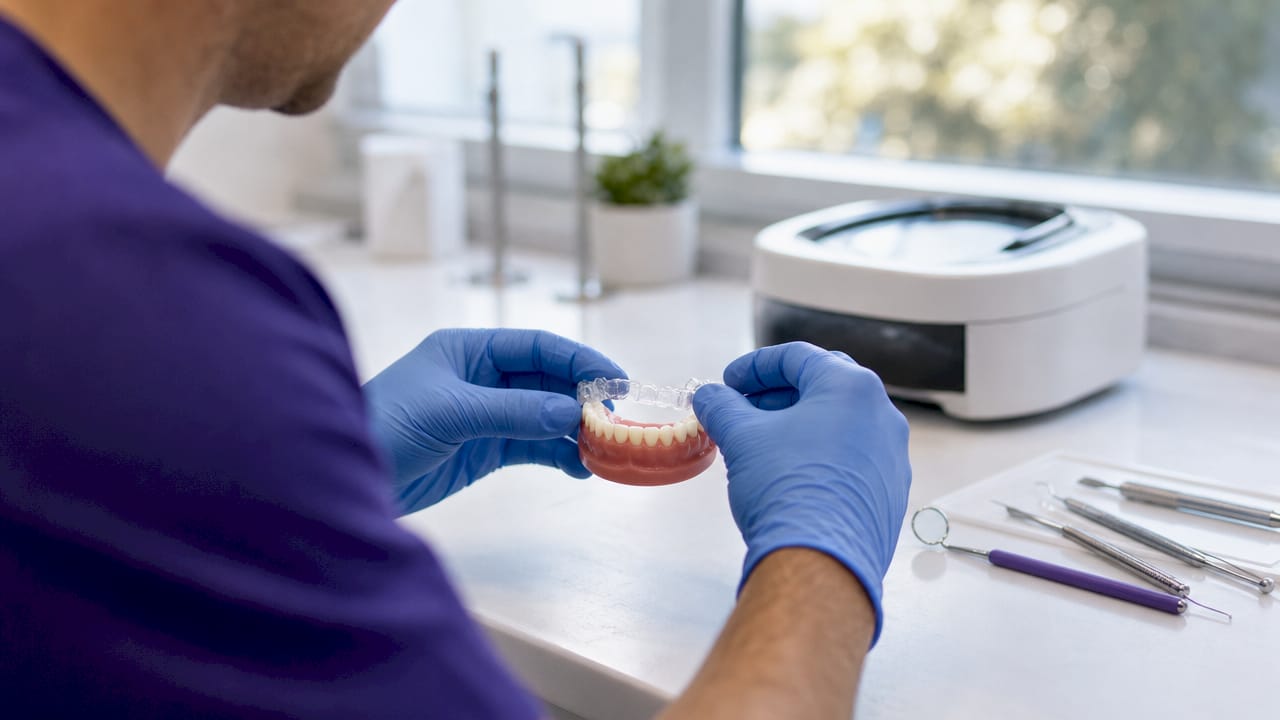
Removable retainers come in two main styles. Essix retainers are clear plastic trays that fit over your teeth, similar in appearance to aligners. Hawley retainers use an acrylic plate with a wire that runs across the front teeth. Both types work well for long-term maintenance, but removable retainers last only 2–5 years on average before they need replacement. That lifespan shortens with poor cleaning habits or frequent dropping.
| Retainer type | Removable | Avg. lifespan | Key care requirement |
|---|---|---|---|
| Fixed (bonded) wire | No | Many years with monitoring | Professional check every 6–12 months |
| Essix (clear tray) | Yes | 2–5 years | Daily cleaning, avoid heat |
| Hawley (wire and acrylic) | Yes | 2–5 years | Daily cleaning, store in case |
Key factors that influence which type your provider recommends:
- Relapse risk: Patients with a history of crowding often benefit from fixed retainers on the lower arch.
- Compliance history: Patients who struggled with aligner wear often do better with a bonded option.
- Budget: Removable retainers ordered directly are significantly less expensive than in-office fabrication.
- Lifestyle: Athletes or people who grind their teeth may need a night guard alongside their retainer.
Pro Tip: Ask your provider about clear retainer benefits before committing to one type. Many patients find that a fixed lower retainer combined with a removable upper retainer covers the highest-risk areas while keeping daily maintenance simple.
What happens if you stop wearing your retainer?
Stopping retainer wear early is the leading cause of orthodontic relapse. Discontinuing use after only 2–3 years significantly raises the risk of noticeable crowding by your mid-30s or 40s. The shift does not happen overnight, which is exactly why so many patients underestimate the risk.
Teeth move because of forces that never stop. Periodontal fiber memory, tongue pressure, lip pressure, and the natural forward drift of teeth all push against your alignment every single day. These forces are subtle but relentless. Missing even a few nights of wear causes micro-shifting that accumulates over time and eventually makes your retainer feel tight or impossible to seat fully.
Retention must be viewed as long-term risk management. Teeth are subject to continuous biological forces that no orthodontic treatment can permanently eliminate. Consistent retainer use is the only reliable way to counteract those forces over a lifetime.
Signs that your teeth have already begun to drift:
- Your retainer feels tight or painful when you first put it in after a break.
- You notice small gaps or crowding that were not there before.
- Your retainer no longer seats fully against your teeth.
- You see visible changes in your smile in photos.
If your retainer no longer fits, do not force it in. Wearing an ill-fitting retainer can push teeth in the wrong direction. Contact your dental provider or order a new set of retainers based on your current tooth positions. Catching relapse early is far less costly than repeating orthodontic treatment.
How do you manage a long-term retainer plan effectively?
Effective long-term retention comes down to three things: a consistent wear schedule, proper retainer care, and timely replacement. None of these requires major effort, but all three require attention.
Follow this schedule for professional reviews:
- Three months post-treatment: Confirm the retainer fits correctly and the initial phase is on track.
- Six months post-treatment: Assess tissue consolidation and adjust wear instructions if needed.
- Twelve months post-treatment: Transition review to confirm readiness for nightly-only wear.
- Annually after that: Check for retainer wear, damage, or subtle tooth movement.
For daily care of removable retainers, rinse with cool water every morning after removal. Clean with a soft toothbrush and mild soap, never toothpaste, which is abrasive enough to scratch the plastic and create bacterial buildup. Store your retainer in its case whenever it is not in your mouth. Heat warps plastic retainers, so keep them away from car dashboards, dishwashers, and hot beverages.
Knowing when to replace your retainer is just as important as wearing it. Cracks, discoloration, a persistent bad odor, or a loose fit are all signals that replacement is overdue. Waiting too long to replace a worn retainer is a false economy. A new retainer costs a fraction of retreatment.
Failure of adherence is predictable and preventable when retention is planned from the start of treatment and patients receive clear, practical education. If you travel frequently, pack your retainer case in your carry-on, never in checked luggage. If you shift to a new sleep schedule, adjust your retainer routine to match. The goal is to make nightly wear as automatic as brushing your teeth.
Retention is not optional: my honest take
Most patients I speak with think of their retainer as a temporary accessory, something to wear for a year or two and then quietly set aside. That misconception is the single biggest driver of orthodontic relapse I see.
The biology is not negotiable. Teeth displace throughout life because of forces that exist in every human mouth, regardless of age or treatment history. A retainer does not fix that biology. It manages it. The moment you stop managing it, the forces resume their work.
What I have found actually works is combining a fixed retainer on the lower arch with a removable clear retainer on the upper arch. This combination covers the highest-risk areas while keeping the daily routine simple enough to sustain for decades. Patients who start with this dual approach from day one show far better long-term outcomes than those who rely on a single removable retainer alone.
The other thing worth saying plainly: the cost of a replacement retainer is trivial compared to the cost of repeat orthodontic treatment. Viewing your retainer as insurance for your smile is not a metaphor. It is an accurate description of the financial math. Protect the investment you already made.
— Clear
Clearretain makes long-term retention simple and affordable
Maintaining your smile for life should not require expensive office visits every time you need a replacement retainer.
Clearretain offers upper and lower retainer sets made from FDA-approved materials, fabricated under the supervision of experienced orthodontic technicians, and delivered directly to your door at up to 80% less than traditional orthodontic office pricing. The ordering process uses a detailed self-impression kit, so you get a precise fit without a clinic appointment. Clearretain also carries night guards for patients who grind their teeth, and a tooth whitening serum designed to work alongside your retainer. When replacement time comes, reordering is fast and straightforward.
FAQ
What is a long-term retainer plan?
A long-term retainer plan is a structured orthodontic retention program that begins with intensive full-time wear after treatment and transitions to indefinite nightly use. Its purpose is to prevent teeth from shifting back due to the biological forces that act on teeth throughout life.
How long do you actually have to wear a retainer?
Retention is lifelong, but the daily commitment decreases significantly after the first year. Most patients wear their retainer only at night after the initial 3–12 month intensive phase.
What happens if I stop wearing my retainer after a few years?
Stopping after 2–3 years significantly raises the risk of visible crowding by your mid-30s or 40s. Teeth continue to face displacement forces throughout life, so early discontinuation leads to gradual but measurable relapse.
How often should I replace my removable retainer?
Removable retainers last 2–5 years on average, depending on how well they are cleaned and stored. Replace yours sooner if you notice cracks, persistent odor, discoloration, or a loose fit.
Can I use a fixed and removable retainer at the same time?
Yes, and many orthodontists recommend this combination. A fixed bonded wire on the lower arch provides constant stability, while a removable clear retainer on the upper arch handles nightly maintenance and is easy to replace when worn.
Key Takeaways
A long-term retainer plan is a permanent, two-phase retention strategy that protects your orthodontic results by managing the biological forces that shift teeth throughout life.
| Point | Details |
|---|---|
| Retention is lifelong | Teeth shift due to forces that never stop, making nightly retainer wear a permanent requirement. |
| Two-phase structure | Start with 22 hours of daily wear for 3–12 months, then transition to nightly use indefinitely. |
| Retainer type matters | Fixed retainers offer constant stability; removable retainers need replacement every 2–5 years. |
| Stopping early causes relapse | Discontinuing wear after 2–3 years significantly raises the risk of visible crowding by your 30s or 40s. |
| Replace on schedule | Watch for cracks, odor, or a loose fit, and replace your retainer before it fails to protect your alignment. |