

The Role of Retention in Smile Preservation
Retention is defined as the phase of orthodontic care that holds teeth in their corrected positions after active treatment ends, and it is the single most critical factor in long-term smile preservation. Without consistent retention, teeth revert toward their original positions through a process called relapse. Research shows that approximately 70% of orthodontic patients experience some degree of relapse, with stable alignment dropping to just 10% after 20 years. That number tells you something important: finishing braces or aligners is not the finish line. Retention is where the real work of keeping your smile begins.
What is the role of retention in smile preservation?
Retention preserves the results of orthodontic treatment by stabilizing teeth against the biological forces that constantly push them back toward their original positions. The periodontal ligament, the fibrous tissue connecting each tooth to the surrounding bone, has a strong memory. After teeth are moved, those fibers remain stretched and pull the teeth back unless a retainer holds them in place long enough for the bone to fully remodel around the new position.
Biological tooth movement begins within hours of stopping retainer wear. Visible changes appear within 4–12 weeks, and significant relapse can occur within one year. This is not a slow, forgiving process. It is fast and largely invisible until the damage is done.
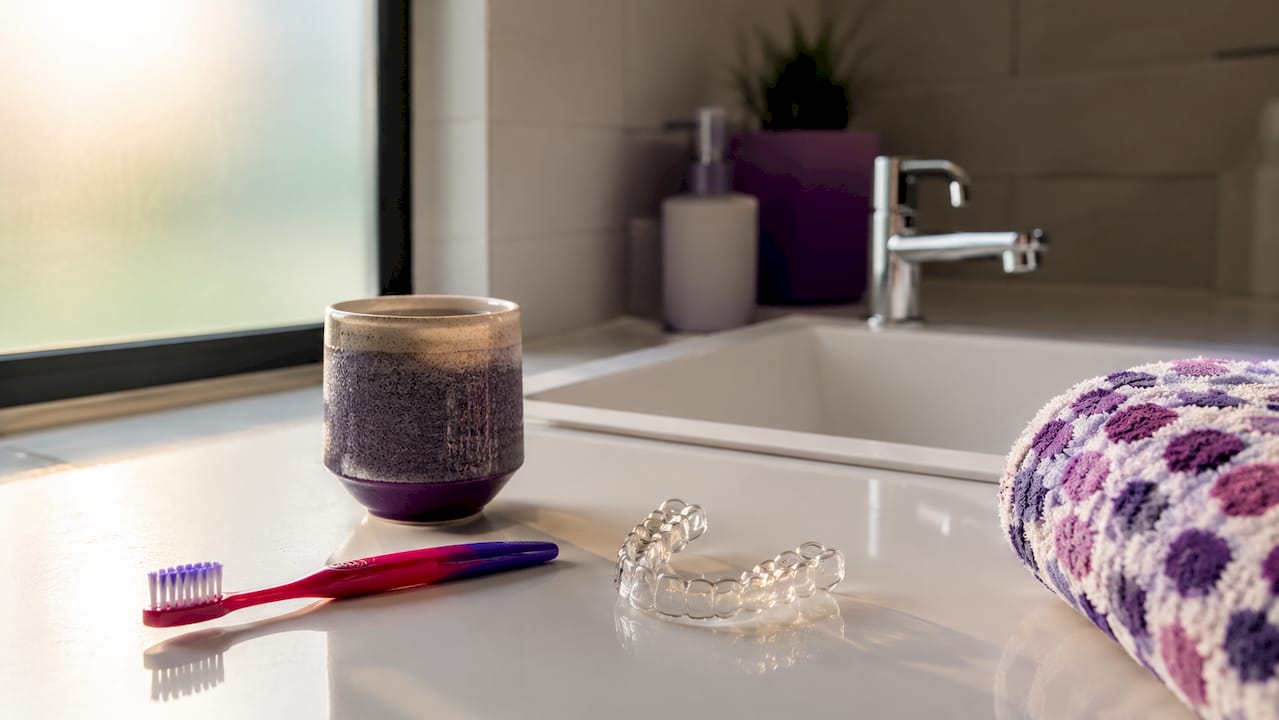
Retention also protects more than your smile’s appearance. Retainers maintain bite stability and jaw function, helping prevent TMJ disorders and uneven tooth wear over time. The importance of dental retention extends well beyond aesthetics. It is a functional health commitment.
Why do teeth shift after treatment?
Teeth shift after orthodontic treatment because of three overlapping biological forces: periodontal ligament memory, ongoing bone remodeling, and natural craniofacial growth. Each one works against your corrected alignment independently, and together they make relapse nearly inevitable without retention.
The periodontal ligament is the primary driver in the short term. Its fibers were compressed or stretched during tooth movement and want to return to their original orientation. Bone remodeling takes longer, often 12 months or more, to fully solidify around the new tooth positions. During that window, teeth are especially vulnerable.
Age-related late mandibular crowding occurs in most adults independently of whether they ever had orthodontic treatment. This means your lower front teeth will naturally crowd over time as part of aging. Retention does not stop aging, but it does manage its impact on your alignment.
Key biological drivers of relapse include:
- Periodontal ligament memory: Stretched fibers pull teeth back toward their pre-treatment positions.
- Bone remodeling lag: Bone around moved teeth takes months to fully harden into the new position.
- Craniofacial growth: The jaw continues to grow and shift into adulthood, altering tooth positions.
- Muscle pressure: Lips, cheeks, and tongue exert constant force on teeth that can push them out of alignment.
- Natural aging: Mandibular crowding progresses in most adults regardless of prior treatment.
Understanding why teeth shift after braces is the first step toward taking retention seriously. These are not random events. They are predictable biological processes that a well-fitted retainer directly counteracts.
How effective are different types of retainers?
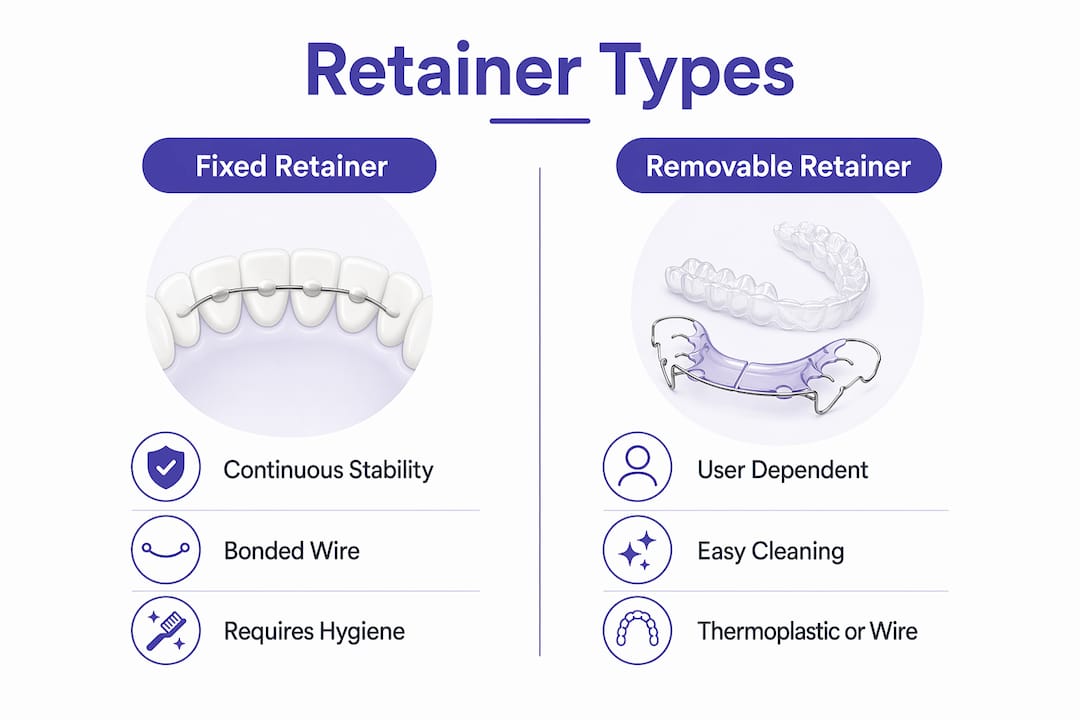
Retainer type matters significantly for both stability and oral health. The two main categories are fixed retainers and removable retainers, and each has a distinct profile of benefits and trade-offs.
A fixed retainer is a thin wire bonded directly to the back of the teeth, usually the lower front six. It works continuously without requiring any action from you. Fixed retainers show superior stability compared to removable options over 12 months, based on a 100-patient clinical study. That stability advantage is real, but it comes with a cost: fixed retainers make flossing harder and are associated with poorer oral hygiene outcomes in the same study.
Removable retainers, including clear thermoplastic retainers and Hawley-style wire retainers, support better oral hygiene because you take them out to brush and floss normally. Their weakness is compliance. If you do not wear them consistently, they do not work. The effectiveness of a removable retainer is entirely dependent on how reliably you use it. For a detailed breakdown of each type, the types of dental retainers guide covers materials, fit, and typical use cases.
| Feature | Fixed retainer | Removable retainer |
|---|---|---|
| Stability | Superior, continuous | Dependent on wear compliance |
| Oral hygiene | More difficult to maintain | Easier, normal brushing and flossing |
| Compliance required | Minimal | High |
| Best for | Lower front teeth, high-relapse risk | Full arch, long-term nighttime use |
| Replacement | Requires professional repair | Can be replaced at home |
Many orthodontists recommend a combination approach: a fixed wire on the lower teeth for continuous stability, paired with a removable clear retainer on the upper arch for hygiene and flexibility. This combination addresses the weaknesses of each type individually.
Pro Tip: If you wear a clear removable retainer, store it in its case every time you remove it. Most retainers are lost or damaged when left on napkins, countertops, or in pockets.
What are the best retention strategies to minimize relapse?
The most protective retention strategy is full-time wear during the first year after treatment. High retainer adherence, with full-time wear transitioning to nighttime use over 1–2 years, is the single most effective factor in preventing relapse across all patient profiles. That transition is not a reward for good behavior. It is a clinically supported protocol.
A practical retention schedule looks like this:
- Months 1–12: Wear your retainer full time, removing it only to eat and brush. This is the highest-risk window for relapse.
- Months 12–24: Transition to nighttime-only wear as directed by your orthodontist. Bone has largely remodeled by this point.
- Year 2 onward: Continue nighttime retainer use indefinitely. Aging and muscle pressure never stop, so retention should not stop either.
- Annual check: Assess retainer fit every year. A retainer that no longer fits correctly is not protecting you.
Personalized retention strategies based on individual risk profiles improve long-term stability, especially for patients with convex facial profiles or specific malocclusions like deep bite or severe crowding. If your orthodontist identified you as high risk, your retention protocol should reflect that with longer full-time wear and more frequent monitoring.
The consequences of inconsistent wear are not always visible immediately. Teeth can shift gradually over months before you notice. By the time crowding is obvious, retreatment with braces or aligners may be the only corrective option. Consistent wear is far less expensive and disruptive than starting over.
Pro Tip: Set a phone reminder for the same time each night to put your retainer in. Habit stacking, pairing it with brushing your teeth, makes compliance almost automatic.
For a full breakdown of recommended retainer wearing schedules, including how to adjust for your specific case, Clearretain provides detailed guidance based on your retainer type and treatment history.
What are common pitfalls in retention and how can you avoid them?
The most dangerous pitfall in retention is not skipping your retainer entirely. It is wearing a retainer that no longer fits correctly. A loose retainer provides a false sense of compliance while allowing tooth movement to continue undetected underneath. You think you are protected. You are not.
Watch for these warning signs and responses:
- Retainer feels tight after a break: This signals tooth movement. If the retainer still fits, wear it consistently and the tightness should ease within a few days.
- Retainer no longer seats fully: Do not force it. Forcing a retainer that no longer fits can damage teeth and gum tissue. Seek professional evaluation immediately.
- Retainer is cracked or warped: Replace it. A damaged retainer does not hold its shape and cannot maintain tooth position reliably.
- Retainer is lost: Replace lost retainers promptly to minimize relapse impact. Every day without a retainer is a day teeth can shift.
- Gum irritation around a fixed retainer: This signals plaque buildup. Use a floss threader or water flosser daily to clean under the wire.
Oral hygiene with a fixed retainer requires more effort than most patients expect. Plaque accumulates around the bonding points and along the wire. Without consistent cleaning, gum disease and decay can develop in exactly the areas the retainer is meant to protect. The retainer preserves alignment, but it cannot protect teeth that are not being cleaned properly.
If you notice any crowding returning, contact your orthodontist before it progresses. Early intervention is almost always simpler and less costly than waiting. In some cases, a new retainer worn consistently can recover minor shifting. In others, retreatment becomes necessary.
Key Takeaways
Retention is a lifelong commitment that directly determines whether your orthodontic results last, and consistent wear of a well-fitted retainer is the most effective tool available for preserving your smile.
| Point | Details |
|---|---|
| Relapse is biologically inevitable | Without retention, 70% of patients experience relapse; stable alignment drops to 10% after 20 years. |
| Tooth movement starts fast | Biological shifting begins within hours of stopping retainer wear, with visible changes in 4–12 weeks. |
| Retainer type affects outcomes | Fixed retainers offer better stability; removable retainers support better hygiene. Combination use addresses both. |
| Full-time wear in year one is critical | The first 12 months carry the highest relapse risk; full-time wear then transitions to nightly use. |
| Loose retainers are a hidden risk | A retainer that no longer fits correctly allows undetected tooth movement while giving false reassurance. |
Retention is risk management, not an afterthought
People often treat retention as the boring part after the exciting work of braces or aligners is done. That framing gets it exactly backwards. Retention is where you protect the investment you already made.
Relapse is not a sign that your treatment failed. It is a biological reality. The periodontal ligament does not care how long you wore braces. It will pull your teeth back if given the chance. Thinking of retention as ongoing risk management, rather than a temporary phase, changes how seriously you take it.
The analogy I find most useful is eyeglasses. No one expects to wear glasses for two years and then have perfect vision forever. Your teeth work the same way. The forces acting on them do not stop when treatment ends. Retention is the ongoing management of those forces.
The patients who keep their smiles long term are not the ones with the most complex treatment. They are the ones who wear their retainers consistently, replace them when needed, and treat retention as a permanent part of their dental routine. Adherence is the most critical factor, and it is entirely within your control.
If your retainer feels uncomfortable or no longer fits, do not ignore it. That discomfort is information. Act on it early, and you protect everything you worked for.
— Clear
How Clearretain supports your long-term smile
Keeping your smile straight for life requires a retainer you can rely on, and Clearretain makes that accessible without the cost of repeated office visits.
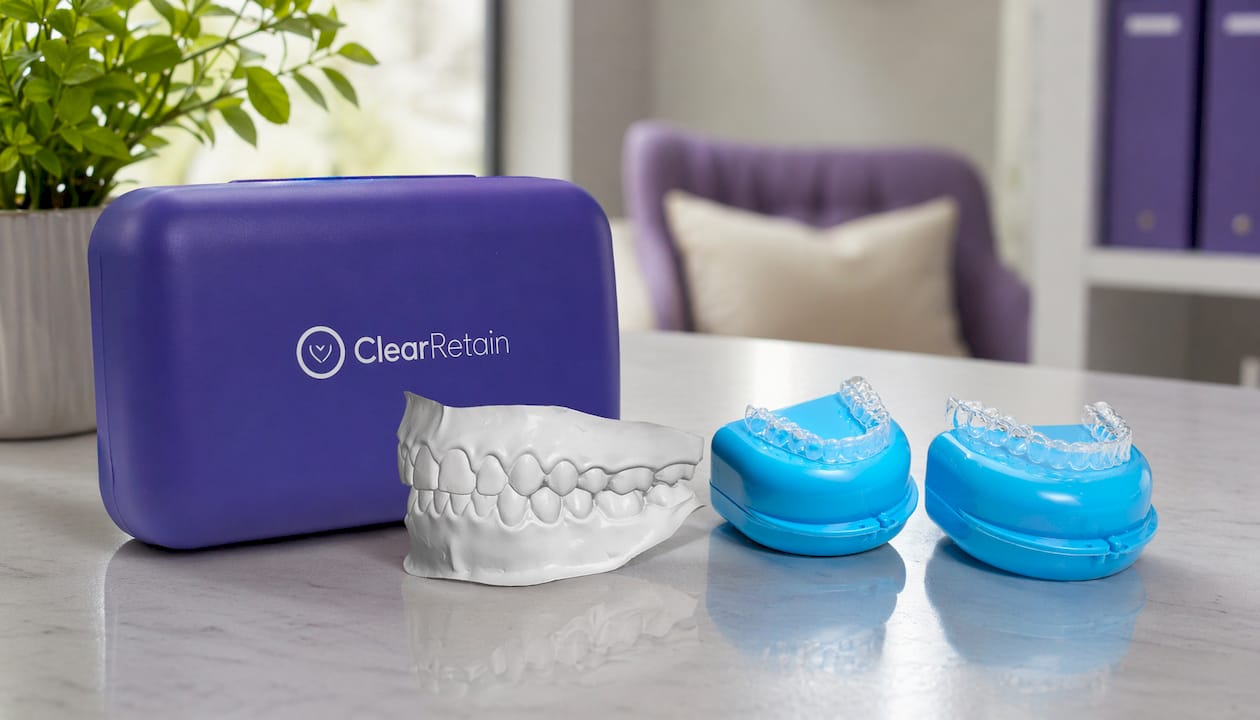
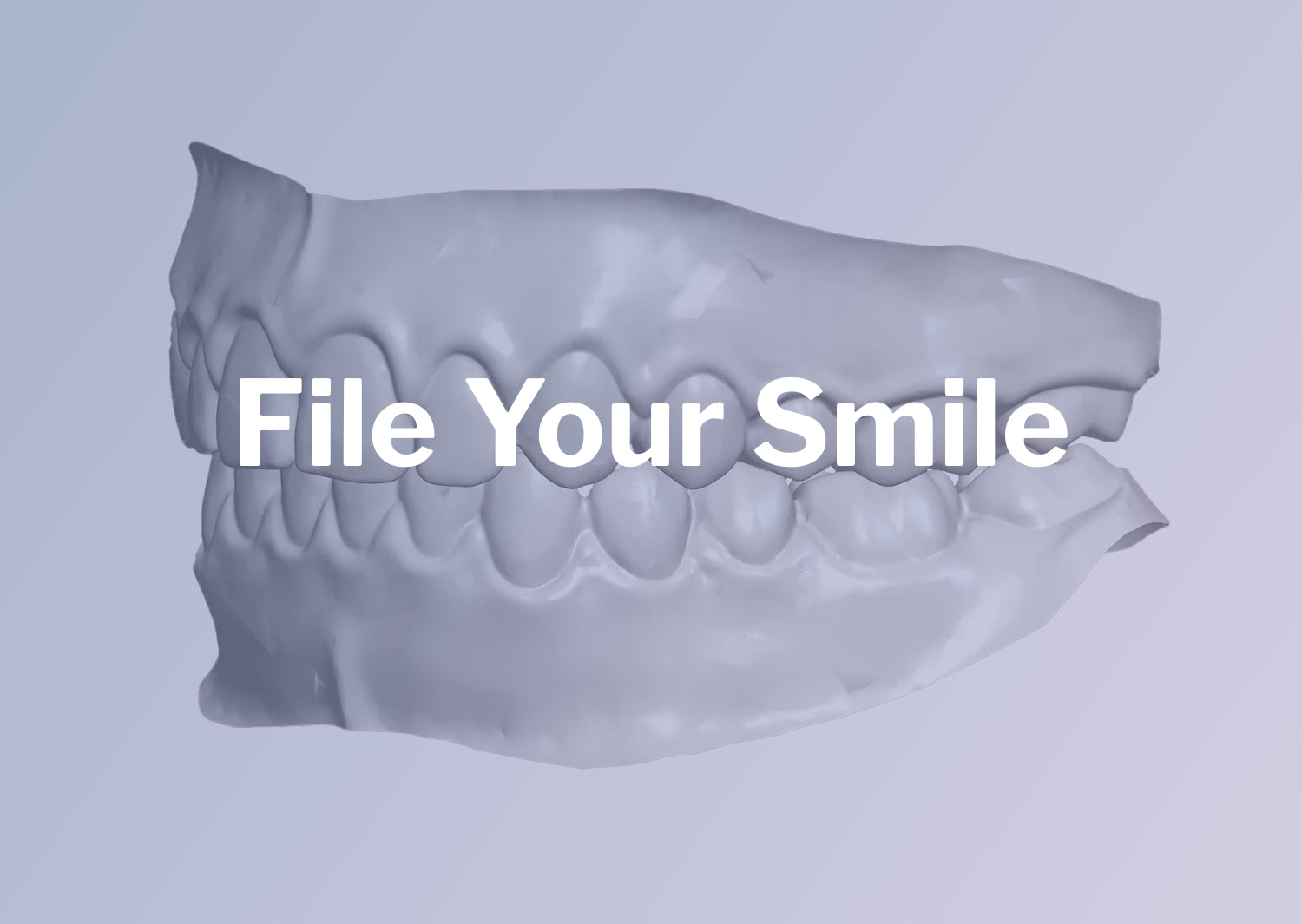
Clearretain offers custom clear upper retainers and clear lower retainers made from FDA-approved materials under the supervision of experienced orthodontic technicians. Orders are placed online with a detailed self-impression kit, cutting out the overhead of in-office appointments. Clearretain also offers a File Your Smile service, which stores a digital record of your impressions so future replacements are fast and accurate. Customers report savings of up to 80% compared to standard orthodontic pricing, with no compromise on fit or quality.
FAQ
How long do I need to wear a retainer?
Retention is a lifelong commitment. Full-time wear for the first year transitions to nightly use, but stopping entirely allows relapse to resume at any age.
What happens if I stop wearing my retainer?
Biological tooth movement begins within hours of stopping retainer wear. Visible crowding or spacing can appear within 4–12 weeks, with significant relapse possible within one year.
Are fixed or removable retainers better?
Fixed retainers provide superior stability but require more careful oral hygiene. Removable retainers are easier to clean around but depend entirely on consistent wear. Many orthodontists recommend using both.
Can teeth shift even after years of wearing a retainer?
Yes. Age-related mandibular crowding occurs in most adults regardless of prior treatment. Lifelong nighttime wear is the most reliable way to manage this natural process.
What should I do if my retainer no longer fits?
Do not force a retainer that no longer seats properly. Contact your orthodontist for evaluation. If it fits but feels tight after a short break, resume consistent wear and monitor closely.