

Space Maintainer vs Retainer: A Parent's Clear Guide
A space maintainer is a dental appliance that holds the gap left by a prematurely lost baby tooth, while a retainer is used after orthodontic treatment to keep teeth in their corrected positions permanently. Understanding what is space maintainer vs retainer is the first step to making the right call for your child or yourself. These two devices look similar, serve completely different purposes, and are prescribed at different stages of dental development. Confusing them leads to delayed treatment and avoidable orthodontic problems down the road.
What is a space maintainer and when is it used?
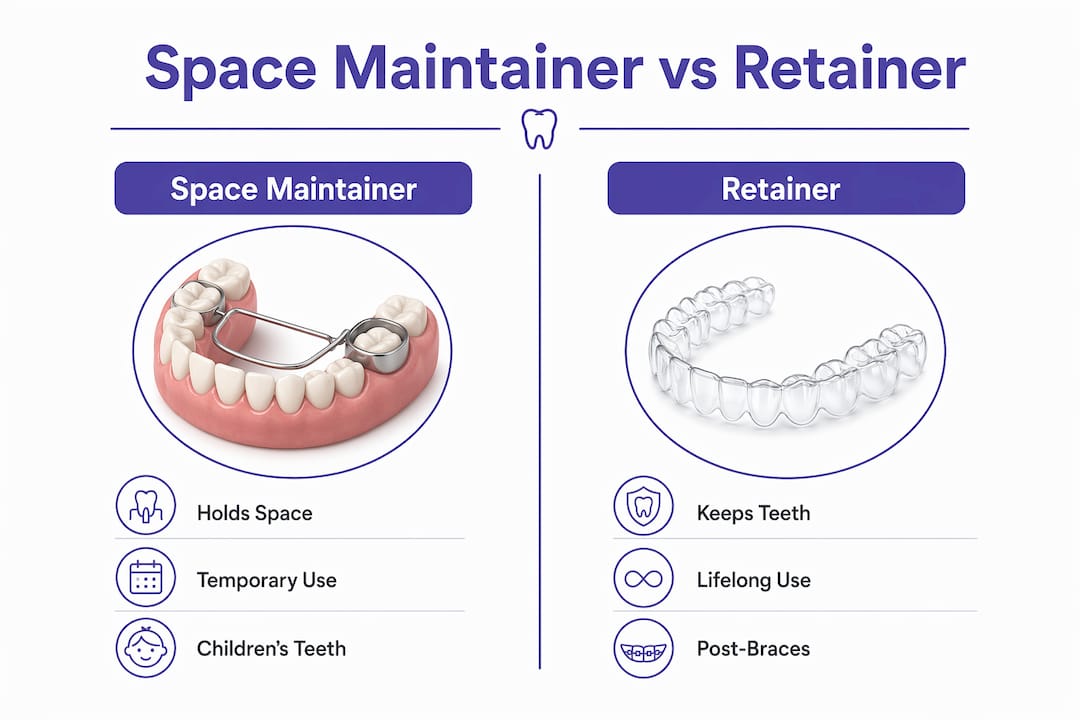
A space maintainer is a pediatric dental device designed to preserve the gap left when a baby tooth is lost too early. Pediatric dentists recommend one when a baby tooth is lost more than 6 months before its natural eruption time. That 6-month threshold matters because adjacent teeth begin drifting into the open space quickly. Without intervention, the permanent tooth has no room to erupt correctly.
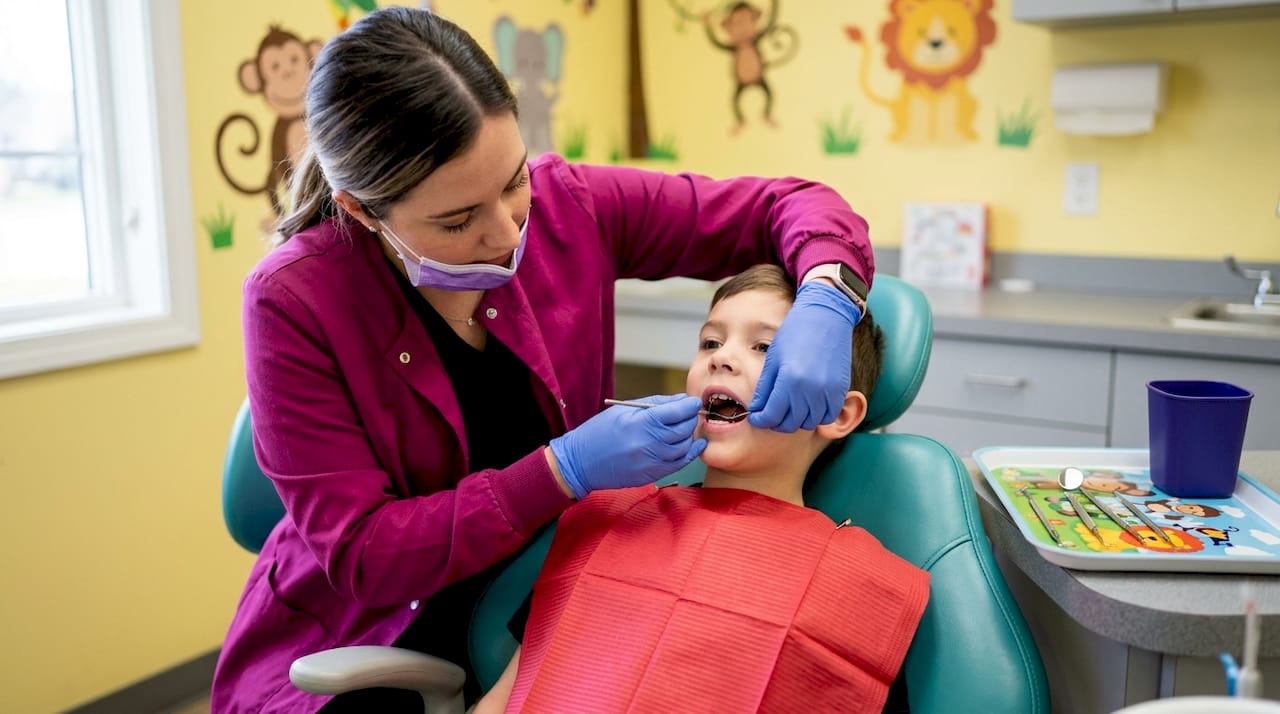
The most common reasons a child needs a space maintainer include early extraction due to severe decay, trauma from an injury, or a congenital absence of a tooth. Each of these scenarios leaves a gap that neighboring teeth will fill if left unmanaged. Space maintenance in childhood prevents complex, costly orthodontic treatments by guiding proper tooth eruption and reducing crowding later.
Types of space maintainers
Space maintainers can be fixed or removable and are made from metal or acrylic. Fixed types are cemented directly onto adjacent teeth and require no daily management from the child. Removable types look like a partial retainer and are better suited for older, more responsible children.
Fixed space maintainers include several designs:
- Band and loop: A metal band on one tooth with a wire loop holding the space. The most common type for a single missing tooth.
- Distal shoe: Used when a baby molar is lost before the first permanent molar erupts. It guides the permanent molar into the correct position.
- Lingual arch: Spans the lower arch and holds space on both sides simultaneously.
- Crown and loop: Similar to band and loop but uses a dental crown instead of a band.
Fixed space maintainers are cemented and compliance-free, making them the preferred choice for younger children who cannot reliably wear a removable device. Removable maintainers are practical for older children but carry the risk of being lost or forgotten. A dentist will recommend the right type based on the child’s age, the location of the missing tooth, and how long until the permanent tooth is expected.
Pro Tip: Ask your child’s dentist to show you the X-ray of the developing permanent tooth. Seeing the tooth waiting beneath the gum line makes the need for a space maintainer much more concrete for both you and your child.
What is a retainer and why is lifelong retention important?
A retainer is an orthodontic appliance worn after braces or clear aligners to hold teeth in their newly corrected positions. Retention after orthodontic treatment is a lifelong commitment because teeth naturally relapse due to periodontal and muscular forces even years after braces are removed. The bone and soft tissue surrounding teeth need time to stabilize around the new positions. Without a retainer, that stabilization never fully happens.
Retainers stabilize teeth mechanically during bone remodeling post-orthodontics, preventing relapse while surrounding tissues mature. This critical phase lasts 6–12 months, but retention is recommended indefinitely to counteract lifelong relapse tendencies. That is not a conservative estimate. It reflects the biological reality that teeth move throughout life.
Retainer types for teeth
The types of dental retainers fall into two main categories: removable and fixed.
Removable retainers:
- Hawley retainer: A wire-and-acrylic design that is durable and adjustable. It allows minor tooth position corrections and lasts many years with proper care.
- Clear thermoplastic retainer: A thin, transparent tray that fits over the teeth. Less visible than Hawley retainers and preferred by most adults for nighttime wear.
Fixed retainers:
- Bonded wire retainer: A thin wire glued to the back of the front teeth, typically the lower arch. It provides compliance-free retention for teeth prone to revert positionally but requires professional hygiene management and periodic evaluation.
Retention is the most important determinant of long-term orthodontic success. A common clinical protocol combines a fixed lower retainer with a removable upper retainer worn at night. This pairing covers the teeth most likely to shift while keeping daily compliance manageable.
Many adults mistakenly view retainers as temporary, but teeth have a lifelong tendency to relapse. Nighttime wear is the minimum standard for most adults after the first year of full-time wear. Skipping even a few weeks can make a retainer feel tight, which signals that shifting has already begun.
Pro Tip: If your retainer feels tight after a break, do not force it. A tight retainer after relapse can cause root damage. See your orthodontist before resuming wear.
Key differences between space maintainers and retainers
The core difference between maintainers and retainers is purpose. A space maintainer prevents a problem from developing. A retainer preserves a correction already made. One is proactive, the other is protective.
| Feature | Space maintainer | Retainer |
|---|---|---|
| Primary purpose | Hold space for erupting permanent tooth | Prevent teeth from shifting after orthodontics |
| Typical patient | Children aged 3–12 | Adolescents and adults post-braces |
| Timing | After premature baby tooth loss | Immediately after braces or aligners are removed |
| Duration of use | Months, until permanent tooth erupts | Indefinite, often lifelong nighttime wear |
| Materials | Metal, acrylic | Metal wire, acrylic, clear thermoplastic |
| Compliance required | Fixed types need none; removable types need daily wear | Removable types require consistent nightly use |
| Prescribed by | Pediatric dentist | Orthodontist |
The difference in duration is significant. A space maintainer is a temporary device with a clear endpoint. A retainer is a permanent part of dental health management. Parents who understand this distinction can set realistic expectations for their child and for themselves after their own orthodontic treatment.
For parents researching when to use space maintainers, the decision point is straightforward: if a baby tooth is lost early and the permanent replacement is more than 6 months away, a space maintainer is the standard recommendation. For adults finishing braces or aligners, a retainer is not optional. It is the final phase of treatment.
How to care for and maintain space maintainers and retainers
Proper care directly determines how long an appliance works and how well it protects the teeth. Neglecting either device leads to appliance failure, discomfort, and undesired tooth movement, requiring timely dental check-ups and maintenance to catch problems early.
Caring for space maintainers
Fixed space maintainers need consistent attention even though the child does not remove them.
- Brush around the appliance twice daily with a soft-bristled toothbrush.
- Avoid sticky foods like caramel, gum, and chewy candy. These can dislodge the cement or bend the wire.
- Schedule dental check-ups every 3–6 months so the dentist can confirm the appliance is intact and the permanent tooth is erupting correctly.
- Watch for signs of loosening, irritation to the gum, or the appliance shifting position.
Removable space maintainers should be cleaned daily with a soft brush and mild soap. Store them in a protective case when not in use. Children are prone to losing or damaging removable appliances, so a fixed design is often the safer choice for younger patients.
Caring for retainers
Clear thermoplastic retainers need daily cleaning to prevent bacterial buildup and discoloration.
- Rinse the retainer with cool water every time you remove it.
- Clean it gently with a soft toothbrush and mild dish soap. Avoid toothpaste, which is abrasive and scratches the surface.
- Store it in a ventilated case away from heat. Heat warps thermoplastic retainers permanently.
- Replace clear retainers every 1–2 years depending on wear. Hawley retainers last longer with proper care.
Fixed bonded retainers require flossing with a floss threader or water flosser to clean beneath the wire. Skipping this step leads to tartar buildup and gum problems directly behind the front teeth.
Pro Tip: Keep a spare retainer. If you lose or break your only retainer and go without for even two weeks, measurable shifting can occur. Ordering a backup clear retainer when your current one is still in good shape is far cheaper than retreatment.
What I’ve learned from years of helping families navigate these appliances
The most common mistake I see is parents waiting too long after a baby tooth is lost before asking about a space maintainer. The assumption is that the permanent tooth will arrive soon. But dental development does not always follow the expected schedule, and a few months of unmanaged space loss can mean years of orthodontic correction later.
The second mistake is treating retainers as optional after braces. Adults who complete orthodontic treatment invest real time and money into their results. Skipping retainer wear, even occasionally, undoes that investment gradually. The shift is subtle at first, which is exactly why people underestimate it until the retainer no longer fits.
The mental shift that helps most is simple: a retainer is not a reminder that treatment is over. It is the reason the treatment stays effective. For children, a space maintainer is not a burden. It is the reason their permanent teeth have room to come in straight. Both appliances do their jobs quietly, which is why they are easy to neglect and why the consequences of neglect take time to show up.
If you are a parent whose child recently lost a baby tooth ahead of schedule, see a pediatric dentist within a few weeks. If you finished braces years ago and have not worn your retainer consistently, talk to your orthodontist before forcing a tight retainer back in. Early action in both cases is always less expensive and less complicated than correcting the result of waiting.
— Clear
Clearretain retainers for lasting results
Finishing orthodontic treatment is a real achievement. Keeping those results takes the right retainer worn consistently.
Clearretain offers custom clear upper and clear lower retainers made from FDA-approved materials under the supervision of experienced orthodontic technicians. The process is straightforward: order online, complete a self-impression kit at home, and receive a custom-fitted retainer without an office visit. Clearretain’s direct-to-consumer model cuts the cost of professional-grade retention by up to 80% compared to standard orthodontic office pricing. For adults committed to protecting their orthodontic results, it is a practical, high-quality option worth considering.
FAQ
What is the main difference between a space maintainer and a retainer?
A space maintainer holds open the gap left by a prematurely lost baby tooth so the permanent tooth can erupt correctly. A retainer holds teeth in their corrected positions after orthodontic treatment and is worn indefinitely.
At what age does a child need a space maintainer?
Pediatric dentists recommend a space maintainer when a baby tooth is lost more than 6 months before the permanent tooth is expected to erupt, which can occur any time between ages 3 and 12 depending on the tooth involved.
Can a retainer fix shifting teeth?
Removable retainers cannot actively realign teeth. They prevent minor shifting after treatment, but forcing a tight retainer after relapse can cause root damage. Consult an orthodontist if your retainer no longer fits comfortably.
How long does a child wear a space maintainer?
A space maintainer stays in place until the permanent tooth erupts into the correct position, which typically takes several months to a couple of years depending on the child’s age and the tooth involved.
Do adults need to wear retainers forever?
Yes. Teeth have a lifelong tendency to shift due to periodontal and muscular forces. Most orthodontists recommend nighttime retainer wear indefinitely to maintain alignment after braces or aligners.
Key takeaways
Space maintainers and retainers both protect tooth position, but they serve opposite ends of the dental development timeline: one prevents future problems in children, the other preserves past corrections in adults.
| Point | Details |
|---|---|
| Different purposes | Space maintainers prevent crowding in children; retainers prevent relapse in adults after orthodontics. |
| Timing determines the device | Use a space maintainer after early baby tooth loss; start a retainer immediately after braces are removed. |
| Fixed vs. removable options | Fixed types require no compliance; removable types need consistent daily or nightly wear to be effective. |
| Retention is lifelong | Teeth shift throughout life, making indefinite nighttime retainer wear the standard clinical recommendation. |
| Early action saves money | Acting quickly after early tooth loss or after finishing braces prevents far more costly corrections later. |