



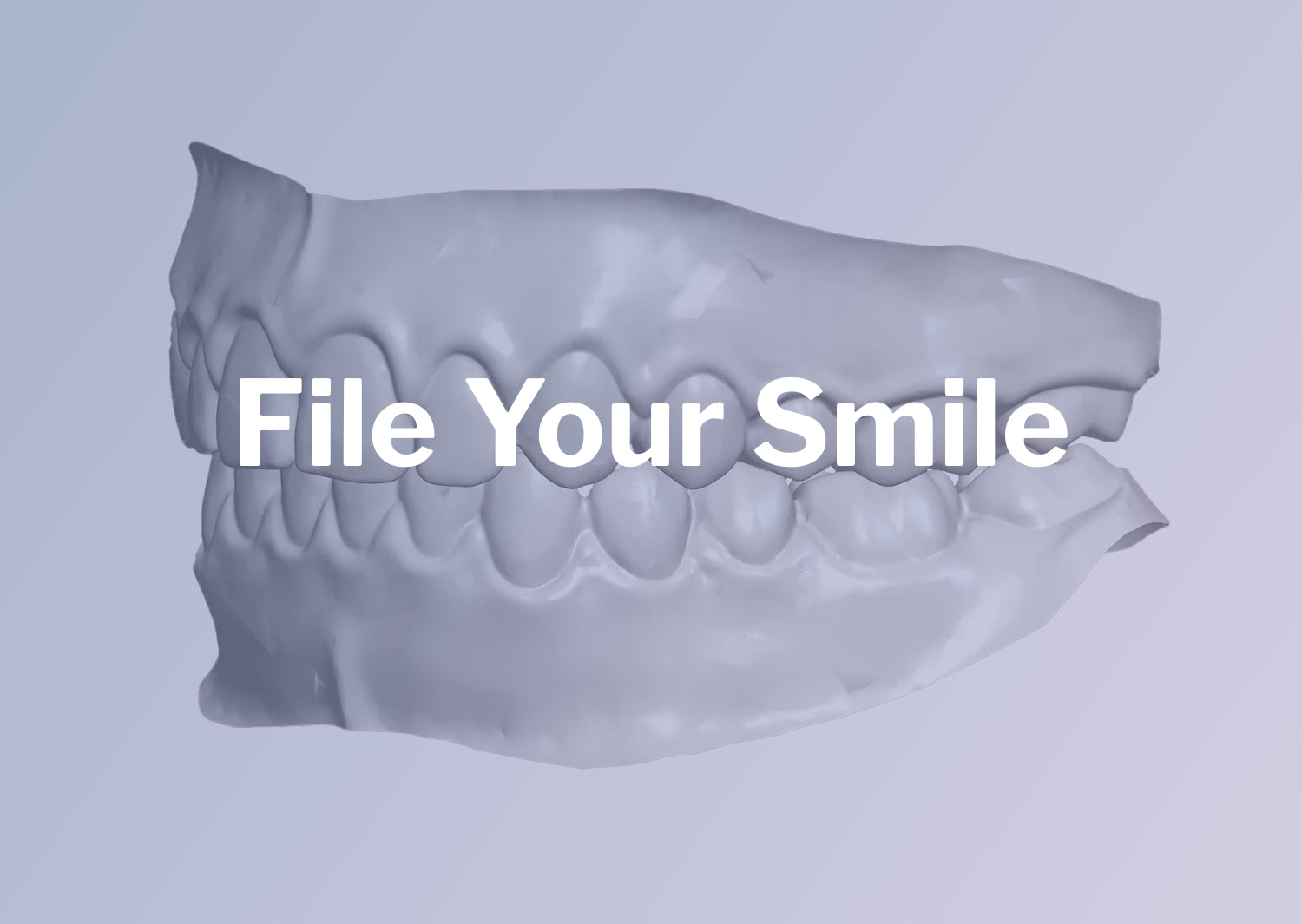
Why Your Mouth Guard Makes You Gag (and How to Stop It)
Most mouth guard gagging comes from one of two things: the back edge of the guard touching your soft palate or tongue base, or the guard being too bulky for your mouth to accept right away. The fastest fix in the moment is simple. Take the guard out, breathe through your nose, tuck your chin down toward your chest, and re-seat it slowly while squeezing your left fist as hard as you can. That last part sounds strange, but it genuinely distracts the nervous system long enough to get the guard in.
- Remove the guard, breathe through your nose, tuck your chin, and reinsert slowly.
- Squeeze your fist tightly during insertion. Pressure in one part of the body can dull the reflex response elsewhere.
- Sit upright rather than lying flat for your first few sessions.
Most people see real improvement within a few weeks of consistent small adjustments or short desensitization sessions, a timeline supported by a case report on hyperactive gag reflex management in which a patient adapted to an oral appliance over several weeks. If gagging persists despite that or comes with vomiting, choking, or weight loss, that’s a signal to stop troubleshooting alone and see a dentist.
Key Takeaways
Most mouth guard gagging traces back to posterior palatal contact or excess bulk, and it resolves for most people within one to three weeks of targeted adjustment and graded desensitization.
| Point | Details |
|---|---|
| Identify the trigger zone | Posterior edge contact with the soft palate or tongue base causes most gagging cases. |
| Use immediate techniques | Nasal breathing, chin tuck, and the fist squeeze trick reduce gag response during insertion. |
| Follow a graded timeline | Build tolerance over roughly three weeks, advancing only after each stage feels routine. |
| Choose fit over cushioning | Thin, custom hard guards often outperform bulky soft ones for gag-sensitive mouths. |
| Escalate when needed | See a dentist if gagging persists past three weeks or causes vomiting or weight loss. |
| Consider a custom option | ClearRetain’s self-impression kits and slim-profile guards, including the Hard Night Guard, reduce the fit issues that trigger gagging. |
Table of Contents
- What Causes the Mouth Guard Gag Reflex?
- How Mouth Guards and Sleep Posture Trigger Gagging
- Quick Fixes to Try Right Now
- Should You Switch to a Custom Guard or Adjust What You Have?
- A Day-by-Day Plan to Build Tolerance
- When to See a Dentist About Persistent Gagging
- How ClearRetain’s Options Help With a Sensitive Gag Reflex
- Alternative Materials and Designs Built for Gag-Sensitive Mouths
- Oral Exercises That Retrain Your Gag Response
- What Actually Moves the Needle on Gag Reflex Management
- Get a Guard Built for Your Fit, Not Against It
- Sources
What Causes the Mouth Guard Gag Reflex?
The gag reflex is a protective circuit, not a flaw. It runs through cranial nerves IX and X, the glossopharyngeal and vagus nerves, and fires when something touches the posterior pharyngeal wall, the tonsillar pillars, or the base of the tongue, according to a clinical overview of the pharyngeal reflex. Your body doesn’t ask permission first. It just contracts your throat muscles to keep foreign material away from your airway.
There are two flavors of trigger here, and they often overlap. Somatogenic triggers are physical: an object actually contacting a sensitive zone. Psychogenic triggers are mental: the anticipation of gagging can prime the reflex before anything even touches your mouth.
Anxiety and the gag reflex feed each other. Expecting to gag makes the reflex more sensitive, which increases the odds of gagging, which reinforces the expectation.
That feedback loop is well documented in a literature review on gag reflex management, and it explains why some people gag on a guard that barely touches anything. A genuinely hypersensitive reflex affects a smaller share of the population, and it usually responds to the same desensitization work that helps milder cases.
How Mouth Guards and Sleep Posture Trigger Gagging
Small design details make an outsized difference here.
- Posterior edge length: the closer the back border sits to the soft palate or tonsillar area, the more likely it triggers a reflex response.
- Thickness and bulk: an overly thick guard crowds the tongue, forces your jaw into an unnatural resting position, and can push the tongue backward toward gag-sensitive tissue.
- Material taste, odor, or rough edges: cheap plastics with a strong chemical smell or unfinished, jagged margins irritate the mouth and heighten sensitivity.
- Nighttime positioning: lying flat shifts your soft palate and tongue backward under gravity, and saliva tends to pool rather than clear the way it does when you’re upright.
That last point matters more than people realize for night guard wearers specifically. Muscles relax during sleep, jaw position drifts, and a guard that felt fine standing at the bathroom mirror can migrate into trigger territory once you’re horizontal, a dynamic described in guidance on adjusting to oral sleep appliances. If your gagging happens mainly at night rather than during the day, posture and saliva pooling are the first suspects, not the guard’s basic shape.
Quick Fixes to Try Right Now
Work through these in order. Most people find relief before reaching the bottom of the list.
- Fix your insertion technique first. Breathe through your nose, not your mouth, tuck your chin down, and seat the guard slowly onto your back teeth before biting down. Rushing the bite makes contact with sensitive tissue more abrupt and more likely to trigger a response.
- Try the fist squeeze trick. Clench your left fist tight while inserting the guard. It sounds like a party trick, but redirecting nervous system attention to another muscle group genuinely reduces gag sensitivity for many people.
- Trim the posterior edge conservatively. If you have a boil-and-bite guard, a small, careful trim of the very back border, no more than a millimeter or two at a time, can remove the exact spot causing contact. Never trim below the gum line or into structural areas that support the bite. Stop trimming the moment the fit feels loose.
- Smooth rough margins. Run a finger along every edge. Any spot that catches or feels sharp is a candidate for light sanding with a nail file meant for dental appliances, or a trip back to whoever made the guard.
- Use short-term sensory strategies sparingly. A pinch of salt on the tongue or a small amount of topical benzocaine spray can dull sensitivity long enough to build a tolerance session. These are bridges, not permanent solutions, and topical anesthetics should be used only occasionally and never on broken skin or in large amounts, per general guidance in the pharyngeal reflex clinical reference.
- Check the guard itself. Old, warped, or roughened material triggers more gagging than a fresh one. If it smells off or the surface has degraded, replace it before troubleshooting technique further.
Pro Tip: Practice inserting your guard in front of a mirror during the day, fully alert and unhurried. Doing this cold, tired, and rushed right before bed is exactly when gagging is most likely to spike.
Should You Switch to a Custom Guard or Adjust What You Have?
Fit is the single biggest lever you control. A custom-fitted guard, built from your own impression, minimizes palatal contact and bulk because it’s shaped to your mouth rather than forced to accommodate a generic tray. That precision is the entire reason prosthodontic training-plate techniques work for gag-sensitive patients. Thinning the palatal coverage while keeping the design intact preserves protection without the excess material that causes contact.
Boil-and-bite guards are accessible and cheap, but the trade-off is real. They’re molded by hand at home, so thickness and posterior extension vary, and getting a precise fit is harder than it looks, a limitation worth understanding before comparing boil-and-bite versus custom lab-made guards.
Material and profile matter too:
- Thin, hard guards work well for people who gag on bulk. They provide protection with minimal material.
- Soft or dual-layer guards offer cushioning but tend to be thicker, which can be a problem for grind-related use if gagging is your main issue.
- Clinician-made or digitally scanned options make sense when trimming and adjustments haven’t resolved things after a few honest attempts, especially if a digital scan can eliminate the need for a gag-triggering physical impression tray, as noted in prosthetic rehabilitation guidance for gagging patients.
A Day-by-Day Plan to Build Tolerance
Desensitization works because the reflex habituates with repeated, graded exposure. It is not about forcing yourself through discomfort. It’s about staying just below the trigger threshold long enough for your nervous system to recalibrate.
- Days 1 to 3: Start with non-threatening contact. Brush just your front teeth and tongue tip for one to five minutes daily, well away from the trigger zone.
- Days 4 to 7: Move contact slightly farther back, toward the middle of the tongue, only once the previous stage feels routine. A literature review on desensitization technique recommends advancing only after several comfortable days at each stage, not on a fixed clock.
- Days 8 to 14: Practice inserting the actual guard for short intervals, building from a minute or two up to full wear time. Combine this with the nasal breathing and chin tuck technique every time.
- Days 15 to 21: Wear the guard for extended periods, including a full night if it’s a night guard. Elevating your head slightly with an extra pillow for these early nights can help, a positioning tweak documented in case-based desensitization protocols.
| Checkpoint | What to expect |
|---|---|
| Day 3 | Front-of-mouth contact feels routine, no gag response |
| Day 7 | Mid-tongue contact tolerated most days |
| Day 14 | Guard insertion tolerated for several minutes |
| Day 21 | Full wear, including overnight, achievable for most people |
If anxiety is driving as much of the problem as physical contact, pairing this schedule with slow breathing and brief distraction techniques breaks the anticipation loop rather than just the physical one. For a small number of people, a dentist may suggest topical anesthetic gel or, in clinic settings, nitrous oxide to get through the first few sessions, though evidence for those measures is more limited than for graded exposure itself.
When to See a Dentist About Persistent Gagging
Stop self-managing and book an appointment if gagging continues despite three weeks of consistent effort, if you’re vomiting or losing weight because you can’t tolerate any oral appliance, or if the gagging feels disproportionate to any visible trigger, which can sometimes point to an underlying sensory issue worth ruling out.
A dentist evaluating your case will look at fit, how far the appliance extends toward the soft palate, and whether the original impression technique itself may have been part of the problem, since impression trays are notorious for triggering gagging during the fitting process.
Bring specific questions:
- Can the palatal or posterior area be thinned or trimmed further?
- Is a digital scan available instead of a physical impression?
- Would a slimmer hard guard or a different material reduce contact?
- Do you offer a structured desensitization protocol, or can you refer me to one?
How ClearRetain’s Options Help With a Sensitive Gag Reflex
Fit precision is the whole game when gagging is the issue, and that’s the problem ClearRetain is built to solve. Custom appliances made from your own self-impression kit eliminate the guesswork of boil-and-bite molding, and the FDA-approved materials come with finished, smooth edges that skip the rough margins that irritate sensitive mouths.
- The Hard Night Guard offers a thin, hard profile for people who gag on bulky soft guards.
- The Upper Retainer-Night Guard combines two functions in one slim appliance, useful if you need retention and nighttime protection without doubling up on bulk.
- The Upper Teeth Retainer and Lower Teeth Retainer are built from your stored impression, so reorders and adjustments don’t mean starting over.
If gagging comes specifically from a palatal extension issue, mention it when you submit your impression kit. Thinner posterior coverage can often be built into the design from the start.
Alternative Materials and Designs Built for Gag-Sensitive Mouths
Not every guard has to cover the same surface area or use the same material, and design choice matters more than most people realize when gagging is the primary concern. Palateless or reduced-palate designs remove coverage over the soft palate entirely, relying instead on retention from the teeth and hard palate only. This is a well-established prosthodontic technique for gagging patients, not a gimmick, and it works because it eliminates contact with the exact tissue that triggers the reflex in the first place.
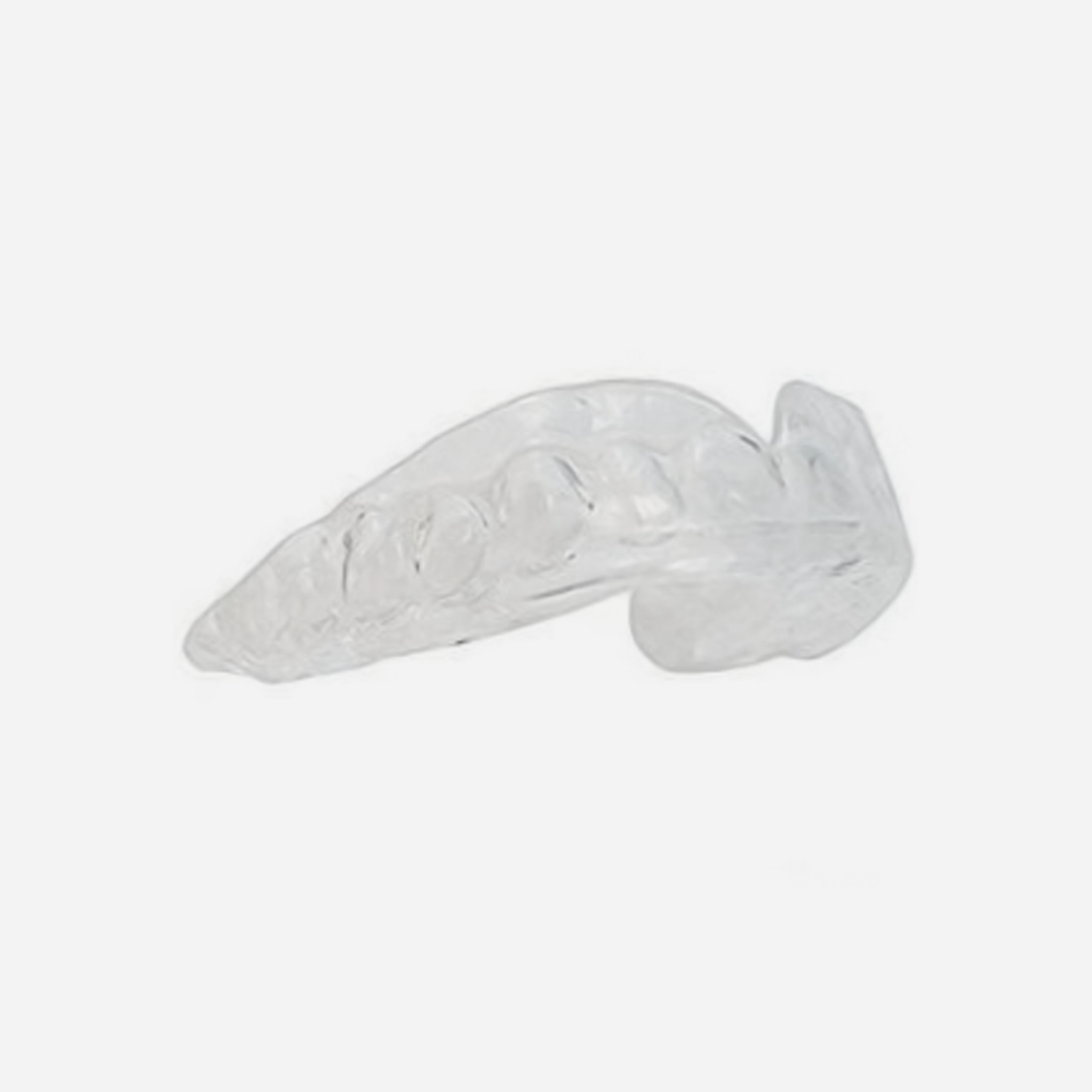
Horseshoe-shaped guards, which skip full palatal coverage in favor of a band around the teeth, serve a similar purpose for people who don’t need whole-arch coverage. They trade a small amount of stability for a large reduction in trigger surface.
Material choice compounds these design decisions. Rigid acrylic or polycarbonate materials can be made thinner than soft, cushioned materials while still holding their shape, so a thin hard guard often triggers less gagging than a thick soft one, even though soft guards feel gentler on paper. Dual-laminate designs split the difference: a hard outer shell for durability with a thin soft inner layer for comfort, without the bulk of an all-soft appliance.
Surface finish matters just as much as shape. A polished, glass-smooth interior surface produces far less tactile stimulation than a guard with visible ridges or seams from the molding process. If you’ve tried multiple designs and still gag, ask specifically about surface polishing before assuming the material itself is the problem. Sometimes it’s not what the guard is made of. It’s how the last quarter-inch of it was finished.
Oral Exercises That Retrain Your Gag Response
Desensitization protocols get most of the attention, but neuromuscular re-education is a related, separate tool worth understanding on its own. Where desensitization gradually raises your tolerance to a specific trigger, neuromuscular exercises retrain the muscles and reflex pathways involved in swallowing and oral control more broadly.
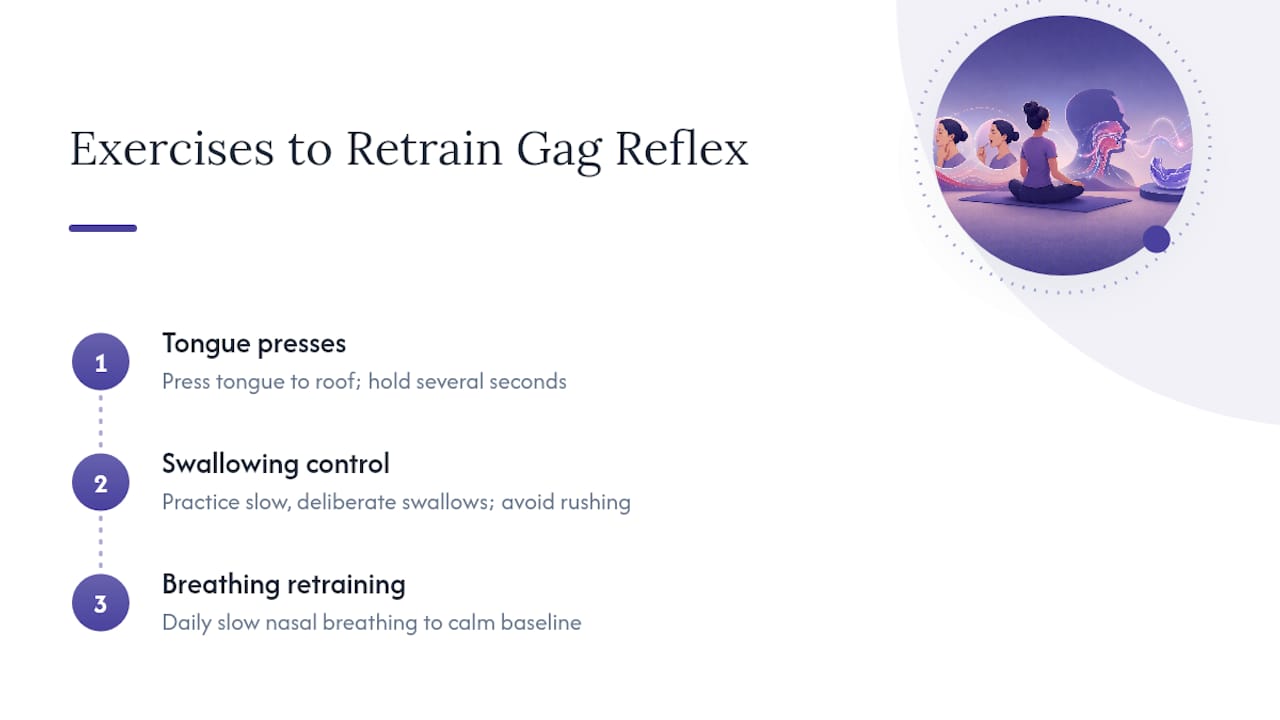
Simple tongue-strengthening exercises, pressing the tongue against the roof of the mouth and holding for several seconds, repeated multiple times daily, can improve overall oral motor control. Better control tends to reduce reflexive, exaggerated responses to touch. Swallowing exercises that emphasize a controlled, deliberate swallow rather than a rushed one can also help, since a hurried swallow reflex often travels alongside a hyperactive gag reflex.
Breathing retraining deserves its own mention here because it does double duty. Practicing slow, deliberate nasal breathing outside of any guard-related context, as a standalone daily habit, lowers baseline sympathetic nervous system activity. A calmer baseline state makes the gag reflex less reactive across the board, not just during guard insertion.
None of these exercises replace the graded exposure work described earlier. They support it. Think of desensitization as teaching your mouth to accept a specific object, while neuromuscular exercises improve the underlying control system that governs how sensitive your reflex is to begin with. Doing both together tends to produce faster, more durable results than either approach alone.
What Actually Moves the Needle on Gag Reflex Management
The conventional advice on this topic stops too early. Most guidance tells people to “just get used to it” or hands over a boil-and-bite guard and calls it solved. Neither addresses the actual mechanism. Gagging is a fit problem wearing a psychological costume half the time, and treating only the mental side, or only the physical side, leaves half the equation unsolved.
What the evidence actually supports is unglamorous: precise fit reduces triggers, and graded exposure reduces reactivity, and you need both working together. The three week timeline that shows up in case-report data isn’t a marketing number. It’s roughly how long habituation takes when someone follows a real protocol instead of white-knuckling through discomfort and giving up after two nights.
Where people go wrong most often is skipping the fit conversation entirely and jumping straight to willpower. If your guard has excess palatal coverage or crude posterior extension, no amount of breathing exercises will fully fix that. Fix the object first. Then train the response.
— Clear
Get a Guard Built for Your Fit, Not Against It
If gagging keeps derailing your night guard routine, the fastest fix isn’t more willpower, it’s a guard designed around your actual mouth instead of a generic mold you have to fight every night. ClearRetain builds custom appliances from your own self-impression kit, at a fraction of what a traditional orthodontic office charges, with FDA-approved materials finished under the supervision of experienced technicians.

If bulk or posterior extension has been your problem, the Hard Night Guard gives you a thin, rigid profile with none of the crowding that comes from soft, cushioned materials. Need retention and nighttime protection in one appliance? The Upper Retainer-Night Guard covers both without doubling your bulk. And because ClearRetain stores your digital impression, reordering or adjusting for fit issues later doesn’t mean starting the whole process over.
Order your self-impression kit today and tell us about your gag sensitivity when you submit it. We’ll factor it into your design from the start.
Sources
- Addressing the gag reflex: a literature review (PMC11720398)
- Gag reflex / pharyngeal reflex (NCBI Bookshelf — NBK554502)
- Management of a hyperactive gag reflex for oral appliance therapy: A case report (J Dent Sleep Med., 2024)
- Addressing the gag reflex: literature review (IJRSM entry)