


Mouth Guard Sports Performance Guide for Athletes
A properly fitted sports mouthguard is defined as a removable oral device that absorbs and distributes impact forces to protect teeth, gums, and jaw during athletic activity. This mouth guard sports performance guide covers what the research actually shows about protection, fit, and compliance, so you can make a decision based on evidence rather than marketing claims. The American Dental Association (ADA) identifies fit and consistent wear as the two factors that determine whether a mouthguard actually protects you. Thickness, material, and type all matter, but none of them help if the guard sits in your bag instead of your mouth.
What are the main types of sports mouthguards?
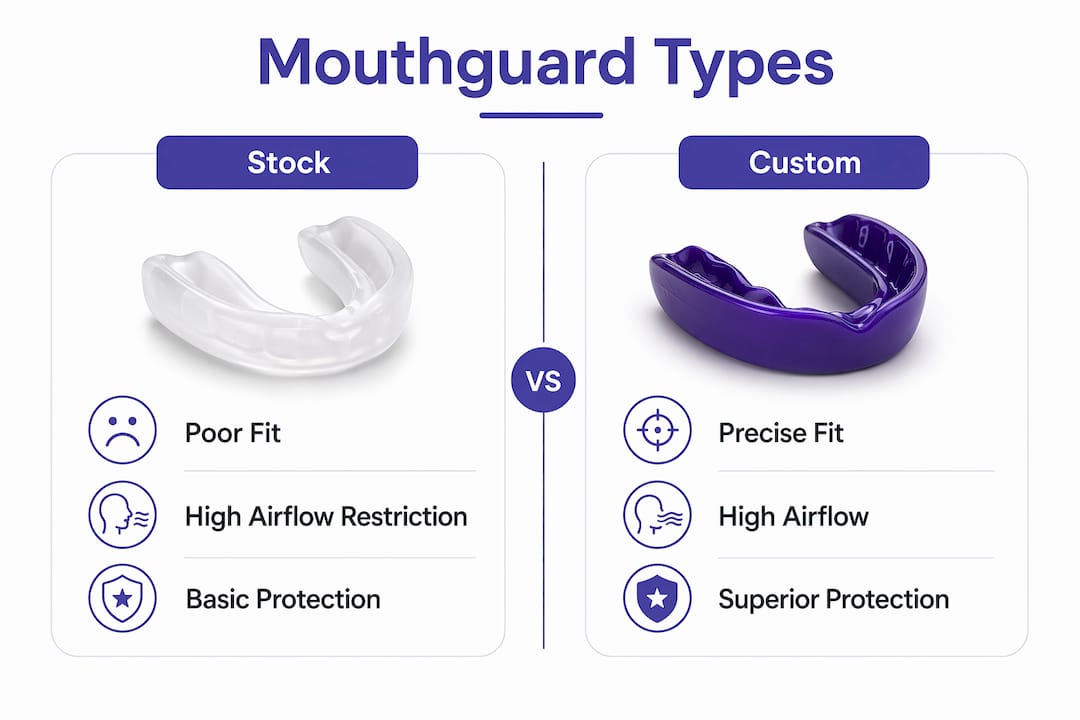
Three types of mouthguards dominate the market: stock guards, boil-and-bite guards, and custom-fitted guards. Each sits at a different point on the protection-to-comfort spectrum, and understanding that spectrum is the first step in any honest mouth guard sizing athletes guide.
Stock guards come pre-formed and require no fitting. They offer basic impact coverage, but their one-size shape forces you to clench your teeth to keep them in place. That constant bite pressure fatigues your jaw muscles and restricts airflow during high-intensity effort.
Boil-and-bite guards are the most common choice for recreational athletes. You soften them in hot water, bite down, and the material molds loosely to your teeth. They cost less than custom options and provide acceptable protection for low-to-moderate contact sports. Boil-and-bite guards offer acceptable protection for recreational athletes but fall short in shock absorption and comfort for serious competitors. The fit degrades faster than custom guards, and the molding process itself introduces errors that reduce effectiveness.
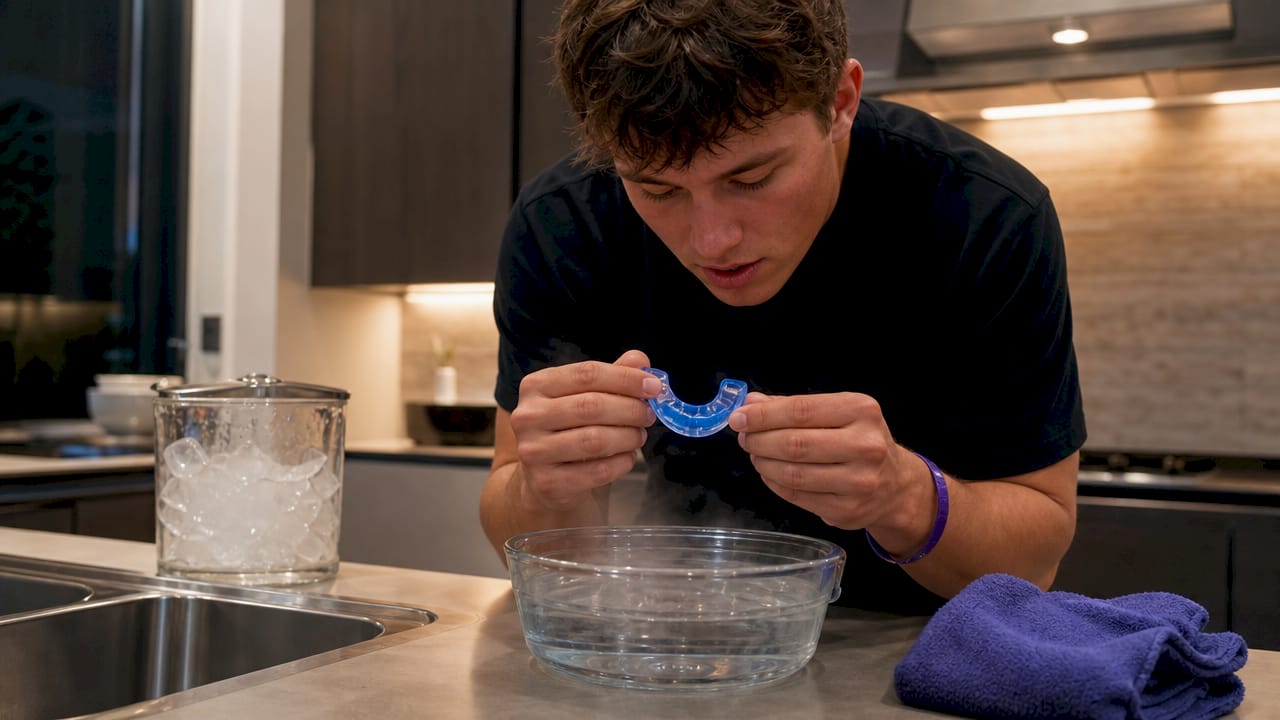
Custom-fitted guards are made from a dental impression of your specific bite. A lab fabricates the guard to match your exact arch shape, which means it stays in place without clenching. Custom-fitted guards cause less subjective breathing interference and jaw muscle fatigue compared to stock guards that require constant bite pressure. For athletes who train or compete regularly, the performance difference is real and measurable.
Pro Tip: Look for a custom guard with at least 3 mm of posterior (back teeth) thickness. Research shows this threshold is where meaningful concussion protection begins.
| Guard type | Fit quality | Airflow impact | Best for |
|---|---|---|---|
| Stock | Poor | High restriction | Occasional, low-contact use |
| Boil-and-bite | Moderate | Moderate restriction | Recreational athletes |
| Custom-fitted | Excellent | Minimal restriction | Serious and competitive athletes |
How does mouthguard fit affect breathing and performance?
Fit is the single biggest variable in how a mouthguard affects your athletic output. A guard that fits poorly changes how you breathe, how your jaw sits, and how long you are willing to wear it.
A 2017 meta-analysis found statistically significant reductions in cardiopulmonary capacity, including VO2max and minute ventilation, with stock and boil-and-bite guards. That means your body’s ability to take in and use oxygen drops when you wear a poorly fitted guard. For endurance athletes or anyone competing at high intensity, that is a direct performance cost.
Poor fit also creates a compliance problem. Youth athlete compliance rates sit between 35% and 55% even when mouthguards are mandatory, with discomfort and breathing interference as the leading reasons athletes remove them. A guard you take out offers zero protection. That is the core argument for investing in fit.
The key fit factors that affect performance are:
- Retention: The guard should stay in place without biting down. If you have to clench to hold it, your jaw muscles are working against you.
- Arch coverage: The guard must cover all posterior teeth to distribute impact forces correctly.
- Lip seal: You should be able to close your lips naturally. If the guard forces your mouth open, airflow and speech are both compromised.
- Thickness at the back: Thinner guards at the molars reduce shock absorption where it matters most.
Increasing vertical dimension with a mouthguard might alter muscle activation, but benefits to performance are unclear and vary by individual. The takeaway: do not buy a mouthguard because a brand claims it will make you stronger or faster. Buy it because it fits, stays in, and protects you.
Step-by-step guide to fitting a custom sports mouthguard
Getting a custom guard right starts before you ever open the impression kit. Follow these steps to get the most accurate fit and the best protection.
-
Choose a reputable source. Use a licensed dental office or a direct-to-consumer service that uses FDA-approved materials and licensed technicians. Avoid generic kits with no professional oversight.
-
Prepare your impression putty correctly. Impression putty must be mixed to a uniform color at room temperature and stored below 80°F before use. Uneven mixing or warm storage causes the material to set too fast, which produces an inaccurate impression.
-
Load the tray evenly. Press the putty firmly into the tray so it fills the entire surface without air pockets. Uneven loading creates thin spots in the finished guard.
-
Bite down firmly and hold. Seat the tray fully over your upper teeth, bite down with even pressure, and hold still for the full recommended time. Moving during the set ruins the impression.
-
Press the edges. Use your fingers to press the tray edges against your gums and cheeks during the set. This step captures the full arch shape and is the most commonly skipped step in DIY fitting.
-
Check the impression before sending. Look for clear tooth imprints with no air bubbles or collapsed areas. A poor impression produces a poor guard. Redo it if the result looks uneven.
-
Ship promptly and store correctly. Send the impression as soon as possible after setting. Keep it away from heat during storage or transit, as warping changes the shape before the lab can work with it.
Pro Tip: If your boil-and-bite guard feels loose after fitting, the most likely cause is over-cooling before you bit down. Over-cooling and poor edge molding are the two most common fitting errors. Reheat and repeat rather than wearing a guard that does not retain properly.
Maintaining your mouthguard for longevity and hygiene
A mouthguard that is dirty, warped, or worn thin no longer protects you at the level it was designed for. Daily care takes less than two minutes and extends the life of the guard significantly.
Clean your guard after every use with cool water and a soft toothbrush. Avoid hot water, which warps thermoplastic materials and changes the fit. Store the guard in a ventilated case, not a sealed bag, so moisture does not build up and promote bacterial growth. For a full daily cleaning routine that keeps your guard hygienic between uses, consistent habits matter more than any single product.
Watch for these signs that your guard needs replacing:
- Visible cracks, tears, or thinning in the material
- Persistent odor that does not clear after cleaning
- Looseness or poor retention that was not present when new
- Distortion or warping from heat exposure
Pro Tip: Bring your mouthguard to your regular dental checkup. Your dentist can spot wear patterns you might miss and confirm whether the fit still matches your current bite.
The ADA emphasizes that the primary protective benefit comes from actual wear and compliance. A guard that has degraded to the point of discomfort will not get worn. Replace it before that point, not after.
Key Takeaways
A properly fitted custom mouthguard with at least 3 mm of posterior thickness is the most effective way to protect teeth and maintain breathing during athletic activity.
| Point | Details |
|---|---|
| Custom fit beats stock every time | Custom guards preserve airflow and reduce jaw fatigue better than stock or boil-and-bite options. |
| Thickness threshold matters | Guards with at least 3 mm at the back teeth provide meaningfully better concussion protection. |
| Compliance drives protection | A guard you remove due to discomfort offers no safety benefit at all. |
| Fit errors are preventable | Mixing putty correctly and pressing guard edges during molding are the two steps most athletes skip. |
| Performance claims lack evidence | No high-powered research confirms mouthguards enhance athletic performance through jaw positioning. |
What I have learned from watching athletes choose the wrong guard
Athletes almost always underestimate how much a poor fit costs them. Not in performance metrics, but in the simple fact that they stop wearing the guard. I have seen serious competitors spend real money on training gear and then grab a stock guard off a pharmacy shelf because it feels like a small decision. It is not.
The performance enhancement angle is where most of the marketing noise lives, and it is mostly noise. No conclusive research supports the claim that jaw positioning from a mouthguard reliably improves strength, speed, or endurance. What the research does support is that a well-fitted guard stays in, does not restrict breathing, and actually protects you when contact happens.
My honest view: the athletes who benefit most from custom guards are not the ones chasing a performance edge. They are the ones who finally stop fighting their equipment. When a guard fits correctly, you forget it is there. That is the goal. Comfort and retention are not luxury features. They are the whole point.
If you are serious about contact sports, treat your mouthguard the same way you treat your footwear. Fit matters. Material matters. And replacing it when it wears out matters. The ventilation and airflow design of a guard is worth understanding before you buy, especially if breathing has been an issue with guards you have worn before.
— Clear
Clearretain’s custom sports mouthguards for athletes
Athletes who want protection without the breathing restrictions of a stock guard have a direct path to a better option.
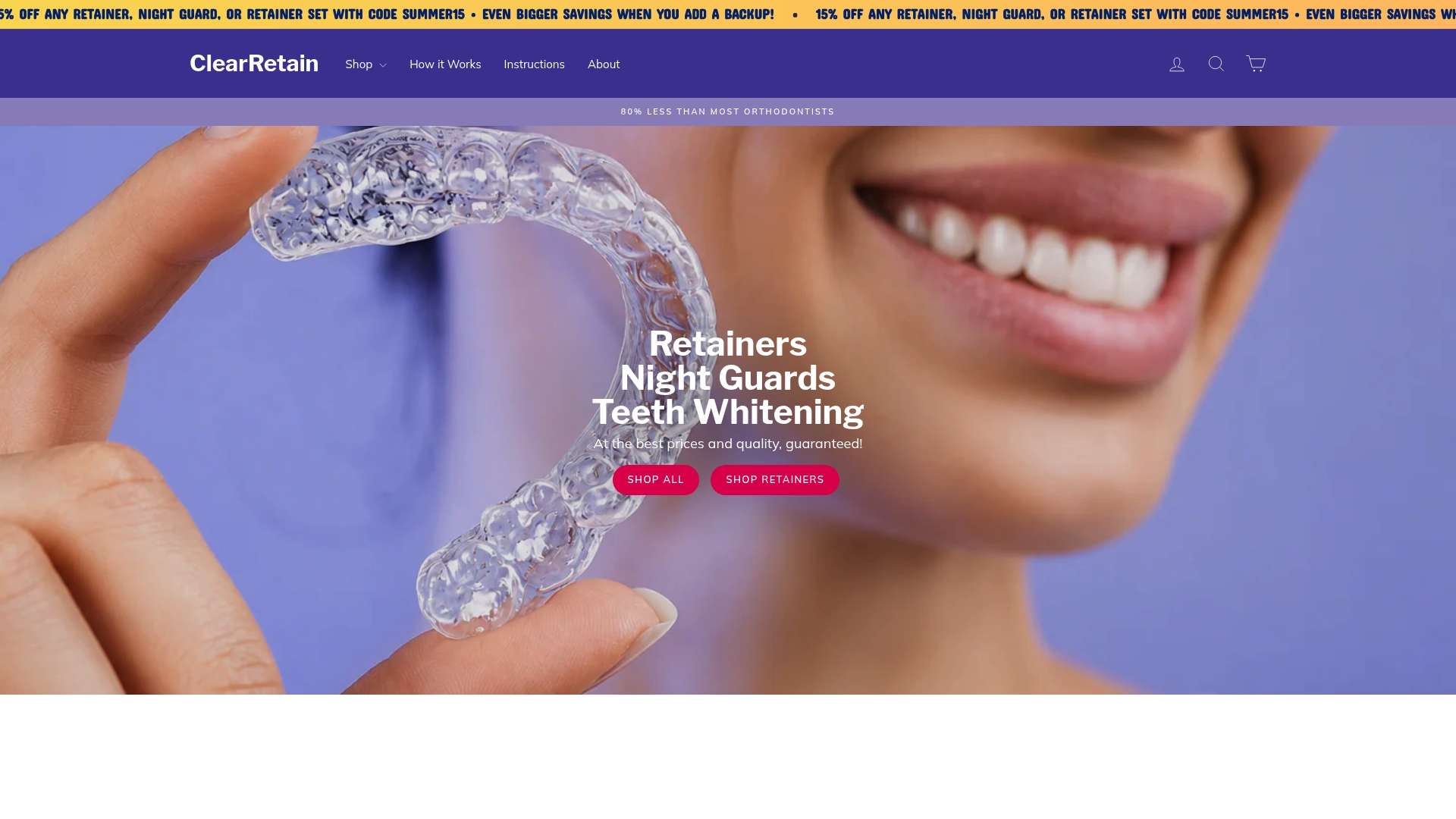
Clearretain offers custom sports mouthguards made from FDA-approved materials under the supervision of experienced orthodontic technicians. The process uses a detailed at-home impression kit, so you get a lab-quality fit without an office visit. Clearretain’s direct-to-consumer model cuts the cost significantly compared to traditional dental offices, with savings that athletes consistently highlight in reviews. If you are also looking for nighttime protection, Clearretain’s night guard collection covers that need with the same quality standards and fitting process.
FAQ
What thickness should a sports mouthguard be?
A custom mouthguard should have at least 3 mm of thickness at the posterior (back) teeth. Research shows this threshold reduces concussion risk by 2.3 times compared to over-the-counter guards.
Do mouthguards actually improve athletic performance?
No high-powered research confirms that mouthguards improve performance through jaw positioning. The ADA’s position focuses on protection and consistent wear, not performance enhancement.
How often should I replace my sports mouthguard?
Replace your mouthguard when you notice cracks, thinning, persistent odor, or a loose fit. Most custom guards last one to two seasons with proper daily cleaning and storage.
Why does my mouthguard feel loose after boil-and-bite fitting?
Loose fit after boil-and-bite molding is almost always caused by over-cooling the guard before biting down or failing to press the edges against your gums. Reheat and refit rather than wearing a guard that does not retain properly.
Can a mouthguard restrict my breathing during sports?
Stock and boil-and-bite guards can restrict airflow and reduce VO2max. Custom-fitted guards are designed to maintain your natural airway, which is one of the main reasons serious athletes choose them over off-the-shelf options.