


Mouth Guard Cleaner: Daily and Weekly Routines That Work
A mouth guard cleaner is any method, product, or routine that removes bacteria, odor, and buildup from your dental appliance without damaging its material or fit. Whether you wear a night guard for bruxism, a sports guard for contact training, or a clear retainer for orthodontic retention, the cleaning approach you choose directly affects your oral health and how long the appliance lasts. Most people underestimate how fast bacteria multiply on a warm, wet guard. The right routine takes under two minutes daily and prevents the buildup that shortens appliance life and causes persistent bad breath.
What is the best mouth guard cleaner routine?
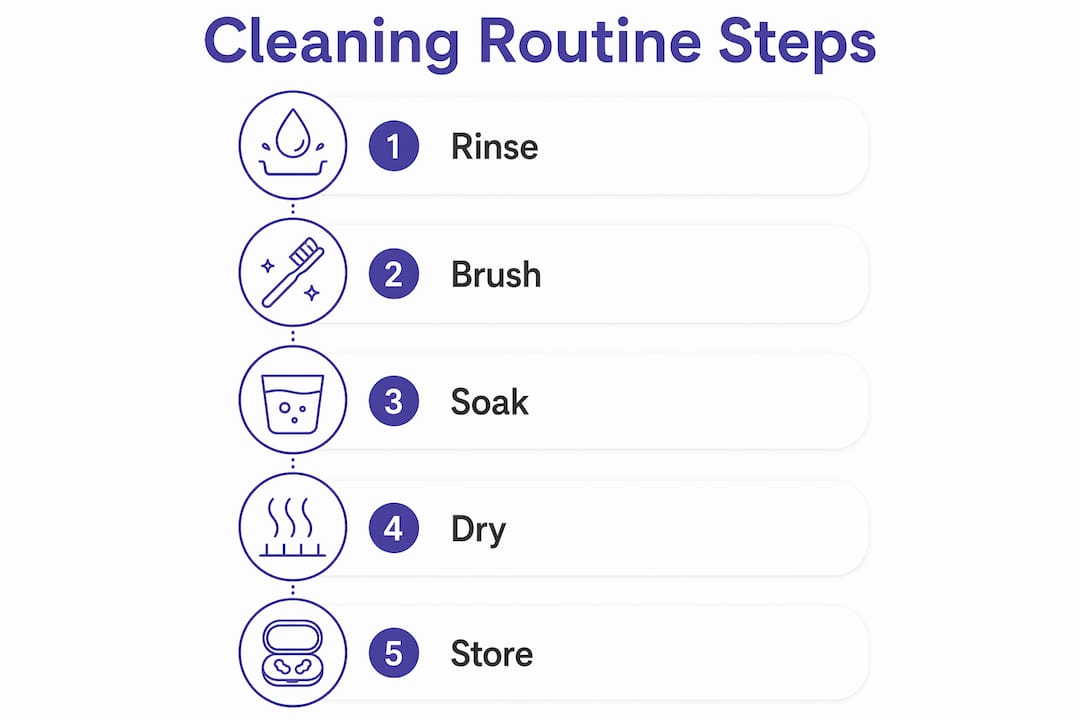
The most effective mouth guard cleaning routine combines immediate rinsing after removal with gentle daily brushing and a weekly deep soak. Daily cleaning takes under 2 minutes with a consistent routine, and the two most critical steps are rinsing right away and drying thoroughly before storage. Skipping either step allows bacteria to multiply in the warm, moist environment left behind after wear. Athletes face this problem more acutely. Bacteria colonization accelerates within the first hour after use when a guard stays warm and wet, making immediate rinsing the single most effective intervention for sports guard hygiene.
The industry term for this combined approach is “dental appliance hygiene protocol.” Dental professionals use it to describe the full cycle of daily maintenance and periodic disinfection that keeps appliances safe for repeated oral contact. Understanding that framework helps you treat cleaning as a system, not a one-off task.
What daily mouth guard cleaning steps should you follow?
A consistent daily routine prevents the majority of odor and bacterial problems before they start. Follow these steps every time you remove your guard:
- Rinse immediately. Hold the guard under cool or lukewarm water as soon as you take it out. Never use hot water. Hot water warps thermoplastic and acrylic materials, which alters the fit permanently.
- Brush gently with mild soap. Use a soft-bristle toothbrush and a small amount of mild, non-abrasive liquid soap. Do not use regular toothpaste. Toothpaste abrasives create microscopic scratches that trap bacteria and undermine long-term hygiene.
- Rinse again thoroughly. Remove all soap film. Residue left on the guard transfers directly into your mouth during the next wear.
- Air dry completely. Set the guard on a clean surface and let it dry fully before placing it in its case. Storing a wet guard creates the exact warm, moist conditions bacteria need to thrive.
- Store in a ventilated case. Ventilated cases with airflow slots promote faster drying and reduce bacterial colonization between uses.
Pro Tip: Keep a dedicated soft-bristle toothbrush next to your sink specifically for your mouth guard. Using the same brush you use for your teeth transfers toothpaste residue and cross-contaminates both.
The logic behind this sequence matters. Rinsing immediately and drying thoroughly are more critical to hygiene success than aggressive chemicals, because bacteria multiply quickly in warm, moist conditions. Chemicals can supplement the routine, but they cannot replace the mechanical action of brushing and the protection of full drying.
How and when should you deep clean your mouth guard?
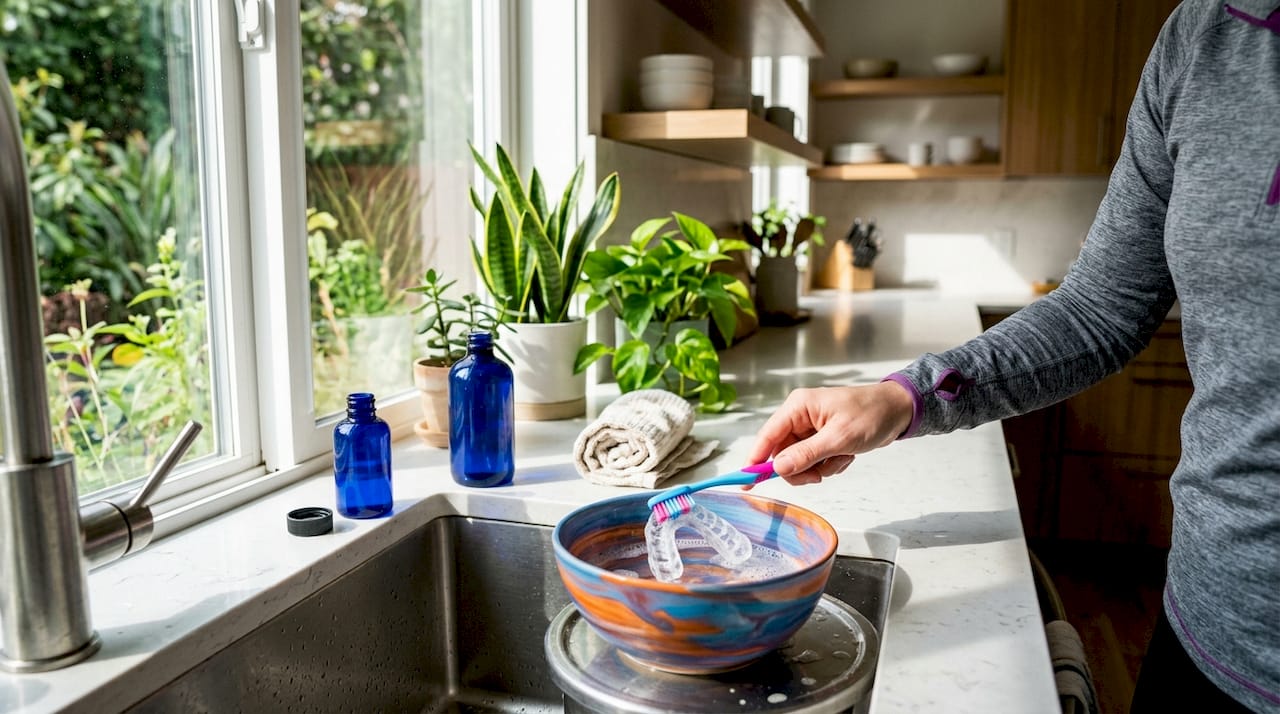
Weekly deep cleaning removes mineral deposits, protein buildup, and odor that daily brushing cannot fully address. The right method depends on your guard’s material, so match the soak to the appliance type before you start.
Soaking options for weekly deep cleaning:
- Denture or retainer cleaning tablets: Drop one tablet in cool water and soak the guard according to the package instructions. These tablets are widely available and formulated to be safe for most appliance materials.
- Diluted hydrogen peroxide: Mix 3% hydrogen peroxide 1:1 with water and soak for 10–30 minutes. This disinfects and helps remove stains. Do not use this method daily, as repeated exposure can weaken the material over time.
- Diluted white vinegar: Mix approximately 1 part vinegar to 3 parts water and soak for 15–30 minutes. Vinegar dissolves mineral and protein deposits and reduces odor effectively.
What to avoid during deep cleaning:
- Alcohol-based mouthwash as a soak. It dries out and degrades soft guard materials.
- Abrasive scrubbing pads or stiff brushes. These scratch the surface and create bacteria traps.
- Hot water at any stage. The warping risk applies to soaking as much as to rinsing.
Post-soak rinsing is mandatory to remove hydrogen peroxide or vinegar residues. Both can cause oral irritation or an unpleasant taste if left on the appliance. Rinse under cool running water for at least 30 seconds after any soak.
Pro Tip: Deep clean your storage case at the same time you deep clean your guard. A contaminated case reintroduces bacteria to a freshly cleaned appliance within hours.
What are the best mouth guard cleaning tools and products?
The right tools make cleaning faster and more effective. Here is a comparison of the main options:
| Method | Ease | Effectiveness | Cost | Appliance safety |
|---|---|---|---|---|
| Soft toothbrush + mild soap | High | Good for daily use | Very low | Safe for all types |
| Denture/retainer tablets | High | Good for weekly soak | Low | Safe for most types |
| Diluted hydrogen peroxide | Medium | Strong disinfection | Very low | Use with caution |
| Diluted white vinegar | Medium | Good for mineral buildup | Very low | Avoid on soft guards |
| Ultrasonic cleaner | High | Strong, hands-free | Medium to high | Safe for most types |
Ultrasonic cleaners use high-frequency vibrations to dislodge debris in cleaning cycles that typically run 5–10 minutes. Some models include UV sterilization for an additional layer of disinfection. They work well for people who want a hands-free option, though the upfront cost is higher than tablet or soak methods.
Cleaning methods should match the guard’s material to avoid damage. Soft athletic guards used for contact sports are more vulnerable to acidic soaks like vinegar and to heat. Hard acrylic night guards tolerate a wider range of cleaning agents. If you wear a custom sports mouth guard, check the manufacturer’s care instructions before using any chemical soak.
For most people, the soft toothbrush and mild soap combination handles daily needs, while denture tablets or a diluted peroxide soak covers weekly disinfection. That combination costs almost nothing and protects the appliance effectively.
How should you store your mouth guard to prevent damage and odor?
Storage is where most people lose the hygiene gains from cleaning. A well-cleaned guard stored incorrectly becomes contaminated within hours.
- Always air dry fully before storage. Even five minutes of air drying reduces the moisture level enough to slow bacterial growth significantly.
- Use a ventilated case. Cases with airflow slots or drip channels allow moisture to escape rather than pool around the guard.
- Clean the case weekly. Rinse it with mild soap and water, then let it air dry completely before placing the guard inside.
- Never store in a sealed plastic bag or wrapped in a tissue. Both trap moisture and create ideal conditions for mold and bacteria.
- Avoid biting or chewing on the guard outside of its intended use. This stresses the material and creates surface cracks where bacteria hide.
Watch for these signs that your guard needs replacement: visible cracks or chips, a persistent odor that does not clear after deep cleaning, visible discoloration that does not respond to soaking, or a noticeable change in fit. A damaged guard is harder to clean and may no longer protect your teeth effectively. For guidance on choosing the right guard type, material matters as much as cleaning method.
What should you do if your mouth guard still smells bad?
Persistent odor after regular cleaning is a signal that something in the routine is incomplete. Work through these steps in order:
- Check your drying practice. If the guard goes into its case while still damp, that single habit causes most chronic odor problems.
- Inspect the storage case. Persistent odor often comes from a contaminated storage case, not the guard itself. Testing by alternating between a clean case and the original one usually confirms the source.
- Run a full deep clean. Soak in diluted hydrogen peroxide or white vinegar as described above. Rinse thoroughly afterward.
- Replace the storage case. Cases develop scratches and cracks over time that trap bacteria even after cleaning.
- Examine the guard surface. Surface scratches from abrasive products or toothpaste create pockets where bacteria accumulate and resist cleaning.
If odor persists after correcting drying habits, replacing the case, and completing two consecutive weekly deep cleans, consult your dentist or orthodontist. The guard may have surface damage that makes it impossible to fully disinfect, and replacement is the safest option.
Daily routines alone cannot solve odor caused by a contaminated case or a scratched guard surface. The fix requires addressing the source, not just increasing cleaning frequency.
Key takeaways
The most effective mouth guard hygiene combines immediate rinsing and full air drying every day with a weekly soak matched to your guard’s material.
| Point | Details |
|---|---|
| Rinse and dry immediately | Remove the guard and rinse under cool water right away, then air dry fully before storage. |
| Skip toothpaste | Use mild soap and a soft brush instead; toothpaste scratches the surface and creates bacteria traps. |
| Deep clean weekly | Soak in diluted hydrogen peroxide or denture tablets once per week to remove buildup daily brushing misses. |
| Match method to material | Soft athletic guards need gentler soaks; hard acrylic night guards tolerate a wider range of cleaning agents. |
| Clean the case too | A contaminated storage case reintroduces bacteria to a freshly cleaned guard within hours. |
What I’ve learned from years of watching people get this wrong
Most people focus on the guard itself and completely ignore the case. That is the single most common reason a cleaning routine fails. You can soak a guard in hydrogen peroxide every week and still end up with a foul-smelling appliance if the case is never cleaned. The case is part of the hygiene system, not an afterthought.
The second mistake I see constantly is using hot water. People assume hotter means cleaner. For mouth guards, the opposite is true. Hot water warps the material, changes the fit, and creates surface irregularities that trap bacteria. Cool water and mild soap outperform hot water every time.
The third mistake is reaching for toothpaste because it feels like the obvious choice. Toothpaste is abrasive by design. Those abrasives work well on enamel but create microscopic scratches on guard surfaces that become permanent bacteria colonies. Mild dish soap or a dedicated appliance cleaner is always the better call.
My practical shortcut: keep a small bottle of mild soap and a dedicated brush next to the sink. Make the two-minute daily routine automatic by placing everything in plain sight. Habits form around convenience. If cleaning the guard requires opening a cabinet and searching for supplies, it will get skipped. If everything is already out and ready, it becomes as automatic as brushing your teeth.
— Clear
Clearretain’s night guards and retainers are built for easy cleaning
Clearretain designs its night guards and clear retainers from FDA-approved materials that hold up to daily brushing and weekly soaking without warping or degrading. Every appliance is made under the supervision of experienced orthodontic technicians, so the fit stays accurate even after months of consistent cleaning.
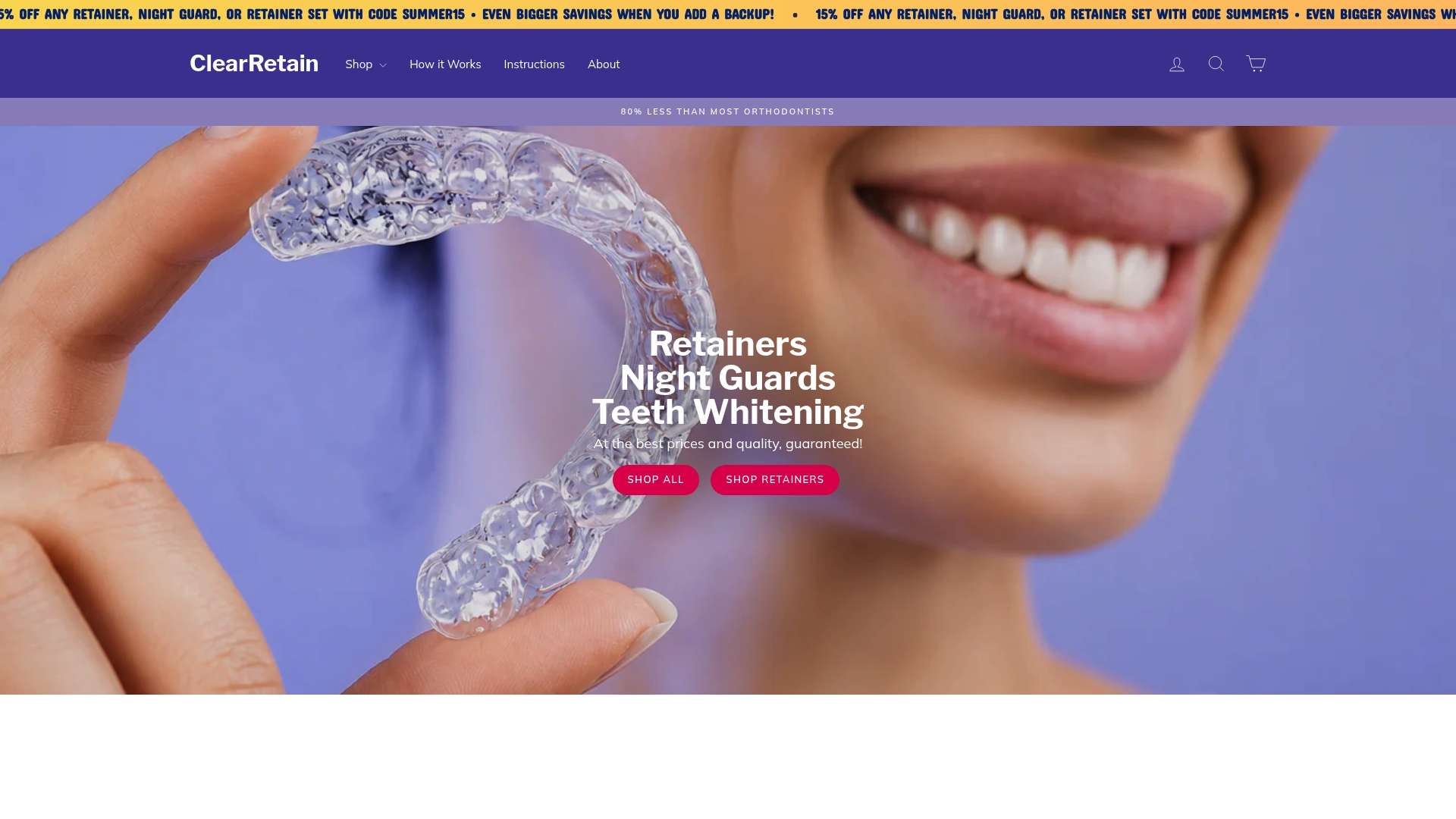
Ordering directly through Clearretain cuts out the office visit markup, which means you get professional-grade appliances at a fraction of the typical cost. If your current guard shows signs of wear, cracks, or persistent odor that cleaning cannot fix, Clearretain’s upper and lower retainer set and night guard options make replacement straightforward and affordable. Browse the full range at Clearretain to find the right appliance for your needs.
FAQ
How often should I clean my mouth guard?
Clean your mouth guard every day with a soft brush and mild soap, and deep clean it once per week using denture tablets or a diluted soak. Daily cleaning prevents bacterial buildup, while weekly deep cleaning removes mineral deposits and odor that brushing alone cannot address.
Can I use mouthwash to clean my mouth guard?
Alcohol-based mouthwash is not recommended for soaking mouth guards. Alcohol degrades soft guard materials over time and can alter the fit; use diluted hydrogen peroxide or denture tablets instead.
Why does my mouth guard still smell after cleaning?
Persistent odor usually points to a contaminated storage case or incomplete drying before storage, not the guard itself. Replace or thoroughly clean the case, and make sure the guard is fully dry before it goes in.
Is it safe to use toothpaste on a mouth guard?
Regular toothpaste is not safe for mouth guards. Its abrasive particles scratch the guard surface and create microscopic grooves where bacteria accumulate, making the appliance harder to clean over time.
How do I know when to replace my mouth guard?
Replace your mouth guard when you notice visible cracks, a fit that has shifted, or a persistent odor that does not clear after two consecutive weekly deep cleans. Surface damage makes full disinfection impossible and signals that the appliance has reached the end of its useful life.