



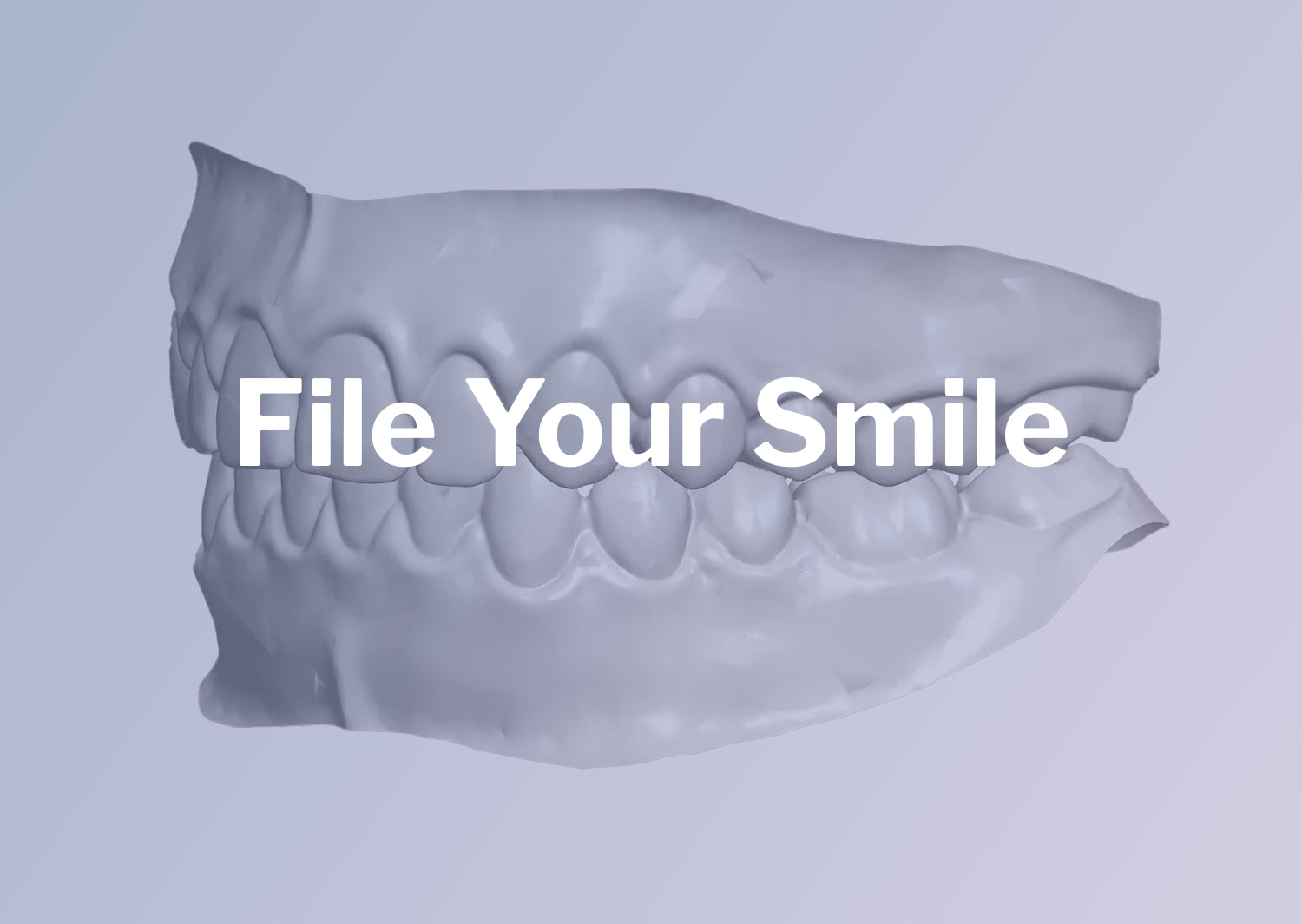
What Is a Functional Appliance in Orthodontics?
A functional appliance is an orthodontic device that uses the natural forces of jaw posture and muscle activity to correct a Class II bite by holding the lower jaw in a more forward position. Orthodontists prescribe them mainly for growing kids and teens, typically timed around the pubertal growth spurt rather than a fixed age. Common examples include the Twin Block, the Herbst appliance, and the Activator.
Class II malocclusion, where the upper jaw or teeth sit noticeably ahead of the lower ones, affects roughly 25% of the population. That’s a quarter of every orthodontic waiting room dealing with some version of this bite pattern.
- Main purpose: correct a Class II bite by guiding the lower jaw and its surrounding muscles into a better working relationship with the upper jaw.
- Best timing: during active growth, ideally near the adolescent growth spurt, when the jaw responds most readily to sustained postural change.
- Common examples: Twin Block and Activator (removable), Herbst (fixed) — each doing the same basic job through different hardware.
Key Takeaways
Functional appliances correct Class II bites in growing patients by repositioning the lower jaw, but their effects are mostly dentoalveolar and usually require a second phase of fixed treatment to finish the job.
| Point | Details |
|---|---|
| Definition and goal | A functional appliance postures the lower jaw forward to correct Class II bite relationships. |
| Timing matters most | Treatment works best near the pubertal growth spurt, not at a fixed chronological age. |
| Fixed vs removable | Removable types like Twin Block need consistent wear; fixed types like Herbst work without compliance. |
| Effects are often temporary | Skeletal change tends to be short-term; most lasting results are dental, not bone-based. |
| Retention comes next | After appliance and braces phases finish, Clearretain’s custom retainers protect the corrected bite affordably. |
Table of Contents
- How Do Functional Appliances Work?
- What Are the Common Types of Functional Appliances?
- Who Is a Good Candidate for a Functional Appliance?
- What Should You Expect During Functional Appliance Treatment?
- Do Functional Appliances Actually Work?
- What Should You Ask Your Orthodontist Before Starting Treatment?
- Get Custom Retainers After Your Orthodontic Treatment
- Frequently Asked Questions
- Sources
How Do Functional Appliances Work?
Functional appliances work by repositioning the lower jaw forward and holding it there long enough that the muscles, ligaments, and teeth around it adapt to the new position. Instead of pushing on individual teeth like braces do, they change the posture of the whole jaw system, which then reshapes how forces get distributed across the bite.
A few distinct mechanisms are doing the work at once:
- Mandibular posturing: the appliance locks the lower jaw into a forward bite, breaking the habitual retruded position.
- Muscle redirection: stretched muscles around the jaw and cheeks generate constant, low-level force that gets transmitted into the teeth and supporting bone.
- Eruption guidance: as permanent teeth continue coming in during treatment, the appliance steers where they land in the new bite relationship.
- Intermaxillary force effects: forces pass between the upper and lower arches, nudging the upper molars backward and the lower ones forward over time, according to a clinical overview of appliance mechanics.
The dental effects (tooth position, tipping) tend to show up fast. The skeletal contribution, the harder question of whether jaw bone itself grows differently, is where the timing of treatment matters most.
Pro Tip: Ask your orthodontist where your child sits on the growth curve, not just their age. A appliance started right before peak growth velocity gets far more skeletal benefit than the same device started two years later or two years earlier.
What Are the Common Types of Functional Appliances?
Functional appliances split first into removable and fixed designs, and that single distinction drives almost everything else about how treatment feels day to day. Removable appliances depend on the patient actually wearing them; fixed appliances stay cemented in place and work whether or not the patient remembers.
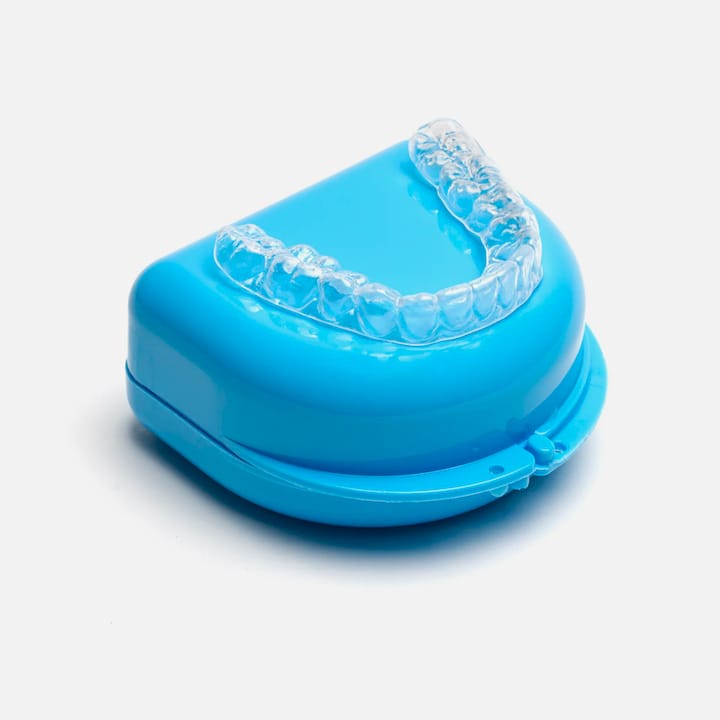
The compliance gap between these categories is the real story. Removable devices like the Twin Block only work if worn the prescribed number of hours; skip too many nights and progress stalls. Fixed appliances like the Herbst sidestep that problem entirely, since continuous mechanical action doesn’t depend on the patient remembering anything. That’s exactly why orthodontists reach for a Herbst or Forsus when they suspect a patient (or a teenager, specifically) won’t wear a removable device reliably.
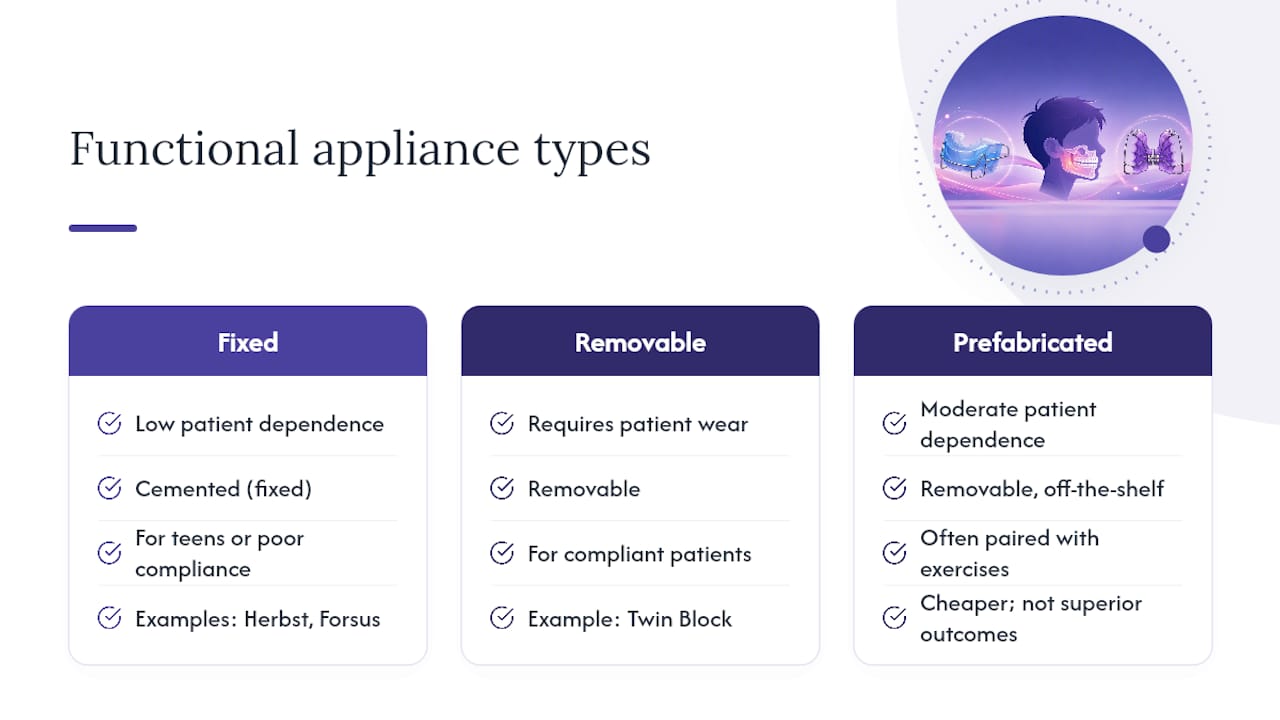
Prefabricated functional appliances occupy a middle ground. They’re often cheaper and paired with myofunctional exercises, but current evidence doesn’t put them ahead of custom-made appliances on actual treatment outcomes.
Who Is a Good Candidate for a Functional Appliance?
The clearest candidate is a growing patient with a skeletal Class II caused by mandibular retrusion, meaning the lower jaw itself sits too far back, not just the teeth, making adult airway orthodontics an important consideration in treatment planning. Dental Class II, where teeth are misaligned but the jaws line up normally, usually responds better to braces alone.
Growth timing matters more than a birthday. Orthodontists look for:
- Peak height velocity, the fastest stretch of a child’s growth spurt, often tracked through hand-wrist X-rays or growth charts.
- Emerging second molars or other dental eruption markers that roughly coincide with pubertal growth.
- Overjet size, since larger gaps between upper and lower front teeth often signal a more significant skeletal component.
- Minimal lower crowding, because appliances that tip lower incisors forward can worsen already-crowded teeth.
- TMJ health and joint symptoms, checked before adding forward-posturing forces to the jaw.
- Realistic likelihood of compliance, which shapes whether a removable or fixed design gets recommended.
What Should You Expect During Functional Appliance Treatment?
Wear schedules vary by design. Twin Blocks and Activators are usually prescribed for 14 to 20 hours a day, covering nighttime sleep plus a chunk of the day. Fixed options like the Herbst stay in around the clock since there’s nothing to take out.
Daily care is straightforward but non-negotiable:
- Clean removable appliances with a soft brush and lukewarm water after meals; avoid hot water, which can warp the plastic.
- Skip sticky or hard foods that can crack components or dislodge fixed hardware.
- Call your orthodontist right away for broken wires, loose bands, or persistent pain, rather than waiting for the next scheduled visit.
Temporary side effects are common and usually mild: some speech changes in the first week or two, increased salivation as the mouth adjusts, and mild soreness in the jaw muscles. Lower incisor tipping can occur with certain fixed designs and gets monitored closely.
Pro Tip: Log wear-time on a phone calendar or a printed chart taped to the bathroom mirror. Parents managing a teen’s retainer wear already know that visible tracking beats verbal reminders for building a real habit.
Do Functional Appliances Actually Work?
Yes, for reducing overjet and correcting Class II relationships in growing patients, but the skeletal change tends to be modest and short-lived rather than a permanent reshaping of jaw bone. Functional appliances have been used clinically for over a century, and the evidence base is substantial, but it points to a specific and limited kind of success.
Most of the measurable change is dentoalveolar: teeth move, the bite improves, the profile often looks better. True skeletal modification, meaning the jaw bone itself growing on a different trajectory, is harder to prove and appears to fade over longer follow-up periods. With a quarter of the population carrying some form of Class II relationship, that distinction affects a lot of treatment plans.
A few things worth knowing before starting treatment:
- Functional appliance therapy is not a guarantee of permanent jaw bone change, no matter what the marketing on a prefabricated appliance box implies.
- Most patients need a second phase of fixed braces afterward to finish aligning individual teeth and refine the bite.
- Results depend heavily on timing relative to growth, patient compliance for removable designs, and the severity of the original skeletal discrepancy.
What Should You Ask Your Orthodontist Before Starting Treatment?
Bring these questions to your consultation:
- Is this a skeletal or dental Class II, and how does that affect the appliance choice?
- Am I (or my child) at the right point in the growth curve for this treatment?
- Would a removable or fixed appliance work better for my situation, and why?
- What’s the expected timeline for this phase of treatment?
- Will a second phase of braces be needed afterward?
- What are the realistic risks, including lower incisor tipping or TMJ symptoms?
- How will you monitor growth and progress during treatment?
- What happens if compliance with a removable appliance isn’t consistent?
- What does the follow-up and retention plan look like once the appliance comes off?
- How will we know if the appliance isn’t working as expected?
Watch for these red flags in any consultation:
- Vague promises about permanently changing jaw shape or facial profile.
- No mention of a likely second phase with braces or clear aligners.
- Pressure to buy a prefabricated appliance online without a clinical exam first.
A clinician-informed perspective on functional appliances
Functional appliances earn their place in orthodontics when timing and diagnosis line up correctly. They add real value for growing patients with genuine skeletal Class II problems, but they’re rarely the whole treatment. At ClearRetain, our work sits downstream of that first phase, in the retention and finishing appliances patients need once the bite correction is complete, overseen by experienced orthodontic technicians.
Get Custom Retainers After Your Orthodontic Treatment
Once a functional appliance phase and any follow-up braces wrap up, retention becomes the piece that protects everything gained. Clearretain sells custom clear retainers directly online at a fraction of what a traditional orthodontic office charges for the same fit and materials, with FDA-approved plastics made under orthodontic technician supervision.
If your orthodontist has already released you into retention, you can order a custom lower retainer or upper retainer using a detailed self-impression kit shipped to your door, no office visit required. Patients who need both arches covered often choose the upper and lower retainer set for one combined order. And since Clearretain stores your digital impressions, reordering a replacement later takes minutes instead of another appointment. Head to clearretain.com to start your order today.
Frequently Asked Questions
What is a functional appliance in orthodontics used for? It’s used mainly to correct Class II bite problems in growing patients by holding the lower jaw in a more forward position, changing how muscle and bite forces act on the teeth and jaw.
At what age do orthodontists use functional appliances? There’s no fixed age; orthodontists time treatment to the patient’s growth spurt, often in the pre-teen to early teen years, using growth indicators rather than a birthday.
Is a functional appliance the same as braces? No. Braces move individual teeth with brackets and wires; functional appliances reposture the entire jaw relationship, and many patients need braces afterward to finish alignment.
Do functional appliances hurt? Most patients report mild soreness in the jaw muscles for the first few days, along with temporary speech changes and extra saliva, which usually settle within one to two weeks.
Are fixed or removable functional appliances better? Neither is universally better. Removable appliances like the Twin Block work well for compliant patients; fixed appliances like the Herbst suit patients unlikely to wear a removable device consistently.
This article is general information, not a substitute for advice from a qualified doctor. Consult a qualified healthcare professional about your own circumstances before acting on anything here.
Sources
- Functional appliances definition and prevalence (PMC)
- The use of functional appliances in contemporary orthodontic practice | British Dental Journal