



Guard Retainer Combo Appliance: What It Is and How It Works
What is a guard retainer combo appliance?
A guard retainer combo appliance is a single custom dental device that holds your teeth in their post-orthodontic position while simultaneously protecting them from nighttime grinding. Clinically, it is called a dual-function splint or hybrid night guard retainer. Think of it as two appliances engineered into one precise fit.
The need for this device comes from a real clinical gap. Standard retainers are too thin to survive severe grinding, while conventional night guards lack the precision to prevent orthodontic relapse. Using either alone when you need both functions leads to appliance failure and, eventually, shifting teeth or enamel damage.
Key features of the combo appliance:
- Dual-layer construction: soft interior for snug retention, hard exterior for grinding resistance
- Custom fit: fabricated from digital impressions of your exact tooth positions
- Thickness range: generally thicker than standard retainers, which are quite thin for retention purposes
- Single-arch or full-set options: available for upper, lower, or both arches
- Orthodontic retention built in: the interior mold grips tooth contours tightly enough to prevent micro-movements
What materials go into making a combo appliance?
The dual-laminate design uses two distinct materials bonded together, each doing a different job.
Materials overview:
- Soft polyurethane inner layer: conforms precisely to tooth contours, absorbs initial clenching impact, and maintains the snug fit needed for retention
- Hard copolyester or acrylic outer layer: resists grinding forces, allows opposing teeth to glide smoothly, and prevents the fractures that destroy standard retainers
- Hawley-style variant: uses a hard acrylic palate with a stainless steel wire; more durable than clear thermoplastic but does not cover biting surfaces the same way
Custom manufacturing steps:
- Digital impressions capture the exact anatomy of your teeth
- CAD/CAM software models the appliance to the required thickness and occlusal scheme
- The soft inner layer is formed first, gripping every contour of the dental arch
- The hard outer shell is bonded or pressure-formed over the soft layer
- The finished appliance is trimmed, polished, and checked for precise fit
CAD/CAM fabrication is what makes this device possible. The added thickness of a hybrid appliance would compromise retention if the interior were not milled to exact tolerances. A lab-poured or boil-and-bite approach simply cannot achieve that level of fit.
Pro Tip: Ask your provider whether the lab uses digital scanning or physical impressions. Digital scanning typically produces a more accurate interior fit, which matters more for retention than for grinding protection.

How to care for your combo appliance
Proper care keeps the appliance effective and extends its lifespan. Failure to follow care instructions can cause warping, discomfort, and a shortened appliance life.
- Rinse immediately after removal. Warm water removes saliva and loose debris before they dry on the surface.
- Clean daily with a nonabrasive agent. A soft toothbrush and mild dish soap or a retainer-specific cleaner work well. Avoid toothpaste, which is abrasive enough to scratch the acrylic exterior.
- Store in a ventilated hard case. Never wrap the appliance in a tissue or leave it on a nightstand. Heat and pressure warp the material.
- Keep it away from hot water. Temperatures above roughly 140°F distort the thermoplastic layers and alter the fit permanently.
- Never stack it with another appliance. Wearing a night guard over a clear retainer distorts your bite and can permanently warp both devices. The combo appliance replaces that stack entirely.
- Schedule periodic professional checks. Your provider should evaluate fit and wear patterns every six to twelve months, or sooner if you notice cracking, looseness, or bite changes.
- Replace when wear-through appears. Heavy grinders may wear through the outer layer faster than light grinders. A worn exterior no longer protects enamel effectively.
Expert insights on clinical considerations
Retention and occlusal protection are two distinct clinical goals, and understanding that difference is the foundation of choosing the right appliance. A retainer is engineered for precision micro-fit. A night guard is engineered for force absorption. A hybrid device makes a deliberate biomechanical compromise to serve both goals at once.
“Combination devices represent a compromise, balancing retention and occlusal protection but sometimes sacrificing the peak effectiveness of either. For patients with severe bruxism, separate devices or fixed retainers may be the more appropriate clinical choice.” — Clinical guidance from Elate Orthodontics
That compromise is well-managed for moderate grinders. The dual-layer architecture integrates both functions in a single custom appliance, eliminating the bite distortion that comes from stacking two separate devices. For most post-orthodontic patients with mild to moderate bruxism, the hybrid performs reliably.
Severe bruxism is a different situation; professional approaches to grinding bite splints can offer tailored treatment options to manage heavy grinding effectively, as discussed by R&H Dental. Patients who generate extreme occlusal forces may wear through the hard exterior faster than the appliance can justify its cost, and the retention function can be compromised as the material degrades. In those cases, a fixed lingual retainer combined with a heavy-duty separate night guard is often the better clinical path. Your provider can assess your occlusal load and periodontal health to determine which setup fits your situation.

Pro Tip: If you wake up with jaw soreness or notice visible wear grooves on the outer surface within a few months, tell your provider. That pattern suggests your grinding forces may exceed what a hybrid appliance can handle long-term.
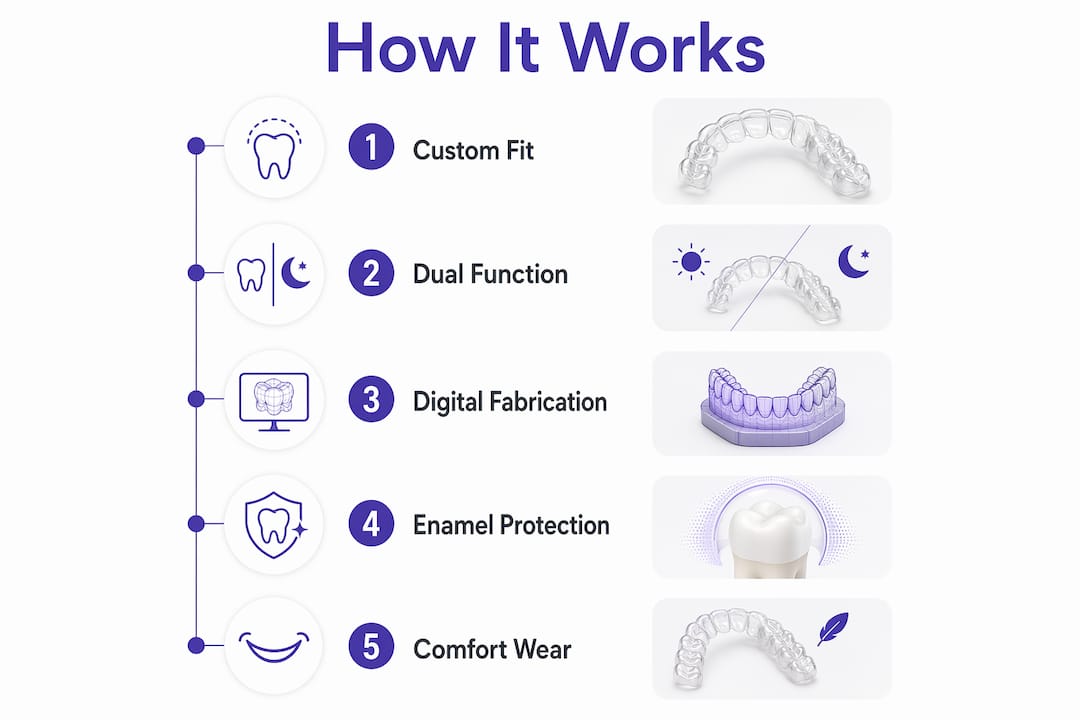
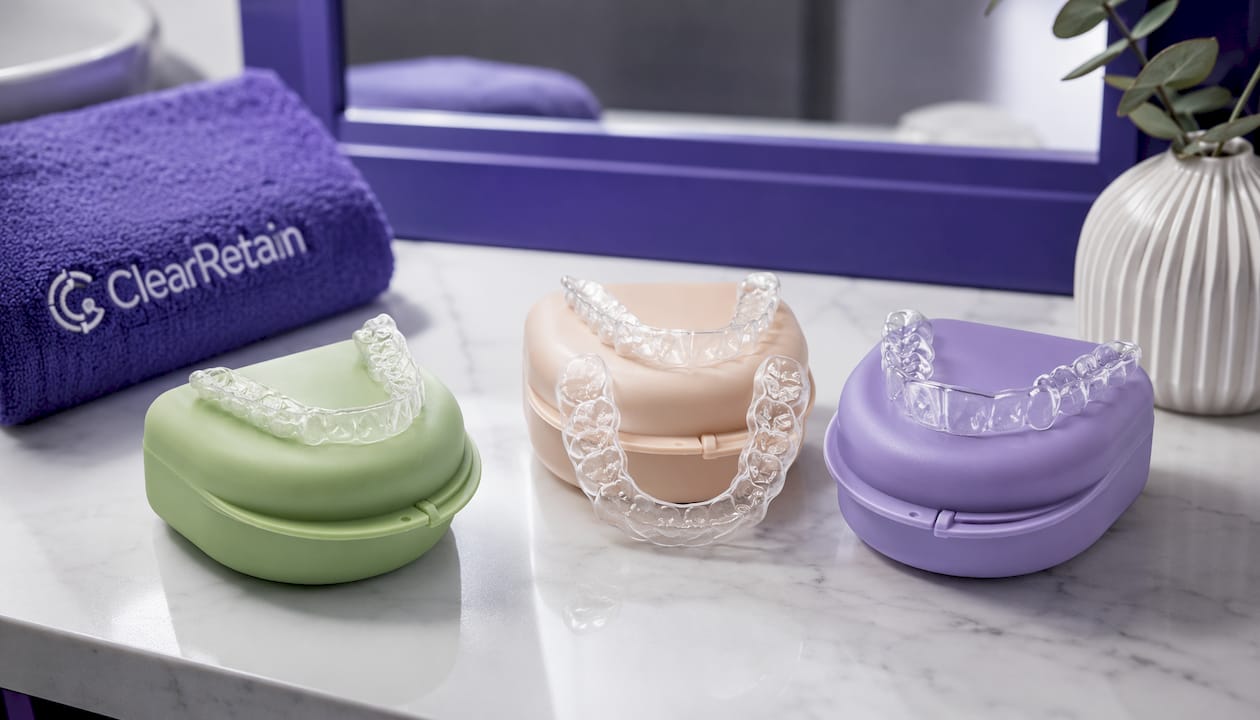
For patients who want a professionally fabricated combo appliance without the cost of multiple office visits, Clearretain offers an upper retainer-night guard and a lower retainer-night guard made from FDA-approved dual-laminate materials under orthodontic technician supervision. The upper and lower set covers both arches at a fraction of typical in-office pricing. Clearretain’s direct-to-consumer model uses detailed self-impression kits so the fit is custom, not generic.
Key Takeaways
A guard retainer combo appliance is designed to simultaneously prevent orthodontic relapse and protect enamel from grinding forces, using a dual-laminate structure with greater thickness than standard retainers.
| Point | Details |
|---|---|
| Dual function in one device | The hybrid appliance retains tooth position and absorbs grinding forces simultaneously. |
| Thickness matters | Combo appliances are noticeably thicker than standard retainers, enhancing durability and protection while maintaining retention. |
| Never stack appliances | Wearing a night guard over a retainer warps both devices and distorts your bite. |
| Not ideal for severe bruxism | Heavy grinders may need a fixed retainer plus a separate heavy-duty night guard instead. |
| Daily care is non-negotiable | Nonabrasive cleaning and proper storage prevent warping and extend appliance lifespan. |