

Teen Retainer Overnight Wear Guide for Parents
Most orthodontists recommend wearing a retainer nearly full-time, typically removing it only for eating and brushing, for the first 4–12 months after braces come off, then shifting to nightly wear only once clinical stability is confirmed. That nightly routine—7 to 10 hours during normal sleep hours—is what most orthodontists recommend indefinitely. The American Association of Orthodontists (AAO) puts it plainly: “Nighttime for a lifetime to ensure your hard-fought results.” Clearretain offers direct-to-consumer replacement retainers if your teen’s appliance is lost or worn out.
Quick overnight schedule summary:
- Initial months: Wear the retainer nearly full-time, removing only to eat and brush.
- Transition point: When the orthodontist confirms stability, typically after a few months.
- Long-term maintenance: Wear retainer every night, especially during sleep, for life or as directed.
- Minimum habit: Aim for most nights each week if nightly wear is not always possible, but consistent nightly use is the goal.
- Replacement: Teeth can begin shifting within days without a retainer — replace a lost or broken one immediately.
Table of Contents
- Why does your teen need a retainer after braces?
- What does the typical retention schedule look like?
- How does retainer type change overnight wear habits?
- Which factors change how long a teen must wear a retainer?
- How do you build a consistent nightly retainer habit for teens?
- How should you clean and care for a removable retainer?
- When should you contact the orthodontist right away?
- Should your teen consider a hybrid fixed-plus-removable approach?
- Key Takeaways
- The case for treating nightly wear as a permanent habit
- Clearretain makes overnight retainer wear easier to maintain
- Useful sources and further reading
Why does your teen need a retainer after braces?
Braces move teeth by applying pressure, but the bone and soft tissue around each tooth need time to catch up. The periodontal ligament — the fibrous tissue anchoring each tooth to the jawbone — retains a kind of “memory” of where the tooth used to sit. Without a retainer holding things in place, those fibers pull teeth back toward their original positions.
Retention is not the end of orthodontic treatment — it is a continuation of it. The AAO explains that retainers are prescribed for two reasons: to allow the bone holding teeth to rebuild after movement, and to maintain healthy new positions once active treatment ends. Your body keeps changing throughout life, and so do your teeth.
Relapse risk is highest in the first weeks after braces are removed, when the periodontal ligament is most active. But aging forces — natural forward drift of teeth, jaw changes, and muscle pressure — continue for decades. That is why retention procedures are considered a long-term commitment, not a short-term formality. Framing nightly wear as maintenance rather than a chore helps teens stay consistent.
What does the typical retention schedule look like?
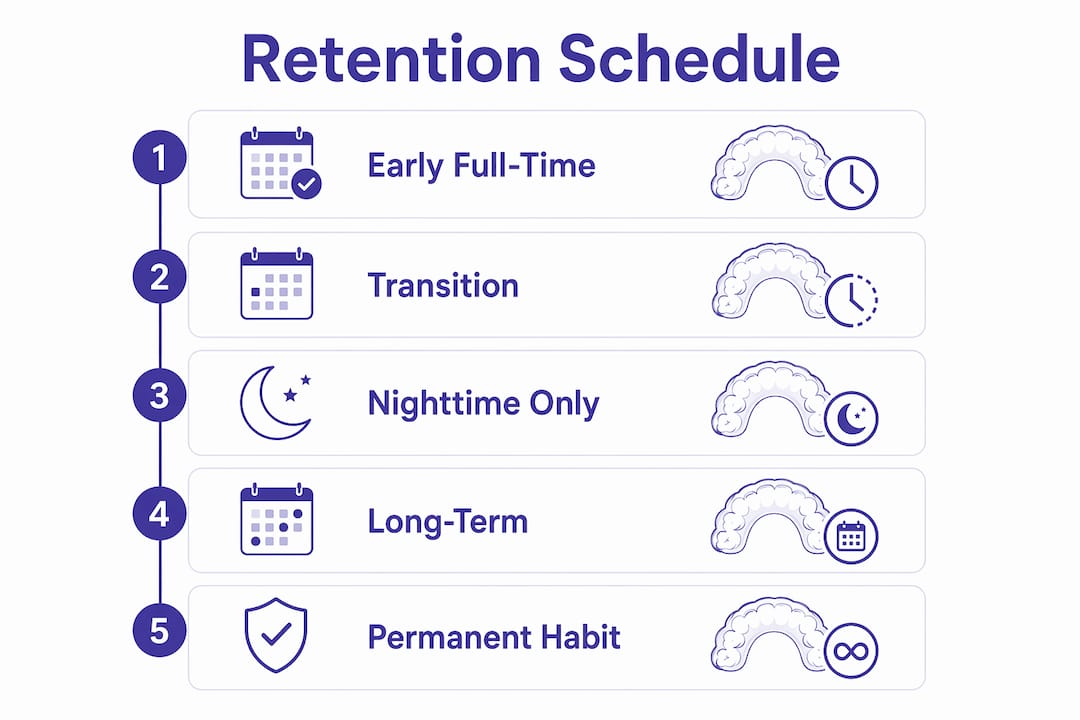
The three phases below reflect the clinical consensus most orthodontists follow. Individual timelines vary, but this gives parents a reliable benchmark.
| Phase | Duration | Wear requirement | Goal |
|---|---|---|---|
| Early full-time | Months 1–6 (up to 12) | 20–22 hours/day | Stabilize bone and ligament remodeling |
| Transition | Months 4–12 (follows full-time phase) | Shift to nights only as stability confirmed | Confirm clinical stability before reducing wear |
| Long-term maintenance | Indefinitely after transition | 7–10 hours nightly (every night) | Prevent age-related relapse |
Transition criteria are set by the orthodontist, not by the calendar. Before reducing daytime wear, the clinician typically checks that teeth are not shifting between appointments, that the retainer still seats fully without pressure, and that the teen’s growth phase is stable. Teens who are still growing — particularly younger adolescents — may stay in the full-time phase longer.
“Nighttime only” means the retainer goes in right before sleep and comes out in the morning. Targeting 7–10 hours aligns with a normal sleep schedule and provides meaningful retention. Aiming for every single night is the standard; five or more nights per week is a practical floor if occasional misses happen, but missing multiple nights in a row is when teeth start to drift.
Pro Tip: Set a recurring phone alarm labeled “retainer in” for 10 minutes before your teen’s usual bedtime. Habit cues like this are more reliable than memory alone.
How does retainer type change overnight wear habits?
Not all retainers work the same way at night. The type your teen has directly affects comfort, compliance risk, and what you need to watch for.
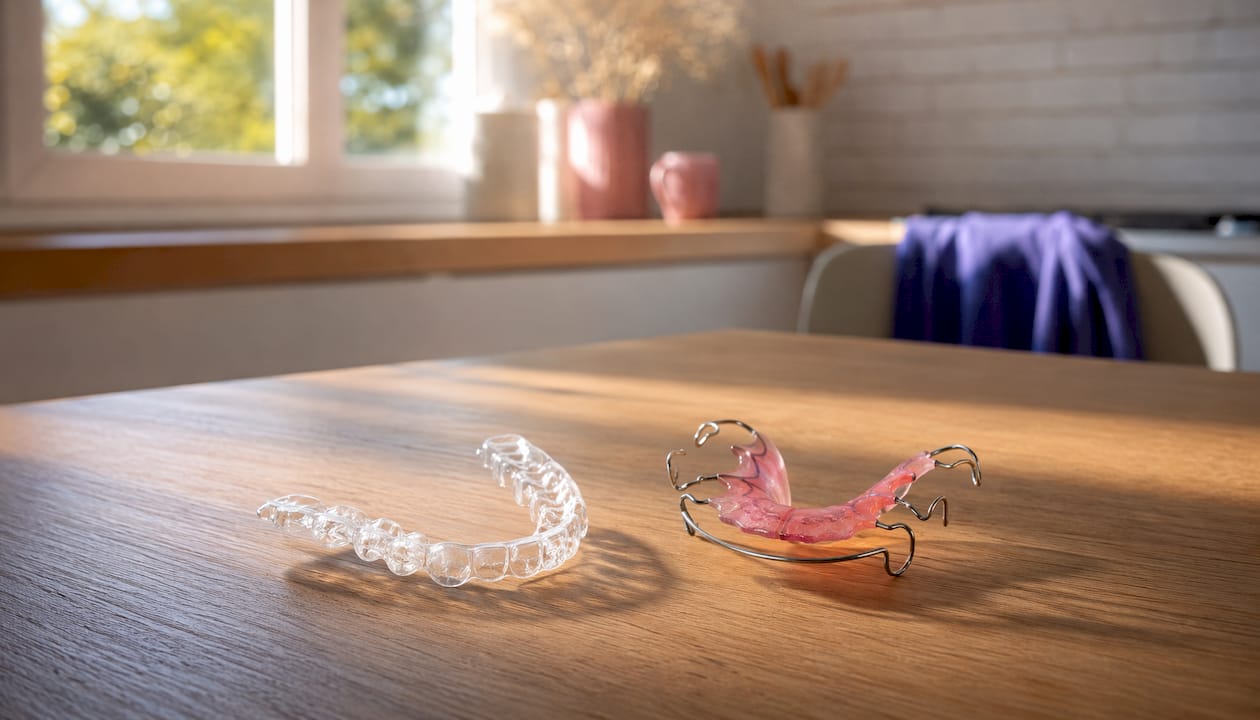
| Type | How it works | Overnight pros | Overnight cons |
|---|---|---|---|
| Hawley (wire + acrylic) | Removable; metal wire across front teeth | Durable, adjustable, easy to clean | Bulkier; some teens find it uncomfortable to sleep in |
| Clear/vacuum-formed (Essix) | Removable; thin clear plastic tray | Nearly invisible, comfortable, popular with teens | Warps with heat; requires discipline; can crack over time |
| Fixed/bonded | Thin wire glued to back of teeth | No compliance required; continuous retention | Harder to clean; cannot be removed; wire can break |
Clear vacuum-formed retainers tend to show higher patient consistency in teens compared with Hawley retainers, according to clinical observations. The trade-off is that clear retainers are more vulnerable to damage and require careful handling.
Key points for each type:
- Hawley retainers last longer with proper care and can be adjusted if minor tooth movement occurs, but the wire can feel intrusive during sleep.
- Clear retainers are the most popular choice among teens for overnight use — comfortable and discreet — but a single night left on a hot car seat or rinsed with hot tap water can permanently warp the fit.
- Fixed retainers remove the compliance variable entirely, which is a genuine advantage for teens who struggle with consistency. The downside is that flossing requires a floss threader, and a broken wire needs prompt professional repair.
Pro Tip: If your teen has a clear retainer, keep a spare. One cracked or warped retainer at the wrong moment — right before a school trip, for example — can mean days without retention. A backup costs far less than re-treatment.
Which factors change how long a teen must wear a retainer?
The standard schedule is a starting point, not a fixed rule. Several patient-specific factors push the timeline longer or change the approach entirely.
- Age at treatment end: Younger teens still in active growth phases face higher relapse risk because jaw development continues. Their full-time phase often runs toward the longer end of the range.
- Complexity of original alignment: Severe crowding, large gaps, or rotated teeth that required significant movement are more prone to relapse than minor corrections.
- Spacing and crowding patterns: Lower front teeth are particularly prone to forward drift and crowding over time, regardless of how well treatment went.
- Wisdom teeth eruption: Emerging wisdom teeth can exert pressure on adjacent teeth. Orthodontists often monitor this closely and may recommend extended or modified retention.
- Oral habits: Tongue thrust, thumb-sucking, or nail-biting can apply continuous pressure that works against retention. These habits may need to be addressed alongside the retainer schedule.
- Growth phase: A teen who finishes braces at 13 faces different retention demands than one who finishes at 17. Earlier treatment end generally means a longer retention commitment.
When relapse risk is high, orthodontists often recommend a fixed bonded retainer for the lower arch, a longer full-time phase for removable retainers, or both. For some teens, nighttime retainer use every night for life is the realistic expectation — not a worst-case scenario, just biology.
How do you build a consistent nightly retainer habit for teens?
Compliance is the single biggest factor in long-term retention success. The schedule only works if the retainer actually gets worn.
- Habit stack with brushing. The most reliable cue is pairing retainer insertion with the last tooth-brushing of the night. Brush, rinse, retainer in. One sequence, every night.
- Place the case next to the toothbrush. Visible cues work. If the case is in a drawer, it gets forgotten. If it is sitting next to the toothbrush or phone charger, it is hard to miss.
- Set a phone alarm. Label it “retainer in” and set it for 10 minutes before the usual bedtime. Teens respond to phone prompts better than verbal reminders.
- Keep a spare retainer. High-risk situations — sleepovers, travel, school lunch — are where retainers disappear. A backup removes the “I forgot it” excuse and the panic of a lost appliance.
- Use a hard-shell case, always. The AAO warns that wrapping a retainer in a napkin at lunch is one of the leading causes of loss. The case goes everywhere the retainer goes.
- Keep parent reminders low-key. Nagging creates resistance. A simple check-in — “retainer in?” — works better than a lecture. Teens who feel ownership over the habit maintain it longer.
Pro Tip: Link retainer insertion to phone charging. Most teens plug in their phone before bed every single night without being reminded. Retainer case next to the charger = retainer in every night.
For more on teen-specific compliance strategies, the Align Clinic podcast with Dr. Guymon covers behavioral approaches that work well with adolescent patients.

How should you clean and care for a removable retainer?
A retainer that is not cleaned properly becomes a breeding ground for bacteria and plaque — and a warped or cracked retainer stops protecting teeth entirely.
Daily care dos:
- Rinse the retainer with cool or lukewarm water immediately after removing it each morning.
- Brush gently with a soft toothbrush and a small amount of mild, unscented soap. Toothpaste is too abrasive for clear retainers and will scratch the surface.
- Soak the retainer at least once a week in a retainer-cleaning solution to prevent mineral and bacterial buildup.
- Store it in a hard-shell case whenever it is not in the mouth.
What to avoid:
- Hot water. This is the most common mistake. Hot water warps plastic retainers permanently, ruining the fit. Use cool or lukewarm water only.
- Abrasive toothpaste on clear retainers. Scratches trap bacteria and cloud the plastic.
- Napkins, pockets, or open surfaces. A retainer left on a lunch tray or wrapped in a napkin gets thrown away or stepped on.
- Alcohol- or bleach-based cleaners. These damage the retainer material and are unsafe if residue remains when the retainer goes back in the mouth.
- Leaving it in a hot car. Dashboard heat is enough to warp a clear retainer within minutes.
Replace a retainer if it is cracked, visibly warped, or no longer seats fully. A damaged retainer provides no retention and can irritate gum tissue.
When should you contact the orthodontist right away?
Some retainer problems need immediate attention. Waiting even a few days can mean measurable tooth movement.
Contact the orthodontist the same day or next morning if:
- The retainer is lost or missing.
- The retainer is cracked, broken, or visibly warped.
- The retainer causes new pain or sharp pressure that was not there before.
- The retainer no longer seats fully or feels significantly tighter than usual after missed wear.
Temporary steps while you wait:
- Do not force a tight retainer. Forcing an ill-fitting appliance can damage teeth or the retainer itself — tightness usually means teeth have shifted.
- Keep the old retainer safe even if it no longer fits. The orthodontist may use it as a reference.
- Call the clinic and describe the problem clearly. Many offices can triage over the phone and advise whether to come in immediately or schedule within a few days.
The orthodontist may make a new retainer, use short-term aligner therapy to move teeth back into position, or simply monitor if the shift is minor. The AAO advises against forcing a retainer that does not seat — the right response is always to call, not to push.
Should your teen consider a hybrid fixed-plus-removable approach?
Many orthodontists consider the hybrid approach — a fixed bonded wire on the lower arch combined with a removable retainer for the upper — the most practical long-term strategy for teens.
The lower front teeth are the most relapse-prone area in the mouth. A fixed retainer on the lower arch provides continuous, passive retention with zero compliance required. The upper arch, which tends to be more stable, gets a removable retainer worn nightly. This combination gives continuous lower support while keeping the upper retainer easy to clean and replace.
Pros of the hybrid approach:
- Eliminates compliance risk for the most vulnerable teeth.
- Removable upper retainer is easy to clean and straightforward to replace.
- Provides a safety net if the teen misses occasional nights with the removable appliance.
- Particularly well-suited to teens with lower anterior crowding or high relapse risk.
Cons to discuss with the orthodontist:
- Fixed retainer requires meticulous flossing with a threader or water flosser.
- Wire breakage needs prompt professional repair — a broken wire provides no retention.
- Not appropriate for teens with poor oral hygiene, since plaque buildup around the wire raises cavity and gum disease risk.
The hybrid strategy is worth raising at the next orthodontic appointment, especially if your teen has a history of lower crowding or struggled with compliance during active treatment.
Key Takeaways
Consistent nightly retainer wear — starting with a full-time phase of 20–22 hours daily for the first 4–12 months, then shifting to 7–10 hours every night — is the most reliable way to protect a teen’s orthodontic results long-term.
| Point | Details |
|---|---|
| Full-time phase first | Wear 20–22 hours/day for the first 4–12 months before transitioning to nights only. |
| Nightly maintenance is indefinite | After transition, 7–10 hours of overnight wear every night is the long-term standard. |
| Type affects compliance | Clear retainers show higher teen consistency but warp with heat; fixed retainers remove the compliance variable entirely. |
| Care rules protect the fit | Never use hot water on plastic retainers; always store in a hard-shell case; replace if cracked or warped. |
| Clearretain for replacements | Clearretain offers FDA-approved replacement retainers and night guards at a fraction of typical office costs. |
The case for treating nightly wear as a permanent habit
The part most families underestimate is not the first year — it is year three, year five, year ten. Teens who wear their retainer faithfully through the initial phase often stop once the orthodontist reduces the schedule to nights only, because “nights only” sounds like almost done. It is not. It is the permanent phase.
The biological forces driving relapse — periodontal ligament memory, natural forward drift, jaw changes with aging — do not stop at 18. They continue. An adult who wore braces as a teen and skipped retainer wear in their twenties often ends up with noticeable crowding by their thirties. That is not a scare tactic; it is a pattern orthodontists see regularly.
The practical upside is that nightly wear is genuinely easy once it becomes a habit. It takes about 30 seconds to insert a retainer before bed. The teens who struggle are almost always the ones who never built the habit in the first place, not the ones who built it and found it burdensome. Habit stacking — retainer in when the phone goes on the charger — is the single most effective behavioral nudge, and it costs nothing.
For parents, the most useful framing is this: you are not policing your teen. You are helping them protect something they already paid for, in time, discomfort, and money. That reframe tends to land better with teenagers than “because the orthodontist said so.”
Clearretain makes overnight retainer wear easier to maintain
Losing or breaking a retainer does not have to mean a week without retention and an expensive office visit. Clearretain offers direct-to-consumer replacement retainers and night guards made from FDA-approved materials, manufactured under the supervision of experienced orthodontic technicians — at up to 80% less than typical office prices.
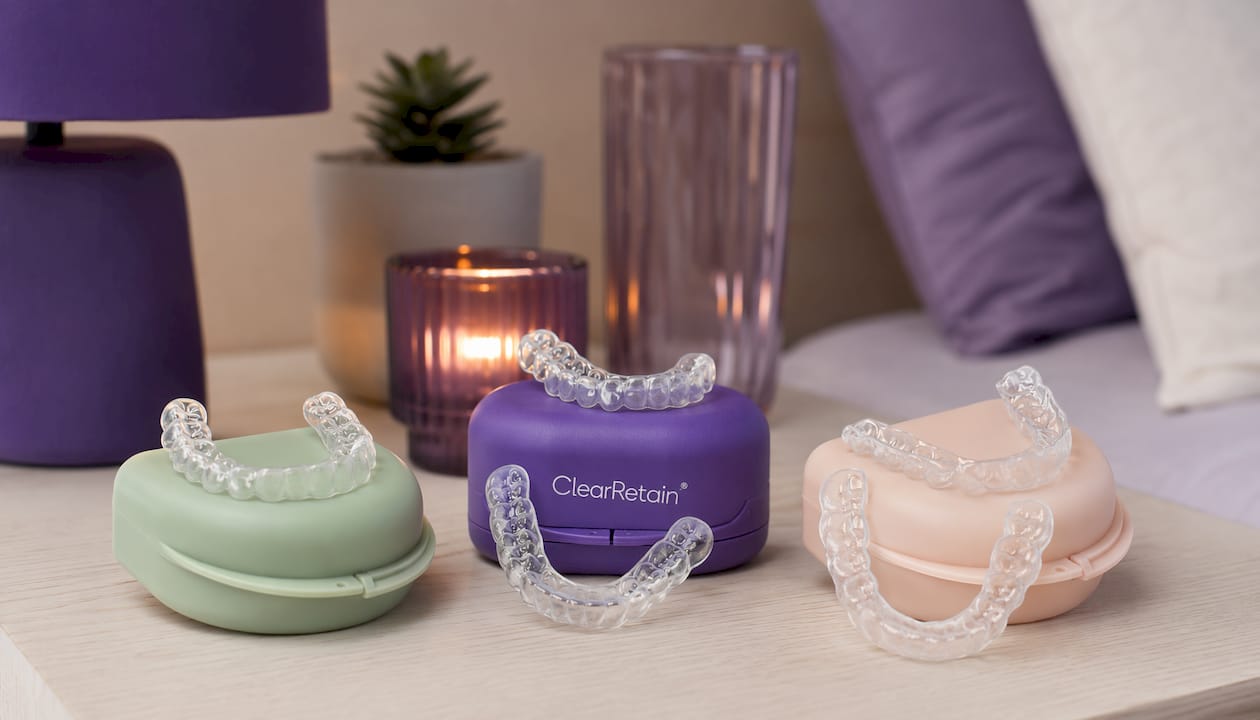
For teens who wear both arches overnight, the Upper and Lower Retainer-Night Guard set covers both in one order. If your teen only needs a single arch, the Upper Retainer-Night Guard and the Lower Retainer-Night Guard are available separately. Orders come with a detailed self-impression kit, so there is no office visit required. Clearretain is an affiliate of this article’s publisher — the recommendation is genuine, and the products are the same quality-controlled appliances used in the overnight routines described throughout this guide. Check your options and order directly at clearretain.com.
This article is general information, not professional dental or medical advice. Confirm your teen’s specific retention schedule and appliance needs with their orthodontist.
Useful sources and further reading
- American Association of Orthodontists — Retainers: The AAO’s patient-facing retainer guide covers care, wear schedules, and the “nighttime for a lifetime” principle — authoritative and regularly updated.
- AAO — Will I Need to Wear Retainers?: Explains the biological rationale for retention, including periodontal ligament memory and lifelong wear recommendations.
- Brockway Orthodontics — How to Wear a Retainer After Braces: Practical clinic-level guidance on wear hours, transition timing, and what to do if a retainer feels tight.
- HCMC Dental — Retainer for Children and Teens: Pediatric-focused clinical overview covering retainer types, delivery timing, and the “nighttime for a lifetime” concept for younger patients.
- PMC — Retention Procedures for Stabilising Tooth Position: Peer-reviewed Cochrane-style review of retention evidence — useful for parents who want the clinical research behind the recommendations.
- Clearretain — Why Nighttime Retainer Use Is Recommended: Practical explanation of the transition to nightly wear and how to build the habit into a teen’s routine.