

Clear Braces Cheap: Affordable Custom Retainers & Guards
If you want affordable, lab-made clear retainers or custom guards without paying office prices, you can order them online today. The best value for most buyers is a custom appliance made from FDA-approved materials under orthodontic technician supervision, delivered to your door through a direct-to-consumer model like Clearretain. You skip the markup, not the quality.
Three things worth confirming before you order anything:
- FDA-approved materials — medical-grade acrylics or multi-layer polymers, not unnamed plastics
- Technician oversight — a real lab professional reviews and fabricates your appliance
- Stored digital impressions — your scan stays on file so reorders are faster and cheaper
Custom appliances typically last several years for retainers and for night guards, though exact duration varies by individual use. A store-bought boil-and-bite guard often needs replacing within months. That gap is where the real savings show up.
Table of Contents
- Which clear appliance do you actually need?
- How does buying a custom appliance online actually work?
- Why custom, lab-made appliances outperform store-bought options
- What materials and quality signals should you check before buying?
- How long do clear retainers and guards last, and how do you care for them?
- How much do budget clear appliances actually cost?
- What should you check before buying a cheap clear appliance online?
- Key Takeaways
- Why direct-to-consumer custom appliances make sense for most buyers
- Clearretain has what you need for affordable custom appliances
- Useful sources
Which clear appliance do you actually need?
The right product depends entirely on why you need it. Buying the wrong one wastes money and can make symptoms worse.
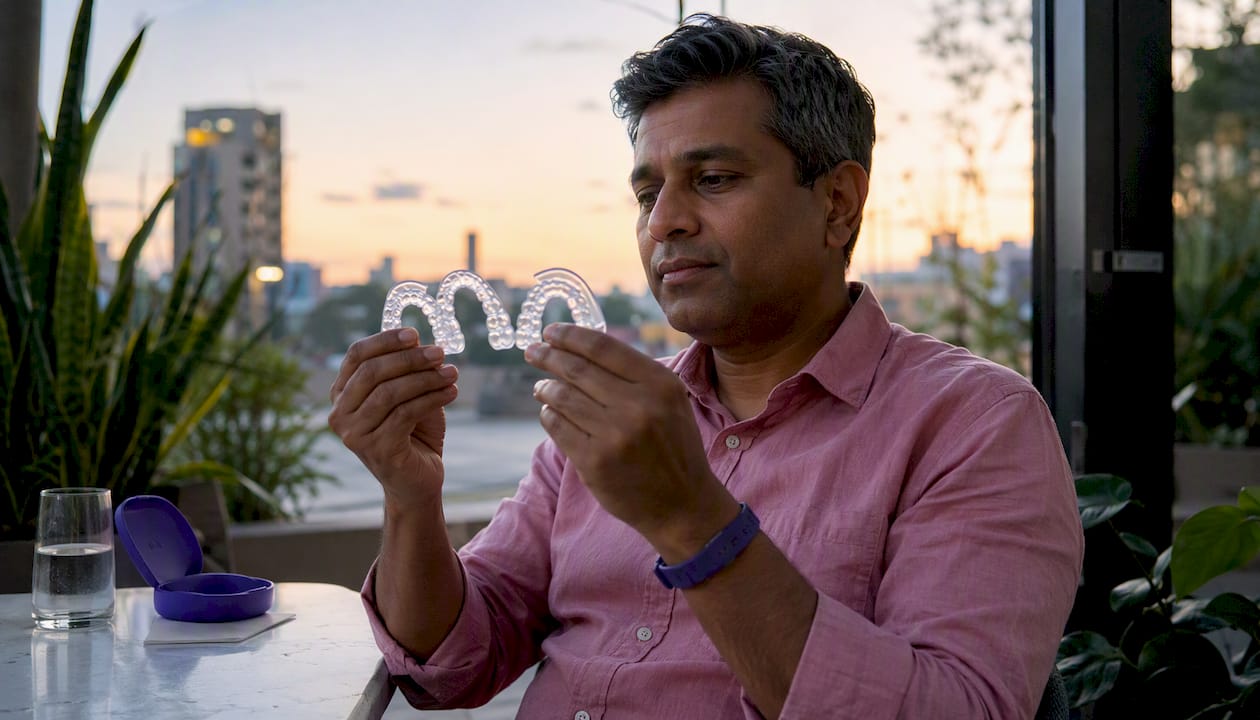
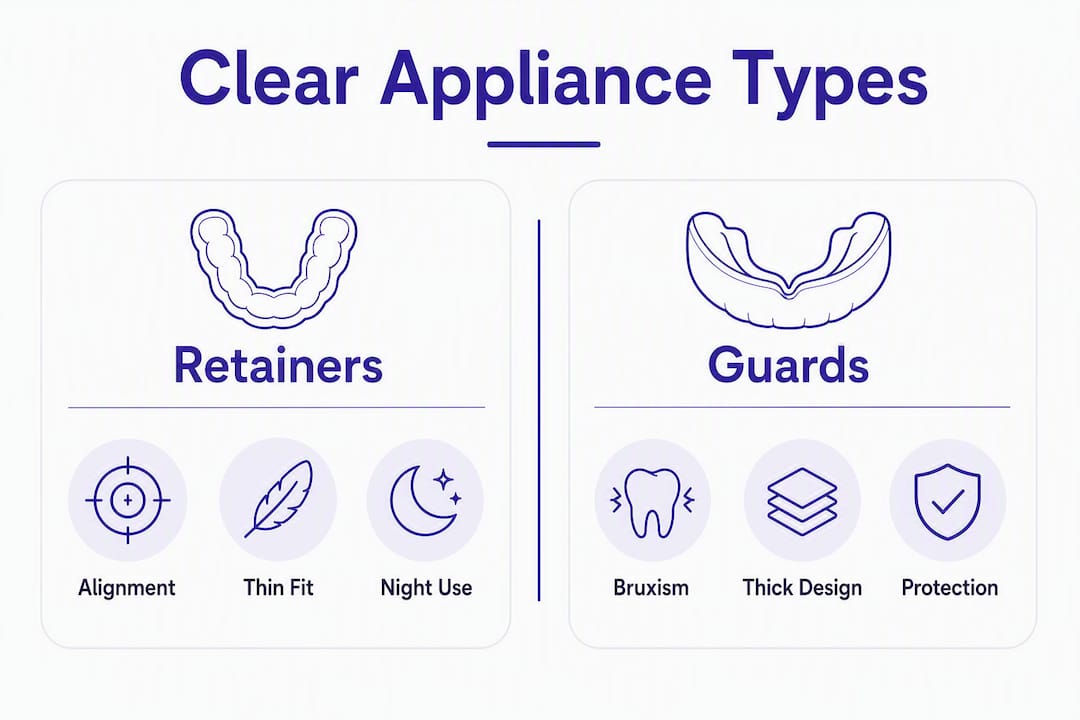
Retainer — holds tooth position after orthodontic treatment. Typically thin and worn nightly or as directed. Not built to absorb grinding force.
Night guard — protects teeth from bruxism (grinding or clenching during sleep). Thicker, with a harder or dual-laminate construction that absorbs occlusal load.
Sports mouth guard — worn during contact activity to cushion impact. Thicker and more flexible than a retainer; not a substitute for either of the above.
Partial denture retainer — holds a single replacement tooth in place. A niche product, but it fills a real gap for patients between dental procedures.
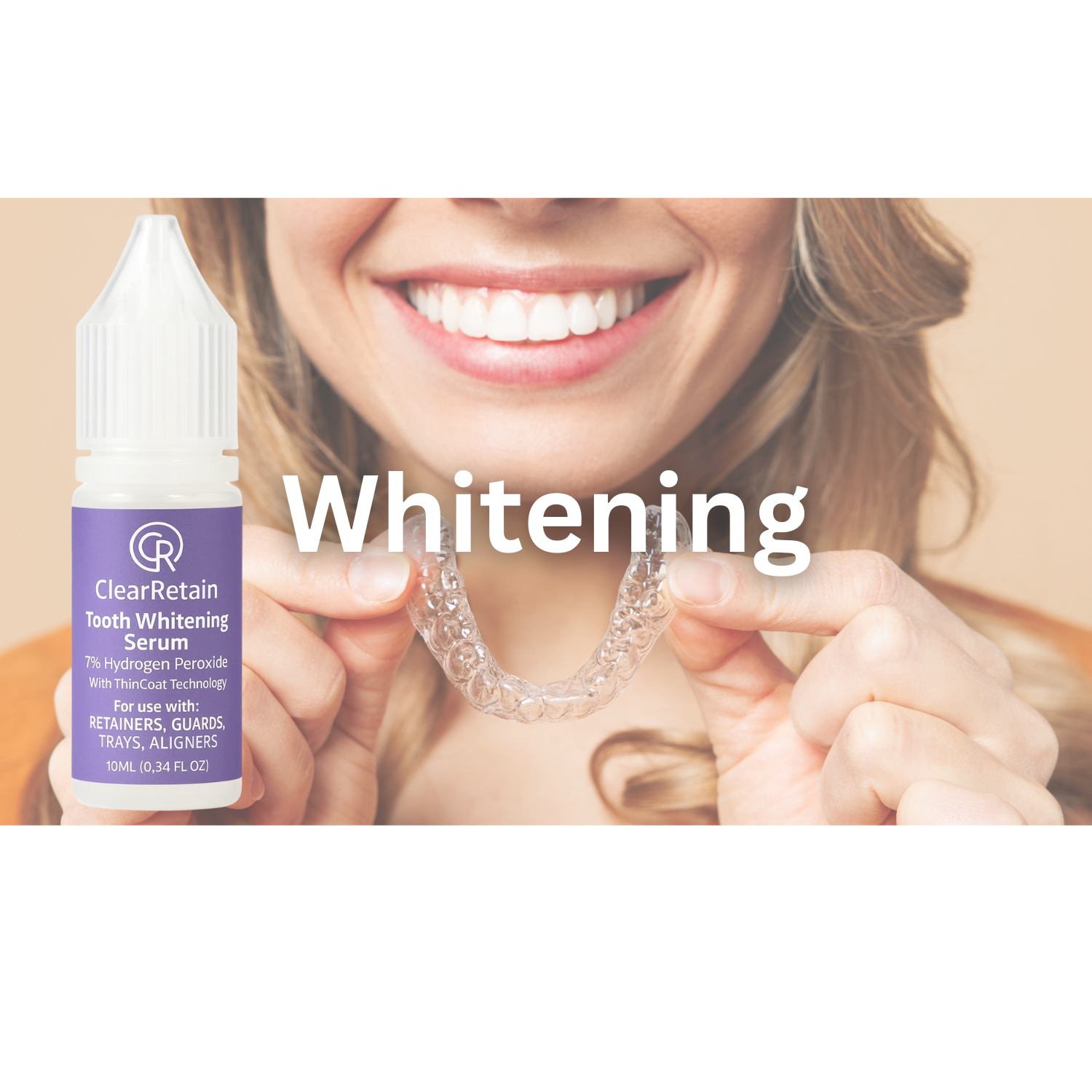
Whitening trays — thin, custom-fitted trays that hold bleaching gel against enamel. Thinner than any guard; not protective.
If you grind at night AND recently finished orthodontic treatment, you likely need both a retainer and a night guard. Wearing a thin retainer as your only protection against heavy grinding is a common and expensive mistake: a mismatched appliance can break quickly and drive up your dental costs.
Pro Tip: Heavy grinders typically need a thicker, hard acrylic or dual-laminate guard rather than a thin Essix-style retainer. If you wake up with jaw soreness or headaches, default to a night guard, not a retainer.
How does buying a custom appliance online actually work?
The process is straightforward, but knowing the steps prevents surprises.
- Choose your product — upper retainer, lower retainer, set, night guard, or whitening tray.
- Order an impression kit — the lab ships you a tray and putty (or you upload an existing digital scan if the lab stores yours).
- Take your impressions at home — follow the included instructions; most kits allow multiple attempts.
- Return the impressions — mail them back in the prepaid packaging or upload your scan.
- Lab fabrication — technicians use your impressions to fabricate the appliance to your exact anatomy.
- Shipping and fit — your finished appliance ships to you, ready to wear.
A typical timeline from ordering your impression kit to first wear runs a few weeks, depending on shipping speed and whether a remake is needed. Expedited options can shorten that window. Budget for the impression kit fee, outbound and return shipping, and any optional adjustments.
Pro Tip: When removing the impression tray, use a gentle side-to-side wiggle rather than pulling straight down. A straight pull distorts the putty and can force a remake, adding another week to your timeline.
Why custom, lab-made appliances outperform store-bought options
The clinical case is straightforward. Custom appliances adapt microscopically to your dental anatomy and stay positioned throughout sleep without requiring you to clench down to hold them. That matters because the alternative does the opposite.
Boil-and-bite and stock OTC guards are bulkier by design. They often displace material unevenly during molding and create uneven occlusal surfaces that can worsen jaw pain rather than relieve it. The user has to clench slightly to keep them in place, which triggers increased muscle activity and adds TMJ stress.
| Feature | Custom lab-made | OTC boil-and-bite |
|---|---|---|
| Fit precision | Anatomically mapped to your teeth | Approximate; user-molded |
| Thickness control | Calibrated to clinical need | Uniform, often too thick |
| Occlusal balance | Adjusted by technician | Uneven; user-dependent |
| Typical lifespan | 1–3 years for retainers; 3–7 years for night guards | Weeks to a few months |
| Saliva/bacteria risk | Minimal gaps | Poor marginal adaptation; gaps collect bacteria |
Dental professionals frame custom appliances as preventive care: the upfront cost is lower than a single crown or implant needed after years of unprotected grinding.
What materials and quality signals should you check before buying?
Not every “custom” appliance online is made the same way. Here is what separates a clinically appropriate product from a cheap knockoff:
- Named materials — look for medical-grade acrylics, BPA-free polymers, or multi-layer laminate construction. “High-quality plastic” with no further detail is a red flag.
- FDA-approved materials claim — the claim should be specific to the materials used, not vague (“FDA-registered facility” alone says nothing about the appliance itself).
- Technician or orthodontic oversight — a real lab professional should review and fabricate each device, not an automated process with no human check.
- Stored digital impressions — labs that keep your scan on file cut reorder time and cost significantly. Confirm this policy before ordering.
- Clear remake and warranty policy — a reputable provider will redo a poor-fitting appliance without charging full price again.
- Contactable customer support — test it before you buy. A live chat or phone number that actually responds is a meaningful quality signal.
Pro Tip: Before ordering, ask support: “What material is used for your night guard, and who reviews the impressions before fabrication?” A vague or scripted non-answer is your cue to look elsewhere.
How long do clear retainers and guards last, and how do you care for them?
Daily care is simple and takes under two minutes. Rinse your appliance with cool water every morning. Clean it with a soft toothbrush and mild dish soap or a dedicated retainer cleaner. Avoid hot water (it warps the material), abrasive toothpaste (it scratches the surface and creates bacterial hiding spots), and leaving it on a napkin where it gets thrown away.
Store it in its case when not in your mouth. Heat is the main enemy: a car dashboard in summer or a bathroom counter near a hot shower can distort the fit permanently.
Realistic lifespans by product type:
- Night guards: — 3–7 years depending on grinding severity and material thickness
Replace your appliance when you notice visible cracks, warping, a loose fit, or persistent odor that cleaning does not resolve. A worn night guard that no longer sits flush is not protecting your teeth.
Pro Tip: Soak your appliance in a diluted white vinegar solution (one part vinegar, three parts water) for 15 minutes once a week. It removes mineral buildup without damaging the material.
How much do budget clear appliances actually cost?
“Cheap” is relative. Here is what the numbers actually look like.
| Product | Traditional in-office range | DTC online range | Typical lifespan |
|---|---|---|---|
| Single-arch retainer | — | Significantly lower | 1–3 years |
| Night guard | — | Significantly lower | 3–7 years |
| Whitening trays | — | Significantly lower | 1–2 years |
Traditional in-office pricing for custom retainers commonly falls in a moderate cost range; night guards often cost more. Direct-to-consumer providers cut that substantially by removing office overhead. Clearretain’s model, for example, claims significant savings compared to standard orthodontic pricing.
Where recurring costs appear: impression kit fees on first order, shipping both ways, and whitening gel refills. If your lab stores your digital impressions, reorders skip the kit fee entirely, which adds up over years of use. A single crown to repair grinding damage can cost more than a decade of custom night guards. That math is worth running before defaulting to a $30 OTC guard.
For a deeper look at how online pricing compares to in-office costs, this breakdown explains the DTC model.
What should you check before buying a cheap clear appliance online?
Run through this list before you enter your payment details.
- [ ] Return and remake policy — does the provider redo poor-fitting appliances at no extra charge?
- [ ] Specific material claims — FDA-approved materials named explicitly, not vaguely
- [ ] Technician oversight confirmed — a human reviews your impressions before fabrication
- [ ] Stored impressions for reorders — saves time and money on future orders
- [ ] Warranty duration — at minimum, a defect warranty; ideally a fit guarantee
- [ ] Contactable support — email, chat, or phone that responds within 24 hours
Red flags to walk away from: delivery timelines under one week for a custom appliance (physically impossible for lab fabrication), no listed remake policy, vague FDA language with no material specifics, and no way to reach a human if something goes wrong.
Pro Tip: If your appliance arrives and the fit is off, photograph it immediately and document the issue in writing before contacting support. A clear paper trail speeds up the remake process significantly.
Key Takeaways
Custom lab-made clear retainers and guards ordered online deliver better long-term value than OTC options when you verify FDA-approved materials, technician oversight, and a clear remake policy before buying.
| Point | Details |
|---|---|
| Match appliance to purpose | Retainers hold alignment; night guards absorb grinding force. Using the wrong one can worsen symptoms and increase costs. |
| Custom beats OTC clinically | Lab-made appliances fit precisely, last 1–3 years for retainers and 3–7 years for night guards, and avoid the occlusal imbalance that OTC guards create. |
| Verify before you buy | Confirm FDA-approved materials, technician oversight, stored impressions, and a remake policy before checkout. |
| Annualized cost favors custom | A custom night guard lasting 3–7 years costs less per year than repeatedly replacing OTC guards, and far less than restorative dental work. |
| Clearretain as a starting point | Clearretain offers upper/lower retainers, night guards, partial denture retainers, and whitening products with FDA-approved materials and stored impressions for reorders. |
Why direct-to-consumer custom appliances make sense for most buyers
The conventional framing treats “cheap” and “custom” as opposites. They are not. The direct-to-consumer model removes the office visit markup, not the lab quality. What you are actually paying for at a traditional dental office is chair time, overhead, and administrative cost. The appliance itself comes from a lab either way.
Where the DTC route fits well: replacing a lost or worn retainer after orthodontic treatment, getting a first night guard for mild-to-moderate bruxism, or ordering whitening trays without a $400 in-office consultation. Where it fits less well: severe TMJ dysfunction or complex bite issues that genuinely need clinical evaluation first. That distinction matters, and any honest DTC provider will say so.
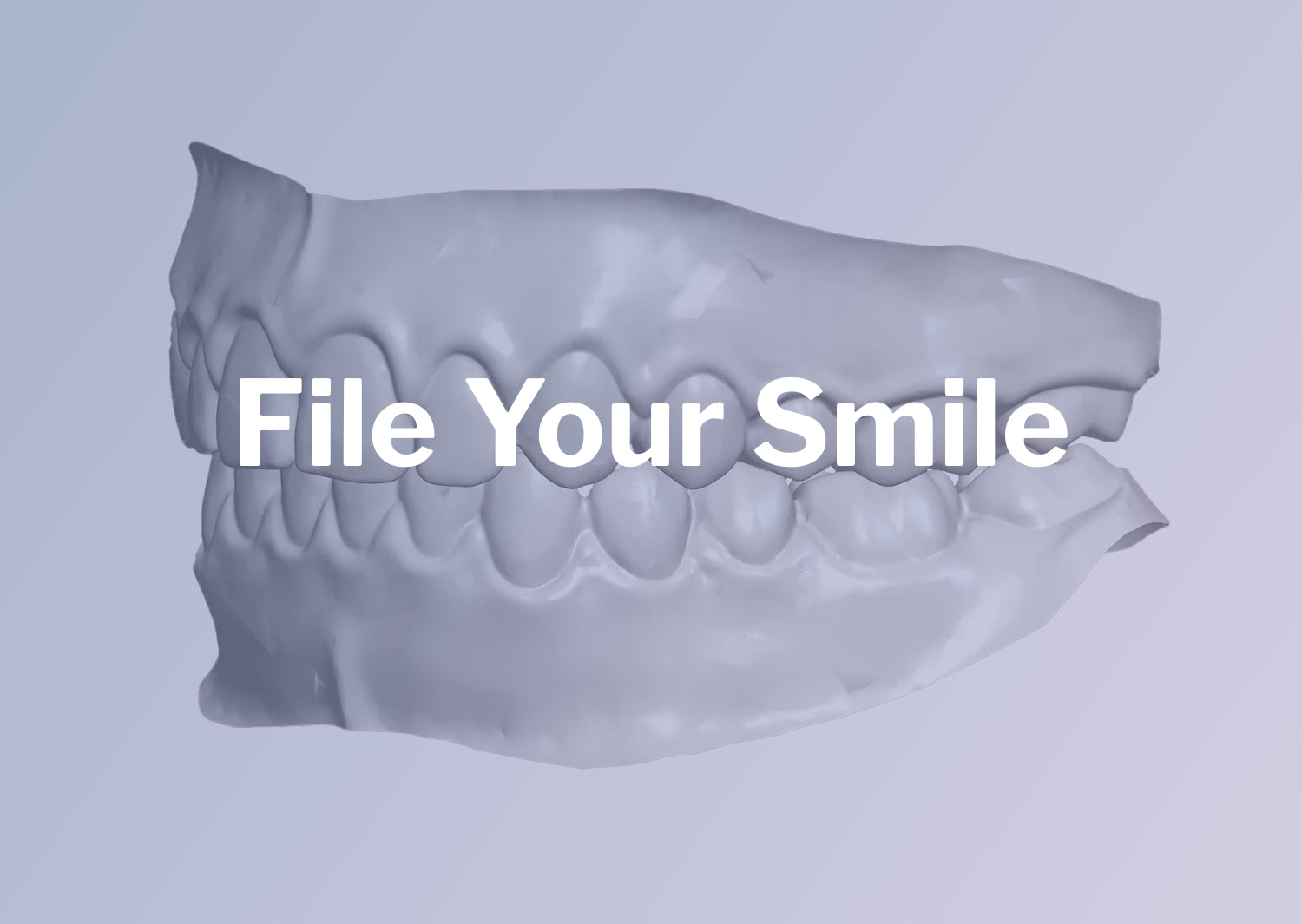
Stored digital impressions are the underrated advantage here. Once your scan is on file, reorders take days rather than weeks and cost a fraction of the first order. Over the lifetime of a retainer wearer, that adds up to real money.
Clearretain has what you need for affordable custom appliances
Clearretain offers the full range of budget-friendly custom dental appliances, made from FDA-approved materials under orthodontic technician supervision, with stored digital impressions for fast reorders. You get lab quality at a fraction of traditional in-office pricing, ordered entirely online with a self-impression kit included.
Products available now:
- Upper Teeth Retainer — single-arch, custom-fitted
- Lower Teeth Retainer — lower arch replacement or backup
- Upper and Lower Retainers Set — both arches together at a set price
- Tooth Whitening Serum — designed for use with your custom retainer or night guard
- Teeth Bleaching Trays — custom-fitted for even gel contact
- Teeth Whitening Gel 3-Pack — refill supply for ongoing whitening
- Night Guards — multiple thickness options for mild to heavy grinding
- Denture Retainers — single-tooth partial denture retainers
Visit Clearretain to choose your appliance, order your impression kit, and have a custom device on its way within days of your impressions arriving at the lab.
Useful sources
- What’s the Difference Between a Retainer and a Night Guard? — Colgate
- ClearRetain — Teeth Retainers, Mouth Guards, Night Guards and More
This article is general information, not professional dental advice. Confirm your specific clinical needs with a licensed dentist or orthodontist before purchasing any dental appliance.