

Bonded Retainer: How to Play Sports and Protect the Wire
For contact and collision sports, take the retainer out and wear a properly fitted mouthguard instead. For low-risk exercise like jogging, cycling, or yoga, you can often leave a removable retainer in as long as it feels stable. Fixed, bonded retainers stay put no matter what, so those wearers need a custom guard built to protect the wire. If you’re unsure which category your sport falls into, ask your orthodontist before game day.
TL;DR:
- Removable retainers made from rigid materials risk shattering or causing injuries during contact sports, so they should always be removed beforehand.
- Custom mouthguards built with relief for wires or brackets are essential for those with bonded or fixed retainers to prevent painful bonding or emergency visits.
- Low-intensity workouts like jogging or yoga are generally safe with a retainer, but high-impact or clenching activities require removing it to avoid damage.
- Replacements or upgrades can be ordered easily from digital impressions, with custom guards lasting one to two seasons of regular use.
- Athletes often mistakenly treat retainers as impact protectors, but they only hold teeth in place, which can lead to dental injuries in sports commonly overlooked.
Table of Contents
- Playing Sports With a Retainer: When to Remove It
- Choosing a Mouthguard: Fit, Material, and What Fits Orthodontic Needs
- Can I Wear My Retainer During a Workout?
- Fixed Retainers: A Different Set of Rules for Sports
- What to Do if Your Retainer Cracks or Goes Missing Mid-Season
- What Athletes Consistently Get Wrong About Retainers and Sports
- Get a Custom Retainer or Mouthguard Without the Orthodontist Markup
- Sources
Playing Sports With a Retainer: When to Remove It
Removable retainers are made from rigid acrylic or thin metal wire, and neither material absorbs shock the way a mouthguard does. A hit to the jaw can shatter the plastic, drive a wire edge into your cheek or tongue, or transfer concentrated force straight into your teeth instead of spreading it out. That’s the opposite of what you want during contact.
The HCMC Dental clinical safety guide recommends removing removable retainers before any contact or collision sport, including:
- Football, hockey, rugby, and lacrosse
- Wrestling and martial arts
- Soccer and basketball, where elbows and headers happen more than most players admit
Before you step onto the field or mat, wash your hands, remove the retainer, and drop it straight into a rigid, ventilated case. Then insert your mouthguard. Coaches and orthodontists working with younger athletes should build this into the pregame routine the same way shin guards or cleats get checked.
Pro Tip: Keep a spare retainer case in your gym bag, not just your bathroom. A retainer left loose in a duffel bag is one bad bounce away from a crack.
Choosing a Mouthguard: Fit, Material, and What Fits Orthodontic Needs
Not all mouthguards protect the same way. Stock guards, the kind you get pre-molded off a shelf, are cheap but bulky and rarely stay put during real contact. Boil-and-bite guards fit better after you mold them at home, but they still shift under pressure. Custom, lab-made guards, usually built from shock-absorbing EVA or a dual-laminate material, fit your exact bite and stay locked in place during impact.
For anyone wearing orthodontic appliances or a fixed retainer, custom is not a luxury upgrade. Labs use a block-out technique over wires and brackets so the guard seats properly without grinding against hardware every time you clench.
A survey of orthodontists and their 11 to 18-year-old patients found that football players reported 91% always wearing a mouthguard, a number that dropped sharply among basketball players despite similar injury risk. The gap comes down to habit, not danger. Basketball just isn’t treated like a mouthguard sport, even though elbows to the mouth happen constantly.
You can get a custom guard three ways: through your orthodontist directly, via a lab order your dentist submits, or through a vetted online supplier that offers a proper impression process rather than a generic mold. Whichever route you choose, ask specifically whether the guard will be fabricated with relief for any wires or brackets you’re wearing. For more on the tradeoffs, comparing custom and boil-and-bite options is worth ten minutes before you buy.
Rinse your guard after every use, store it dry in its case, and replace it once you notice thinning, tearing, or a fit that’s gone loose. Most custom guards last one to two seasons of regular use before they need swapping out.
Can I Wear My Retainer During a Workout?
Low-intensity movement is usually fine with a retainer in. Jogging, stationary cycling, yoga, and elliptical sessions rarely put enough force on your jaw to cause damage, and plenty of people leave their retainer in through an entire workout without issue.
Heavier exertion changes the math. Weightlifting and high-intensity interval training often trigger unconscious clenching, and clenching is a known cause of cracked clear retainers. If you grind your teeth when you push through a hard set, that habit doesn’t disappear just because you’re wearing plastic instead of nothing.
- Test it during a lower-intensity session first and pay attention to how your jaw feels.
- If you notice clenching, tightness, or discomfort, take the retainer out for that activity going forward.
- Remove it entirely for heavy resistance training or HIIT, regardless of how it felt during a lighter workout.
- If you keep it in, rinse it after the session, skip the pool with it in, and store it in its case the moment you’re done.
Fixed Retainers: A Different Set of Rules for Sports
A bonded lingual retainer isn’t optional to remove. It’s cemented behind your teeth, which means the usual “take it out for contact sports” advice doesn’t apply. Instead, the mouthguard has to work around it.
This is where a boil-and-bite guard becomes a real problem. The softened plastic can mold directly onto the bonded wire during fitting, effectively locking the guard to your retainer and making it painful or impossible to remove cleanly. That’s not a minor annoyance. It’s the kind of mistake that sends someone to an emergency dental visit mid-season.
Ask your orthodontist for a custom guard built with internal relief specifically over the wire. This block-out step on the lab model keeps the guard from bonding to the retainer while still protecting the wire from impact.
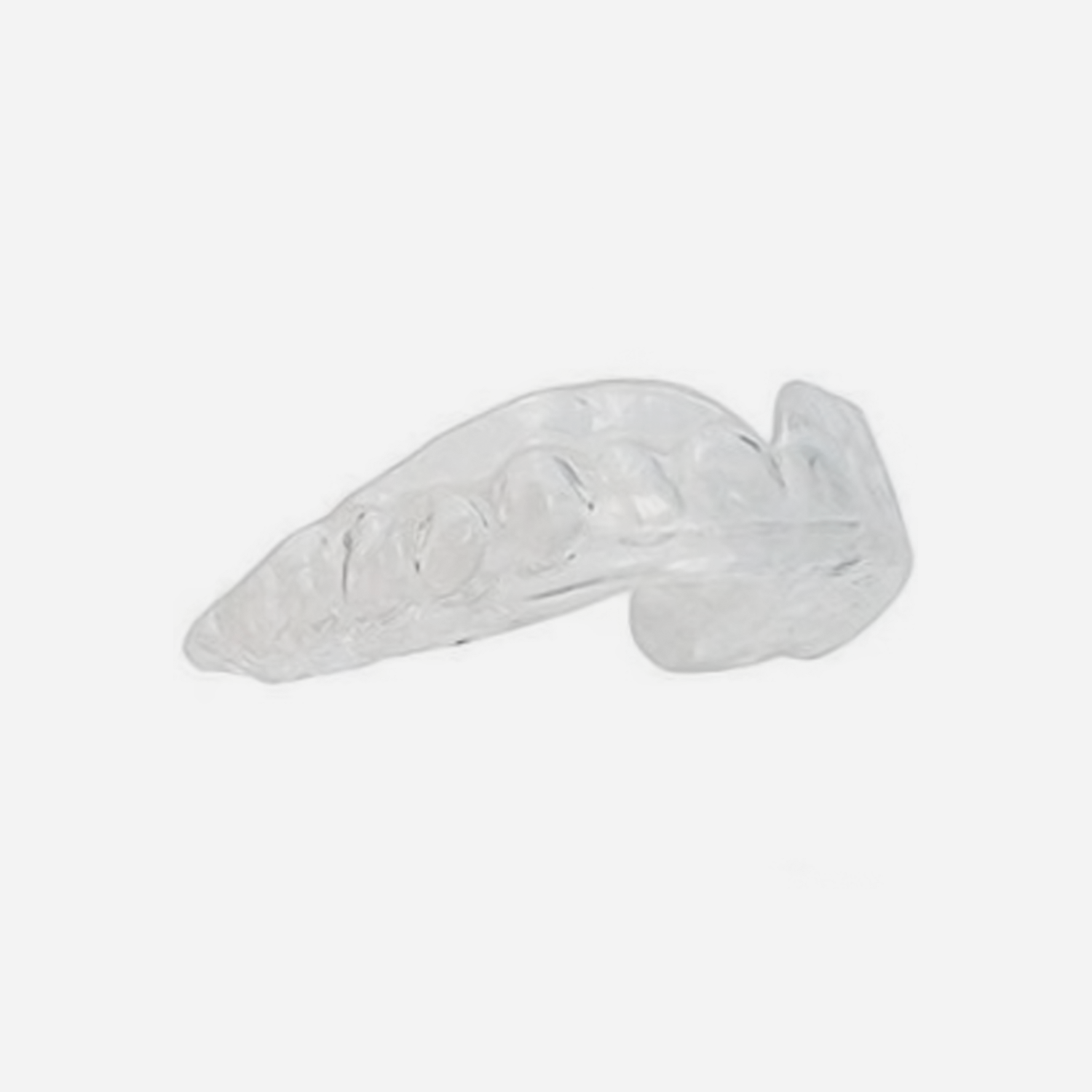
Pro Tip: Practice inserting and removing your new guard at home before wearing it to practice. If it feels stuck or you have to fight it, go back to the lab. A properly relieved guard should slide on and off without resistance.
What to Do if Your Retainer Cracks or Goes Missing Mid-Season
Handle removal the same way every time: wash your hands first, then place the retainer directly into a rigid, ventilated case. Never wrap it in a napkin or drop it loose in a bag. Cracks and losses happen most often in the ten seconds between “I took it out” and “I put it somewhere safe.”
- After sports, rinse the retainer under cool water and brush it gently with a soft toothbrush.
- Air-dry it before closing the case. Skip hot water and harsh disinfectants, both of which can warp the plastic.
- If it cracks or goes missing, stop wearing it immediately and contact your orthodontist, or reorder a replacement from stored impressions if you have that option.
- For a knocked-out or fractured tooth, rinse the area gently, save any tooth fragments in milk or saline, and get to a dentist within thirty minutes if possible.
Roughly 91% mouthguard compliance among football players shows how routine can prevent most of these emergencies in the first place. The habit matters more than the gear.
What Athletes Consistently Get Wrong About Retainers and Sports
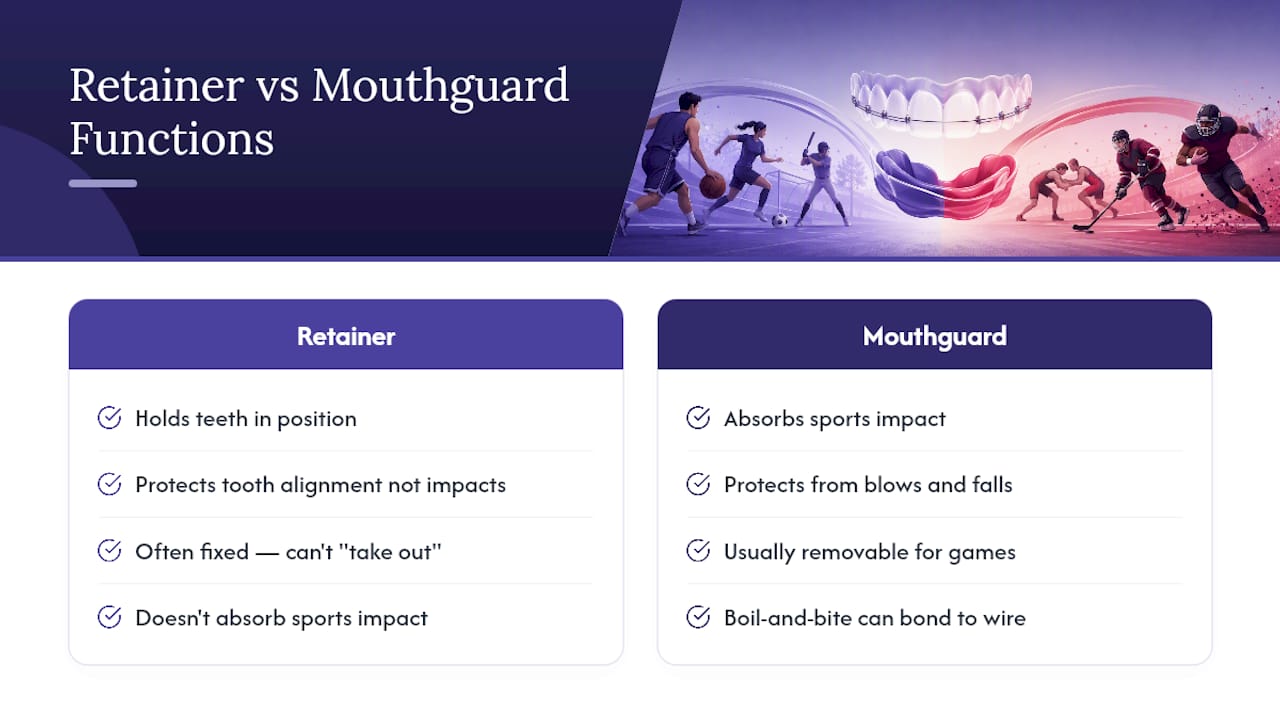
Most guidance on this subject treats retainers and mouthguards as interchangeable, when they solve completely different problems. A retainer holds your teeth in position. A mouthguard absorbs impact. Wearing one instead of the other, thinking either will cover both jobs, is the single most common mistake we see among athletes and parents alike.
The bigger blind spot is sports that don’t feel dangerous. Basketball, gymnastics, and skateboarding rarely get treated with the same caution as football, yet dental associations have flagged real injury risk in all three. If your kid plays a “low contact” sport and has never worn a guard, that’s worth revisiting, not dismissing. The same logic applies to basketball’s injury patterns, where elbows and falls cause more dental trauma than most parents expect.
Fixed retainers deserve more attention than they usually get in general sports advice. A wearer can’t simply “take it out for the game,” and generic boil-and-bite guards actively work against them by bonding to the wire. That’s a fabrication detail, not a footnote, and it’s the difference between a guard that protects your mouth and one that turns into a dental emergency.
— Clear
Get a Custom Retainer or Mouthguard Without the Orthodontist Markup
Clearretain builds custom upper and lower retainers using FDA-approved materials, made under the supervision of experienced orthodontic technicians, at a fraction of standard orthodontic pricing. If your retainer cracked during a game or went missing in a gym bag, you can reorder a replacement using your stored digital impressions instead of scheduling a new office visit and starting the process over.

Athletes who clench during heavy training can also look at Clearretain’s Upper Retainer-Night Guard or Hard Night Guard, both built to hold up under pressure without the bulk of a traditional guard. Missing a single tooth from a partial appliance is covered too, with the Upper Partial Denture Retainer available as a single-tooth option. Every order starts with a detailed self-impression kit shipped to your door, so you can get a proper fit without sitting in a waiting room. If your current retainer needs a backup, start your order today at Clearretain.
Sources
- Orthodontists’ and patients’ practices and beliefs about mouthguard use
- Retainer while playing sports — HCMC Dental clinical safety guide