

Thermoplastic Retainer Material: Properties and Uses
Thermoplastic retainer material is a clear polymer sheet that gets heated until soft, then vacuum-formed over a dental model to create a custom-fit orthodontic retainer. Vacuum-formed retainers made from these materials are the most widely used post-treatment retention devices in orthodontics today. The three most common polymers are polypropylene, PETG (polyethylene terephthalate glycol), and polyurethane. Each one behaves differently in the mouth, ages at a different rate, and suits different patients. If you are researching thermoplastic retainer material to decide what works best for your situation, the material chemistry matters more than most people realize.
What is thermoplastic retainer material and how does it work?
Thermoplastic retainer material is a polymer that softens when heated and hardens when cooled, making it ideal for forming custom dental devices. The manufacturing process is called thermoforming or vacuum forming. A flat sheet of polymer is heated to a specific temperature, then drawn tightly over a physical or 3D-printed dental model using suction. The result is a thin, transparent tray that fits the exact contours of a patient’s teeth.
Clear retainers made from polypropylene, PETG, or polyurethane each carry distinct degradation and mechanical properties. This distinction matters because a retainer is not a static object. It flexes every time you insert or remove it, absorbs saliva continuously, and endures biting forces for hours each day. The polymer you start with determines how long the retainer holds its shape and retentive force.
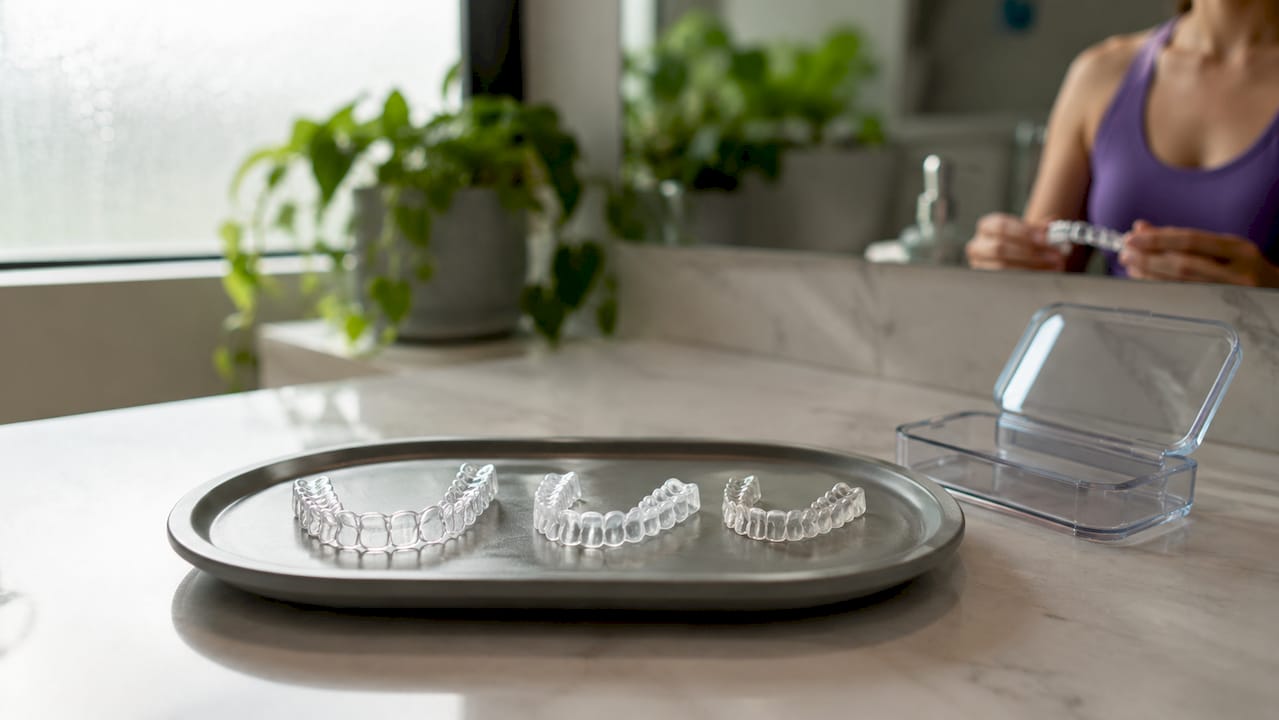
The term “thermoplastic retainer” is the standard clinical label for what many patients call a clear retainer or Essix retainer. Both terms refer to the same device. Understanding the material behind it helps you predict how it will perform and when it needs replacing.
What are the main types of thermoplastic materials used for retainers?
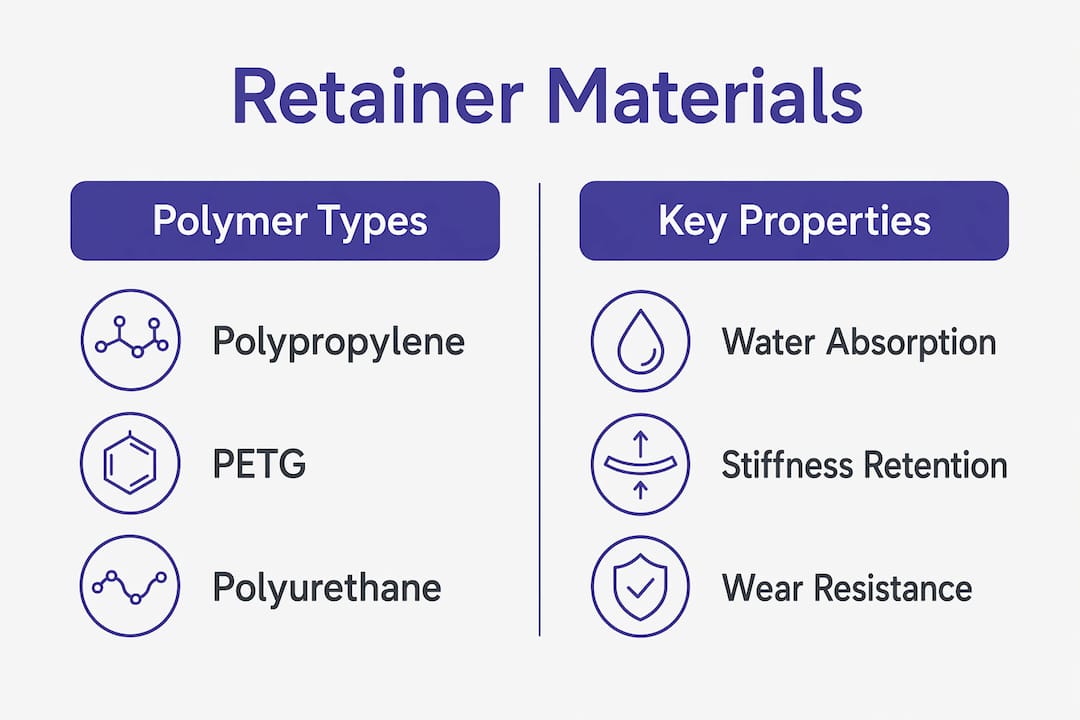
The three primary polymers used in clear retainers differ in stiffness, water absorption, and how they respond to the oral environment over time.
Polypropylene is the most flexible of the three. It is inexpensive and easy to form, but it absorbs the most water. Polypropylene showed 12.5% water absorption at six months, compared to 5–7.5% for PETG and polyurethane. Higher water absorption accelerates plasticization, which means the material loses stiffness and retentive force faster than the alternatives.
PETG strikes a balance between rigidity and clarity. It is the most commonly used material in commercial clear retainers and aligners. PETG resists water absorption better than polypropylene and maintains its shape under moderate biting forces. Its transparency is excellent, which is why patients and clinicians favor it for aesthetics.
Polyurethane offers the highest wear resistance of the three. It handles occlusal stress better than PETG or polypropylene, making it a stronger candidate for patients who grind their teeth. Its water absorption rate sits in the same range as PETG, so plasticization is less of a concern.
| Material | Water absorption (6 months) | Stiffness retention | Best suited for |
|---|---|---|---|
| Polypropylene | ~12.5% | Lowest | Short-term or budget use |
| PETG | 5–7.5% | Moderate | Standard retention cases |
| Polyurethane | 5–7.5% | Highest | Bruxism or heavy wear |
Pro Tip: Ask your provider which specific polymer brand they use, not just the material category. Same polymer types from different manufacturers behave differently due to distinct thermal forming parameters, so brand matters as much as chemistry.
How do thermoplastic retainers degrade over time?
Two mechanisms drive retainer degradation: creep and plasticization. Understanding both helps you recognize when a retainer is failing before it causes tooth movement.
Creep is the slow, permanent deformation a material undergoes under constant load. Every time you bite down while wearing a retainer, the polymer stretches slightly. Over months, those micro-deformations accumulate. Creep causes a permanent increase in retainer size, meaning the tray gradually loosens its grip on your teeth. A retainer that feels snug at month one may feel noticeably loose by month six.
Plasticization happens when saliva and oral fluids penetrate the polymer matrix. Water molecules disrupt the polymer chains, reducing stiffness. The retainer becomes more flexible, which sounds comfortable but actually means it exerts less corrective force. Polypropylene is the most vulnerable to this process.
Here are the most common signs that a thermoplastic retainer is degrading:
- The tray feels looser than it did when first fitted.
- Visible whitening, cloudiness, or micro-cracks appear on the surface.
- The edges feel rough or sharp against the gums.
- The tray no longer snaps firmly onto the teeth.
- A persistent odor that does not clear with cleaning.
Constant oral load and saliva accelerate mechanical property loss, meaning retainers lose effectiveness before visible damage appears. This is the most important fact most patients miss. A retainer can look intact and still be failing at the material level.
Pro Tip: Replace your retainer on a schedule, not just when it looks damaged. Most thermoplastic retainers reach their functional limit within 6–12 months of daily wear, depending on the polymer and your habits.
What are the advantages and limitations of thermoplastic retainers?
Thermoplastic retainers offer real clinical advantages over traditional wire-based Hawley retainers, but they also carry specific limitations that patients should weigh honestly.
Advantages
Clear thermoplastic retainers encapsulate entire tooth crowns, preventing multi-dimensional movement and offering bite protection. This full coronal coverage is a structural advantage that Hawley retainers cannot match. The wire in a Hawley retainer contacts only the labial surfaces of the teeth, leaving room for rotational relapse.
Thermoplastic trays are also nearly invisible. Patients wear them more consistently because they are less noticeable in social situations. Higher compliance directly improves retention outcomes. The trays are removable, comfortable against soft tissue, and do not require adjustment appointments.
“Thin thermoplastic shells are more comfortable but prone to earlier failure under biting forces.” — Hawley vs. Clear Retainers: A Clinical Comparison
Limitations
Thinness improves comfort but increases the risk of micro-cracking and occlusal wear, particularly in patients with bruxism. A patient who grinds heavily at night can wear through a standard PETG retainer in weeks. For those patients, a thicker polyurethane tray or a dedicated night guard is the better choice.
Thermoplastic retainers also cover the occlusal surfaces of the teeth. This means the upper and lower teeth do not make direct contact while the retainer is in place. Some patients find this affects their bite comfort during extended wear. Hawley retainers allow natural occlusal contact, which is one reason orthodontists still recommend them for specific cases.
Heat is the other major vulnerability. Heat exposure above normal oral temperatures causes thermal distortion that alters the fit and retentive capacity of thermoformed retainers. Leaving a retainer in a hot car or rinsing it with boiling water can permanently warp the tray.
For a detailed side-by-side breakdown of these two retainer types, the Hawley vs. clear retainer comparison from Clearretain covers the clinical differences clearly.
How are thermoplastic retainers made and cared for?
The fabrication process directly affects how well a retainer fits and how long it lasts. Proper care after delivery extends that lifespan significantly.
Fabrication steps
- A dental impression or digital scan captures the exact shape of the patient’s teeth.
- A physical or 3D-printed model is created from that impression.
- A thermoplastic sheet is heated to the correct softening temperature for the specific polymer.
- The softened sheet is vacuum-formed over the model, pulling the material tightly into every contour.
- The tray is trimmed, polished, and checked for fit before delivery.
Temperature control during step three is critical. Fabrication parameters influence retainer consistency beyond chemistry alone. Overheating degrades the polymer before it even reaches the patient. Underheating produces a tray with poor adaptation and weak retentive force.
Care practices that extend retainer life
Patient habits such as heat exposure and cleaning routines critically affect thermoplastic retainer durability. The following practices protect the material:
- Clean the retainer with a soft toothbrush and mild soap. Avoid toothpaste, which contains abrasives that scratch the surface.
- Rinse with cool or lukewarm water only. Hot water warps the tray.
- Store the retainer in its case when not in use. Leaving it on a table or wrapped in a napkin leads to accidental damage.
- Keep the retainer away from heat sources: car dashboards, dishwashers, and direct sunlight.
- Soak the tray in a retainer cleaning solution weekly to reduce microbial buildup in surface scratches.
Pro Tip: Microscopic scratches from abrasive cleaners create surface area where bacteria accumulate. A scratched retainer is harder to clean and degrades faster. Use only non-abrasive cleaning products.
For more guidance on removable retainer care, Clearretain publishes practical advice on maintaining thermoplastic trays across different material types.
Key Takeaways
Thermoplastic retainer material determines how long a clear retainer holds its shape, how it responds to saliva and heat, and whether it suits your specific bite habits.
| Point | Details |
|---|---|
| Material type drives performance | PETG and polyurethane outperform polypropylene in stiffness retention and water resistance. |
| Creep and plasticization are the main failure modes | Retainers lose retentive force before visible damage appears, so schedule-based replacement matters. |
| Full coronal coverage is a structural advantage | Thermoplastic trays prevent multi-dimensional tooth movement better than wire-based Hawley retainers. |
| Heat is the primary care risk | Temperatures above normal oral range permanently distort the tray and compromise fit. |
| Bruxism patients need thicker or harder materials | Standard PETG trays fail faster under heavy biting forces; polyurethane or a night guard is the better fit. |
What I have learned from watching retainers fail
The most common mistake I see is treating a retainer like a permanent appliance. Patients finish orthodontic treatment, receive their clear tray, and assume it will work indefinitely as long as it looks intact. That assumption causes relapse.
The material science is clear on this: mechanical property deterioration happens continuously from the first day of wear. Saliva, biting force, and temperature cycles all chip away at the polymer. A retainer that looks fine at month eight may have lost enough retentive force to allow measurable tooth movement. The damage is internal before it is visible.
What I find most underappreciated is the role of individual habits. Two patients with identical PETG retainers can have completely different outcomes based on how they clean the trays, whether they drink hot coffee while wearing them, and whether they grind at night. Lab test similarities between materials do not guarantee identical clinical outcomes because the oral environment varies so much between people.
The technology is improving. 3D-printed retainer models now produce more accurate fits than traditional stone casts, which means the thermoformed tray starts with a better foundation. Better fit means better retention and less stress on the material during insertion and removal. That is a genuine advance worth noting.
My practical advice: evaluate your retainer every three months. If it feels loose, looks cloudy, or has visible cracks, replace it. The cost of a new retainer is far lower than the cost of retreatment.
— Clear
Clearretain’s custom thermoplastic retainers
Clearretain offers custom clear retainers made from quality thermoplastic materials, fabricated under the supervision of experienced orthodontic technicians and cleared by the FDA. The process starts with a self-impression kit sent directly to your door, eliminating the need for an office visit.
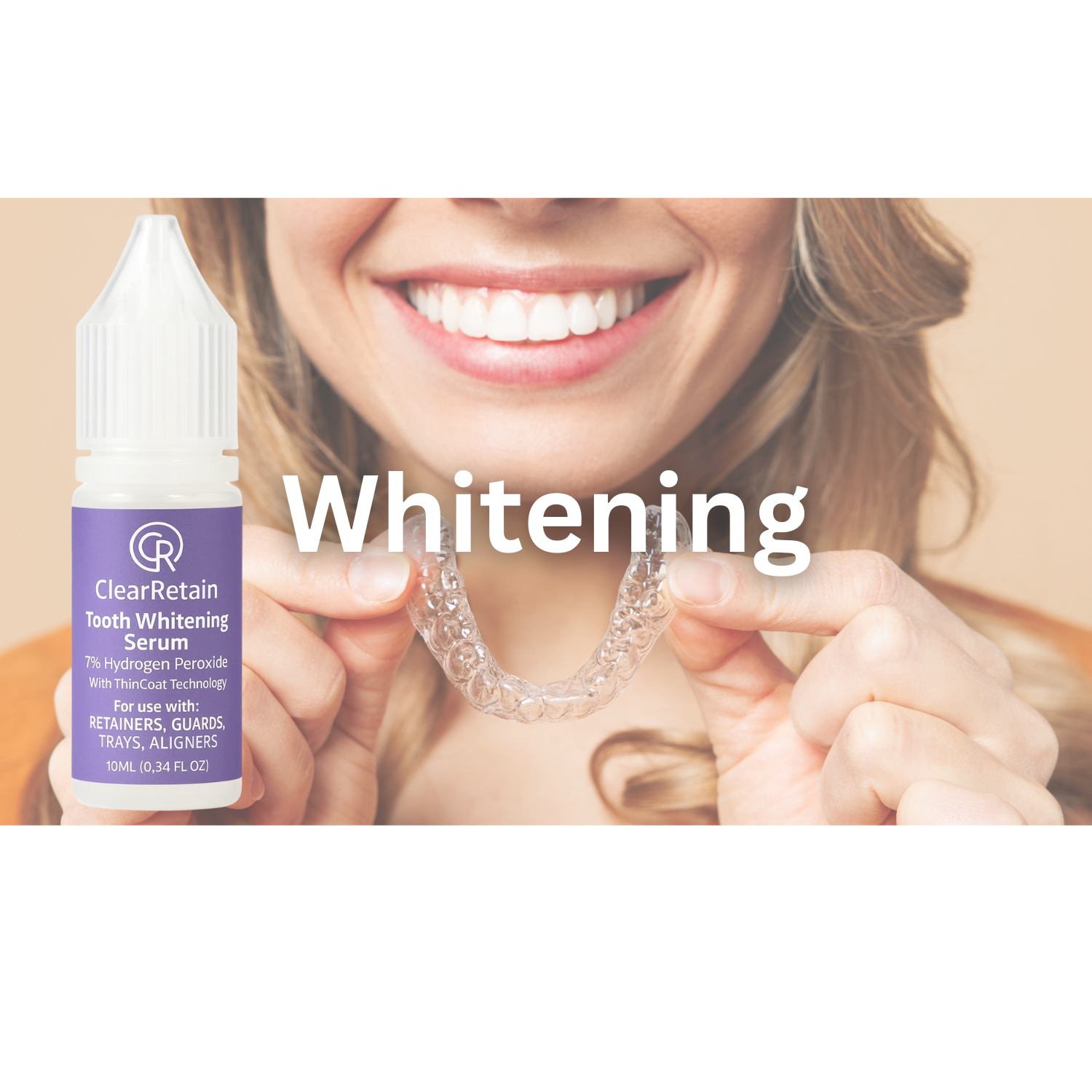
You can order a custom upper retainer or a custom lower retainer individually, or save with the upper and lower retainer set for complete coverage. Clearretain also offers a tooth whitening serum formulated for use with clear retainers, so you can maintain both alignment and aesthetics in one routine. Prices run up to 80% less than traditional orthodontic office rates, with the same material quality and fit precision.
FAQ
What is thermoplastic retainer material made of?
Thermoplastic retainer material is typically made from polypropylene, PETG, or polyurethane. Each polymer is heated until soft, then vacuum-formed over a dental model to create a custom-fit clear tray.
How long does a thermoplastic retainer last?
Most thermoplastic retainers reach their functional limit within 6–12 months of daily wear. Creep and plasticization reduce retentive force before visible damage appears, so replacement on a schedule is more reliable than waiting for cracks.
Are thermoplastic retainers better than Hawley retainers?
Thermoplastic retainers provide full coronal coverage and better multi-dimensional retention, while Hawley retainers allow natural occlusal contact and are more durable under heavy biting forces. The best choice depends on the patient’s bite habits and compliance history.
Can heat damage a thermoplastic retainer?
Yes. Heat above normal oral temperatures causes permanent thermal distortion that alters the fit and retentive capacity of the tray. Avoid hot water, car dashboards, and direct sunlight when storing your retainer.
Which thermoplastic material is best for patients who grind their teeth?
Polyurethane offers the highest wear resistance among the three common retainer polymers and handles occlusal stress better than PETG or polypropylene. Patients with bruxism may also benefit from a dedicated night guard for nighttime protection.