



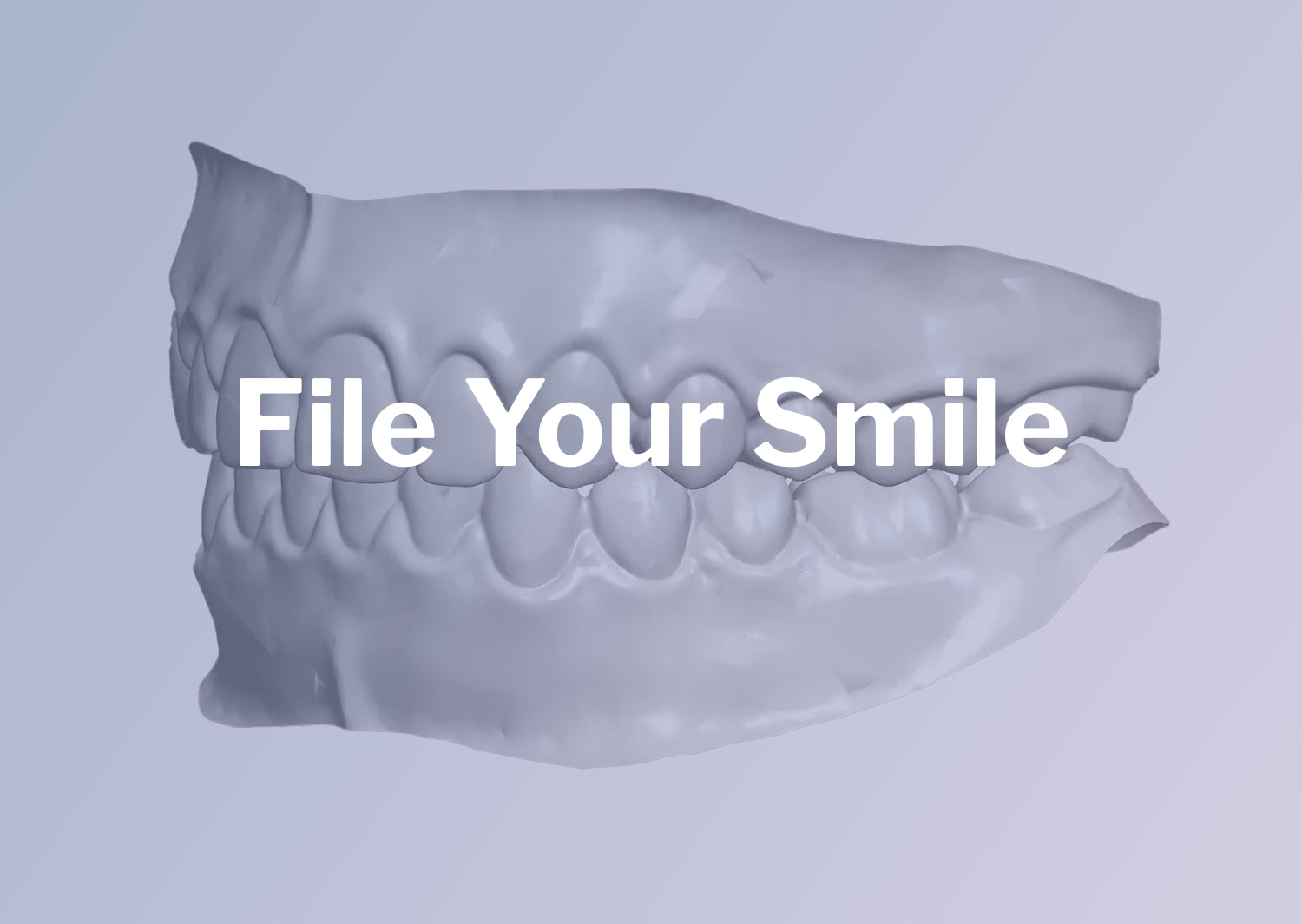
Sleep vs Awake Causes of Bruxism, and How to Protect Teeth Fast
Bruxism rarely has one cause. It’s usually a mix of sleep physiology, psychological stress, medication side effects, substance use, and genetics acting together. Sleep bruxism and awake bruxism are distinct conditions with different triggers and treatments. Whatever the mix, the immediate priority is the same: protect your teeth with a guard while the underlying cause gets sorted out.
TL;DR:
- Sleep bruxism affects approximately 8% to 10% of adults, while awake bruxism is reported by 22% to 31% of adults and is often linked to stress.
- Stress, anxiety, high caffeine or alcohol intake, certain medications, and smoking significantly increase the risk of awake and sleep bruxism.
- Dental guards, especially custom-fitted hard night guards, are the most effective way to protect teeth during the diagnosis and sorting of bruxism causes.
- Misaligned teeth and dental work can amplify bruxism effects but are typically considered secondary factors rather than primary causes.
Table of Contents
- Bruxism Causes: How Doctors Classify Teeth Grinding
- Physical and Neurological Roots of Teeth Grinding
- Stress, Anxiety, and the Psychology Behind Jaw Clenching
- Alcohol, Caffeine, and Medications That Trigger Grinding
- When Teeth Grinding Needs a Dentist or Doctor
- Protecting Your Teeth While You Sort Out the Cause
- Do Crooked Teeth or a Bad Bite Cause Grinding?
- How Grinding Damages Your Teeth Over Time
- The ClearRetain Perspective: Protect the Teeth First
- Get a Custom Night Guard Without the Dental Office Markup
- Sources
Bruxism Causes: How Doctors Classify Teeth Grinding
Clinicians split bruxism into two categories that behave nothing alike. Sleep bruxism happens during rest, tied to brain and nervous system activity you can’t consciously control. Awake bruxism happens during the day, usually as an unconscious clenching habit tied to concentration or tension. A person can have one, the other, or both.
The framework also separates primary bruxism (no clear identifiable disease behind it) from secondary bruxism (linked to another condition, medication, or substance). Getting this classification right shapes everything that follows, since a sleep specialist and a behavioral therapist are solving very different problems.
- Adult sleep bruxism prevalence estimates hover around 8% to 10%, with some population studies putting it near 13%.
- Awake bruxism is reported far more often, with estimates ranging from 22.1% to 31% of adults.
- Children show even higher sleep bruxism rates, in the range of 15% to 40%, though most outgrow it.
Multiple contributing factors typically overlap in the same person, which is why a single “cause” rarely explains the whole picture.
Physical and Neurological Roots of Teeth Grinding
Sleep bruxism looks less like a bad habit and more like a nervous system event. Researchers describe it as centrally mediated, meaning it originates in brain activity rather than the jaw itself. Just before a grinding episode, the body typically goes through a microarousal, a brief shift toward lighter sleep accompanied by a jump in heart rate and muscle activity. This triggers rhythmic masticatory muscle activity, or RMMA, the clinical term for the grinding and clenching pattern picked up on a sleep study.
By the numbers: A large-scale polysomnographic study found sleep bruxism in roughly 49.7% of adults with obstructive sleep apnea, and about 85.7% of grinding episodes were time-linked to sleep arousals.
That overlap with obstructive sleep apnea (OSA) is one of the most consistent findings in bruxism research, but the relationship isn’t fully settled. Some researchers think apnea events trigger arousals that in turn trigger grinding as the airway reopens. Others argue the two conditions simply share risk factors without one directly causing the other. Either way, the association between arousal and RMMA is strong enough that sleep apnea screening belongs in any serious bruxism workup.
Genetics play a role too. Bruxism tends to run in families, and certain neurological conditions, including Parkinson’s disease and some movement disorders, carry a higher rate of grinding as a secondary symptom.
Stress, Anxiety, and the Psychology Behind Jaw Clenching
Awake bruxism behaves more like a stress response than a sleep disorder. People under chronic pressure, deadline anxiety, or unresolved tension often clench without noticing, especially while driving, working, or scrolling a phone. The muscles tighten as a physical outlet for mental strain, and because it happens while you’re conscious, it’s technically easier to interrupt, once you know it’s happening.
- Anxiety disorders and high perceived stress correlate strongly with awake clenching and grinding episodes.
- Depression and other mood disorders show up frequently alongside bruxism in clinical populations, though the direction of cause and effect isn’t always clear.
- Certain personality traits linked to perfectionism or high internal pressure appear more often in people who report frequent daytime clenching.
Because awake bruxism is largely behavioral, treatment usually starts with awareness training rather than a night guard alone: habit reversal, biofeedback, and simple reminders to check jaw position throughout the day. If stress or anxiety feels unmanageable on your own, that’s a signal to talk to a doctor or therapist, not just a dentist.
Pro Tip: Set three random phone alarms during your workday labeled “jaw check.” Most people who clench during the day have no idea they’re doing it until something forces them to notice.
Alcohol, Caffeine, and Medications That Trigger Grinding
Several everyday substances raise your odds of grinding, and the effect is bigger than most people expect. According to Cleveland Clinic, heavy drinkers, smokers, and people with very high caffeine intake are roughly twice as likely to grind their teeth as people without those habits.
- Alcohol disrupts normal sleep architecture, which can increase arousals and, by extension, grinding episodes.
- High caffeine intake overstimulates the nervous system in ways that mirror the muscle activity seen in bruxism.
- Tobacco use is independently linked to higher grinding rates, likely through its stimulant effects.
- Recreational stimulants carry real risk, since drugs that speed up the central nervous system can trigger intense, sometimes damaging clenching.
Medications matter just as much. SSRIs and stimulant prescriptions are both associated with new-onset bruxism in people who never had it before starting the drug. If grinding started around the same time as a new prescription, mention it to whoever prescribed the medication before assuming it’s unrelated.
When Teeth Grinding Needs a Dentist or Doctor
Most people find out they grind their teeth from a partner, not a mirror. Recognizing the signs early keeps a minor habit from becoming a dental repair bill.
- Notice the physical signs. Flattened or chipped teeth, morning jaw soreness, headaches near the temples, and a partner reporting grinding sounds at night are the most common tip offs.
- Get evaluated in person. A dentist can spot wear patterns that confirm grinding even if you’ve never noticed a symptom yourself.
- Ask about a sleep study. If snoring, gasping, or daytime fatigue accompany the grinding, polysomnography can check for obstructive sleep apnea alongside bruxism.
- Treat these as red flags for prompt care: loose or cracked teeth, jaw locking or clicking that doesn’t resolve, and grinding that starts abruptly after a new medication or a period of high stress.
Protecting Your Teeth While You Sort Out the Cause
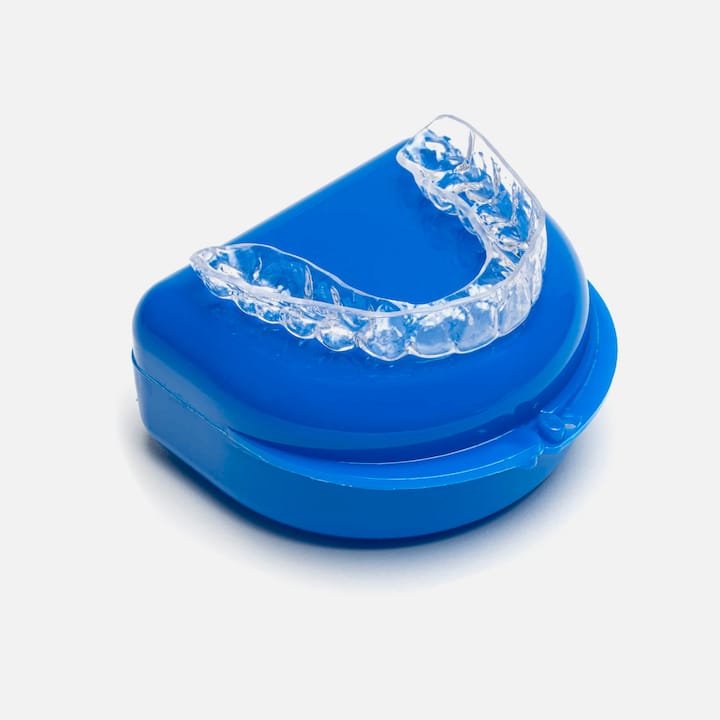
Figuring out the exact mix of causes behind your bruxism can take time, sometimes months of tracking symptoms, ruling out sleep apnea, or adjusting a prescription. Your teeth don’t get a pause button while that happens, which is why dental guards are consistently recommended as a protective step regardless of the underlying trigger.
- A hard night guard holds up best against heavy, forceful grinding and tends to last longer under real pressure.
- A soft guard suits lighter clenching but wears through faster if your grinding is more intense than you think.
- Custom-fitted guards stay in place better than boil-and-bite versions, which matters most for people who grind hard enough to dislodge a loose-fitting one overnight.
Alongside a guard, cutting back on evening alcohol and caffeine, keeping a consistent sleep schedule, and building in a stress-relief habit before bed all reduce the frequency of grinding episodes. If symptoms persist despite those changes, a sleep evaluation or a review of current medications with your prescriber is the logical next step.
Pro Tip: If you wake up with a guard on the floor instead of in your mouth, that’s a sign it doesn’t fit well enough for how hard you actually grind. A custom-molded guard solves that problem better than a store-bought one.
Do Crooked Teeth or a Bad Bite Cause Grinding?
Dentists once believed misaligned teeth, known as a poor occlusion, were the main driver of bruxism. That theory has mostly fallen out of favor as sleep and neurological research has taken over, but occlusal factors haven’t disappeared from the conversation entirely. They just play a smaller, more complicated role than dentists assumed decades ago.
A bite that doesn’t line up well can concentrate pressure on specific teeth during a grinding episode, turning a mild habit into visible, uneven wear faster than it would with a properly aligned bite. Missing teeth, poorly fitted crowns, or old fillings that sit slightly too high can create a pressure point your jaw unconsciously tries to grind away at, especially during the lighter stages of sleep when muscle control is less precise.
This is why dentists still check occlusion during a bruxism evaluation, even though they no longer treat it as the root cause. Adjusting a high filling or replacing an ill-fitting crown sometimes reduces grinding intensity, even when the deeper trigger is still sleep-related or stress-related. The relationship works in both directions too: existing bruxism can worsen bite alignment over time as teeth wear down unevenly, which then changes how the jaw closes and can intensify future grinding. Dental factors are best understood as amplifiers of bruxism rather than its primary cause. A dentist who checks your bite isn’t ruling out sleep apnea or stress. They’re closing off one more variable that could be making things worse.
How Grinding Damages Your Teeth Over Time
Bruxism causes damage gradually, which is exactly why so many people don’t take it seriously until the wear is severe. A single night of light grinding does almost nothing. Years of regular, forceful grinding reshapes your bite entirely.
Enamel is the first casualty. It wears down flat and thin, exposing the softer dentin underneath, which shows up as increased sensitivity to hot, cold, or sweet foods. Once dentin is exposed, decay risk rises since that layer isn’t as resistant to bacteria as enamel. Cracked and chipped teeth follow, particularly along the biting edges of front teeth and the cusps of molars. Severe, long-term grinders sometimes crack teeth badly enough to need a crown or, in extreme cases, extraction.
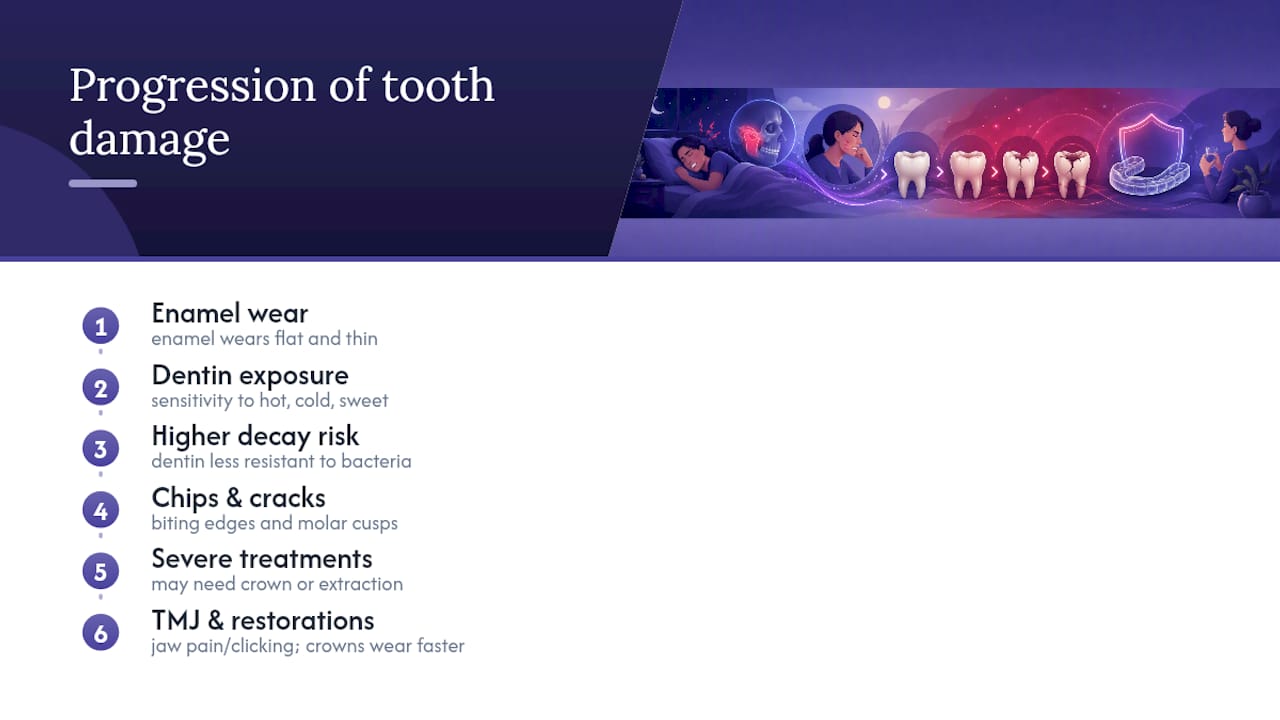
The jaw joint absorbs a lot of this stress too. Chronic grinding is one of the most common contributors to temporomandibular joint (TMJ) disorders, causing clicking, popping, limited jaw movement, and pain that can radiate into the ears and neck. Morning headaches near the temples are one of the most reliable early signs, caused by overworked jaw muscles rather than anything neurological.
Existing dental work takes a beating as well. Crowns, fillings, veneers, and bridges all wear out faster under grinding forces than they would otherwise, meaning more frequent, more expensive replacements. This is one of the strongest arguments for a protective guard: it’s far cheaper to wear one nightly than to repeatedly replace dental work that grinding keeps breaking down.
The ClearRetain Perspective: Protect the Teeth First
Whatever mix of causes is behind your grinding, protecting your teeth doesn’t have to wait for a diagnosis. Clearretain’s night guards use FDA-approved materials and cost a fraction of an in-office appliance, which makes early protection realistic instead of optional. If you’re already dealing with jaw pain, cracked teeth, or suspect sleep apnea, get evaluated first. Otherwise, a well-fitted guard is a smart place to start.
— Clear
Get a Custom Night Guard Without the Dental Office Markup
If you already know you grind and just need a guard that actually fits, you don’t need an expensive dentist visit to get one. Some companies ship self-impression kits to your door, provide instructions for molding impressions at home, and turn them into custom-fit appliances under professional supervision, often at a fraction of traditional pricing.

For heavy grinders, the hard night guard holds up against forceful clenching night after night. For lighter grinding or dual use as a retainer, the upper retainer-night guard combines both functions in one appliance. If you’ve already had orthodontic work and need standard retention alongside grinding protection, the upper teeth retainer and lower teeth retainer are built from the same impression process. Once your first impression is on file, reordering a replacement takes minutes instead of another office visit. Start with a self-impression kit and get your custom guard on the way this week.
This article is general information, not a substitute for advice from a qualified doctor. Consult a qualified healthcare professional about your own circumstances before acting on anything here.
Sources
- StatPearls: Bruxism prevalence estimates
- Sleep bruxism is highly prevalent in adults with obstructive sleep apnea: a large-scale polysomnographic study
- Bruxism management (NCBI Bookshelf/StatPearls)
- Cleveland Clinic: Bruxism causes and risk factors