



Why Children Need Night Guards for Healthy Teeth
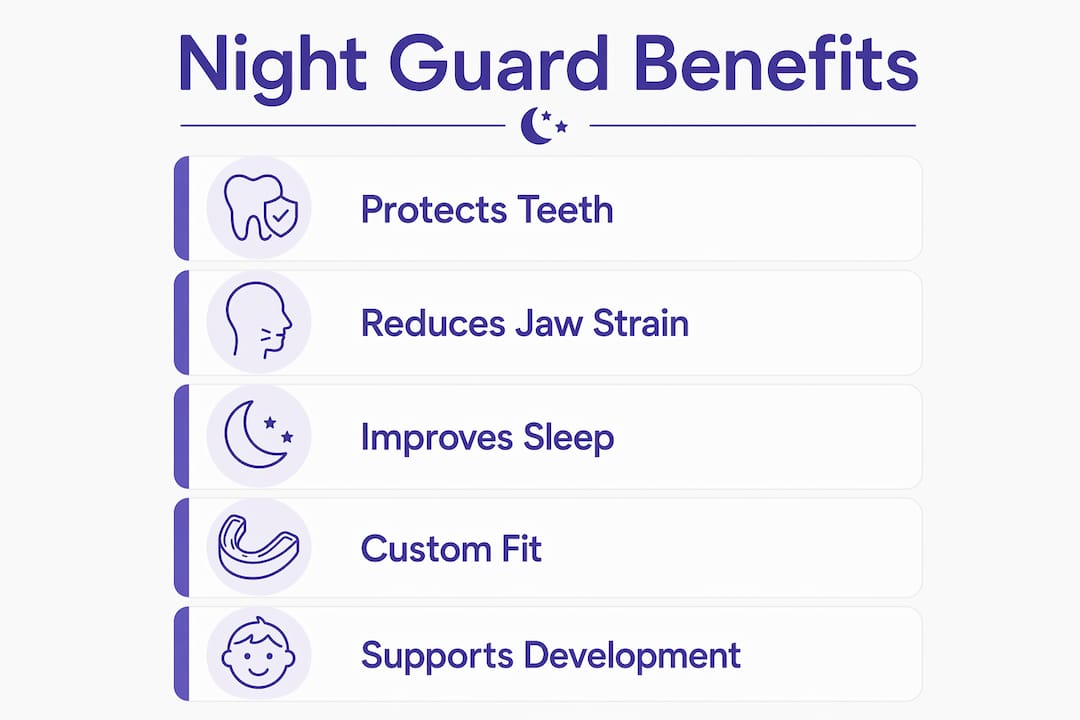
A night guard is a custom-fitted dental appliance worn during sleep to protect teeth from the damage caused by grinding and clenching, a condition known as bruxism. Understanding why children need night guards starts with one fact: 15–33% of children experience bruxism, most commonly during the mixed dentition phase when baby and permanent teeth coexist. That prevalence makes pediatric bruxism one of the most common and underrecognized threats to children’s oral health. Left unaddressed, grinding wears down enamel, strains the jaw joints, and causes pain that disrupts sleep and daily life. A properly fitted night guard absorbs grinding forces before they reach the teeth, giving developing dentition a real layer of defense.
Why do children need night guards?
Pediatric bruxism is defined as the involuntary grinding or clenching of teeth during sleep, and it affects children across all age groups. The condition peaks during mixed dentition, the years when a child is losing baby teeth and growing permanent ones. During this phase, the bite is constantly shifting, and the jaw muscles can respond with grinding as the body tries to find a comfortable resting position.
Stress, airway obstructions, and dental eruption are the three most common triggers for pediatric bruxism. Stress includes school pressure, anxiety, and major life changes. Airway issues, such as enlarged tonsils or adenoids, force the jaw into abnormal positions during sleep, which triggers grinding. Erupting teeth create localized pressure that the jaw muscles respond to by clenching.
Night guards protect teeth by creating a physical barrier between the upper and lower arches. They absorb the mechanical force of grinding before it reaches the enamel surface. Without that barrier, repeated grinding gradually flattens tooth surfaces, causes sensitivity, and places chronic strain on the temporomandibular joint, commonly called the TMJ.

Signs your child may need a night guard
Pediatric dentists recommend evaluation when parents or clinicians observe any of the following:
- Visibly flattened or worn tooth surfaces
- Complaints of jaw soreness or facial pain in the morning
- Frequent headaches, especially upon waking
- Tooth sensitivity without an obvious cavity
- Audible grinding sounds during sleep
- Disrupted sleep, snoring, or restless nights
Parents should monitor for jaw soreness, headaches, and visible tooth wear as the clearest clinical indicators. Hearing grinding at night is not enough on its own. Pediatric dentists rarely prescribe night guards based on sound alone. Clinical evidence of damage or symptoms is what drives the recommendation.
Why adult and over-the-counter guards are wrong for kids
Adult night guards and boil-and-bite guards sold at pharmacies are not safe for children. Non-custom adult guards risk improper fit, orthodontic complications, and skeletal development problems. A guard that does not fit precisely can shift teeth, restrict jaw growth, or create new bite problems that require costly correction later.
Hard acrylic adult guards are particularly problematic. They are rigid and cover the full arch, which can interfere with the natural eruption of permanent teeth. A child’s jaw is still growing, and any appliance that limits that movement can alter the trajectory of dental development in ways that are difficult to reverse.
The fit problem compounds over time. A guard bought at a pharmacy today may not accommodate the tooth that erupts three months from now. Children’s mouths change rapidly, and a static appliance cannot keep pace with that change.
Pro Tip: Never place an adult night guard in a child’s mouth, even temporarily. The few nights of protection are not worth the risk of misaligning a developing bite. Call your child’s dentist for an interim solution instead.
Pediatric dentists recommend custom-fitted guards designed specifically for growing mouths. These guards use softer, more flexible materials and cover only the teeth that need protection, leaving room for natural jaw movement and tooth eruption. The kids night guard fitting guide from Clearretain walks parents through exactly what a proper pediatric fit looks like and what to watch for.
What types of night guards work best for children?
Pediatric night guards fall into two broad categories: soft guards and hard guards. Each serves a different clinical purpose, and the right choice depends on the severity of grinding and the child’s stage of dental development.
Soft night guards are the most common choice for younger children and mild to moderate grinders. They are made from flexible, resilient materials that cushion grinding forces without restricting jaw movement. Custom pediatric guards use softer materials and partial coverage designs that accommodate changing dentition and growing jaws. Soft guards are also more comfortable, which directly affects whether a child will actually wear one.
Hard night guards are typically reserved for adolescents with stable dentition and more severe bruxism. A hard night guard provides greater durability and force absorption for heavy grinders, but it requires a more stable bite to fit correctly. Using a hard guard too early in dental development carries the same risks as using an adult guard.
How guards protect growing teeth
Night guards work by redistributing grinding forces across a wider surface area. Instead of concentrating pressure on individual tooth tips, the guard spreads the load across the entire biting surface of the appliance. This prevents the micro-fractures and enamel erosion that accumulate from months of unprotected grinding.
Guards also reduce strain on the TMJ by keeping the jaw in a slightly open, relaxed position during sleep. That small amount of separation prevents the full muscle contraction that occurs during a grinding episode. Over time, this reduces morning jaw soreness and headaches.
Night guards require adjustment or replacement every 6–12 months due to developmental changes. That timeline is not optional. A guard that fit perfectly six months ago may be too tight or too loose today, and a poor fit provides less protection while potentially causing new problems.
Child compliance improves significantly when the guard is comfortable and visually appealing. Color options and minimal-contact designs help increase long-term use. Letting your child pick a color or design makes the guard feel like their own, not something imposed on them.
For children who grind primarily on the upper arch, an upper retainer night guard provides targeted protection while keeping the design minimal and comfortable. For those with lower arch involvement or heavier grinding patterns, a lower night guard offers the same custom fit with added durability.
How parents can support night guard use at home
Consistent use is the single biggest factor in whether a night guard actually protects your child’s teeth. A guard that sits in a drawer provides zero benefit. Building the habit takes a few weeks of intentional effort, but most children adapt quickly when parents make it part of the routine.
- Introduce the guard during the day first. Let your child wear it for short periods while watching TV or reading. This removes the pressure of falling asleep with something new in their mouth.
- Connect it to an existing habit. Place the guard next to the toothbrush so it becomes part of the brushing routine. Consistency in timing builds automatic behavior.
- Check the fit every few months. Ask your child if the guard feels tight, loose, or uncomfortable. Any of those answers means it is time for a dental check.
- Clean it daily. Rinse the guard with cool water after each use. Use a soft toothbrush and mild soap weekly. Never use hot water, which warps the material.
- Store it properly. Keep the guard in its ventilated case when not in use. Leaving it exposed collects bacteria and increases the risk of damage.
Guard adjustments every 6–12 months are critical during dental development. Schedule these check-ins alongside your child’s regular dental appointments so nothing falls through the cracks.
Pro Tip: If your child refuses to wear the guard, ask the dentist to check the fit before assuming it is a behavioral issue. Discomfort from a poor fit is the most common reason children reject night guards.
For a broader look at children’s oral health, including hygiene habits that complement night guard use, the Y-Brush parent guide covers the full picture of preventive pediatric dental care.
Key takeaways
Night guards protect children’s developing teeth from bruxism damage, but they work only when properly fitted, consistently worn, and replaced every 6–12 months as the child grows.
| Point | Details |
|---|---|
| Bruxism is common in children | Between 15–33% of children grind their teeth, most often during mixed dentition. |
| Adult guards cause harm | Non-custom or adult guards risk bite misalignment and restricted jaw growth in children. |
| Soft guards suit most kids | Flexible, partial-coverage designs protect teeth without interfering with natural development. |
| Replacement is non-negotiable | Guards must be adjusted or replaced every 6–12 months to match a growing child’s mouth. |
| Compliance depends on comfort | Comfortable, visually appealing guards are far more likely to be worn consistently. |
What I’ve learned from watching parents navigate this
The most common mistake I see is parents waiting too long. They hear grinding, assume it is a phase, and do nothing until a dentist points out visible enamel wear at the next checkup. By that point, the damage is done. Enamel does not grow back.
The second mistake is buying a boil-and-bite guard from a drugstore because it seems like a quick fix. Night guards protect enamel but do not address underlying causes. A poorly fitted guard adds a new problem on top of the original one.
What actually works is a two-track approach. Get a proper custom guard fitted by a pediatric dentist or through a reputable direct-to-consumer provider with professional oversight. At the same time, ask the dentist to assess whether airway issues, stress, or bite problems are driving the grinding. Night guard use is part of a multidisciplinary approach that may include orthodontic evaluation and airway assessment. The guard buys time and prevents damage while you address the root cause.
Parents who stay involved, monitor fit, and keep up with replacements see the best outcomes. The guard is a tool. You are the one who makes it work.
— Clear
Clearretain’s custom night guards for growing smiles
Protecting your child’s teeth does not have to mean expensive office visits or one-size-fits-all solutions.
Clearretain offers custom-fitted pediatric night guards made from FDA-approved materials under the supervision of experienced orthodontic technicians. The process starts with a detailed self-impression kit sent directly to your home. Parents get professional-grade protection at a fraction of traditional orthodontic costs, with options including soft guards for younger children and more durable designs for heavier grinders. Every guard is built to fit your child’s current dentition, with support available when it is time for an adjustment or replacement.
FAQ
What age can a child start wearing a night guard?
Most pediatric dentists consider night guards appropriate once a child has enough permanent teeth to anchor the appliance, typically around age 6–8, though the decision depends on clinical signs of damage rather than age alone.
Are night guards safe for children?
Custom-fitted pediatric night guards made from soft, flexible materials are safe for children. The key is proper fit and regular replacement every 6–12 months to keep pace with jaw growth and tooth eruption.
How do I know if my child’s night guard fits correctly?
A well-fitting guard stays in place without being forced, does not cause gagging, and shows no pressure marks on the gums after removal. If your child complains of tightness or soreness, schedule a fitting check with the dentist.
Do night guards stop teeth grinding?
Night guards do not stop grinding behavior. They absorb the forces of grinding to prevent enamel damage and jaw strain while the underlying cause, whether stress, airway issues, or bite problems, is identified and addressed separately.
How often should a child’s night guard be replaced?
Children’s night guards should be replaced every 6–12 months because ongoing jaw growth and tooth eruption change the fit. A guard that no longer fits correctly provides less protection and can cause new dental problems.