


At-Home Dental Care Kits for Children: Safe Use Guide
At-home dental care kits are appropriate for children in a narrow set of situations: custom retainers to hold orthodontic results, basic night guards for bruxism, simple sports guards, and whitening trays for teens old enough to use them safely. They are not a substitute for braces, restorative work, crowns, or implants. The American Academy of Pediatric Dentistry (AAPD) sets clear age-based guidelines for supervised dental product use, and any appliance your child wears should be made from FDA-approved materials under orthodontic technician oversight. Clearretain meets those standards and offers a direct-to-consumer option for families who want quality appliances without the office markup.
Safe uses at a glance:
- Custom retainers (post-orthodontic, to hold alignment)
- Basic night guards (for documented teeth grinding)
- Simple sports mouth guards
- Whitening trays for teens 14 and older, with parental supervision
Not appropriate for at-home kits:
- Active orthodontic tooth movement (braces, aligners)
- Restorative work, crowns, or implants
- Complex multi-tooth appliances requiring clinical precision
Table of Contents
- What can at-home dental care kits actually do for kids?
- Safety, age limits, and what the AAPD actually says
- How do you choose a safe kit for your child?
- Putty impressions vs. self-impression kits vs. in-office digital scans
- Step-by-step parent checklist for taking a safe impression at home
- What do at-home kits cost, and how much can you save?
- Why Clearretain is a strong option for children’s appliances
- Key Takeaways
- What responsible at-home dental care for kids actually looks like
- Get started with Clearretain for your child’s appliance
- Useful sources for parents
What can at-home dental care kits actually do for kids?
The honest answer: quite a bit for simple protective and cosmetic appliances, almost nothing for anything clinical. Consumer mold kits suit whitening trays, basic night guards, and simple mouthguards well. They lack the precision required for crowns, implants, complex restorations, or active orthodontic movement.
Appropriate uses:
- Post-orthodontic retainers (upper, lower, or both arches) to maintain alignment after braces or clear aligner treatment
- Night guards for children with confirmed bruxism, typically ages 6 and up with adult supervision
- Sports mouth guards for contact sports
- Single-tooth partial retainers where a child has lost one tooth and needs a placeholder appliance
Not appropriate:
- Moving teeth into new positions (that requires clinical force and monitoring)
- Replacing a crown, filling, or implant
- Managing jaw joint disorders without professional diagnosis
- Any appliance where a poor fit could cause unintended tooth movement
Poor fit is the main risk. Inaccurate impressions can lead to soft tissue irritation or unwanted tooth movement in developing mouths, which is why material quality and technician oversight matter so much for growing kids.
Safety, age limits, and what the AAPD actually says
Age guidance is not arbitrary. A child’s jaw is still developing, which means an ill-fitting appliance can do real harm.
Whitening: The AAPD and ADA both advise against whitening for children under 14. Enamel is thinner in younger teeth, and peroxide-based gels can cause sensitivity or pulp irritation. For teens 14 and older, low-concentration whitening gel used with custom trays and parental supervision is generally considered acceptable. Clearretain’s bleaching trays and whitening serum are designed for use with custom-fit appliances, which reduces gel contact with gum tissue.
Night guards and retainers: Children as young as 6 can wear night guards when a dentist has confirmed bruxism. Retainers are appropriate once orthodontic treatment is complete, regardless of age, provided the fit is verified.
Fluoride products: The AAPD’s fluoride policy recommends twice-daily brushing with fluoride toothpaste and professional topical treatments where indicated. Community water fluoridation is associated with approximately 35% fewer decayed, missing, and filled primary teeth and about 26% fewer decayed, missing, and filled permanent teeth according to AAPD policy. For parents with fluoride concerns, a natural oral care guide can help you weigh ingredient choices and alternatives.
Stat: The FDA recently began action to remove ingestible fluoride prescription drug products for children from the market, citing concerns about gut microbiome effects. Topical fluoride in toothpaste and rinses is a separate category and remains widely recommended.
Red flags — stop and see a dentist if your child experiences:
- Pain or pressure during or after wearing an appliance
- Bleeding gums or sores at appliance edges
- The appliance feels loose or rocks on the teeth
- Persistent gagging that doesn’t improve after a few days
- Any visible change in tooth position
How do you choose a safe kit for your child?
Run through this checklist before you buy anything.
- FDA-approved materials — confirm the appliance is made from materials cleared for intraoral use. No exceptions.
- Orthodontic or dental technician oversight — someone with clinical training should be fabricating the appliance from your impression, not an automated machine with no review.
- Pediatric fit instructions — the kit should include age-specific guidance, not just adult directions.
- Clear impression instructions — vague or incomplete instructions produce bad molds, which produce bad appliances.
- Reorder policy and stored impressions — can you reorder without taking a new impression? Stored digital records save time and money.
- Return or remake policy — a reputable provider will remake an appliance that doesn’t fit correctly.
Red flags to walk away from:
- No mention of pediatric use or age guidance
- Materials listed as “medical grade” with no FDA reference
- No technician or clinical oversight mentioned
- No return or remake policy
- Fit disclaimers that put all responsibility on the buyer
Putty impressions vs. self-impression kits vs. in-office digital scans
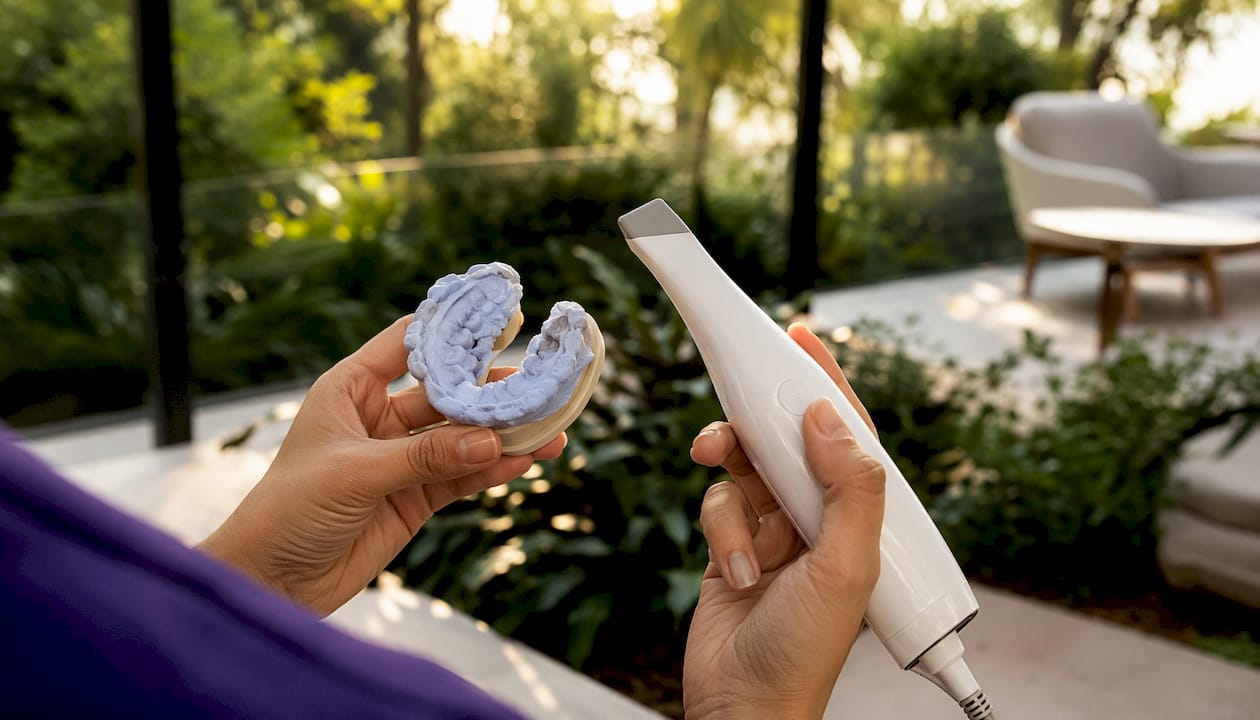
The method matters more for children than for adults. Kids have smaller mouths, stronger gag reflexes, and less patience.
| Method | Comfort | Accuracy | Speed | Best for |
|---|---|---|---|---|
| Putty impression kit | Moderate | Good if done correctly | 10–15 min setup | Most children 6+ with adult help |
| Self-impression kit | Moderate | Good | Similar to putty | Cooperative older children and teens |
| In-office digital scan | High | Highest | Shorter by ~4 minutes vs. putty | Anxious children, high-precision needs |
A randomized crossover trial found that 80% of pediatric patients preferred digital intraoral scans over rubber-base impressions, with digital scans completing roughly 4 minutes faster and producing lower gag reflex scores.
When to insist on an in-office digital scan: ongoing orthodontic treatment, any restorative need, a child who gags severely with putty, or any case where appliance precision is critical.
Pro Tip: If your child is anxious about the putty, try a dry run first. Have them practice opening wide and holding still for 30 seconds before the actual impression. It reduces the surprise factor significantly.
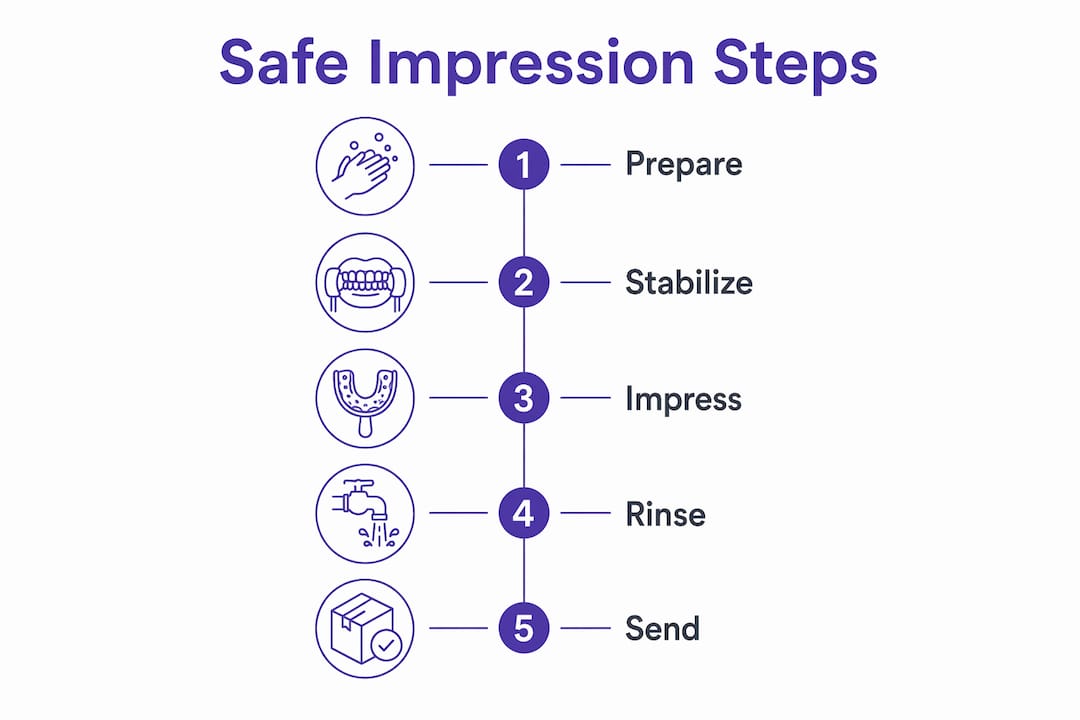
Step-by-step parent checklist for taking a safe impression at home
Before you order:
- Read the pediatric instructions fully before the kit arrives.
- Confirm the materials are FDA-approved.
- Check that your child has no loose teeth that could be dislodged.
Impression day: 4. Have a second adult or older helper present. One person stabilizes the child’s head while the other seats the tray. This two-person technique reduces errors and improves mold accuracy. 5. Mix putty only when your child is calm and ready. You have limited working time. 6. Seat the tray firmly and evenly. Hold it still for the full time specified in the instructions.
First fit: 7. Check all edges for sharp spots or areas pressing into gum tissue. 8. Have your child wear the appliance for 15 minutes before committing to a full night. 9. If it rocks, pinches, or causes immediate discomfort, contact the provider before continuing use.
Daily care:
- Rinse the appliance before and after each use.
- Clean with a soft toothbrush and mild soap. Avoid hot water, which warps the material.
- Store in the provided case, away from pets and heat.
Troubleshooting:
- Bubbles in the putty: the mix wasn’t thorough enough. Use the backup putty and remix completely.
- Gagging: try tilting the child’s head slightly forward and breathing through the nose.
- Poor fit on arrival: contact the provider immediately. A reputable company will remake it.
Pro Tip: Clearretain publishes step-by-step impression instructions specifically for their kits. Read them the night before, not the morning of.
What do at-home kits cost, and how much can you save?
Price ranges for common items (approximate, based on direct-to-consumer providers):
- Single upper or lower retainer: $50–$100
- Upper and lower retainer set: $80–$150
- Night guard: $80–$150
- Whitening trays: $50–$100
- Whitening gel refills (3-pack): $20–$40
Timeline from order to first fit typically runs 1–2 weeks, including impression submission, fabrication, and shipping.
Stat: Clearretain positions its direct-to-consumer pricing at up to 80% savings compared to traditional office visits for the same appliances.
One important caveat: those savings apply to simple appliances. Orthodontic treatment, restorative work, and anything requiring clinical monitoring still belongs in a dental office.
Why Clearretain is a strong option for children’s appliances
Clearretain’s product line covers the appliances that are genuinely appropriate for at-home use in children:
- Upper Teeth Retainer — post-orthodontic retention, single arch
- Lower Teeth Retainer — post-orthodontic retention, lower arch
- Upper and Lower Retainers Set — both arches, best value for full retention
- Teeth Bleaching Trays — custom-fit trays for teens 14+ using whitening gel
- Tooth Whitening Serum — designed to pair with custom trays or night guards
- Teeth Whitening Gel 3-Pack — refill supply for ongoing whitening maintenance
Every appliance is made from FDA-approved materials under orthodontic technician supervision. Clearretain stores your digital impression records, so reordering is straightforward when a child loses or outgrows an appliance.
For children’s night guard fitting, Clearretain provides parent-specific guidance on sizing, wear schedules, and what to watch for during the first few weeks.
Key Takeaways
At-home dental kits are safe and cost-effective for children when used for retainers, night guards, and teen whitening, with FDA-approved materials and technician oversight as non-negotiable requirements.
| Point | Details |
|---|---|
| Appropriate uses only | Use kits for retainers, basic night guards, and whitening trays; see a dentist for braces or restorative work. |
| Age limits matter | Whitening is appropriate for teens 14 and older; night guards suit children 6+ when bruxism is confirmed. |
| Red flags to watch | Stop use and see a dentist if your child experiences pain, poor fit, bleeding, or visible tooth movement. |
| Impression method | A second adult on impression day reduces errors; consider an in-office digital scan for anxious children. |
| Clearretain option | Clearretain offers FDA-approved, technician-supervised appliances with stored impressions and a clear reorder process. |
What responsible at-home dental care for kids actually looks like
The conversation around at-home dental kits tends to split into two camps: enthusiasts who treat them as a complete replacement for dental care, and skeptics who dismiss them entirely. Both miss the point.
At Clearretain, the position is straightforward. At-home kits serve a real purpose for a specific set of needs, and pretending otherwise helps no one. A child who has finished orthodontic treatment needs a retainer. A child who grinds their teeth at night needs a night guard. A teenager who wants whiter teeth can use a custom tray safely. These are not clinical emergencies. They are maintenance and cosmetic needs that a well-made, properly supervised at-home appliance can address at a fraction of the office cost.
What we won’t do is suggest that a kit replaces a pediatric dentist. The AAPD recommends a dental home by age 12 months and regular checkups throughout childhood. That relationship is where orthodontic decisions, restorative work, and complex needs belong. Clearretain fits into the space between office visits, not instead of them.
Get started with Clearretain for your child’s appliance
Custom appliances for kids don’t have to mean a long wait or a large bill.
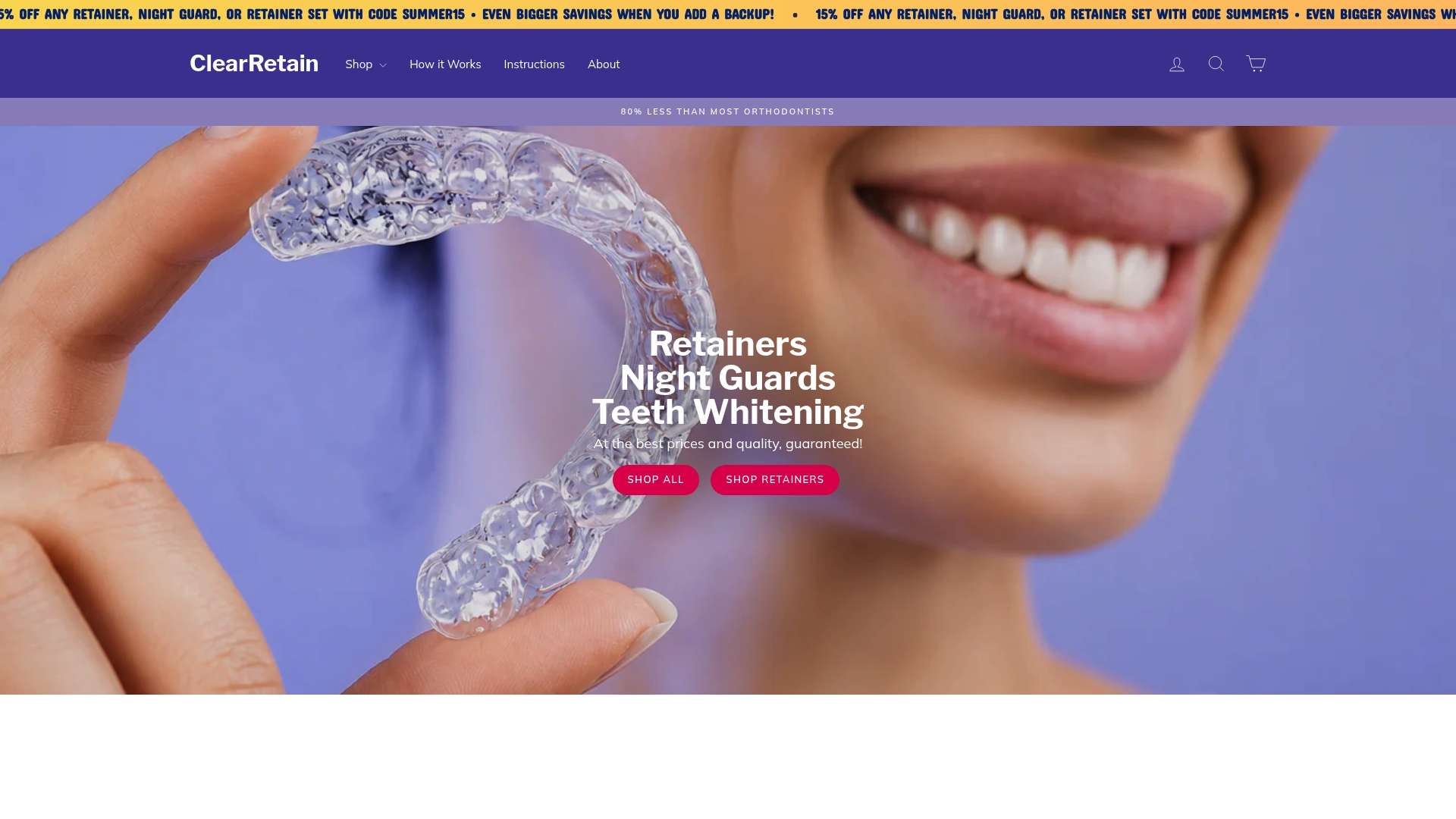
Ordering through Clearretain takes a few minutes. Choose the appliance your child needs, receive the impression kit, take the mold at home using the included instructions (two adults recommended for younger children), and mail it back. Clearretain’s orthodontic technicians fabricate the appliance from FDA-approved materials and ship it directly to you. If you need a replacement later, stored digital impressions mean you skip the mold step entirely.
Every order includes pediatric fit guidance, and the support team is available if the first fit raises any questions. Browse the full range of retainers and night guards or go directly to the product that fits your child’s need and place your order today.
Useful sources for parents
- AAPD Policy on Use of Fluoride — the primary reference for fluoride safety, community water fluoridation data, and supervised topical product use in children.
- AAPD Fluoride Therapy Best Practices — age-specific guidance on home-use fluoride products and prescription gel supervision.
- AAPD Perinatal and Infant Oral Health Care — broader pediatric oral health framework including anticipatory guidance and caries prevention.
- Pediatric digital scan vs. putty impression study — randomized crossover trial comparing comfort, time, and preference in children.
- FDA action on ingestible fluoride products — current FDA position on swallowed fluoride supplements for children.
- Clearretain impression kit instructions — step-by-step guide for taking impressions at home, including pediatric tips.
This article is general information, not professional dental advice. Confirm current guidance with the AAPD, your child’s pediatric dentist, or a qualified dental professional for your child’s specific situation.