



Why Kids Grind Teeth at Night: A Parent's Guide
Pediatric sleep bruxism is the involuntary grinding and clenching of teeth during sleep, and it affects 15% to 40% of children at some point in childhood. That grinding sound coming from your child’s room at night is alarming, but it rarely signals serious harm. Most children outgrow the behavior as their teeth and jaws mature. Understanding why kids grind teeth at night, what drives it, and when to act gives you the clarity to respond without panic.
What are the main causes of teeth grinding in children?
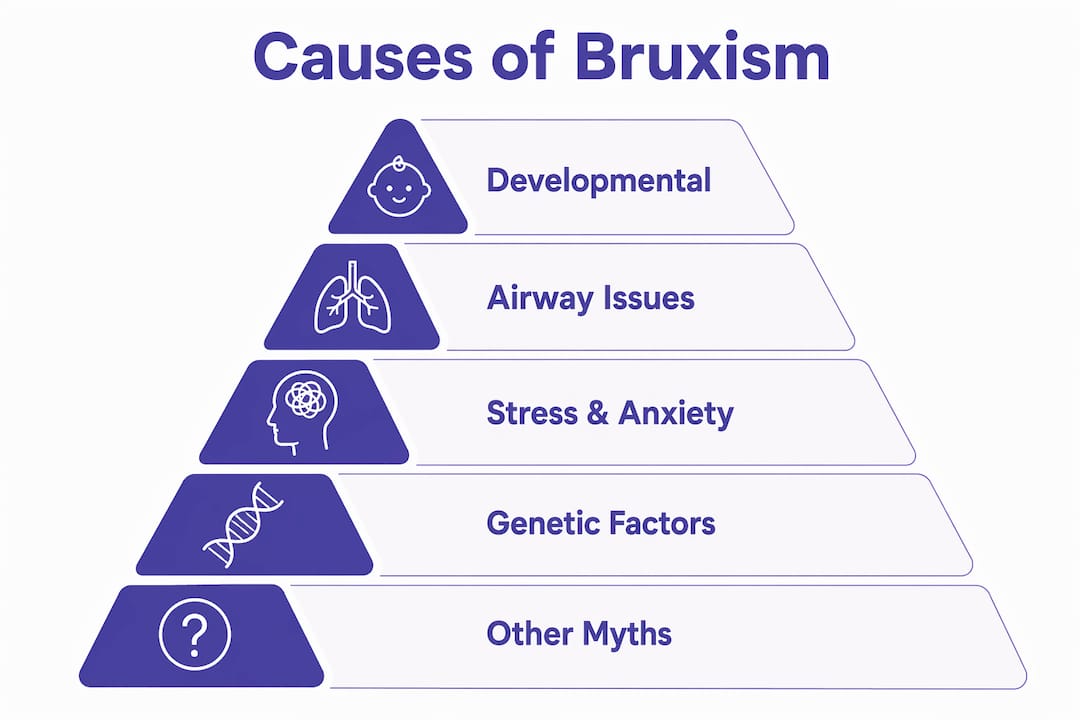
Child sleep bruxism is not caused by a single factor. It is a multifactorial condition driven by developmental changes, airway problems, psychological stress, and genetics working together or independently.
Developmental factors
Children grind more during tooth eruption and jaw growth phases, and this typically resolves within 6 to 12 months. The brain is essentially recalibrating the bite as new teeth come in and the jaw reshapes. This is why grinding peaks during the toddler years and again during the mixed dentition phase, when baby and permanent teeth coexist.
Airway and breathing issues
This is the cause most parents miss entirely. Pediatric bruxism often acts as a physiological reflex where the brain moves the jaw forward to restore airflow during partial airway obstruction. Enlarged tonsils and adenoids are the most common culprits. The data on this connection is striking: 70% to 80% of children with sleep apnea experience sleep bruxism. When tonsils and adenoids are surgically removed, grinding frequency drops by 40% to 60% in those children.
Psychological and behavioral factors
Stress and anxiety raise grinding intensity significantly. Stressful life events increase nocturnal grinding intensity by 30% to 50% during those periods. School pressure, family changes, a new sibling, or a move to a new home can all trigger or worsen grinding. Children with ADHD show higher rates of bruxism, and ADHD stimulant medications have been linked to increased grinding frequency. If your child recently started a stimulant medication and grinding appeared or worsened, mention it to their pediatrician.
Genetic predisposition
Grinding teeth at night reasons often run in families. Children with parents who grind their teeth are 3 to 4 times more likely to grind themselves. Parental psychological health also plays a role. Maternal anxiety significantly influences the severity of childhood bruxism. This does not mean anxious parents cause grinding, but it does suggest that the household emotional environment matters.
Pro Tip: If you or your partner grind your teeth, tell your child’s dentist at the first appointment. It changes the clinical picture immediately.
A common misconception is that worms or parasites cause grinding. No credible research supports this. The real causes are developmental, respiratory, psychological, and genetic.
How do you know when your child’s grinding needs attention?
Most grinding in children is benign and self-limiting. The challenge is recognizing the signs that suggest something more serious is happening.
Watch for these warning signs:
- Visible tooth wear: Flattened, chipped, or shortened teeth are signs of significant enamel loss.
- Morning jaw pain or soreness: Your child complains that their jaw hurts or feels tired when they wake up.
- Headaches on waking: Frequent morning headaches, especially around the temples, can signal nighttime clenching.
- Ear pain without infection: The jaw joint sits close to the ear canal, and grinding can cause referred pain that mimics an earache.
- Snoring, gasping, or restless sleep: These are red flags for sleep-disordered breathing, which is strongly linked to grinding.
- Daytime sleepiness: A child who grinds due to airway obstruction often does not sleep deeply and wakes unrefreshed.
The grinding sound itself is not a reliable indicator of damage. Loud grinding does not always mean severe wear, and quiet clenching can cause more damage than audible grinding. A pediatric dental exam with a close look at enamel wear gives you the most accurate picture.
Pro Tip: Take a short video of your child sleeping if you hear grinding. Showing it to the dentist, along with any snoring or breathing pauses, helps them assess airway involvement quickly.
Symptoms of teeth grinding that involve the airway, such as snoring or observed pauses in breathing, warrant a referral to a pediatric sleep specialist or an ear, nose, and throat physician. Dental damage alone is managed differently than grinding driven by obstructive sleep apnea.
What practical steps can parents take to reduce nighttime grinding?
Children grinding teeth treatment starts with the least invasive approaches. The goal is to address the underlying drivers, not just mask the symptom.
-
Improve sleep hygiene. A consistent bedtime routine, a cool and dark room, and limiting screens for at least one hour before bed all reduce sleep disruption. Better sleep quality lowers the arousal threshold that triggers grinding episodes.
-
Reduce stress before bed. A calm wind-down routine matters more than most parents realize. Reading together, gentle stretching, or quiet conversation about the day helps children process anxiety before sleep. Avoid stimulating activities or difficult conversations close to bedtime.
-
Address airway issues with a professional. If your child snores regularly or breathes through their mouth, see a pediatrician or ENT physician. Treating enlarged tonsils or adenoids can dramatically reduce grinding. Improving sleep hygiene, reducing stress, and addressing airway issues are the three primary management strategies recommended for pediatric bruxism.
-
Monitor without overreacting. Most children do not experience long-term damage from bruxism and outgrow it as permanent teeth develop. Schedule regular dental checkups every six months so the dentist can track enamel wear over time.
-
Consider natural relief options. Some parents explore natural approaches to bruxism relief as part of a broader stress management plan. Always discuss any supplement or remedy with your child’s pediatrician first.
Pro Tip: Ask your child’s dentist to photograph their teeth at each checkup. Comparing photos over 12 months tells you whether wear is progressing or stable.
Avoid the temptation to buy an over-the-counter mouth guard for a young child without professional guidance. Poorly fitted appliances can shift teeth or interfere with jaw development.
What role do dental devices play in children’s teeth grinding?
Dental appliances are not the first line of treatment for most children with bruxism. The decision to use one depends heavily on age, tooth development, and the severity of symptoms.
Hard night guards are generally contraindicated in young children because they can restrict jaw growth. A child’s jaw is actively developing, and a rigid appliance can interfere with that process. This is why pediatric dentists typically recommend observation and addressing root causes before reaching for an appliance.
The picture changes for older children and adolescents. Once the permanent teeth have fully erupted and jaw growth has largely stabilized, a custom-fitted night guard becomes a reasonable protective option. Custom-fitted devices made from professional-grade materials protect enamel without the fit problems of generic store-bought guards.
Here is a simple comparison of the two main appliance approaches used when a device is clinically appropriate:
| Appliance type | Best suited for | Key consideration |
|---|---|---|
| Soft night guard | Adolescents with mild to moderate grinding | Comfortable but may encourage clenching in some patients |
| Hard night guard | Adolescents with severe wear or jaw pain | More durable; requires professional fitting and follow-up |
Night guards are reserved for older children and adolescents with permanent teeth and significant symptoms. Using them prematurely can interfere with natural jaw growth. A pediatric dentist or orthodontist should make the call, not a parent shopping online.
Pro Tip: If your teen is prescribed a night guard, look into custom mouth guard alternatives that offer professional-grade fit at a fraction of the cost of in-office appliances.
Key takeaways
Child sleep bruxism is a common, usually temporary condition driven by developmental changes, airway obstruction, stress, and genetics, and most children outgrow it without lasting dental damage.
| Point | Details |
|---|---|
| Bruxism is common | Between 15% and 40% of children grind their teeth at some point during childhood. |
| Airway issues are a key driver | 70% to 80% of children with sleep apnea also grind their teeth at night. |
| Stress raises grinding intensity | Stressful life events increase grinding intensity by 30% to 50% during those periods. |
| Hard guards harm young children | Hard night guards are contraindicated in young children because they can restrict jaw growth. |
| Most children outgrow it | The majority of children stop grinding as their permanent teeth develop and the jaw matures. |
What I’ve learned from watching parents react to grinding sounds
The grinding sound is almost always worse than the actual damage. Parents hear it and assume their child’s teeth are being destroyed. In most cases, the enamel wear is minimal and the grinding resolves on its own within months.
What concerns me more is the grinding that nobody hears. Silent clenching, especially in anxious children or those on stimulant medications, can cause more cumulative damage than the loud, dramatic grinding that sends parents rushing to the dentist at 7 AM. The absence of sound does not mean the absence of force.
The other thing I see consistently is parents focusing on the appliance before they address the cause. A night guard does not fix sleep apnea. It does not reduce a child’s anxiety. It does not change the fact that a child is sleeping with their mouth open because their airway is partially blocked. Treating the symptom while ignoring the driver is the most common mistake in managing pediatric bruxism.
My honest advice: if your child grinds, get a dental exam to check for wear, ask about airway health, and look at what is happening in the child’s emotional environment. Those three steps will tell you more than any appliance ever will. Observation is not passivity. It is the right clinical response for most children with bruxism.
— Clear
Protecting your child’s teeth when it matters most
When a pediatric dentist does recommend a protective appliance for an older child or teen, the cost of in-office custom devices can be a real barrier. Clearretain offers professional-grade night guards for teeth grinding made from FDA-approved materials and fitted using detailed at-home impression kits, at up to 80% less than traditional orthodontic prices.

For teens who need full coverage, the upper and lower retainer set provides nightly protection for both arches. Every Clearretain appliance is made under the supervision of experienced orthodontic technicians. Always confirm with your child’s dentist that an appliance is clinically appropriate before ordering.
FAQ
What is sleep bruxism in children?
Sleep bruxism is the involuntary grinding and clenching of teeth during sleep. It affects between 15% and 40% of children and is considered a sleep-related movement disorder.
Why do kids grind their teeth at night more than adults?
Children grind more because their jaws and teeth are actively developing, and the brain uses jaw movement to maintain airway patency during sleep. Most children naturally stop grinding as their permanent teeth fully erupt.
Can stress really cause teeth grinding in kids?
Yes. Stressful life events increase grinding intensity by 30% to 50% in children during those periods. School changes, family disruptions, and anxiety are all documented triggers.
Should I buy a night guard for my young child?
No, not without professional guidance. Hard night guards are contraindicated in young children because they can restrict jaw growth. A pediatric dentist should evaluate your child before any appliance is used.
When should I take my child to the dentist for grinding?
Schedule an evaluation if you notice flattened or chipped teeth, your child complains of jaw pain or morning headaches, or you observe snoring, mouth breathing, or restless sleep alongside the grinding.