


Sports Mouth Guard Cost: What You'll Actually Pay in 2026
Stock mouth guards run about $5 to $20, boil-and-bite versions land around $15 to $50, mail-order custom guards typically cost $75 to $150, and dentist-made custom guards range from $150 to $300, with laminated versions reaching $500. Here’s the short version:
- Casual pickup games or low-contact sports: boil-and-bite is fine.
- Regular league play, braces, or a bite that doesn’t fit stock trays: mail-order custom gets you a lab-made guard without dentist-office pricing.
- High-contact collision sports (football, hockey, boxing): dentist-made or premium laminated custom guards are worth the extra cost.
A broken tooth repair runs $1,000 to $1,800, and an implant can cost $3,000 to $5,000 — numbers that make even a $300 custom guard look like a bargain if you play a contact sport regularly.
Key Takeaways
Custom mouth guards cost more upfront than stock or boil-and-bite options, but that difference is small compared with the $1,000 to $5,000 cost of repairing a damaged tooth.
| Point | Details |
|---|---|
| Stock and boil-and-bite are budget tiers | Stock runs $5 to $20 and boil-and-bite runs $15 to $50, fine for casual or low-contact play. |
| Custom guards cost more but pay off for contact sports | Dentist-made custom runs $150 to $300, cheap next to a $1,000 to $1,800 crown or a $3,000 to $5,000 implant. |
| Mail-order custom splits the difference | Typically $75 to $150, giving lab-made fit without dentist-office fees if impressions are done carefully. |
| Material and thickness drive real protection | Laminated multi-layer construction and proper millimeter thickness matter more than color or logo add-ons. |
| ClearRetain offers the mail-order custom path | ClearRetain fabricates custom guards in FDA-approved labs using self-impression kits, priced below dentist-office custom guards. |
Table of Contents
- Sports Mouth Guard Cost by Type: Stock, Boil-and-Bite, and Custom
- What Factors Drive Mouth Guard Pricing?
- Mail-Order Custom vs. Dentist-Made: What You’re Actually Trading Off
- Is a Custom Guard Worth It? The Real Repair Costs
- How to Choose, Buy, and Maintain Your Guard
- Does Insurance Cover the Cost of a Sports Mouth Guard?
- Where to Buy: Retail, Online, and Dental Office Price Differences
- Do Custom Logos or Names Add to the Cost?
- How to Spot a Low-Quality Mouth Guard Before You Buy
- Order a Custom Sports Mouth Guard Without the Dentist-Office Markup
- Frequently Asked Questions
- Sources
Sports Mouth Guard Cost by Type: Stock, Boil-and-Bite, and Custom
Not every guard on the market solves the same problem, and the price differences aren’t arbitrary. Each tier trades off protection, comfort, and durability in a specific way.
-
Stock guards ($5 to $20). These come pre-formed in a handful of sizes and you wear them as-is. They’re the cheapest option and the least protective, since a guard that doesn’t match your bite shifts around during contact and can even interfere with breathing or talking. Fine as an emergency backup, not a primary safety tool.
-
Boil-and-bite ($15 to $50). You soften these in hot water and bite down to create a rough custom shape. Quality brands sit at the upper end of that range and offer noticeably better fit than the cheapest stock options. For most recreational basketball, soccer, or rec-league hockey players, a good boil-and-bite guard is a reasonable middle ground.
-
Mail-order custom ($75 to $150). You take your own impressions at home with a kit, mail them to a lab, and get back a guard molded to your exact teeth. This tier closes most of the gap between drugstore guards and dentist-made ones, at roughly half the dentist price. Fit quality depends heavily on how carefully you follow the impression instructions.
-
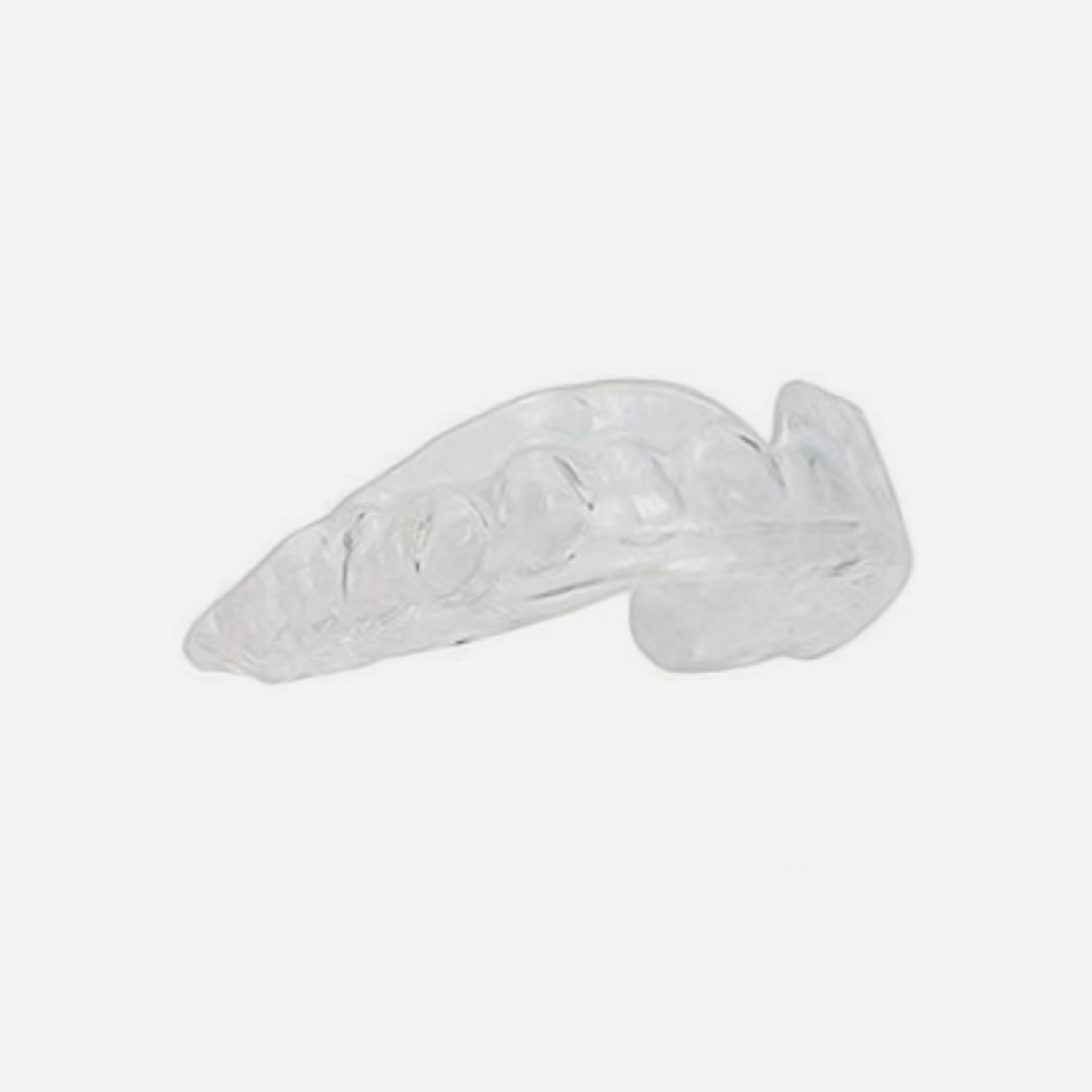
Dentist-made custom ($150 to $300, laminated versions up to $500). Your dentist takes a clinical impression and bite registration, then sends it to a lab for fabrication with material and thickness choices suited to your sport. Laminated dual or triple-density construction is common at the collegiate and professional level because it holds up to repeated high-force impacts better than single-layer EVA.
Stock and boil-and-bite guards typically need replacing every season or sooner if they tear or lose shape. Custom guards, properly cared for, often last one to two seasons depending on sport intensity and growth (for younger athletes).
What Factors Drive Mouth Guard Pricing?
A $20 price gap between two guards that look similar usually comes down to a short list of variables:
- Material and construction: single-layer EVA foam is cheaper to produce than laminated, multi-layer designs that distribute impact force across denser materials.
- Lab and clinical fees: dentist-made guards fold in the cost of a chairside impression appointment, bite registration, and lab fabrication time, not just materials.
- Sport-specific reinforcement: guards built for boxing or hockey often carry extra material at impact zones, which adds cost.
- Orthodontic accommodations: guards designed to fit over braces require extra clearance and sometimes a different mold entirely.
- Warranty and remake policies: some sellers include a free remake if the fit is off; that assurance is baked into the price.
Pro Tip: Ask any seller, dentist or mail-order alike, whether a remake is included if the fit doesn’t work on the first try. A guard with a bad fit that you can’t get corrected for free is a wasted purchase no matter how cheap it looked at checkout.
Higher price generally buys you thicker protective zones, better material layering, and a tighter, clinically verified fit. It should not just buy you a logo or a color choice.
Mail-Order Custom vs. Dentist-Made: What You’re Actually Trading Off
Both paths get you a guard molded to your teeth. The difference is in who takes the impression and what backs up the fit if something goes wrong.
Mail-order custom guards (typically $75 to $150) ship you a kit with putty or a similar material, clear instructions, and a return mailer for your impressions. A lab fabricates the guard from that mold. Dentist-made guards (typically $150 to $300) skip the DIY step entirely: a clinician takes the impression in-office, checks your bite, and sends it to the same kind of lab.
The main risk with mail-order is impression accuracy. A rushed or shallow impression at home produces a looser fit than a clinical one, though following kit instructions carefully closes most of that gap.
- Choose dentist-made if you have braces, a complex bite, or play a high-contact collision sport where a marginal fit issue has real consequences.
- Choose mail-order custom if you’re budget-conscious, have a straightforward bite, and want lab-quality materials without the office-visit premium.
Is a Custom Guard Worth It? The Real Repair Costs
Run the numbers before deciding a guard is “too expensive.” A knocked-out tooth that requires a dental implant typically costs $3,000 to $5,000. A cracked tooth needing a crown runs $1,000 to $1,800. A custom mouth guard at $150 to $300 is a fraction of either bill.
Consider two athletes over a three-season stretch:
- Athlete A wears a $20 stock guard, it slips during a collision, and one incisor cracks. Repair with a crown: roughly $1,000 to $1,800, plus the guard he’ll now need to replace anyway.
- Athlete B invests $200 in a dentist-made custom guard at the start of the season. Even replacing it every year for three seasons costs $600, less than one crown.
The breakeven math favors custom guards heavily for anyone in a contact sport, and comfort matters here too: athletes wearing better-fitting custom guards tend to actually keep them in during play, which is the part a cheap guard sitting in a gym bag can’t deliver.
How to Choose, Buy, and Maintain Your Guard
Picking the right guard is less about brand and more about matching protection level to what you actually play.
Before you buy, ask:
- What’s the contact level of my sport, and does it call for reinforced or laminated material?
- Do I need a guard that accommodates braces or a retainer?
- Can I breathe and talk normally with this guard in, or does it need adjustment?
- What’s the remake or warranty policy if the fit is off?
Sizing and thickness matter more than most buyers realize. Mouth guard thickness generally ranges from about 1mm at the thin end to 4mm or more for high-impact sports, and a guard that’s too thin for hockey or boxing won’t absorb force the way it should.
Caring for it once you own it:
- Rinse after every use and brush occasionally with a soft toothbrush.
- Store it in a vented case, never sealed in a hot car or gym bag.
- Replace it if you notice thinning, tears, an odor that won’t go away, or a fit that’s gone loose (a common sign for younger athletes whose mouths are still changing). The signs it’s time for a new guard are usually visible well before the guard fails outright.
ClearRetain’s Approach to Mail-Order Custom Guards
ClearRetain fabricates guards in FDA-approved labs under the supervision of experienced orthodontic technicians, using the same mail-order impression model discussed above. That structure is what lets the brand skip office-visit markups and pass the savings to the customer.
Does Insurance Cover the Cost of a Sports Mouth Guard?
Coverage depends heavily on your specific dental plan, and there’s no universal answer here. Some dental insurance plans classify a custom sports mouth guard as a preventive appliance and reimburse part of the cost, similar to how they treat night guards for grinding. Others treat it as elective or cosmetic and cover nothing.
A few patterns show up often enough to be worth checking directly with your provider:
Plans tied to orthodontic coverage sometimes bundle a mouth guard allowance if you already have braces or a retainer, since the guard has to accommodate that hardware anyway. Flexible spending accounts (FSAs) and health savings accounts (HSAs) frequently qualify custom mouth guards as an eligible medical expense, even when your regular dental plan doesn’t cover them outright, which can offset a meaningful chunk of a $150 to $300 dentist-made guard.
If you’re weighing mail-order custom against dentist-made partly on cost, it’s worth calling your insurer before you order either one. Ask specifically whether “athletic mouth guards” or “sports guards” are a covered category, since some plans word it differently than “night guards” or “occlusal guards” and get denied on a technicality. You can review general dental insurance coverage details to get a sense of how plans typically categorize these appliances before you make that call.
If your plan doesn’t cover mouth guards at all, that’s usually a signal to compare mail-order custom pricing against the dentist-office quote rather than assuming the higher-priced option is your only path to a proper fit.
Where to Buy: Retail, Online, and Dental Office Price Differences
The same guard type can cost noticeably different amounts depending on where you buy it, and the gap isn’t always about quality.
Retail sporting goods stores mostly sell stock and boil-and-bite guards, and pricing tends to sit at or slightly above the low end of the national range because you’re paying for shelf space and in-store markup. Dental offices selling custom guards charge for the impression appointment itself, not just the physical guard, which is a large part of why dentist-made custom guards land at $150 to $300 versus mail-order’s $75 to $150 for a comparable lab-made product.
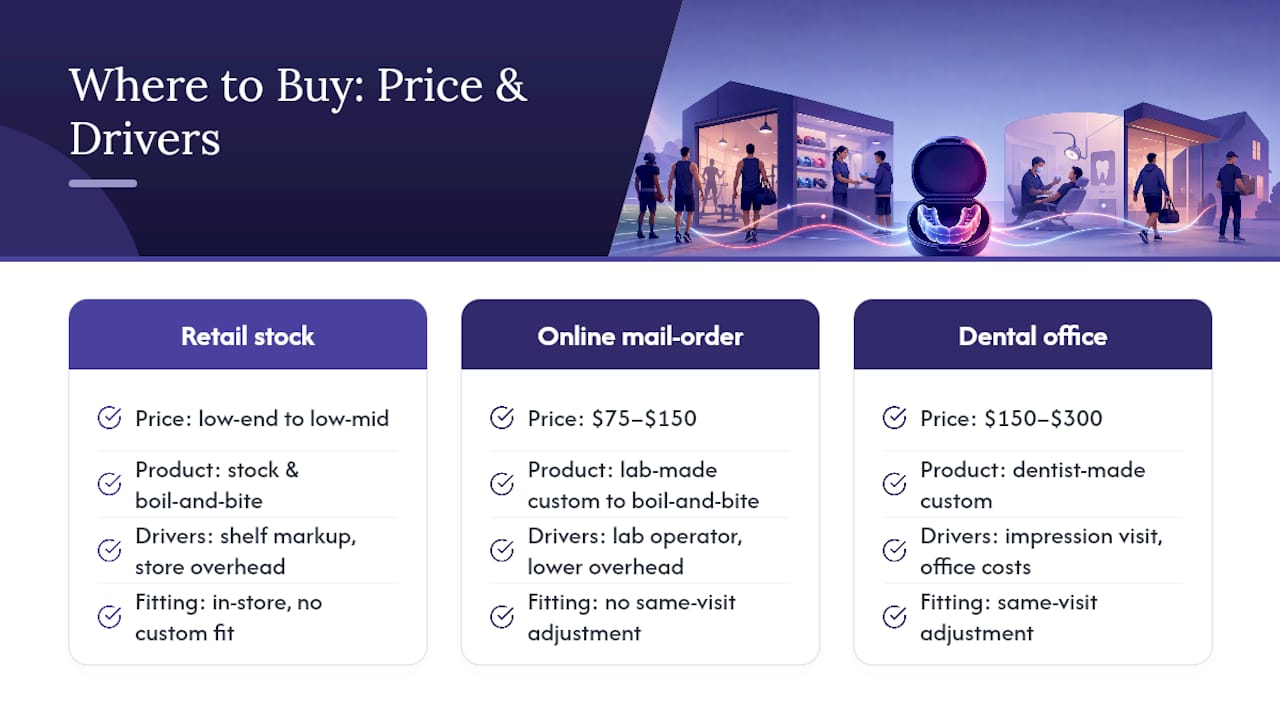
Online retailers span the widest range, from bargain-bin boil-and-bite guards with no brand reputation behind them to established mail-order labs offering the same fabrication quality as a dental office. That spread is exactly why it pays to check who’s actually running the lab behind an online guard rather than assuming “online” means “cheap and equal.”
Buying in person at a dental office gets you a same-visit fitting adjustment if something’s off, something mail-order can’t replicate immediately. Mail-order shifts that convenience trade for savings: you wait a bit longer for fabrication and shipping, but you skip the office overhead entirely. For most recreational and moderately competitive athletes, that trade-off favors mail-order unless you have a bite complication that really benefits from an in-person check.
Do Custom Logos or Names Add to the Cost?
Adding a team logo, jersey number, or player name to a mouth guard is a cosmetic upgrade, and it typically adds a modest flat fee on top of the base guard price rather than changing the underlying material cost. Expect this kind of personalization mostly on boil-and-bite and custom guards rather than basic stock models, since those are the tiers where sellers already offer color and design options.
The upcharge is usually small relative to the guard’s base price, but it’s worth confirming before you order whether the fee is one-time or whether team orders (say, an entire roster wanting matching logos) qualify for a bulk discount. Coaches and team parents ordering multiple guards at once sometimes have leverage to negotiate that fee down, especially through mail-order sellers who can batch-process a team’s impressions together.
One caution: personalization shouldn’t come at the expense of material quality. A flashy custom color scheme on a thin, single-layer EVA guard is still a thin, single-layer EVA guard underneath. If a seller is pushing hard on customization options but staying vague about material thickness or construction, that’s a signal to ask more direct questions about what’s actually protecting your teeth, not just what it looks like.
How to Spot a Low-Quality Mouth Guard Before You Buy
A cheap guard that fails during a hit isn’t actually cheap once you factor in a dental repair bill. A few checks help you separate a legitimately affordable guard from one that’s just poorly made.
Check whether the seller discloses the material and construction type. A legitimate seller states clearly whether a guard is single-layer EVA or laminated multi-layer, and can tell you the thickness in millimeters. Vague marketing language without a materials spec is a red flag regardless of price.
Look for FDA-approved or medical-grade material claims, and verify they’re specific rather than generic. “Medical-grade” without any material name or regulatory reference is often just marketing copy.
Check the remake or return policy before buying, not after a bad fit shows up. A seller confident in their fabrication process will back it with a free remake if the impression comes back unusable, and a seller with no policy at all is worth avoiding, no matter how low the price looks.
Read the guard’s expected lifespan against its price. A guard priced like a premium custom product but rated for “single season use only” with no reinforcement details is charging custom prices for boil-and-bite level protection. If a low price comes with no clear lifespan estimate at all, assume it’s shorter than a properly constructed guard and budget for more frequent replacement.
The Practical Case for Matching Guard to Sport
If you’re playing football, hockey, lacrosse, or boxing, a custom guard, whether mail-order or dentist-made, is worth the money over stock or boil-and-bite. For casual or low-contact recreational sports, a quality boil-and-bite guard covers you without overspending. Mail-order custom is the sensible middle path for most budget-conscious athletes who still want a real fit. Whichever tier you choose, the fit and material matter more than the price tag alone.
Order a Custom Sports Mouth Guard Without the Dentist-Office Markup
ClearRetain builds mail-order custom guards using the same self-impression workflow already covered above, minus the office-visit fee that pushes dentist-made pricing to $150 to $300. You send in your impressions, an FDA-approved lab supervised by orthodontic technicians fabricates your guard, and you check the fit at home once it arrives.
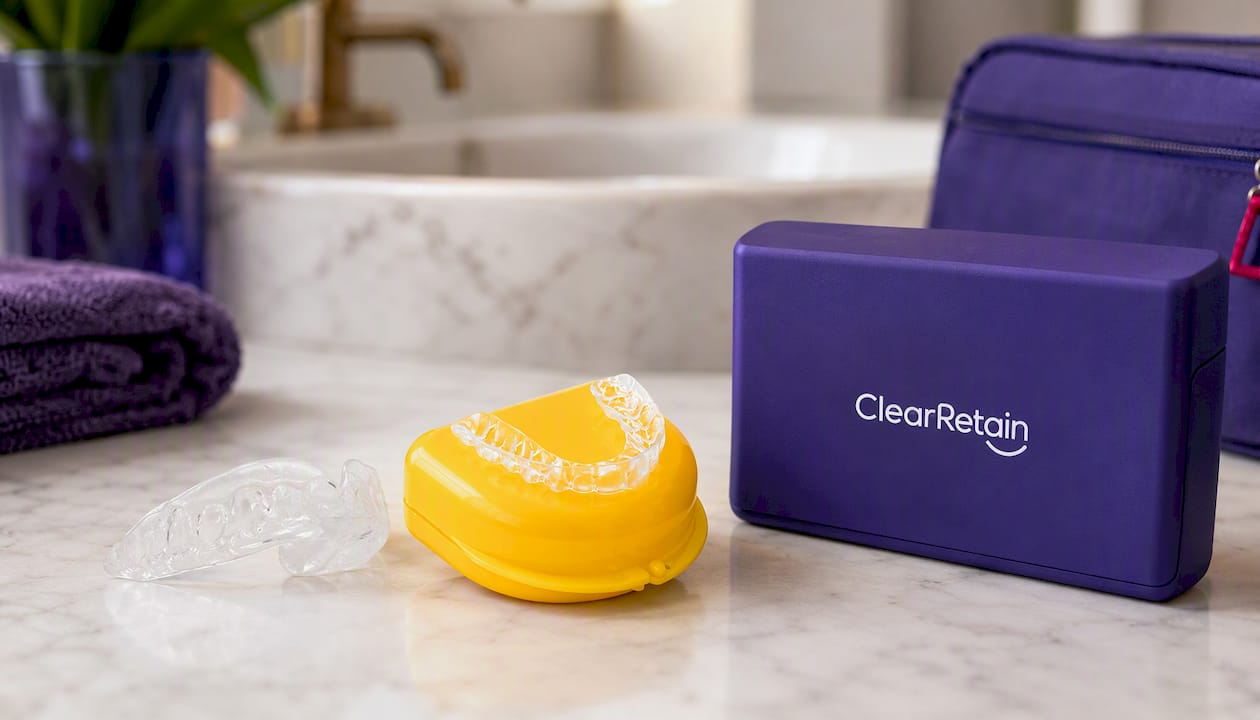
The ordering process is straightforward: pick your product, request your self-impression kit, mail it back once you’ve taken your impressions following the included instructions, and wait for your custom piece to ship. If you already wear a retainer or night guard and want a matching sports guard workflow, the Upper and Lower Retainers Set uses the identical lab-fabrication process, and ClearRetain keeps a digital copy of your impressions on file so future replacements skip the impression step entirely. Ready to get fitted? Start your order through ClearRetain’s product catalog and get a lab-made fit without the dentist-office price tag.
Frequently Asked Questions
How much should I budget for a sports mouth guard? Plan on $15 to $50 for a quality boil-and-bite guard, or $75 to $300 if you want a custom fit through mail-order or a dentist.
Is a custom mouth guard actually worth the extra cost over boil-and-bite? For contact sports, yes. The fit difference improves comfort and protection, and the price is still far below what a single dental repair costs.
Do mail-order custom guards fit as well as dentist-made ones? Fit quality depends on how carefully you follow the self-impression instructions; done correctly, mail-order guards get close to clinical fit at a lower price.
How often do I need to replace a sports mouth guard? Stock and boil-and-bite guards often need replacing every season; custom guards can last one to two seasons depending on sport intensity and wear.
Will my dental insurance cover a sports mouth guard? Coverage varies by plan. Some classify it as preventive and reimburse part of the cost; others don’t cover it at all, so check with your insurer directly.
This article is general information, not a substitute for advice from a qualified doctor. Consult a qualified healthcare professional about your own circumstances before acting on anything here.
Sources
For guard-type standards and typical pricing, see the AAO’s guidance on mouth guard costs, ToothCostGuide’s sports mouthguard cost breakdown, and Dentist Decoded’s comparison of guard materials.
- Sports Mouthguard Cost in 2026: Boil-and-Bite vs. Custom Options — ToothCostGuide
- Mouthguard Materials: Stock vs. Boil-and-Bite vs. Custom — Dentist Decoded