


Mouth Splint Cost in the U.S.: What You'll Actually Pay
Mouth splint costs in the U.S. range from under $30 for an over-the-counter stock guard to $6,000 or more for a neuromuscular repositioning orthotic. The most common device most people actually need, a custom hard-acrylic night guard, typically runs $400–$600 at a dentist’s office. Stabilization splints for TMJ symptoms land in the $800–$1,200 range, and full TMJ treatment packages can reach $800–$5,000+.
Here’s a quick map of what each tier buys you:
- OTC stock or boil-and-bite: Basic enamel protection for mild grinding; generally the least expensive option with a poorer fit and shorter lifespan
- Mail-order custom night guard: Lab-fabricated from your impressions; typically less expensive than dentist-made custom guards, no office visit required
- Dentist-made custom hard-acrylic guard ($400–$600): Precise fit, durable, professionally adjusted; the standard for moderate-to-severe bruxism
- Stabilization splint: Used to reduce TMJ muscle pain and joint loading; typically more expensive due to clinical diagnosis and complexity
- Neuromuscular/repositioning orthotic: Repositions the jaw; often part of a multi-visit TMJ treatment plan and more costly
Your single most useful first step: ask your dentist for the CDT code D7880 (occlusal orthotic device) and request a predetermination from your insurer before the device is fabricated to understand your potential financial responsibility.
Key Takeaways
Custom mouth splints in the U.S. range from $100 for a mail-order custom guard to $6,000 for a neuromuscular orthotic, and the single most effective cost-control step is requesting a predetermination under CDT code D7880 before any device is fabricated.
| Point | Details |
|---|---|
| Price ranges by type | OTC: $10–$100; mail-order custom: $100–$300; dentist custom guard: $400–$600; stabilization splint: $800–$1,200; neuromuscular orthotic: $3,000–$6,000 |
| Insurance and billing | Ask for CDT code D7880 and request a written predetermination before fabrication; many dental plans cover ~50% of the allowable fee |
| Cost-saving options | Use HSA/FSA funds, choose an in-network provider, and consider lab-direct mail-order for bruxism-only cases |
| Lifespan and replacement | Hard acrylic custom guards last 3–5 years; replace when cracked, ill-fitting, or visibly worn to avoid higher restoration costs |
| Clearretain option | Clearretain’s direct-to-consumer custom night guards and partial retainers offer lab-quality appliances at significantly lower cost than dentist-office pricing |
Table of Contents
- What types of mouth splints cost and why the ranges vary so much
- What actually drives the price you’ll pay
- How insurance handles mouth splints and the CDT codes you should know
- What the typical treatment timeline looks like
- How long mouth splints last and what replacement costs
- Are mouth splints actually worth the price?
- Lower-cost custom options: how mail-order guards compare on price and fit
- The real cost calculation most people skip
- Custom night guards from Clearretain, without the office markup
- Sources
What types of mouth splints cost and why the ranges vary so much
The term “mouth splint” covers several clinically distinct devices. Knowing which one you’re being quoted for is the fastest way to tell whether a price is fair.
Stock and boil-and-bite guards are sold at pharmacies and sporting goods stores. The ADA notes that custom-made guards are typically the most protective option, but stock and boil-and-bite versions made from EVA (ethylene-vinyl acetate) are acceptable for mild grinding or low-contact sports. They cost $10–$100 and last a few months to a year under regular use.
Mail-order custom guards close a meaningful part of the price gap. You take impressions at home with a kit, mail them to a lab, and receive a custom-fitted appliance. Prices generally run $100–$300, depending on material and whether you choose a soft, hard, or dual-layer design.
Dentist-made custom hard-acrylic night guards are the clinical standard for moderate-to-severe bruxism. The dentist takes impressions or a digital scan, sends them to a dental lab, and adjusts the finished device at a follow-up visit. Expect $400–$600 at a general dentist, though urban specialists and premium labs can push that higher.
Stabilization splints (sometimes called flat-plane splints) are prescribed for TMJ symptoms: jaw pain, clicking, muscle tension. They cover all the teeth on one arch and are designed to reduce joint loading. The NIDCR describes splints as common conservative treatments for TMD, and the price reflects that clinical complexity: $800–$1,200 is typical.
Neuromuscular orthotics go further, repositioning the jaw to a computed “ideal” position. They’re typically part of a broader TMJ treatment plan and are rarely appropriate as a first-line device. Cost: $3,000–$6,000, often bundled into packages that include diagnostic imaging and multiple adjustment visits.
Geographic variation is real. A custom night guard that costs $450 in rural Ohio might run $650 in Manhattan. Specialist TMJ clinics also charge more than general dentists for the same device, partly because they use articulator-mounted models and premium lab services that improve long-term fit.
Quick rule: A boil-and-bite is fine for mild grinding or sports protection. If you have jaw pain, clicking, or morning headaches, skip the pharmacy and get a clinical diagnosis first.
What actually drives the price you’ll pay
Two dentists can quote wildly different prices for what sounds like the same device. Here’s what’s actually behind that gap.
Material and design complexity account for a large share of the difference. A single-layer soft guard costs less to fabricate than a dual-layer hard-soft guard or a precision-milled hard acrylic device. Hard acrylic requires more lab time and specialized equipment; soft liners add a fabrication step. You can read a detailed breakdown of how material choices affect cost and durability in Clearretain’s mouth guard materials comparison.
Lab fees and articulation are where many dentists’ quotes diverge. A dentist who sends models to a high-quality lab and requests articulator mounting (which replicates your bite mechanics) pays more for that service and passes it on. That extra cost usually means fewer adjustment visits and better long-term comfort, so it’s not always money wasted.
Extra diagnostics add up fast. A new patient exam (CDT code D0140 or D0150) runs $50–$150. A panoramic X-ray (D0330) adds $100–$250. Diagnostic casts (D0470) can add another $50–$150. If your dentist suspects a structural TMJ issue, an MRI referral can cost $500–$2,000 depending on your medical coverage. None of these are included in the device price.
Number of adjustment visits matters too. A well-fitted custom guard typically needs one or two adjustments; a stabilization splint for TMJ may require four to six visits over several months. Each adjustment visit (D7881) can cost $50–$150 if not bundled.
Provider type shifts the baseline. A general dentist working with a standard lab is almost always cheaper than a TMJ specialist or a prosthodontist using premium lab services.
Pro Tip: Before accepting a quote, ask your dentist specifically whether the price includes lab fees, the delivery appointment, and at least one adjustment visit. Many offices quote the device alone, and the total can be $200–$400 higher once those are added.
How insurance handles mouth splints and the CDT codes you should know
Insurance coverage for mouth splints is genuinely inconsistent, but knowing the right codes and asking the right questions before fabrication can make a real difference.
The key CDT codes:
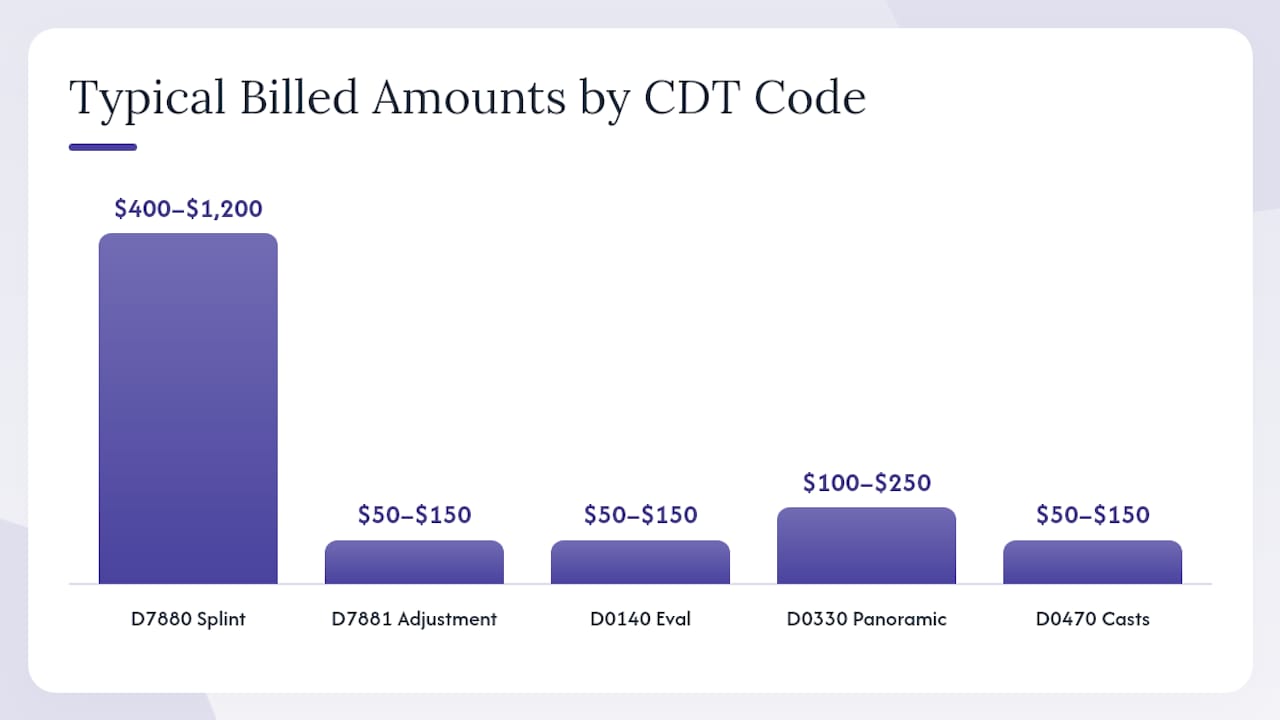
| CDT Code | Description | Typical Billed Amount | Notes |
|---|---|---|---|
| D7880 | Occlusal orthotic device (night guard / splint) | $400–$1,200 | Most common code for custom guards and stabilization splints |
| D7881 | Adjustment of occlusal orthotic device | $50–$150 per visit | Billed separately from D7880 |
| D0140 | Limited oral evaluation | $50–$150 | Often required before fabrication |
| D0330 | Panoramic radiographic image | $100–$250 | May be required for TMJ diagnosis |
| D0470 | Diagnostic casts | $50–$150 | Sometimes required for complex cases |
WMWTL’s guidance on dental codes for occlusal guards recommends requesting a predetermination from your insurer before fabricating any appliance that will cost more than roughly $500. This is not the same as pre-authorization; it’s a written estimate of what your plan will pay, and it protects you from surprise bills.
Frequency limits are common: many plans cover one guard every three to five years. Some insurers may partially cover custom-fitted guards, but routine athletic guards are almost always excluded.
TMJ orthotics are a different story. Because they’re treating a medical condition, they may qualify under your medical plan rather than your dental plan, especially when a physician documents medical necessity. Documenting medical necessity for a TMJ orthotic increases the chance of medical-plan coverage significantly. Ask your dentist or physician for a letter of medical necessity if you’re pursuing that route.
HSA and FSA funds can be used for custom night guards and TMJ orthotics. If your insurer won’t cover the device, paying with pre-tax HSA/FSA dollars still reduces your effective out-of-pocket cost by your marginal tax rate.
Actionable steps before fabrication:
- Call your insurer and ask whether D7880 is a covered benefit under your plan
- Request a written predetermination (not just a verbal estimate)
- If pursuing medical coverage for a TMJ orthotic, get a letter of medical necessity from your treating provider
- Ask whether your dentist is in-network; out-of-network fees can be 30–50% higher
What the typical treatment timeline looks like
Getting a custom mouth splint isn’t a one-appointment process. Here’s what a standard timeline looks like from first visit to finished device.
-
Initial exam and diagnosis (Visit 1): Your dentist evaluates your bite, jaw function, and symptoms. This may include X-rays or diagnostic casts. Budget 45–90 minutes. If TMJ is suspected, a referral for imaging may add 1–2 weeks before fabrication begins.
-
Impressions or digital scan (Visit 1 or 2): Traditional alginate impressions take about 15 minutes. Digital intraoral scans are faster and increasingly common. Some offices complete this at the same appointment as the exam.
-
Lab fabrication (off-site, 1–3 weeks): The lab fabricates the device from your impressions or scan file. Standard turnaround is 7–14 business days. Rush orders are available at some labs for an additional fee.
-
Delivery and initial fitting (Visit 2 or 3): Your dentist seats the device, checks occlusal contacts, and makes chairside adjustments. This visit typically runs 30–45 minutes.
-
Follow-up adjustments (Visit 3–5): Most patients need at least one follow-up adjustment within the first two to four weeks. Stabilization splints for TMJ may require four to six adjustment visits over two to three months.
-
Mail-order custom path: If you order through a lab-direct service, the timeline compresses: impression kit arrives in 2–5 days, you return it, and the finished guard ships back in 7–14 days. No office visits required, though you won’t have a dentist adjusting the fit.
How long mouth splints last and what replacement costs
Lifespan varies more than most people expect, and it’s one of the most important factors in calculating the true cost per year of ownership.
Typical lifespan by type:
- OTC stock/boil-and-bite: A few months to one year; heavy grinders often destroy them in weeks
- Soft custom guards: 1–3 years with regular care; softer materials wear faster under bruxism
- Hard acrylic custom guards: 3–5 years for moderate grinders; some last longer with proper care
- Dual-layer (hard-soft) guards: 2–4 years; the soft inner layer tends to compress over time
- Stabilization splints: Variable; 2–5 years depending on material and adjustment history
- Neuromuscular orthotics: Often replaced or modified as treatment progresses; not designed for indefinite use
Daily care that extends lifespan: Rinse with cool water after each use (hot water warps acrylic). Clean with a soft toothbrush and mild soap, not toothpaste (abrasive). Store in a ventilated case away from heat. Never leave it in a car in summer.
When to replace: Visible cracks, thinning, a changed fit, or persistent odor despite cleaning are all signs it’s time. Wearing a degraded guard is worse than wearing none at all in some cases, because a poorly fitting appliance can shift your bite. Clearretain’s guide on mouth guard replacement indicators covers the specific signs to watch for.
Replacement costs: A dentist-made replacement runs the same as the original ($400–$600 for a hard custom guard). Mail-order replacements are significantly cheaper, and services that store your digital impression on file make reorders fast and straightforward.
Are mouth splints actually worth the price?
For most people with bruxism, a well-fitted custom night guard is worth every dollar. The math is simple: a $500 guard worn for three years costs about $14 a month and protects enamel that costs $1,000–$3,000 per tooth to restore with a crown. The guard wins.
The picture is more nuanced for TMJ. A peer-reviewed review on splints and TMD found mixed evidence for long-term structural change from splints but concluded that many patients experience meaningful symptomatic relief with conservative splint therapy. That’s an important distinction: a stabilization splint can reduce muscle pain and joint loading, but it doesn’t fix a structural disc displacement or an arthritic joint. Expecting a $1,000 splint to permanently resolve complex TMJ disease is setting yourself up for disappointment.
Where each device type delivers:
- Custom night guard: Strong evidence for enamel protection; good evidence for reducing muscle tension from bruxism
- Stabilization splint: Good evidence for symptom relief in TMJ muscle pain; less clear for joint-based symptoms
- Neuromuscular orthotic: Expensive, and the NIDCR recommends starting with conservative treatments before pursuing complex repositioning therapy
Risks worth knowing:
- A poorly fitted OTC guard can actually increase clenching force by giving your jaw something to clench against
- Wearing a repositioning orthotic without clinical monitoring can shift your occlusion permanently
- Skipping adjustments on a stabilization splint reduces its effectiveness and can cause uneven tooth contact
The practical rule: let your diagnosis drive the device choice, not the price tag in either direction.
Lower-cost custom options: how mail-order guards compare on price and fit
Mail-order, lab-direct custom guards have matured significantly. For the right patient, they deliver a genuinely custom appliance at a fraction of the dentist-office price.
How it works: You receive an impression kit, take your own molds at home, and mail them back. A dental lab fabricates the device from those impressions using the same materials a dentist’s lab would use. The finished guard ships directly to you. No office visit, no markup for chair time.
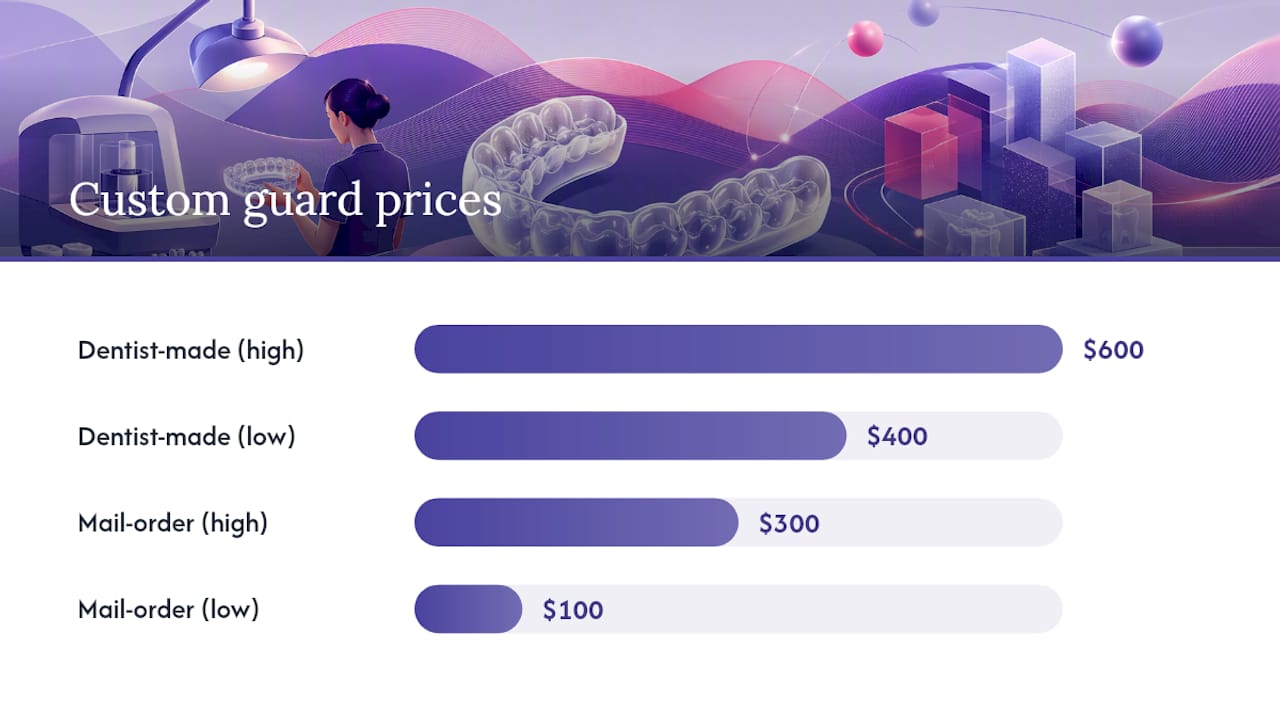
The price difference is real. A dentist-made custom hard guard runs $400–$600. A comparable mail-order custom guard typically costs $100–$300. That gap exists almost entirely because you’re removing the office overhead, not because the lab quality is lower.
Who is a good fit for mail-order:
- Adults with confirmed bruxism who need enamel protection, not TMJ treatment
- People replacing a previously fitted guard whose bite hasn’t changed significantly
- Anyone who has already been evaluated by a dentist and ruled out complex occlusal issues
- Budget-conscious patients who want a custom fit without the office visit cost
Who should see a dentist instead:
- Anyone with jaw pain, clicking, locking, or morning headaches (possible TMJ involvement)
- Patients with complex bite issues, missing teeth, or recent dental work
- Children and adolescents, whose bites are still developing
Clearretain offers a direct-to-consumer lineup that covers several appliance needs. The Lower Partial Denture Retainer (1 Tooth Only) and Upper Partial Denture Retainer (1 Tooth Only) are designed for single-tooth gaps, providing a removable protective solution without the cost of a full dental visit. The Lower Teeth Retainer serves patients who need a lower-arch appliance for retention or mild protection. All three are fabricated from FDA-approved materials under the supervision of experienced orthodontic technicians.
Checklist before ordering mail-order custom:
- Confirm the lab uses FDA-approved materials
- Check whether the service stores your digital impression for easy reorders
- Understand the remake/warranty policy before you pay
- If you’ve never been evaluated for TMJ, get at least one dental exam first
Pro Tip: If you already have a dentist-made guard and need a backup or replacement, a mail-order custom guard made from your stored impression is one of the most cost-effective options available. Clearretain’s premium hard night guard reorder process is built exactly for this scenario.
The real cost calculation most people skip
The sticker price of a mouth splint is only part of the story. What most people underestimate is the cost of not wearing one.
A single porcelain crown to repair a cracked molar from bruxism runs $1,000–$2,000. A full-mouth restoration for someone who ground through their enamel for a decade can reach $20,000 or more. Against that backdrop, even a $600 dentist-made guard looks cheap.
The mistake worth avoiding is the opposite one: spending $4,000 on a neuromuscular orthotic for symptoms that a $500 stabilization splint would have addressed just as well. Complex TMJ treatment has its place, but it’s often sold to patients who haven’t tried conservative therapy first. The NIDCR’s guidance on TMD is explicit on this point: start conservative.
One more thing that rarely gets said: get a written estimate and a predetermination before any device is fabricated. Not after. Not at the delivery appointment. Before. A dentist who won’t provide a written fee estimate before starting is a red flag regardless of the device type.
Custom night guards from Clearretain, without the office markup
If your dentist has confirmed you need a custom night guard for bruxism protection and you’re not dealing with active TMJ symptoms, Clearretain’s direct-to-consumer model cuts the typical $400–$600 dentist price down to a fraction of that. You get a lab-fabricated, FDA-approved custom appliance made from the same hard acrylic or dual-layer materials a dental office would use.
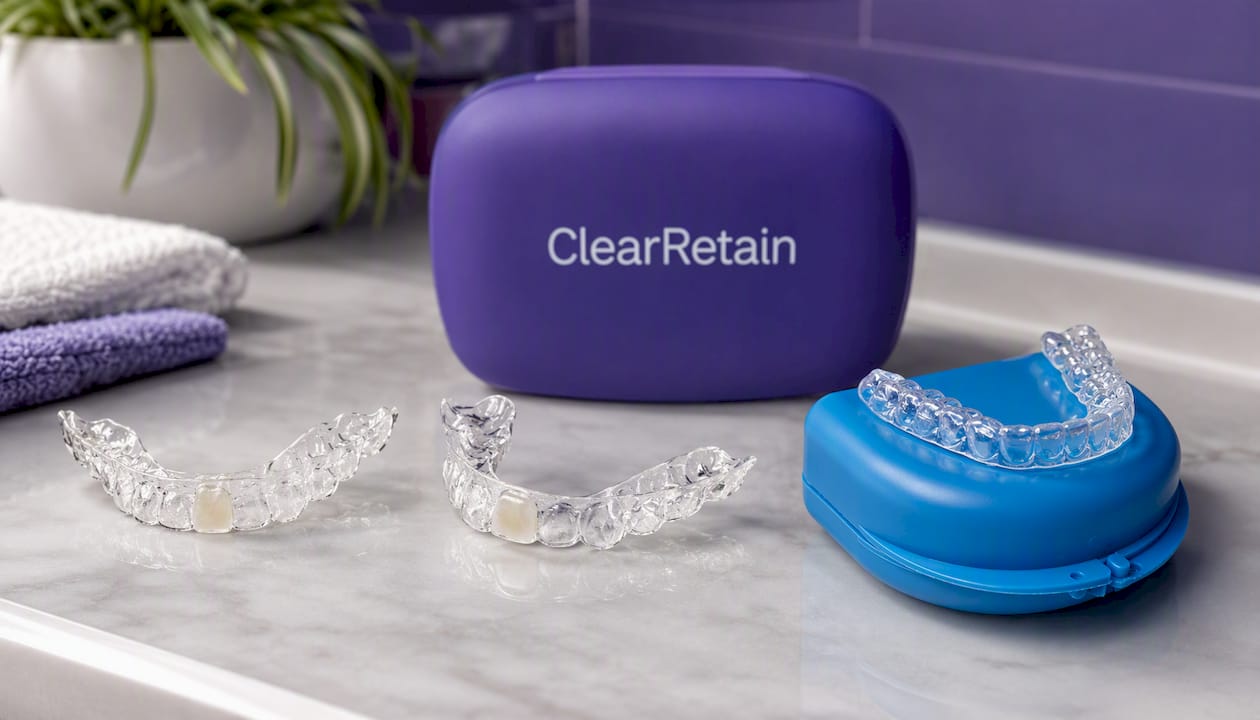
The process is straightforward: order a self-impression kit, take your molds at home with the included instructions, and mail them back. Clearretain’s orthodontic technicians fabricate your guard and ship it directly to you. The Clearretain night guard lineup includes soft, hard, and dual-layer options, so you’re not locked into one material. Stored digital impressions make reorders fast and inexpensive. To get started, visit Clearretain’s night guard product page and select the guard type that matches your dentist’s recommendation.
Sources
These are the primary sources used for pricing data, clinical guidance, and billing codes in this article.
- NIDCR: Temporomandibular disorders (TMD)
- ADA: Athletic mouth protectors (mouthguards)
- Cleveland Clinic: Mouthguards
- WMWTL: Dental codes for occlusal guards
- PMC article on splints and TMD
- TMJ Splint Cost (RealDentalCosts)
This article is general information, not a substitute for advice from a qualified doctor. Consult a qualified healthcare professional about your own circumstances before acting on anything here.