


Retainers Only Work for Gaps Under 2 to 3 Millimeters
A retainer can close a gap, but only a small one, and only under the right conditions. It works best on tiny relapse gaps that reopened after braces or aligners, not on gaps caused by bone loss, missing teeth, or arch mismatch. If your gap is more than a couple of millimeters or your bite feels off, skip the DIY approach and get evaluated first by a dentist in Greenville, TX.
TL;DR:
- Retainers are effective only for small relapse gaps less than a millimeter if caught early within months of treatment completion.
- Bodily tooth movement requires active appliances like aligners or braces, while retainers mainly prevent further relapse or tipping of teeth.
- Larger gaps over 2 to 3 millimeters, bite issues, or bone loss signs indicate that a retainer is unsuitable, and professional intervention is necessary.
- Clear retainers can sometimes close tiny gaps after relapse within weeks, but anything larger needs months of monitored wear or active orthodontics.
- For active gap closure, consulting a dentist first is essential, as retainers are primarily stabilization tools, not movement devices.
Table of Contents
- Why Gaps Form (and Why the Cause Determines If a Retainer to Close a Gap Will Work)
- How Retainers Actually Work: Retention vs. Active Movement
- Which Retainer Types Can Nudge Small Gaps Closed, and How Long It Takes
- When a Retainer Isn’t the Right Fix
- How to Wear and Care for a Retainer While Trying to Close a Gap
- ClearRetain: Matching the Right Retainer to the Right Situation
- What This Guide Gets Right That Most Advice Skips
- Ordering a ClearRetain Retainer: What to Expect
- Sources
Why Gaps Form (and Why the Cause Determines If a Retainer to Close a Gap Will Work)
Not every gap is the same problem presented in a different way. Some open up because your teeth were never lined up tight to begin with. Others reappear months after you finished orthodontic treatment, which is what dentists call relapse. The distinction matters more than the size of the gap itself, because it tells you whether a retainer to close a gap is even a reasonable tool for the job.
Common causes include:
- Natural diastema — a genetic gap, often between the upper front teeth, present since the permanent teeth erupted.
- Post-orthodontic relapse — teeth drifting back toward their original position after braces or aligners come off.
- Periodontal bone changes — gum disease or bone loss that lets teeth migrate over time.
- Tongue thrust or oral habits — repeated pressure from the tongue or a thumb-sucking habit pushing teeth apart.
- Tooth-size or arch mismatch — teeth that are simply too small for the space available in the jaw.
Relapse is the one category where a retainer genuinely has a shot. Research comparing outcomes after aligners and braces shows that relapse tends to occur across both treatment methods, with the biggest shifts happening in the first few months to a year after treatment ends. That early window is exactly when a retainer has the most influence, because the bone and ligament fibers around the tooth haven’t fully locked into the new position yet. Wait two or three years and try the same fix, and you’re usually out of luck.
How Retainers Actually Work: Retention vs. Active Movement
A retainer’s job is to hold teeth still, not push them somewhere new. That’s the entire design premise. An aligner is built to apply controlled, staged forces that move a tooth through bone, while a retainer is built to resist forces that would otherwise let a tooth drift. Those are different engineering problems, and conflating them is where a lot of at-home gap-closing attempts go wrong.
Retention lowers relapse but rarely reverses it once it’s established. Systematic-review data on post-treatment stability shows retention protocols reduce how much teeth shift back, but they don’t eliminate relapse entirely, especially without consistent wear.
When a retainer does move a tooth even slightly, it typically does so through tipping (the crown leans one direction while the root stays roughly put) rather than bodily movement (the whole tooth, crown and root, sliding as a unit). That distinction matters for stability:
- Tipping can close a visible gap cosmetically while leaving the root at an odd angle underneath the gum.
- Bodily movement keeps the root and crown aligned and tends to hold long-term, but it requires the kind of graduated force an aligner or bracket system delivers, not a static retainer.
Lean on tipping too aggressively and you risk a tooth that looks straight but sits on unstable footing, which is often why gaps reopen again later.
Which Retainer Types Can Nudge Small Gaps Closed, and How Long It Takes
Not all retainers are built the same, and their gap-closing potential varies quite a bit depending on design.
- Fixed bonded retainers — a thin wire glued behind the front teeth. Excellent at preventing a gap from reopening, but essentially useless for closing one, since there’s no adjustable force involved.
- Essix or clear tray retainers — similar to the types of dental retainers used for standard retention, these can occasionally be modified by a clinician to apply gentle pressure on a specific tooth, closing a hairline gap over a few weeks.
- Hawley retainers — the classic wire-and-acrylic design. A dentist can add a small spring or adjust the wire to coax a tooth a fraction of a millimeter, which is one reason Hawleys show up more often than clear trays in true gap-closing cases.
Timelines vary sharply based on gap size. A relapse gap under a millimeter, caught early and treated with near-constant wear, can sometimes close in days to a few weeks. Anything closer to two or three millimeters usually needs months of monitored wear, and beyond that, you’re looking at active orthodontics instead.
Pro Tip: Never force a retainer that doesn’t seat properly or feels warped. A distorted appliance can push a tooth in the wrong direction entirely, and forcing a bad fit is one of the fastest ways to create a new problem instead of solving the old one.
When a Retainer Isn’t the Right Fix
Some signs mean it’s time to stop experimenting and see a professional instead of continuing to bank on a retainer to close a gap.
- The gap measures more than 2 to 3 millimeters.
- X-rays would likely show root angulation problems, not just a crown-level gap.
- You notice bite changes, clicking, or discomfort when chewing.
- There’s visible gum recession or bone loss around the gap.
For any of these, aligner refinements, fixed braces, or restorative options like composite bonding and veneers are the standard paths forward. Braces and aligners cost more and take longer but deliver bodily movement with lasting stability. Bonding and veneers work fast, in a single visit sometimes, but they’re cosmetic fixes layered over the existing gap rather than a structural correction, and they carry their own maintenance costs down the line.
How to Wear and Care for a Retainer While Trying to Close a Gap
Wear schedules depend on the goal. If a clinician has you attempting an active correction, that usually means full-time wear, often for several weeks before tapering to nights only. Once the position looks stable, nightly wear becomes the long-term maintenance plan, indefinitely, since teeth can drift at any age.
- A well-fitting retainer should seat fully without rocking or requiring you to bite down hard to force it into place.
- Pain, a retainer that no longer seats flush, or a fresh gap appearing elsewhere are all reasons to check in with a dentist.
- Clean it with a soft brush and lukewarm water; skip boiling water or hot car dashboards, which warp the material.
- Watch for signs your retainer needs replacement, including cracks, cloudiness, or a loose fit that used to feel snug.
Pro Tip: If a retainer that used to fit perfectly suddenly feels loose, don’t assume it stretched. That’s often your teeth shifting, not the appliance failing, and it’s worth a quick evaluation either way.
ClearRetain: Matching the Right Retainer to the Right Situation
ClearRetain builds custom retainers, night guards, and whitening kits direct-to-consumer, with materials that are FDA-approved and fabricated under the supervision of experienced orthodontic technicians.
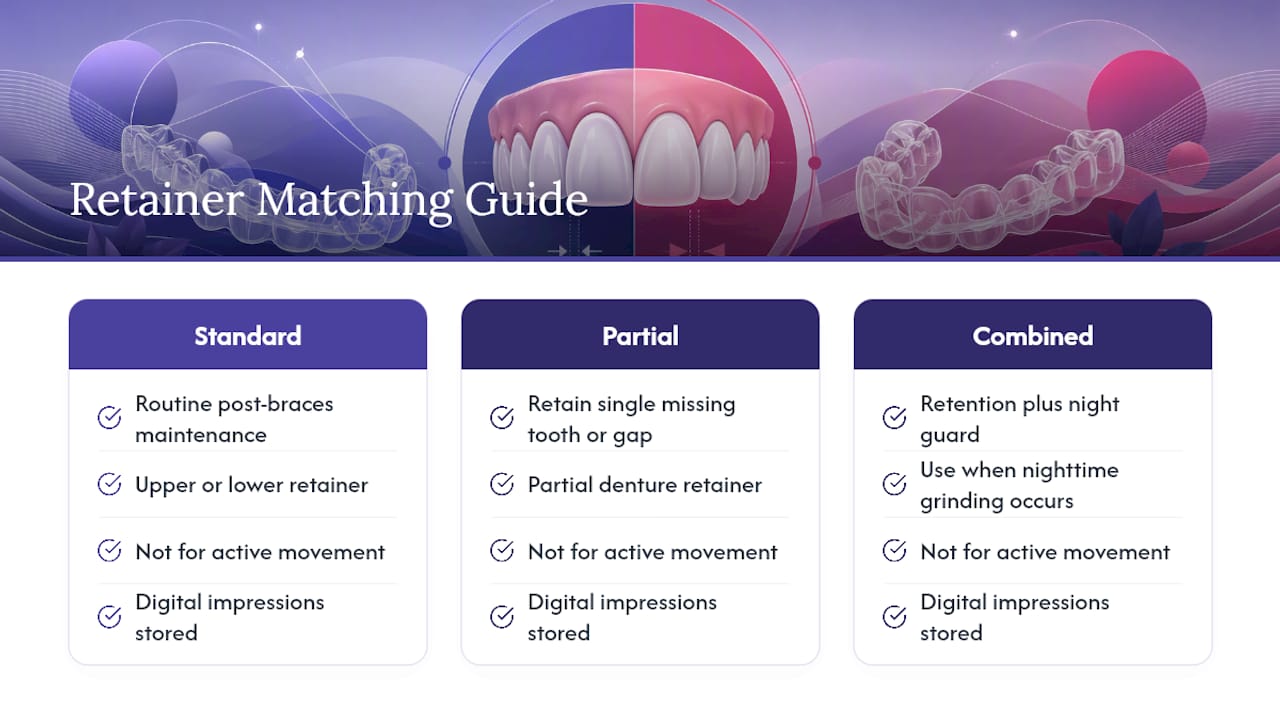
Product fit depends on your situation. General maintenance after braces usually calls for a standard upper or lower retainer. A single-tooth gap or missing tooth is a better match for a partial denture retainer. If nighttime grinding is contributing to tooth movement, a combined retainer and night guard addresses both problems at once. Every order relies on digital impression files, which ClearRetain stores for faster reorders down the line.
One honest note: if your actual goal is active gap closure, not just retention, talk to a dentist before treating any retainer as a movement appliance. ClearRetain’s products are built for stability and maintenance, and that clinical consult protects your outcome either way.
What This Guide Gets Right That Most Advice Skips
Most consumer content treats “will a retainer close my gap” as a yes-or-no question, when it’s really a question about timing and cause. The honest answer is that a retainer is a stabilizer that occasionally moonlights as a corrector, and only within a narrow window measured in weeks, not years.
Where conventional advice falls short is in downplaying root position. Plenty of guides show someone snapping a retainer back on and watching a gap shrink, without mentioning that tipping a crown closed can leave a root sitting at an angle it was never meant to hold. That’s a cosmetic win hiding a structural risk.
If you take one thing from this, prioritize timing over hope. A relapse gap caught in month two is a completely different situation than the same gap ignored for three years. Get it checked early, wear whatever appliance you’re given exactly as prescribed, and treat “it feels loose now” as information, not an inconvenience to ignore.
— Clear
Ordering a ClearRetain Retainer: What to Expect
ClearRetain is the practical alternative to booking an expensive orthodontic office visit just to get a maintenance retainer. You skip the markup, not the quality: materials are FDA-approved, and technicians with real orthodontic experience oversee every fabrication run.
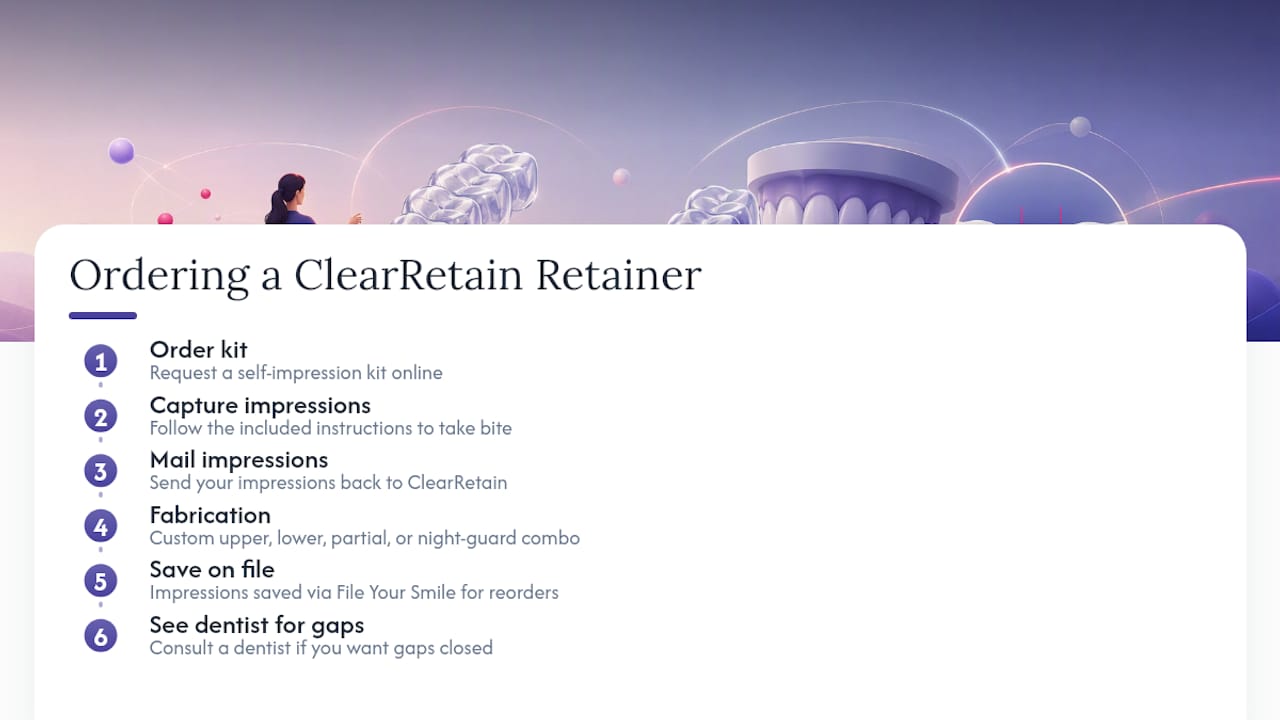
The process is simple. Order a self-impression kit, follow the included instructions to capture your bite at home, and mail it back. ClearRetain fabricates your custom upper or lower retainer, or a partial denture retainer if you’re dealing with a single missing or gapped tooth. Grinding at night alongside a shifting bite? The upper retainer-night guard combo handles both. Your impressions get saved through File Your Smile, so reordering later, if your retainer cracks or wears out, skips the impression step entirely.
One more time, plainly: if you’re hoping a retainer will actively close a gap rather than just hold your smile in place, run that plan by a dentist first. For everything else, from replacements to routine maintenance, start with ClearRetain’s retainer options and get your kit moving.
This article is general information, not a substitute for advice from a qualified doctor. Consult a qualified healthcare professional about your own circumstances before acting on anything here.
Sources
- Comparative studies of relapse after aligners vs brackets (systematic review)
- Dentalhealth
- Gaps after braces? Can retainers fix your smile after braces? – Somos Dental