

Professional vs. Home Whitening: Similar Results, Gentler Custom Trays
In-office whitening gives the fastest, most dramatic single-visit change, while dentist-supervised at-home trays reach similar results over one to three weeks at lower cost and often with less sensitivity. Plain over-the-counter kits cost the least but work slowest and least predictably. Dentist oversight and a proper tray fit matter more to your results and comfort than which method you pick.
TL;DR:
- A trial comparing 10% carbamide peroxide trays with 35% hydrogen peroxide in office found slightly greater early color change at home on some measures.
- At home bleaching caused milder sensitivity, but the chance of experiencing it remained similar; pause one day and resume with shorter wear if discomfort starts.
- Crowns, veneers, and fillings do not change shade, so whitening natural teeth beside them can create a visible mismatch in your smile.
- Postpone whitening if you are pregnant or breastfeeding, or have untreated decay, advanced gum disease, or severe sensitivity; ask a dentist to assess you first.
- The ADA Seal covers only specific products tested for safety and efficacy, so check whether a kit is included before buying.
Table of Contents
- Quick takeaways before you choose a whitening route
- What counts as professional whitening versus an OTC kit
- What happens during an in-office whitening visit
- How take-home trays and OTC kits differ in practice
- How the two approaches compare on what matters most
- What whitening actually costs and how long it lasts
- Managing sensitivity so it doesn’t derail your results
- Who actually benefits from whitening and who should wait
- A simple checklist to match your priorities to a method
- Why we back supervised at-home whitening
- Get professional-grade whitening without the office visit
- FAQ
- Sources
Quick takeaways before you choose a whitening route
Here is the short version if you want to skip straight to a decision:
- Fastest results: in-office bleaching gets you several shades lighter in a single visit.
- Best value with oversight: dentist-supplied custom trays worn at home, which cost less than chairside visits while keeping professional guidance.
- Lowest cost, slowest pace: OTC strips and gels, which take longer and give less predictable results.
- Sensitivity pattern: in-office tends to cause sharper short-term sensitivity, while lower-concentration at-home gels tend to feel gentler over their longer course.
- See a dentist first if you have fillings, crowns, active gum disease, or a history of severe sensitivity.
What counts as professional whitening versus an OTC kit
Professional whitening covers two paths: chairside bleaching done in a dental office, and custom trays a dentist supplies for use at home. Both count as professional because a dentist examines your teeth, fits the trays or applies the gel, and controls the concentration used, something OTC strips and generic trays cannot offer.
The American Dental Association distinguishes dentist-supplied professional products from OTC options and notes that its Seal of Acceptance applies to specific home-use products that meet tested safety and efficacy standards.
What happens during an in-office whitening visit
A typical appointment starts with an exam and a cleaning to remove surface plaque, followed by isolation of your gums and lips with a rubber dam or a resin barrier so the gel only touches enamel. The dentist then applies a higher-concentration peroxide gel in cycles, often 10 to 20 minutes each, sometimes repeated up to three times in one sitting, before rinsing and checking shade progress against a guide.
Clinical trials measure the outcome using ΔE00 (a standardized color-difference score) and shade guide units rather than guesswork, and a single visit commonly produces a visible multi-shade change. Clinicians limit sensitivity and tissue exposure by using neutral-pH gels, short contact windows, and desensitizing pastes with potassium nitrate or fluoride either before or immediately after treatment.
How take-home trays and OTC kits differ in practice
Dentist-supplied trays start with an impression or digital scan of your teeth, so the tray seals tightly against enamel and keeps gel away from your gums. Historically these trays used 10% carbamide peroxide, which converts to about 3.5% hydrogen peroxide, though many dentists now offer lower-concentration options such as 3% hydrogen peroxide or 8% carbamide peroxide that produce comparable whitening over a longer wear schedule, as shown in a split-mouth randomized trial comparing the two.
A practical guide to custom-tray protocols walks through how wear time and concentration interact to produce in-office-like results without the office visit.
OTC strips and boil-and-bite trays use lower concentrations too, but without a custom fit the gel spreads unevenly onto gum tissue, which raises irritation risk and makes results harder to predict. The underlying principle is cumulative dose: a lower concentration worn longer can match a higher concentration worn briefly, which is why well-designed at-home protocols close most of the gap with chairside bleaching.
How the two approaches compare on what matters most
An updated systematic review and meta-analysis found no significant difference in bleaching efficacy between at-home and in-office techniques measured in shade guide units, and in one pooled outcome, color change favored at-home protocols. A triple-blinded randomized clinical trial comparing 10% carbamide peroxide trays against 35% hydrogen peroxide in-office treatment found the at-home group showed slightly higher short-term color change on some measures, with the in-office group reporting higher sensitivity only on day one.
Speed still favors the chair: in-office delivers a visible change in one visit, while take-home protocols typically need one to three weeks depending on concentration and wear time. Cost runs the opposite direction, since in-office bleaching is a one-time procedure fee, dentist-supplied trays are a single kit cost with repeat refills, and OTC kits are cheapest per purchase but often repurchased for the same incremental result.

Sensitivity data leans toward at-home being gentler: the same meta-analysis reported significantly lower intensity of sensitivity with at-home bleaching in pooled analyses, even though the overall risk of experiencing any sensitivity was similar across methods. Custom trays also edge out OTC kits on comfort and evenness, since a tight fit keeps gel off your gums and against enamel where it belongs.
What whitening actually costs and how long it lasts
In-office bleaching is priced as a single procedure that typically includes the exam, isolation, and one appointment’s worth of gel cycles. Dentist-supplied custom trays are usually a one-time kit cost that covers the trays and an initial gel supply, with refill gel priced separately for touch-ups. OTC strips and generic trays cost the least upfront but are usually repurchased multiple times to maintain results, which adds up over a year of regular use.
Results commonly last anywhere from several months to a couple of years depending on your diet and habits. Tobacco, coffee, tea, and red wine all speed up the return of staining, so most people maintain their shade with occasional touch-up trays or gel rather than repeating a full treatment.
Managing sensitivity so it doesn’t derail your results
Sensitivity is the most common side effect of whitening regardless of method, and the American Dental Association lists it alongside gum irritation as a typical, usually temporary, response to peroxide exposure. The same meta-analysis that found no efficacy gap between methods also found at-home bleaching produced significantly lower intensity of sensitivity in several pooled comparisons, even though some patients will feel it with either approach.
Practical steps that clinicians use to keep sensitivity manageable include neutral-pH gels, potassium nitrate or fluoride applied before or after a session, spacing out sessions instead of stacking them, and dropping to a lower concentration or shorter daily wear time if you notice discomfort early. A dedicated breakdown of ADA-backed safety measures and a look at how common post-whitening sensitivity really is cover these tactics in more depth.
Pro Tip: If sensitivity shows up on day one, skip a day, apply a potassium nitrate desensitizing gel, and resume at a shorter wear time rather than pushing through.
Stop and call a dentist if pain persists beyond a few days, if you notice exposed dentin or visible gum lesions, or if sensitivity feels sharp rather than the typical mild zing.

Who actually benefits from whitening and who should wait
Whitening only works on natural enamel, so crowns, veneers, and bonded fillings will not change shade no matter which method you use, a point the Journal of the American Dental Association notes directly when describing restoration-heavy cases. If your front teeth have visible bonding or a crown, whitening the surrounding natural teeth can actually create a mismatch instead of a uniform smile.
Skip whitening, or get checked first, if you have active decay, untreated cavities, advanced gum disease, a history of severe sensitivity, or you are pregnant or breastfeeding, since clinical guidance generally favors postponing elective bleaching in that case. When in doubt, a dental exam before you start saves you from spending on a treatment that will not deliver what you expect.
A simple checklist to match your priorities to a method
- Rate your urgency: if you need results before an event in the next few days, in-office is the only route that delivers that fast.
- Set your budget ceiling: a one-time dentist-supplied tray kit typically costs less than a chairside procedure while still giving you professional oversight.
- Think back on past sensitivity: if whitening has hurt before, start with a lower-concentration gel and a longer timeline rather than a high-concentration single session.
- Check your dental history: restorations, cavities, or gum issues mean a dental exam comes before any whitening purchase.
- Ask the right questions: how is the tray fitted, what concentration is in the gel, what is the wear schedule, what shade change should you expect, and is there a fit guarantee.
Favor options backed by ADA guidance, published clinical trials, dentist supervision, and neutral-pH formulations over anything that skips those signals entirely.
Why we back supervised at-home whitening
We built our whitening line around what the evidence actually shows: a well-fitted custom tray with a professionally formulated gel can rival chairside results without the chairside price. Every kit uses materials produced under oversight of experienced technicians, which is the same kind of quality control a dentist’s office relies on, just without the office overhead.
We still recommend a dental exam first if you have restorations, gum concerns, or a history of sensitivity, because the safest whitening plan is one that starts with knowing your mouth is ready for it.
— Clear
Get professional-grade whitening without the office visit
Our Teeth Bleaching Trays are custom-fitted from your own impressions, so gel stays on enamel instead of spreading onto your gums, the same fit advantage that makes dentist-supplied trays more comfortable than generic kits.

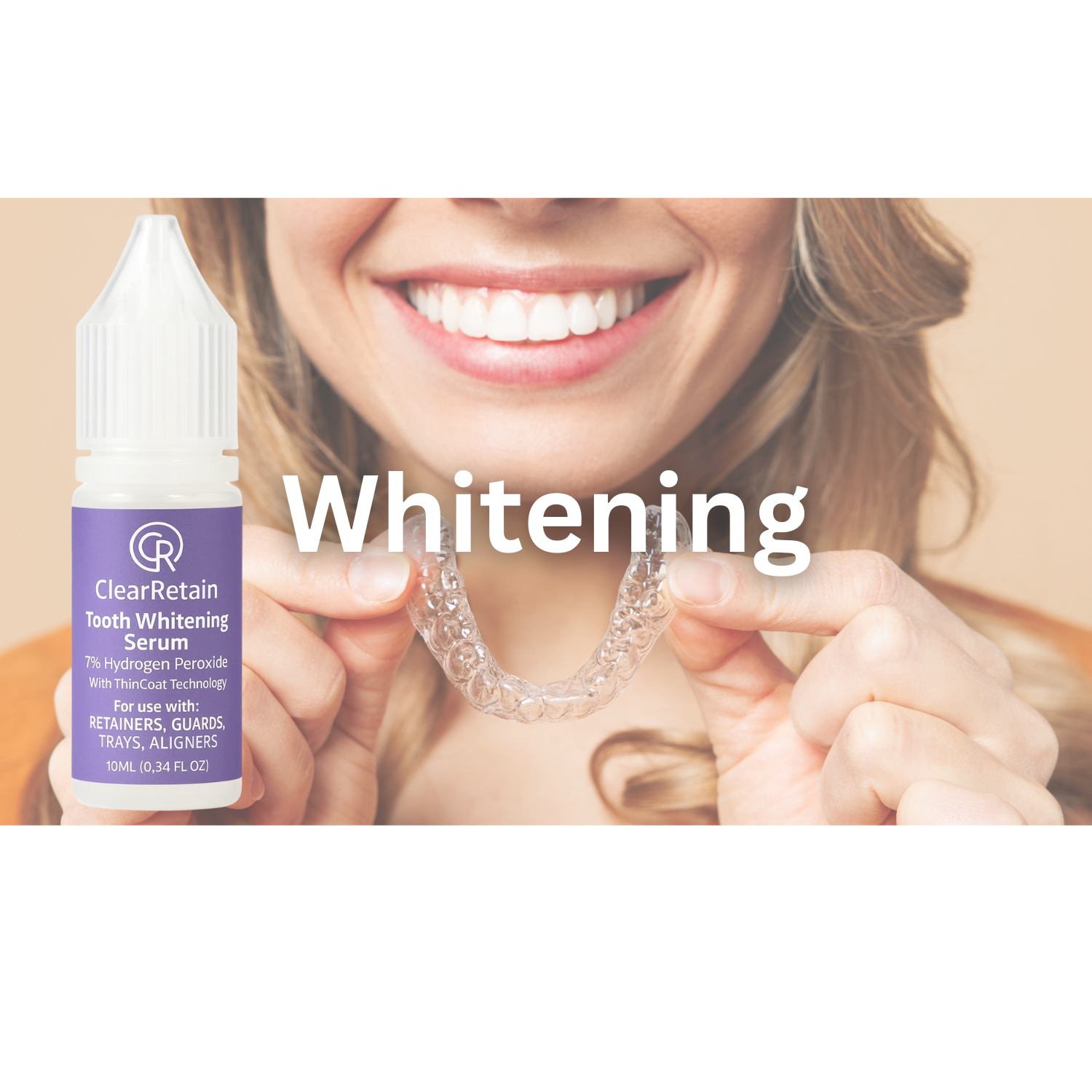
Pair your trays with our Teeth Whitening Gel - 3 Pack for enough refills to maintain your shade for months, or add our Tooth Whitening Serum to use alongside your existing clear retainer or night guard for touch-ups between full sessions. All three are priced well under a chairside procedure, with a custom fit and gel quality aligned with those of professional trays commonly recommended by dentists.
Browse our full bleaching tray and gel collection or start with our whitening lineup to find the kit that matches your timeline and budget.
This article is general information, not a substitute for advice from a qualified doctor. Consult a qualified healthcare professional about your own circumstances before acting on anything here.
FAQ
Can yellow teeth be professionally whitened?
Yes, surface and age-related yellowing on natural enamel typically responds well to both in-office and dentist-supplied at-home bleaching. Deeper intrinsic discoloration, such as from certain medications, may lighten less dramatically and is worth discussing with a dentist before you start.
Is it worth it to do professional teeth whitening?
For many people, yes: a systematic review and meta-analysis found no significant efficacy gap between in-office and at-home professional protocols, and dentist oversight reduces the guesswork and sensitivity risk you take on with generic OTC kits. Whether it is worth the cost depends on how fast you want results and how much custom fit and supervision matter to you.
Do dentists recommend at-home teeth whitening?
Dentists commonly recommend dentist-supplied take-home trays, which differ from drugstore kits because they are custom-fitted and use gels at a controlled concentration. The American Dental Association distinguishes these professional at-home options from OTC products and still advises a dental exam before starting any whitening treatment.
Why are my teeth still yellow after professional whitening?
This usually happens when discoloration sits on a restoration like a crown, veneer, or bonded filling, since whitening gel only changes the color of natural enamel. It can also happen if the whitening protocol was too short for your level of staining, in which case a longer or repeated course often closes the gap.
Sources
- At-home vs In-office Bleaching: An Updated Systematic Review and Meta-analysis
- Triple-blinded randomized clinical trial comparing efficacy and tooth sensitivity of in-office and at-home bleaching techniques
- Whitening | American Dental Association
- Effect of low-concentration at-home bleaching gels on whitening and tooth sensitivity: a split mouth randomized clinical trial