

Cut Sensitivity: ADA Backed Teeth Whitening Safety for At Home Use
Teeth whitening is safe for most adults when you follow the manufacturer’s instructions or get supervision from a dentist. The main risks are temporary tooth sensitivity and mild gum irritation, both of which usually clear up within days. The American Dental Association and peer-reviewed clinical research back this up, and this guide (published by Clearretain) walks through when to pause treatment and call a dentist instead of pushing through discomfort.
TL;DR:
- Higher peroxide concentrations in dentist-supervised treatments can lead to greater sensitivity and irritation, but proper tray fit significantly reduces risks.
- Moderate peroxide levels, roughly 25% to 35%, provide effective whitening with less sensitivity compared to maximum concentrations.
- Custom-fit trays and desensitizing agents can lower the chance of soft tissue irritation and improve safety during at-home whitening routines.
- Whitening products with the ADA Seal of Acceptance have been independently tested for safety and effectiveness, unlike unverified OTC options.
- People with active dental issues, crowns, or veneers should consult a dentist before whitening, as peroxide does not affect restorations and can worsen existing problems.
Table of Contents
- How Teeth Whitening Works: The Chemistry Behind the Change
- What Are the Different Types of Teeth Whitening, and Which Is Safest?
- What Side Effects Are Common, and How Long Do They Last?
- How Do You Whiten Your Teeth Safely? A Step-By-Step Approach
- Who Should Avoid or Delay Teeth Whitening?
- What Does the Clinical Evidence Actually Say About Whitening Safety?
- A Publisher’s Note on Safe At-Home Whitening
- Get Custom-Fit Whitening Trays Built for Safer Results
- Sources
How Teeth Whitening Works: The Chemistry Behind the Change
Whitening products work through oxidation. Hydrogen peroxide or carbamide peroxide molecules break down and release oxygen radicals that penetrate enamel and dentin, breaking apart the pigmented compounds (chromogens) responsible for staining. That’s the entire mechanism. Nothing physically scrubs the tooth; the chemical reaction alters color at a molecular level.
Carbamide peroxide is the gentler cousin of the two. It releases hydrogen peroxide slowly, so a 10% carbamide peroxide gel converts to roughly 3.6% hydrogen peroxide, which explains why many at-home tray systems use carbamide peroxide instead of straight hydrogen peroxide. Slower release generally means gentler contact with the tooth surface over a longer wear time.
It also matters what kind of stain you’re dealing with:
- Extrinsic stains sit on the enamel surface (coffee, red wine, tobacco) and respond well to bleaching or even abrasive whitening toothpaste.
- Intrinsic stains live inside the dentin (from aging, certain medications, or trauma) and need peroxide-based bleaching to lighten, not surface polishing.
- Dehydration from bleaching agents can make teeth look temporarily whiter and feel more sensitive. That’s separate from the actual pigment change and typically resolves once the tooth rehydrates.
Understanding that distinction matters because it explains why some people see dramatic results and others barely notice a difference using the same product.
What Are the Different Types of Teeth Whitening, and Which Is Safest?
Safety here scales roughly with concentration and supervision, not with how impressive the results look on day one.
- Over-the-counter strips and whitening toothpaste. These use the lowest peroxide concentrations, sometimes under 6% hydrogen peroxide for strips, and rely on fixed application times. Whitening toothpaste mostly works through mild abrasives rather than deep bleaching, so it lightens surface stains but won’t touch discoloration inside the tooth. This category is the safest entry point, though results are slower and shallower.
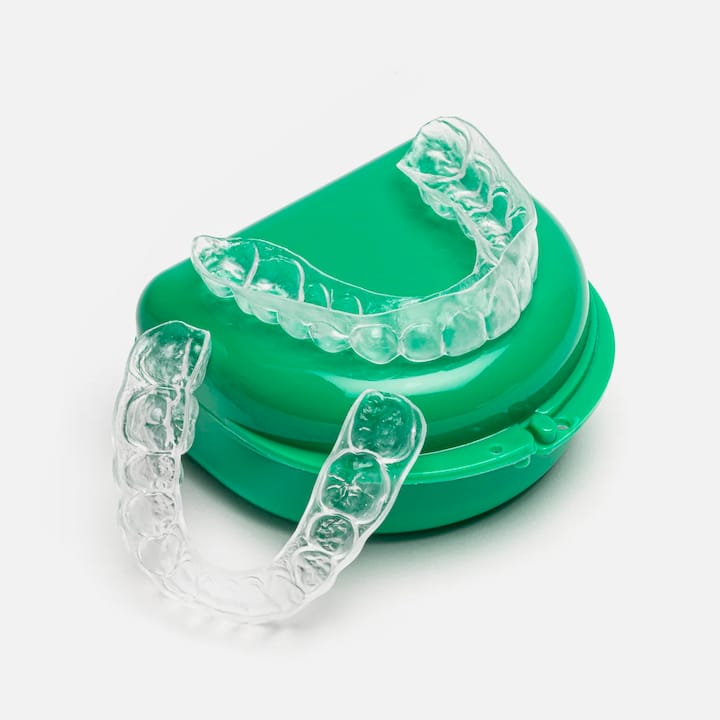
- Dentist-supplied custom trays. A dentist takes an impression, so the tray seals against the gumline and limits gel from leaking onto soft tissue. Concentrations run higher than OTC strips, but the custom fit offsets much of that added risk. This tier balances speed and safety better than either extreme.
- In-office bleaching. Dental offices apply the strongest concentrations, sometimes with a protective gum barrier or rubber dam, and deliver visible results in a single visit. Sensitivity tends to spike faster here simply because of the concentration and exposure, which is why professional oversight matters more at this level than anywhere else.
- Internal (intracoronal) bleaching. This is a different procedure entirely, done from inside a nonvital (root canal treated) tooth. It requires an internal seal, usually glass ionomer or MTA, to prevent bleaching agent from reaching the root surface. Done without that barrier, it carries a rare but documented risk of external cervical resorption, a condition where the root structure erodes near the gumline.
What Side Effects Are Common, and How Long Do They Last?
Sensitivity and gum irritation aren’t rare exceptions. They’re the expected, well-documented response to peroxide exposure, and knowing that upfront takes a lot of the anxiety out of the process.
By the numbers: A 2014 clinical review found tooth sensitivity in 50.3% of people using at-home bleaching trays, while gingival irritation showed up in 35.7% of in-office patients compared to just 14% of at-home users. Most cases in both groups were transient.
That gap between in-office and at-home irritation rates isn’t a coincidence. Higher concentrations applied by a clinician, even with a gum barrier, put soft tissue in closer contact with stronger peroxide for a shorter, more intense burst. At-home trays spread lower concentrations over longer wear times, which tends to produce milder, slower-building symptoms rather than a sharp reaction.
Here’s what typically happens, and when it stops being normal:
- Days 1 to 3: Zinging or sharp sensitivity to cold, especially right after each application. Expected and temporary.
- Days 3 to 5: Sensitivity usually tapers noticeably as enamel rehydrates.
- Gum irritation: White patches or soreness where gel touched soft tissue; resolves within a day or two once contact stops.
- Beyond a week, or worsening pain: Not typical. Stop and get evaluated.
Enamel itself doesn’t get weaker from properly used peroxide, but people with existing crowns, veneers, or fillings need to know bleaching won’t change those materials’ color. That mismatch is cosmetic, not a safety issue, but it’s worth planning for before you start.
How Do You Whiten Your Teeth Safely? A Step-By-Step Approach
Most whitening complications trace back to skipped screening or ignored instructions, not the chemistry itself. Here’s the sequence that actually reduces risk.
- Get a dental exam before you start. Cavities, exposed root surfaces, cracked fillings, and active gum disease all turn a routine whitening session into a painful one. A five-minute check catches problems that bleaching gel will otherwise find for you.
- Choose products carrying the ADA Seal of Acceptance or get a dentist-dispensed option. The Seal means the product passed independent testing for both safety and effectiveness, not just marketing claims.
- Check the peroxide concentration and match your wear time to it. Higher concentration products need shorter contact time. Longer isn’t stronger; it’s just riskier.
- Use a well-fitted tray, not a one-size-fits-all mouthpiece. A custom tray that seals against the gumline keeps gel where it belongs, on enamel, and away from soft tissue.
- Add a desensitizing step if you’re prone to sensitive teeth. Potassium nitrate or sodium fluoride gel, used before or after bleaching sessions, reduces sensitivity without weakening the whitening effect.
- Watch for red flags. Burning sensation, mouth ulcers, sensitivity that lasts more than a week, or pain that gets worse rather than better all mean stop and call a dentist.
Pro Tip: If your gums feel raw after a session, check your tray fit before blaming the gel. An ill-fitting tray lets gel pool against soft tissue, and that’s usually the real cause of irritation, not the peroxide concentration itself.
Who Should Avoid or Delay Teeth Whitening?
Whitening only changes the color of natural tooth structure. Anyone with visible crowns, veneers, or bonding in their smile line should plan for how those restorations will look against newly whitened teeth, because peroxide won’t lighten them to match.
A few groups warrant extra caution:
- Pregnant or breastfeeding patients. There’s no strong evidence of harm, but dentists commonly recommend delaying elective whitening as a precaution, simply because it’s not urgent and the fetal safety data is thin.
- Children and young adolescents. Whitening is generally deferred until permanent teeth have fully erupted and matured, since younger dentin tends to be more sensitive to peroxide.
- People with untreated dental disease. Active cavities or gum disease should be treated first. Bleaching over unresolved decay can trigger sharp, unpredictable pain.
- Chronic sensitivity sufferers. These patients can often still whiten safely, just with lower concentrations, shorter sessions, and a desensitizing regimen built in from day one rather than added after symptoms start.
- Nonvital, root-canal treated teeth need internal bleaching, a distinct in-office procedure with its own sealing protocol, rather than any surface-applied product.
What Does the Clinical Evidence Actually Say About Whitening Safety?
The ADA Seal isn’t a marketing badge. It requires manufacturers to submit independent clinical studies demonstrating both safety and effectiveness, including specific testing for oral tissue safety and non-persistent hypersensitivity before a product ever earns that seal.
The research on concentration is where things get genuinely useful for anyone choosing between products.
An umbrella review of systematic reviews and meta-analyses found that moderate hydrogen peroxide concentrations, roughly 25% to 35%, produce whitening results comparable to much higher concentrations while causing noticeably less sensitivity.
The same review found that light-activation systems, the blue LED lamps often marketed as boosting in-office results, generally add little to no whitening benefit and may actually increase sensitivity. That’s a useful thing to know before paying extra for a “laser whitening” upgrade. Combine that with the finding that desensitizing agents cut sensitivity without reducing efficacy, and a clear pattern emerges:
- Moderate concentration beats maximum concentration for most people’s risk tolerance.
- Skip the light activation upsell unless there’s specific evidence it helps your case.
- Build a desensitizing step into the protocol rather than treating sensitivity as an unavoidable cost.
The takeaway isn’t “avoid whitening.” It’s “choose the conservative, evidence-backed version of it.”
A Publisher’s Note on Safe At-Home Whitening
Custom whitening products can be designed around principles supported by clinical evidence: fit and concentration control matter more than raw strength. Custom-fit trays, made from FDA-approved materials, keep whitening gel sealed against enamel instead of pooling against gum tissue, which is where most irritation actually starts.
Product instructions and concentration levels are written to align with ADA-backed guidance on exposure time and peroxide levels, not to push maximum strength for a flashier before-and-after. Customer results and satisfaction data will be added here as that information becomes available.
— Clear
Get Custom-Fit Whitening Trays Built for Safer Results
Some companies sell custom-fit dental appliances similar to those discussed, often at lower prices than dental offices typically charge for equivalent setups. That matters because fit, not just gel strength, is what keeps peroxide off your gums and on your enamel where it belongs.
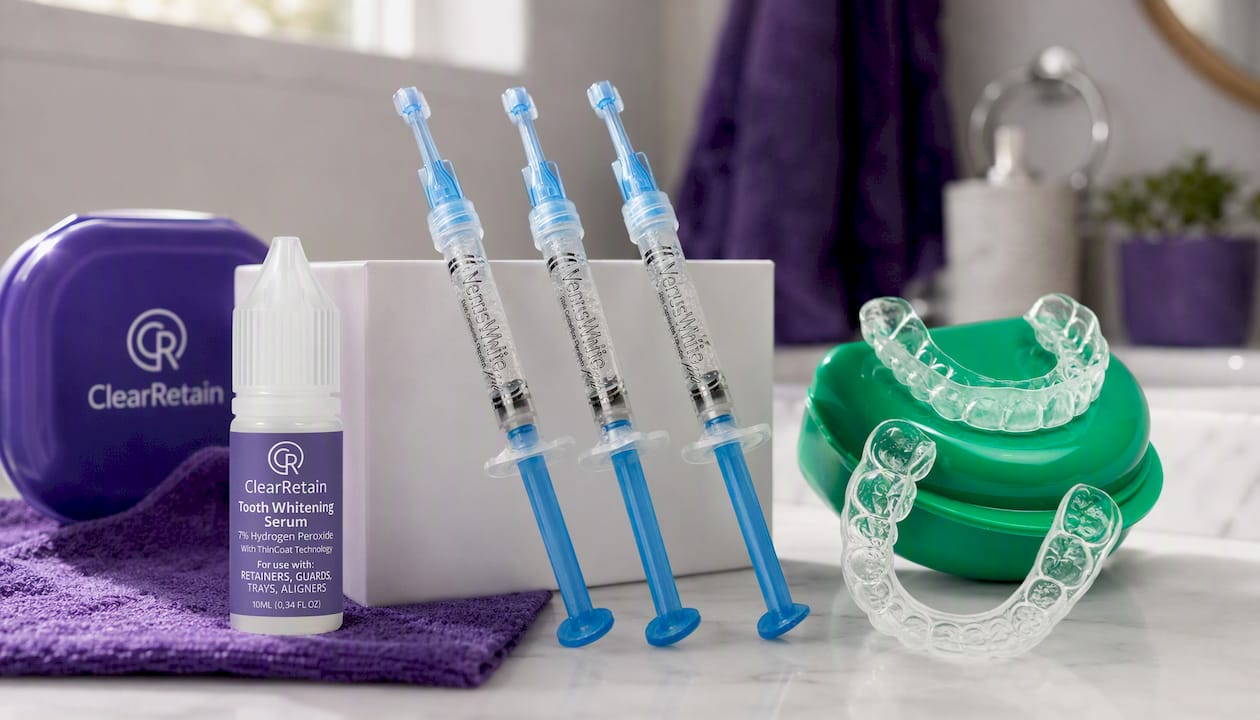
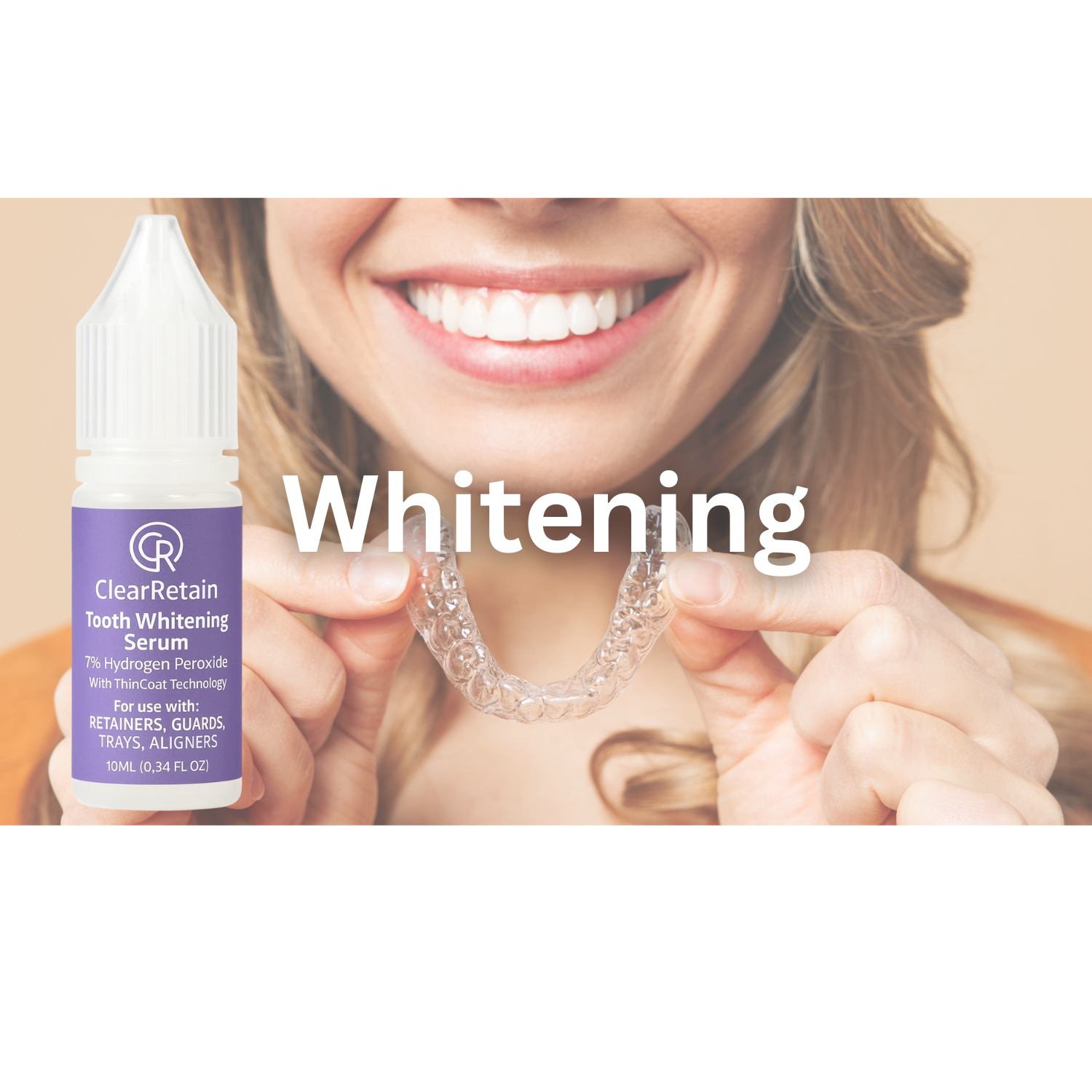
The lineup covers what a safe at-home routine actually needs. The Tooth Whitening Serum is designed to pair with a clear retainer or night guard you already own, so you’re not buying a separate whitening system from scratch. The Teeth Whitening Gel 3-Pack gives you enough refills to complete a full whitening cycle without constant reorders. And the custom bleaching trays are molded from a self-impression kit, giving you the same sealed fit a dental office would provide, at a lower cost.
The materials used are FDA-approved and produced under professional supervision. If you have crowns, veneers, fillings, or any active gum or tooth issue, talk to a dentist before starting. Otherwise, order a self-impression kit and get a tray built around your actual mouth.
This article is general information, not a substitute for advice from a qualified doctor. Consult a qualified healthcare professional about your own circumstances before acting on anything here.
Sources
- Whitening | American Dental Association
- In-office tooth bleaching protocols: an umbrella review of systematic reviews and meta-analyses on whitening efficacy and tooth sensitivity