

Reduce Rebound Staining: Teeth Whitening for Smokers With Custom Trays
Yes, smokers can whiten their teeth, and peroxide is the reason it works. Custom at-home trays and professional in-office bleaching both deliver a real, measurable shade change, while whitening toothpaste and strips barely touch tobacco stains. If you’re starting from scratch, book a dental exam first to rule out gum disease or exposed roots, then order a custom impression kit for tray-based bleaching, since it holds gel against enamel longer and tends to last.
TL;DR:
- Custom tray-based bleaching with peroxide agents shows longer-lasting results and is more effective against tobacco stains than over-the-counter strips or pastes.
- In-office bleaching can lift shades in a single visit but tends to cause more sensitivity and quicker rebound without ongoing maintenance.
- Smoking’s particulate matter, especially tar, penetrates enamel pores, making stains intrinsic and harder to remove than surface-level extrinsic stains.
- Quitting smoking or delaying your first cigarette after whitening sessions significantly reduces the risk of reversing treatment progress due to increased enamel porosity.
- Proper fit of customized trays, along with a moderate peroxide concentration, offers the best results and minimizes sensitivity for smokers seeking whitening.
Table of Contents
- Why Tobacco Stains Are So Hard to Remove
- Which Whitening Method Actually Works Best?
- Is Whitening Safe if You Smoke? A Sensitivity Checklist
- How to Maintain Whitening Results as a Smoker
- What Products and Ingredients Actually Lift Tobacco Stains
- Whitening Toothpaste vs. Mouthwash: What Helps a Smoker’s Smile
- Beyond Quitting: Lifestyle Habits That Protect Your Whitening Investment
- Smart Timing Tricks to Minimize New Staining
- Why Custom Trays Beat One-Size-Fits-All Whitening for Smokers
- Getting Started With a Custom Whitening Kit
- Sources
Why Tobacco Stains Are So Hard to Remove
Cigarette smoke doesn’t just coat your teeth, it works into them. The particulate matter in smoke, mostly tar, settles into the microscopic pores of enamel and clings there in a way that coffee or tea residue doesn’t. Lab analysis using GC-MS has identified a cluster of terpenoid compounds in that particulate layer as the likely chromogens responsible for staining, and notably, nicotine itself isn’t the primary culprit. Nicotine oxidizes and turns yellow over time, but the deeper, browner discoloration comes from tar deposits.
That distinction matters for treatment. Dentists split discoloration into two categories:
- Extrinsic stains sit on the enamel surface and respond well to polishing and bleaching.
- Intrinsic stains have migrated into the tooth structure and need stronger, longer-contact peroxide exposure to lift.
Research comparing cigarette smoke to heated-tobacco aerosol found markedly worse discoloration from combustible smoke, which tells you the particulate load, not just nicotine exposure, drives most of what you see in the mirror.
Which Whitening Method Actually Works Best?
Not every whitening option is built for tobacco stains, and the differences show up fast once you compare them side by side.
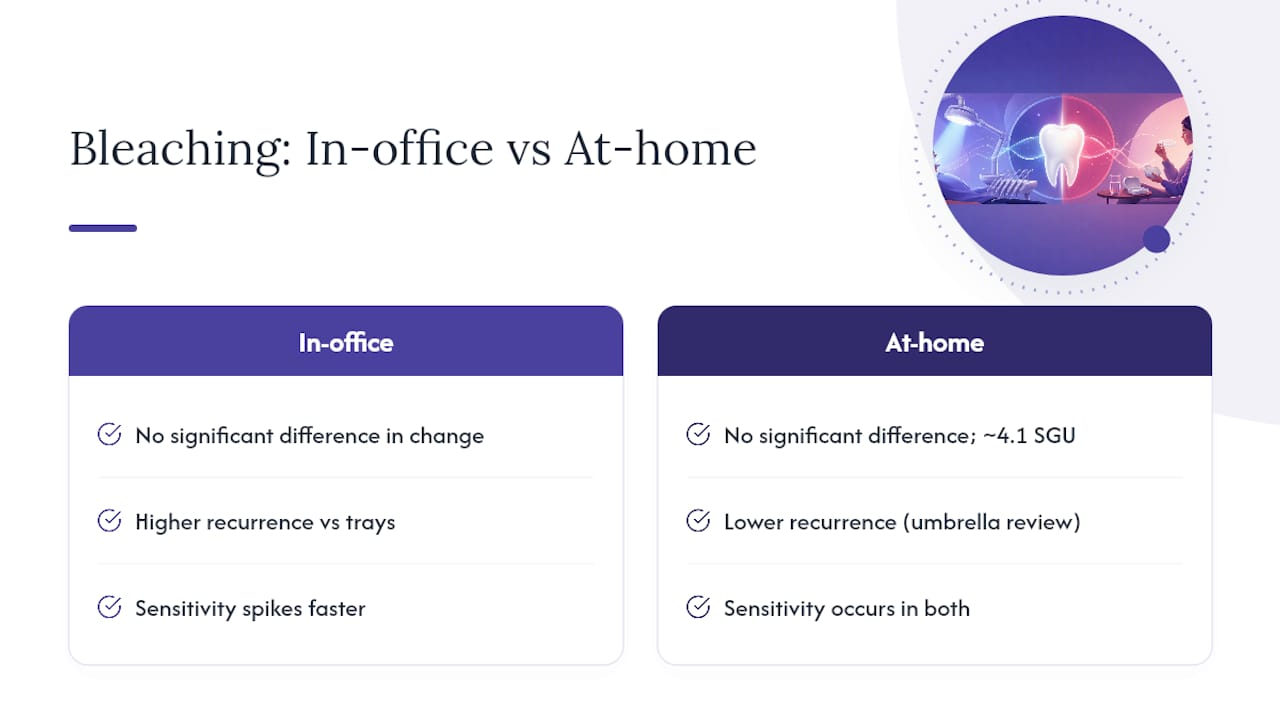
In-office power bleaching uses high-concentration peroxide activated by light or heat, and it can lift shade in a single visit. The tradeoff: sensitivity tends to spike faster, and because the treatment is short and intense, color often rebounds sooner without a maintenance plan behind it.
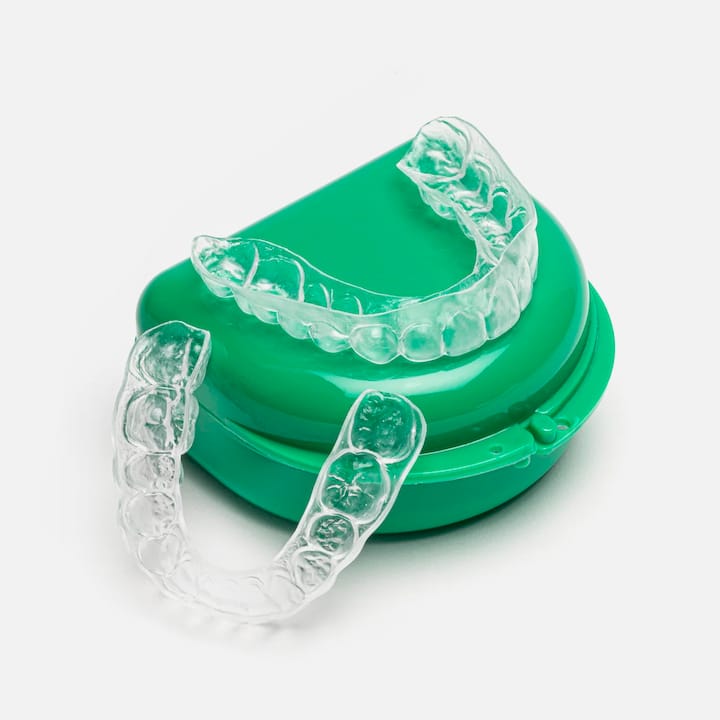
Custom at-home tray systems use carbamide peroxide or lower-concentration hydrogen peroxide worn for extended periods, usually 30 minutes to a few hours depending on the formula. They work slower but the results tend to hold longer, largely because the tray keeps gel in even contact with the whole tooth surface instead of relying on a single clinical session.
OTC strips, whitening pastes, and abrasive polishes mostly address surface-level extrinsic staining. They can brighten a smile a shade or two, but they’re not formulated to handle tar that has worked into enamel pores, and most smokers find the results underwhelming.
Professional polishing before bleaching removes surface plaque and loose particulate so the whitening agent can actually reach enamel instead of getting blocked by debris sitting on top of it.
The clinical evidence backs the tray-based approach more than most people expect. A multicenter trial on at-home bleaching in smokers versus nonsmokers found equivalent color improvement between the two groups at one week, and overall shade improved by about 4.1 shade guide units at one month. Smoking didn’t blunt the treatment’s effectiveness in that window, which is genuinely reassuring if you’ve assumed whitening “doesn’t work” for you.
A broader umbrella review comparing in-office and at-home bleaching techniques found no significant difference in overall color change between the two approaches, but at-home trays showed lower recurrence rates. Sensitivity showed up across both methods, so neither one is a free pass on that front.
Is Whitening Safe if You Smoke? A Sensitivity Checklist
See a dentist before starting any whitening regimen if you have active gum disease, exposed tooth roots, untreated decay, or visible restorations like crowns and fillings that might not match a whiter shade. The American Dental Association advises professional assessment in these cases precisely because whitening gel can aggravate exposed dentin or highlight a mismatch between natural teeth and existing dental work.
Sensitivity is common across bleaching methods, not unique to smokers, but a few tactics reliably reduce it:
- Start with a lower peroxide concentration and step up only if results plateau.
- Ask about desensitizing agents like potassium nitrate applied before or during treatment.
- Stage your treatment across shorter sessions rather than one long, aggressive push.
- Space out at-home tray wear if gums feel irritated instead of pushing through discomfort.
Timing also matters more than most people realize. Enamel becomes temporarily more porous right after bleaching, so smoking in the first 24 to 48 hours can undo progress almost as fast as you made it.
Pro Tip: If you can’t quit smoking during treatment, at least push your first cigarette back a full day after each whitening session. That porous window is when tar rebinds fastest.
How to Maintain Whitening Results as a Smoker
Whitening isn’t a one-time fix, and pretending it is setting you up for disappointment. A 30-month follow-up study found color rebound happens in both smokers and nonsmokers over time, so a maintenance rhythm matters more than the initial treatment itself.
Daily habits that make the biggest difference:
- Brush within 30 minutes of your last cigarette rather than waiting hours, since tar hasn’t fully set yet.
- Use a whitening toothpaste with mild abrasives daily, not just after smoking sessions.
- Rinse with water immediately after smoking if brushing isn’t an option.
For cadence, someone smoking a pack a day needs shorter touch-up cycles than a social smoker. A short at-home top-up every four to eight weeks using your existing trays keeps results stable for most people; heavier smokers may need to shorten that window.
| Situation | Best option | Typical time investment |
|---|---|---|
| Heavy daily smoker, first whitening | Custom trays + dental exam | 1 to 2 weeks initial, then top-ups |
| Light or social smoker | Custom trays alone | 3 days initial |
| Fast event deadline | In-office session + tray maintenance | Single visit, then ongoing |
| Maintaining existing results | At-home gel refill every 4 weeks | 30 minutes to a few hours per session |
A professional refresh makes sense before major events or when at-home top-ups stop moving the shade. Otherwise, tray-based touch-ups at home are cheaper and just as effective for staying ahead of rebound.
What Products and Ingredients Actually Lift Tobacco Stains
Peroxide is the active ingredient that matters, full stop. Carbamide peroxide breaks down slowly into hydrogen peroxide, which makes it gentler and better suited to longer wear times in a tray. Hydrogen peroxide alone acts faster but at higher concentrations it raises sensitivity risk, which is why in-office formulas lean on it for short, supervised sessions rather than extended daily wear.
Beyond peroxide, a few supporting ingredients show up in effective at-home regimens. Potassium nitrate reduces the nerve sensitivity that peroxide can trigger, and it’s common in serums designed to pair with a custom tray. Fluoride helps remineralize enamel weakened by acid exposure, which matters for smokers who also drink coffee or wine, compounding the staining problem.
What doesn’t reliably work: baking soda pastes, activated charcoal, and oil pulling. These have a following online, but none of them carry peroxide’s ability to actually bleach intrinsic discoloration. At best they buff away light surface residue, which won’t touch tar that has settled into enamel pores.
The ADA has cautioned against simply cranking up peroxide concentration or wear time as a shortcut to better results, since it mostly just raises sensitivity without proportional whitening gains. A steady, moderate-concentration approach with consistent contact time beats an aggressive one-off blast for tobacco stains specifically.
Whitening Toothpaste vs. Mouthwash: What Helps a Smoker’s Smile
Whitening toothpastes rely on mild abrasives and sometimes a small amount of hydrogen peroxide to polish away surface stains. They’re a reasonable daily habit, but they’re not a substitute for tray-based bleaching, since their contact time with enamel is measured in seconds, not minutes. Look for one with silica or hydrated aluminum oxide as the abrasive and, if you can find it, a low percentage of peroxide for a mild bleaching boost alongside the polish.
Mouthwash plays a different role entirely. Most whitening mouthwashes contain a trace of hydrogen peroxide, but the contact time during a rinse is too brief to meaningfully lift tobacco stains on its own. Where mouthwash earns its place is in slowing new stain formation between whitening sessions, particularly formulas with cetylpyridinium chloride, which helps break up the biofilm that tar and plaque cling to.
For smokers specifically, pairing an anti-plaque mouthwash with a whitening toothpaste covers daily maintenance, but neither replaces the deeper contact a bleaching tray provides. Think of toothpaste and mouthwash as damage control between real treatments, not the treatment itself. If your goal is closing the gap between “stained” and “white,” the actual lift comes from peroxide sitting against your teeth for real time, which only trays or in-office bleaching deliver.
Beyond Quitting: Lifestyle Habits That Protect Your Whitening Investment
Quitting smoking is the single best thing you can do for your smile, but it’s not the only lever. Diet plays a bigger role than most people admit. Coffee, red wine, and dark berries all deposit chromogens the same way tobacco does, so pairing a smoking habit with a daily coffee routine compounds staining faster than either one alone.
Hydration matters more than it sounds like it should. Saliva naturally buffers acid and washes away loose particulate, and a dry mouth, common in heavy smokers, gives stains more time to set before your body’s own defenses kick in. Drinking water throughout the day, especially after smoking or coffee, cuts down on how long staining compounds sit against enamel.
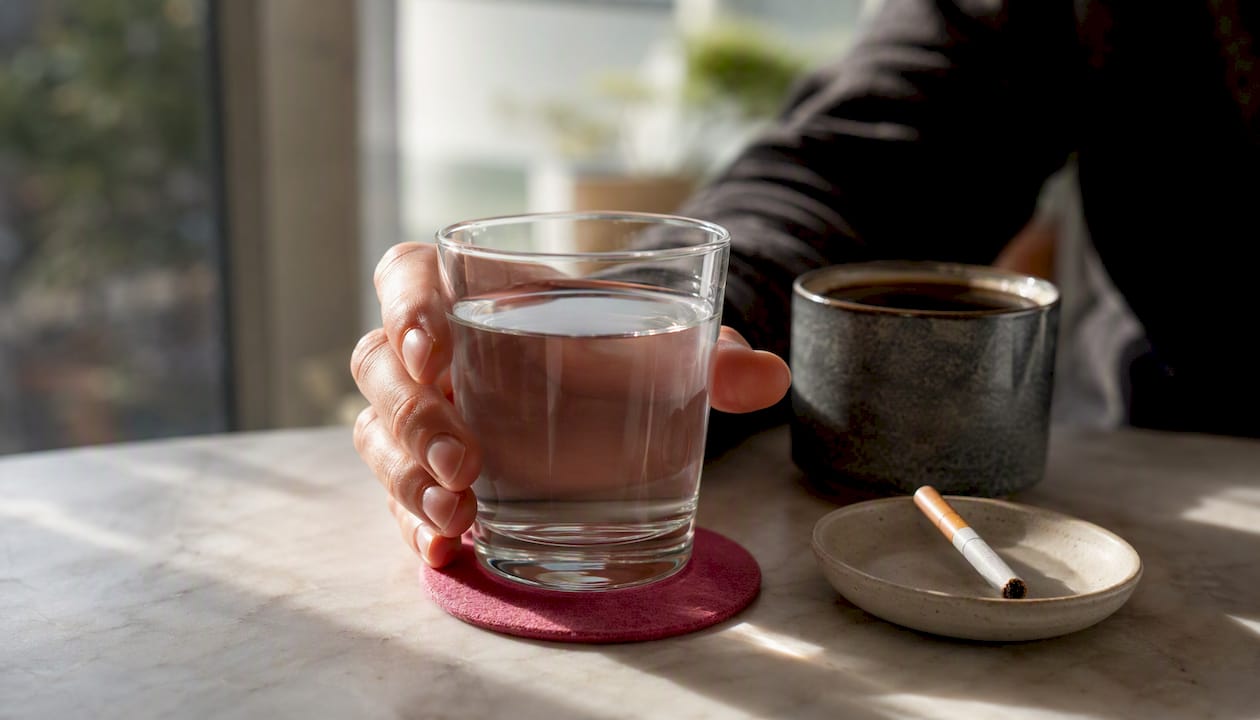
Straws help more than people expect for pigmented drinks, since they route liquid past the front teeth. It won’t do anything for smoke exposure, but it reduces the compounding effect from coffee or soda on top of tobacco.
Regular dental cleanings every six months remove the buildup that whitening alone can’t touch, and they give your dentist a chance to catch early enamel wear or gum recession before it becomes a bigger problem. None of this replaces quitting, but it buys you more mileage between whitening sessions if quitting isn’t happening yet.
Smart Timing Tricks to Minimize New Staining
The biggest lever most smokers overlook is spacing cigarettes away from oral care routines instead of overlapping them. Smoking right before brushing means you’re grinding fresh tar into enamel with your toothbrush; smoking right after undoes the polish you just created.
A better sequence looks like this: brush first, then smoke if you’re going to, then rinse with water once you’re done rather than brushing again immediately (enamel is briefly softer right after brushing, and brushing too soon after eating or smoking can do more harm than good). If you use a whitening tray, wear it before your first cigarette of the day whenever your schedule allows, not after, so the gel works on cleaner enamel.
Chewing sugar-free gum for a few minutes after smoking stimulates saliva flow, which helps clear loose particulate before it has time to settle. It’s not a stain remover, but it narrows the window tar has to bond with enamel.
If you’re mid-whitening treatment, the 24 to 48 hour post-session window is the one time to actually skip cigarettes if you can manage it. Enamel is more porous during that stretch, and anything you put against it, tobacco smoke included, gets absorbed more readily than usual.
Why Custom Trays Beat One-Size-Fits-All Whitening for Smokers
Most whitening frustration among smokers comes down to fit, not formula. A drugstore strip can’t adapt to your tooth shape, so gel pools in some spots and misses others entirely, which is exactly why over-the-counter kits underdeliver on tobacco stains. Clearretain’s custom bleaching trays are built from a self-impression kit and shaped to match your teeth, which means the whitening gel sits in even contact across every surface, including the areas along the gumline where tar tends to concentrate.
The materials are FDA-approved and fabricated under the supervision of experienced orthodontic technicians, the same standard you’d expect from a dental office visit. That combination, a tight custom fit plus regulated gel formulas, is what the clinical evidence points to when it recommends tray-based systems for durability over strips or pastes. Folding this into a maintenance plan is straightforward: order your kit, wear your trays on the schedule that matches your smoking intensity, and reorder gel refills through stored digital impressions when you’re ready for another round.
— Clear
Getting Started With a Custom Whitening Kit
If you’ve read this far, you already know the fastest path to real results is a tray that fits your mouth exactly and a peroxide formula strong enough to reach tobacco stains without wrecking your gums. That’s the gap Clearretain was built to close, at a fraction of what a dental office charges for the same custom-fit process.
The starter process is simple. You order a self-impression kit, follow the included instructions to capture your bite at home, and send it back. From there, Clearretain fabricates your custom bleaching trays using FDA-approved materials under the supervision of experienced technicians, then ships them to your door. Most people find the fit check straightforward on the first try, and many health savings accounts (HSAs) or flexible spending accounts (FSAs) cover dental appliance purchases like this, worth checking before you order.
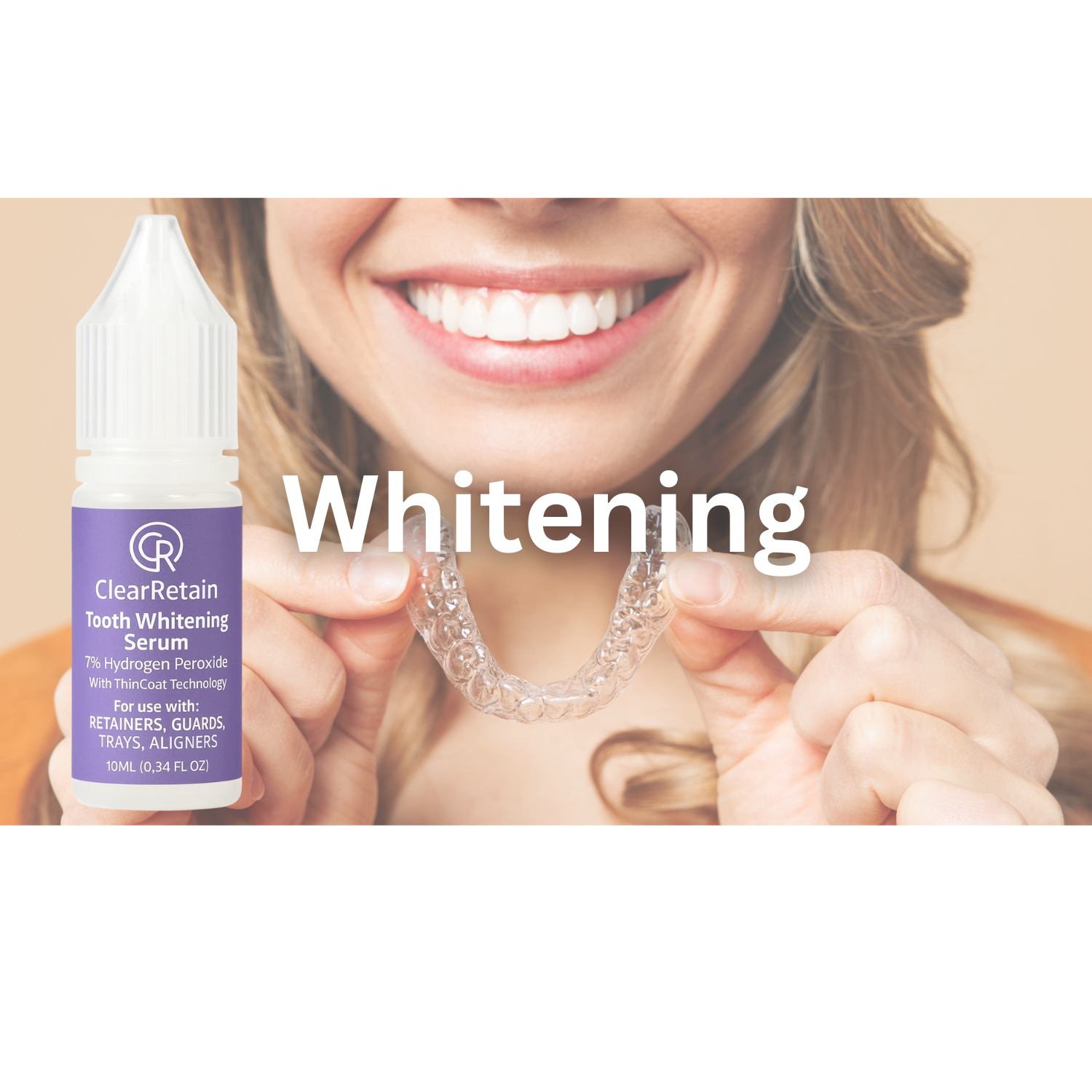
Once your trays arrive, pair them with the tooth whitening serum for touch-ups, or stock up on whitening gel refills so you’re never waiting between maintenance cycles. Your impressions stay on file, so reordering later takes a few clicks instead of a repeat appointment. Ready to get your shade back on track? Order your impression kit today, or reach out to Clearretain’s customer service team if you want guidance on which kit fits your situation before you buy.
Sources
- Effectiveness of and tooth sensitivity with at-home bleaching in smokers: A multicenter clinical trial
- Effects of cigarette smoke and tobacco heating aerosol on color stability of dental enamel, dentin, and composite resin restorations
- Comparison of in-office and at-home bleaching techniques: An umbrella review of efficacy and post-operative sensitivity
- Analysis of chemical deposits on tooth enamel exposed to total particulate matter from cigarette smoke and tobacco heating system 2.2 aerosol