

Yes, Red Wine Stains Teeth. Here's What to Do Now
Red wine stains teeth because of a chemical triple threat: pigments called chromogens, binding agents called tannins, and acidity that softens enamel enough to let those pigments latch on. If you’re mid glass right now, do this: sip water between pours, swish it around your mouth, eat something (cheese works great), and skip the toothbrush for 30 to 60 minutes.
That last part matters more than most people realize. Brushing right after wine scrubs enamel that’s temporarily softened by acid, which can do more harm than the stain itself.
- Sip water between glasses of wine
- Swish water around your mouth after each sip
- Eat cheese, nuts, or crunchy vegetables while drinking
- Wait 30 to 60 minutes before brushing
Keep reading for the science behind the stains, a full prevention routine, and how to remove stains that already set in.
Key Takeaways
Red wine stains teeth through a combination of pigment, tannins, and acid, but timing your brushing, rinsing, and eating habits controls most of the damage.
| Point | Details |
|---|---|
| Staining is a triple threat | Chromogens, tannins, and acidity work together, so rinsing alone won’t fully prevent stains. |
| Timing beats avoidance | Wait 30 to 60 minutes to brush after wine so you don’t scrub softened enamel. |
| Erosion depends on drinking pattern | Sipping wine slowly over hours causes more enamel wear than finishing a glass with a meal. |
| Skip DIY abrasives | Charcoal and frequent baking soda scrubs wear enamel faster than they whiten it. |
| Custom trays offer controlled whitening | Clearretain’s self-impression kit and tray-based bleaching system deliver even gel contact for surface stains at home. |
Table of Contents
- Why Red Wine Stains Teeth: Chromogens, Tannins, and Acid
- A Step-by-Step Routine for Drinking Wine Without the Stains
- Removing Red Wine Stains: Home Care vs. Professional Whitening
- The Bigger Risk: What Red Wine Does to Enamel Over Time
- ClearRetain’s Tray-Based Whitening: A Safe At-Home Option for Wine Stains
- What the Research Actually Supports
- Start Here: Ordering Custom Trays and Whitening Serum
- Sources
Why Red Wine Stains Teeth: Chromogens, Tannins, and Acid
Anthocyanins are the deep purple pigments that give red wine its color. They’re chromogens, meaning they cling to surfaces and leave color behind, and tooth enamel is one of the surfaces they cling to best. Tannins make things worse by acting like glue, binding those pigments to your teeth and to each other so the color builds up layer by layer with every glass.
Then there’s acidity, which Rutgers dental experts call the third piece of the puzzle. Wine’s acid opens up microscopic pores in enamel, giving chromogens more surface area to grab onto. It’s not just about pigment sitting on top of your teeth. It’s pigment sinking into etched enamel.
Plaque and the thin biological film on your teeth called the pellicle make this worse. Both act like a sponge for chromogens, which is exactly why brushing before you drink (not after) removes some of that sponge and cuts down how much pigment has somewhere to stick.
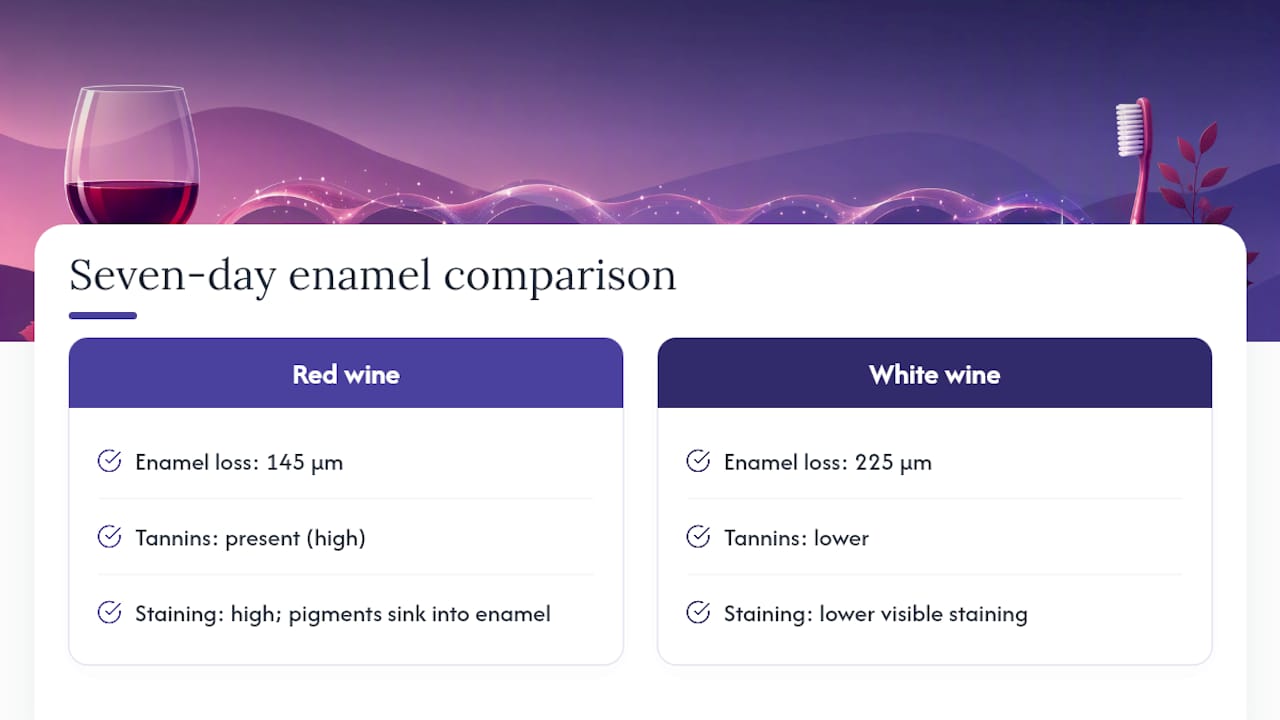
The acid concern isn’t hypothetical, either. One in vitro study on comparative enamel erosion found red wine caused 145 micrometers of enamel loss over seven days of exposure, compared to 225 micrometers for white wine. Red wine’s tannins may actually offer some protective effect against acid, even as its pigments stain more visibly. Color and structural damage aren’t the same problem, and they don’t always move together.
A Step-by-Step Routine for Drinking Wine Without the Stains
Timing is everything here. What you do before, during, and after a glass of red wine determines whether you’re dealing with a five-minute rinse or a stain that needs professional attention.
Before you pour:
- Brush about 30 minutes before drinking, not right beforehand. This clears plaque and gives any toothpaste residue time to settle.
- Floss to remove trapped plaque between teeth, since those tight spaces are prime stain territory.
- Skip abrasive whitening toothpaste right before drinking. Freshly polished enamel can be slightly more porous for a short window.
While you’re drinking:
- Alternate sips of wine with sips of water. This is the single easiest habit to build and it works.
- Swish water in your mouth after each glass to physically dislodge pigment before it settles.
- Eat while you drink. Cheese, nuts, and raw vegetables all stimulate saliva, which naturally buffers acid and helps rinse pigment away. Colgate’s dental guidance points to pairing wine with food as one of the most effective and least effortful habits available.
After the glass is empty:
- Rinse with plain water immediately.
- Wait a while before brushing, giving softened enamel time to remineralize.
- Use a whitening toothpaste for daily maintenance, but stay away from DIY abrasives like activated charcoal or frequent baking soda scrubs. They can wear enamel down faster than the stains they’re trying to remove.
Pro Tip: Keep a water glass next to your wine glass at dinner parties. The habit of alternating sips becomes automatic within a night or two, and it does more for your teeth than any toothpaste on the market.
Regular dental cleanings round out the routine. A partner resource on preventing wine stains echoes the same core advice: consistent plaque control between wine nights keeps the whole cycle from compounding.
Removing Red Wine Stains: Home Care vs. Professional Whitening
Not all stains are equal. Surface stains, called extrinsic stains, sit on enamel and respond well to whitening products. Intrinsic stains sit deeper in the tooth structure and need professional attention to budge at all.
For extrinsic stains, you have real options:
- Whitening toothpaste for daily upkeep and light discoloration
- Over-the-counter whitening gels or pens, used exactly as directed to avoid overexposure
- Custom tray-based bleaching, which holds whitening gel against tooth surfaces longer and more evenly than a one-size product ever can
Custom trays outperform generic strips largely because of contact time and fit. A tray molded to your own teeth keeps the whitening gel where it needs to be instead of letting it slide around your mouth, which is part of why tray-based bleaching tends to produce more even results than drugstore strips.
Professional options matter when home care isn’t enough. A dental cleaning and polishing removes buildup that toothpaste can’t touch, in-office whitening handles stubborn or long-standing discoloration, and a dentist can evaluate whether erosion has progressed enough to need restorative work.
A few safety notes apply either way: don’t brush immediately after wine or any acidic drink, skip harsh DIY scrubs, and see a dentist if you notice sensitivity or a stain that doesn’t respond to a few weeks of consistent care.
The Bigger Risk: What Red Wine Does to Enamel Over Time
Staining is cosmetic. Enamel erosion is structural, and it’s the risk that gets less attention than it deserves. Wine’s acidity softens the outer layer of enamel temporarily, and the longer that acid sits on your teeth, the more time it has to do damage.
This is where drinking pattern matters as much as the wine itself. Nursing a glass over three hours at a party exposes your teeth to acid far longer than finishing the same glass with dinner in twenty minutes. Frequent sipping without food keeps your mouth in an acidic state, while eating stimulates saliva that buffers the acid between exposures.
Certain factors raise your personal risk: dry mouth, acid reflux or GERD, and naturally low saliva flow all reduce your mouth’s ability to neutralize acid on its own. If any of those apply to you, the food-pairing and water-alternating habits from the prevention section aren’t optional extras. They’re doing real protective work.
Chewing sugar-free gum after a glass is a simple add-on that stimulates saliva flow when food isn’t an option, and it costs you nothing to build into the routine.
ClearRetain’s Tray-Based Whitening: A Safe At-Home Option for Wine Stains
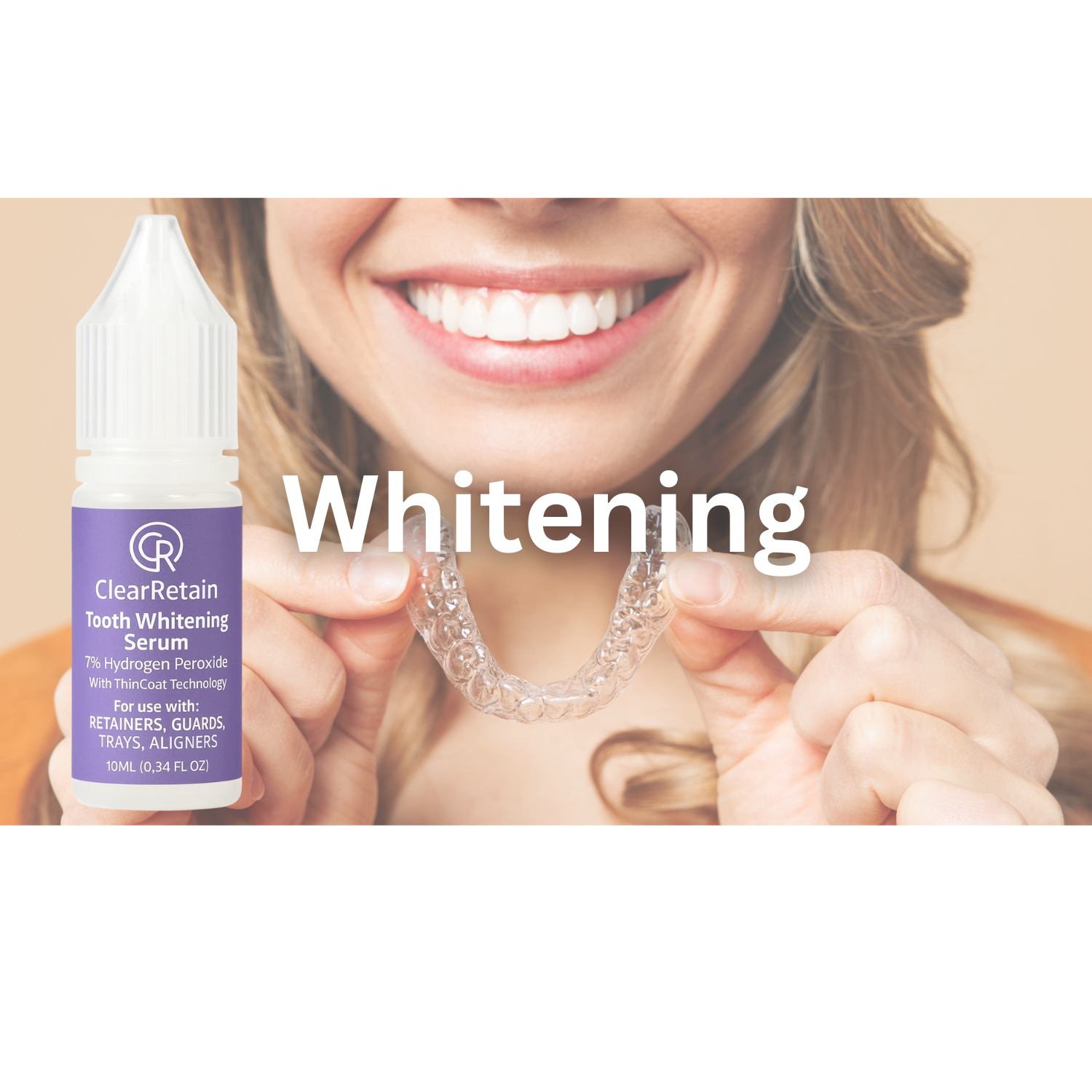
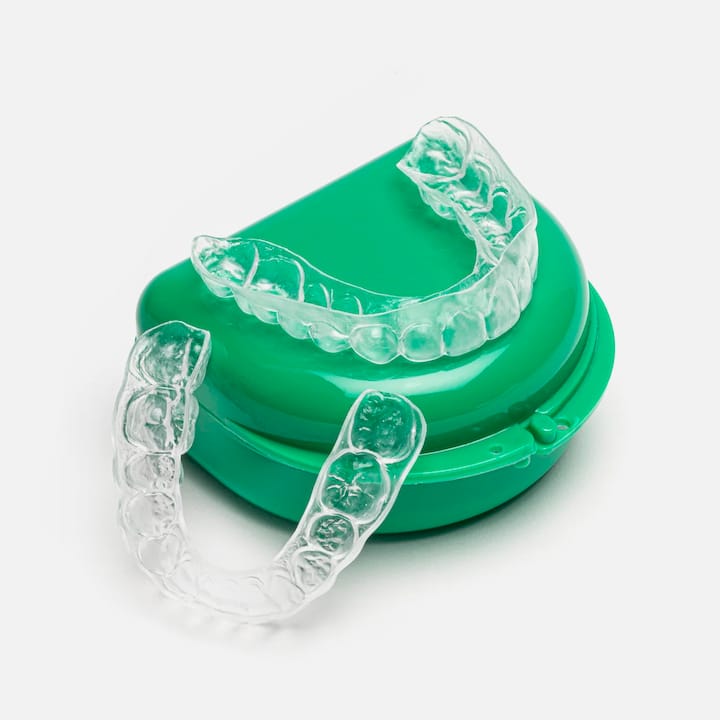
Custom trays solve a real problem with generic whitening products: uneven gel contact. A tray built from your own dental impression keeps whitening serum pressed evenly against enamel, which improves results and reduces the gum irritation that comes from ill-fitting one-size trays.
ClearRetain’s teeth bleaching trays are made from FDA-approved materials, produced under the supervision of experienced orthodontic technicians, and ordered using a self-impression kit you complete at home. That direct-to-consumer model typically runs at a fraction of in-office whitening costs.
- Custom fit reduces gel waste and gum contact
- FDA-approved materials, made in the US
- Self-impression kit skips the office visit
- Reorder gel refills once you know your routine
Pro Tip: If you have crowns, veneers, or bonded restorations, whitening affects natural enamel and restorations differently. Check with your dentist before starting a whitening routine.
At-home trays work well for maintenance and moderate staining. Persistent discoloration or tooth sensitivity is your cue to talk to a dentist first.
What the Research Actually Supports
Most articles on this topic treat red wine like the enemy, telling you to swap it for white or cut it out entirely. That advice misses the more interesting finding: in the enamel erosion research, red wine actually caused less structural damage than white wine over the same exposure window. The staining is worse. The erosion isn’t.
That distinction changes what you should actually prioritize. If you’re only worried about looks, focus on the behavioral habits, rinsing, food pairing, and brushing timing, since those cost nothing and work immediately. If you’re worried about long-term enamel health, focus less on which wine you’re drinking and more on how you’re drinking it. A glass nursed for hours does more damage than the same glass finished with a meal.
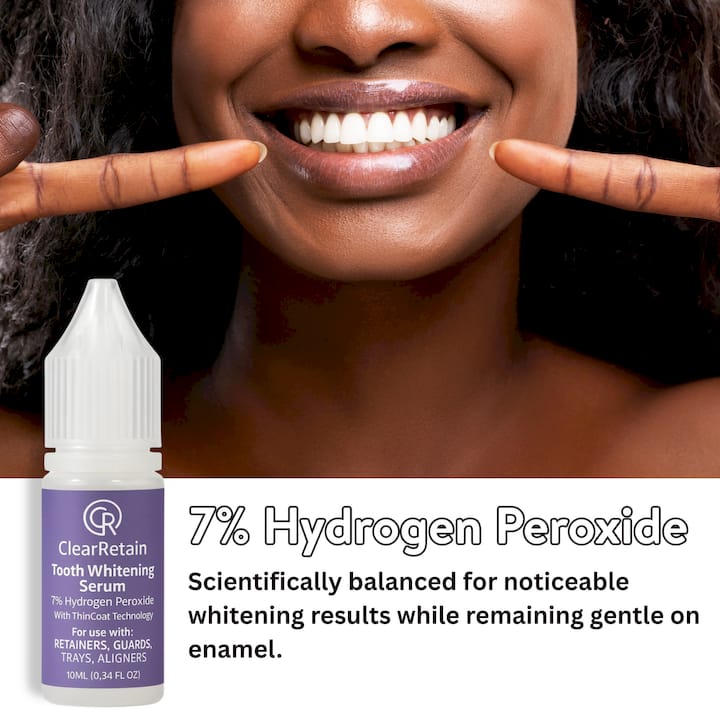
Conventional advice also oversells DIY whitening hacks like charcoal and baking soda, which trade short-term brightness for long-term enamel wear. The better trade is patience: consistent prevention habits paired with a controlled, dentist-grade whitening method when stains do build up.
Prioritize timing over avoidance. You don’t have to give up red wine to protect your teeth. You have to change when you brush, when you rinse, and how long you let a glass sit in your mouth.
— Clear
Start Here: Ordering Custom Trays and Whitening Serum
If staining has already set in and you want more control than a drugstore strip offers, custom tray-based whitening is the direct next step.
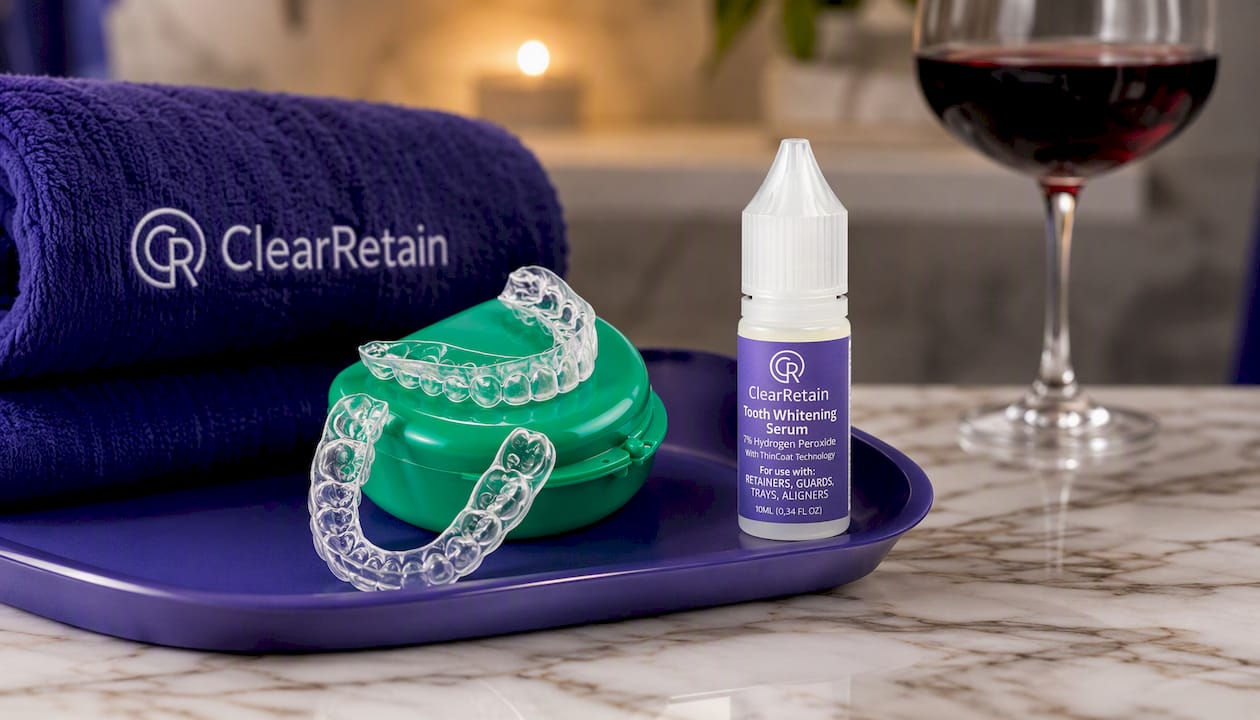
The process is straightforward. Order a self-impression kit online, complete the impression at home following the included instructions, and mail it back. Clearretain uses that impression to produce your custom bleaching trays, built under the supervision of experienced orthodontic technicians from FDA-approved materials. Once your trays arrive, you apply whitening serum directly into them following the included dosing instructions.
Most people notice visible whitening within one to two weeks of consistent use, though results vary by starting shade and how long stains have set in. If you experience sensitivity beyond mild, temporary tingling, pause use and check with your dentist.
The whole model skips the office visit and the office markup, which is why Clearretain’s direct-to-consumer pricing runs at a fraction of traditional in-office whitening. Order your self-impression kit today and start the process before your next wine night.
Sources
- PubMed: comparative enamel erosion by wines
- Rutgers: How to prevent “wine teeth” this holiday
- Colgate: How to avoid wine-stained teeth
This article is general information, not a substitute for advice from a qualified doctor. Consult a qualified healthcare professional about your own circumstances before acting on anything here.