

Up to Two Thirds Get Sensitivity After Whitening, and What Helps
Yes. Mild, temporary tooth sensitivity after whitening is normal and affects most people who bleach their teeth. It typically peaks within the first day and fades within a few days. The fastest relief comes from switching to a potassium-nitrate desensitizing toothpaste right away and avoiding very hot, cold, or acidic foods and drinks until the feeling settles.
TL;DR:
- Using moderate peroxide concentrations of 25% to 35% for whitening results in less sensitivity compared to higher-strength formulas.
- Pre-treating with potassium-nitrate toothpaste for one to two weeks before whitening significantly reduces post-treatment discomfort.
- Sensitivity typically peaks within the first day after whitening and resolves within a few days, unless symptoms worsen or persist.
- Larger or recurrent sensitivity, especially with sharp pain or swelling, indicates a need to consult a dentist rather than continuing treatments.
- Light activation and higher peroxide levels do not improve whitening and often increase the risk of discomfort, making a conservative approach more effective.
Table of Contents
- Why Whitening Causes Tooth Sensitivity, and How Long It Lasts
- What Actually Relieves Sensitivity Right Now
- How to Whiten Without the Sting Next Time
- When Sensitivity Means It’s Time to See a Dentist
- The Evidence Behind This Guidance
- What Most Whitening Advice Gets Backwards
- ClearRetain’s Whitening Lineup for Sensitivity-Conscious Whitening
- Sources
Why Whitening Causes Tooth Sensitivity, and How Long It Lasts
Whitening gel works by pushing peroxide through your enamel and into the dentin underneath, the layer packed with microscopic tubules that lead straight to the nerve. That diffusion is exactly what lifts stains, and it’s also exactly what causes the sting. Peroxide passing through those tubules irritates the pulp temporarily, which produces the sharp, quick jolt people call a “zinger.” It’s not damage. It’s a nerve responding to a chemical passing through a tissue it normally never touches.
The American Dental Association reports that up to two-thirds of people who whiten their teeth experience some transient sensitivity, making it the single most common side effect of the procedure. That figure alone should tell you something: if your teeth are buzzing after a whitening session, you’re not having an unusual reaction. You’re having the typical one.
Most of that discomfort follows a predictable arc. Sensitivity tends to spike within the first day, then improve steadily as the tooth rehydrates and the protective saliva layer, called the pellicle, reforms over the enamel surface. A systematic review on post-operative sensitivity found this recovery window generally runs a few days, with most people feeling normal again well before the one-week mark.
Not everyone reacts the same way, though. Several factors make sensitivity more likely or more intense; understanding these common causes of tooth sensitivity can help you manage and prevent discomfort:
- Thin or worn enamel, which gives peroxide a shorter path to the dentin
- Gum recession that exposes root surfaces never meant to be uncovered
- Micro-cracks in the enamel, often invisible without a dental exam
- Leaky or aging fillings and restorations that let gel seep underneath
- A history of sensitive teeth before you ever started whitening
If two or more of these apply to you, expect sensitivity on the higher end of normal rather than the low end.
What Actually Relieves Sensitivity Right Now
If your teeth are aching after a whitening session, work through these steps in order:
- Switch to a potassium-nitrate toothpaste immediately. Formulas combining 5% potassium nitrate with 2% sodium fluoride are the gold standard for calming an irritated nerve. A systematic review of desensitizing agents found that applying this combination before or during bleaching measurably reduced pain scores compared to no treatment. Brush gently and leave a thin film on your teeth rather than rinsing it away completely.
- Apply a topical desensitizing gel or serum directly to the tooth surface for a more concentrated dose than toothpaste alone provides. Some dental offices also use fluoride varnish for a similar effect after in-office treatments.
- Take an over-the-counter anti-inflammatory like ibuprofen if the discomfort is more than mild, particularly in the first 24 hours when irritation runs highest.
- Avoid temperature extremes and acidic foods for a couple of days. Skip the ice water, the hot coffee, and the citrus. Switch to a soft-bristled brush temporarily so you’re not adding mechanical irritation on top of chemical.
- Pause treatment if pain is sharp or persistent, rather than pushing through another whitening session. Give your teeth 48 to 72 hours to recover, apply desensitizing toothpaste during that break, and resume at a lower frequency once the sensitivity clears.
Pro Tip: Keep the desensitizing toothpaste on your teeth for a couple of minutes before rinsing at night. That extra contact time gives the potassium nitrate more chance to calm the nerve endings inside the dentin tubules, rather than just brushing over the problem.
How to Whiten Without the Sting Next Time
Sensitivity after whitening is largely predictable, and that means it’s also largely preventable if you plan ahead instead of reacting after the fact.
Start using a potassium-nitrate toothpaste one to two weeks before you begin whitening, not the day discomfort shows up. Clinical guidance from dental providers points to pre-treatment as one of the more effective ways to blunt the intensity of sensitivity before it starts, since it gives the desensitizing agent time to build a protective effect around the nerve endings.
Concentration matters more than most people realize. Research on in-office bleaching protocols found that moderate peroxide concentrations, roughly 25% to 35%, deliver whitening results comparable to stronger formulas while producing noticeably less sensitivity. Higher concentrations don’t buy you meaningfully whiter teeth. They mostly buy you more discomfort.
Simpler application protocols help too. That same research found single gel applications performed about as well as repeated gel renewals during a session, but with less irritation. And skip the light or heat activation some in-office treatments push as an upsell. Colgate’s clinical resources note that photothermal activation typically doesn’t improve whitening outcomes and may add unnecessary pulpal irritation.
A few practical checkpoints before you start:
- Pre-treat with sensitive toothpaste for one to two weeks
- Choose a moderate-strength gel rather than the highest concentration available, whether through custom bleaching trays or another delivery method
- Skip light-activated add-ons if minimizing sensitivity is your priority
- Get a dental exam first if you have fillings, crowns, recession, or a history of sensitive teeth, since restorations respond differently to whitening gel than natural enamel does
When Sensitivity Means It’s Time to See a Dentist
Most post-whitening discomfort is background noise that fades on its own. A few signs mean it’s something else, and you should get it checked rather than wait it out:
- Pain that gets worse instead of better after 48 to 72 hours
- Sharp pain localized to one specific tooth rather than a general buzz across your smile
- Pain when biting down, which often points to a cracked tooth or a failing restoration
- Swelling, fever, or visible gum changes near a tooth
- Any sensitivity that hasn’t meaningfully improved after about a week
These symptoms can signal pulpitis, a cracked tooth, or a restoration that’s letting gel leak underneath it, none of which resolve with more desensitizing toothpaste. A dentist will typically examine the tooth, may take an X-ray to rule out a crack or deep decay, and can apply in-office fluoride varnish or adjust a restoration if that turns out to be the source.
The Evidence Behind This Guidance
The recommendations above aren’t guesswork. The ADA’s own resources on whitening confirm sensitivity is the most frequently reported side effect of vital tooth bleaching, and randomized trials back the specific fix dentists reach for first.
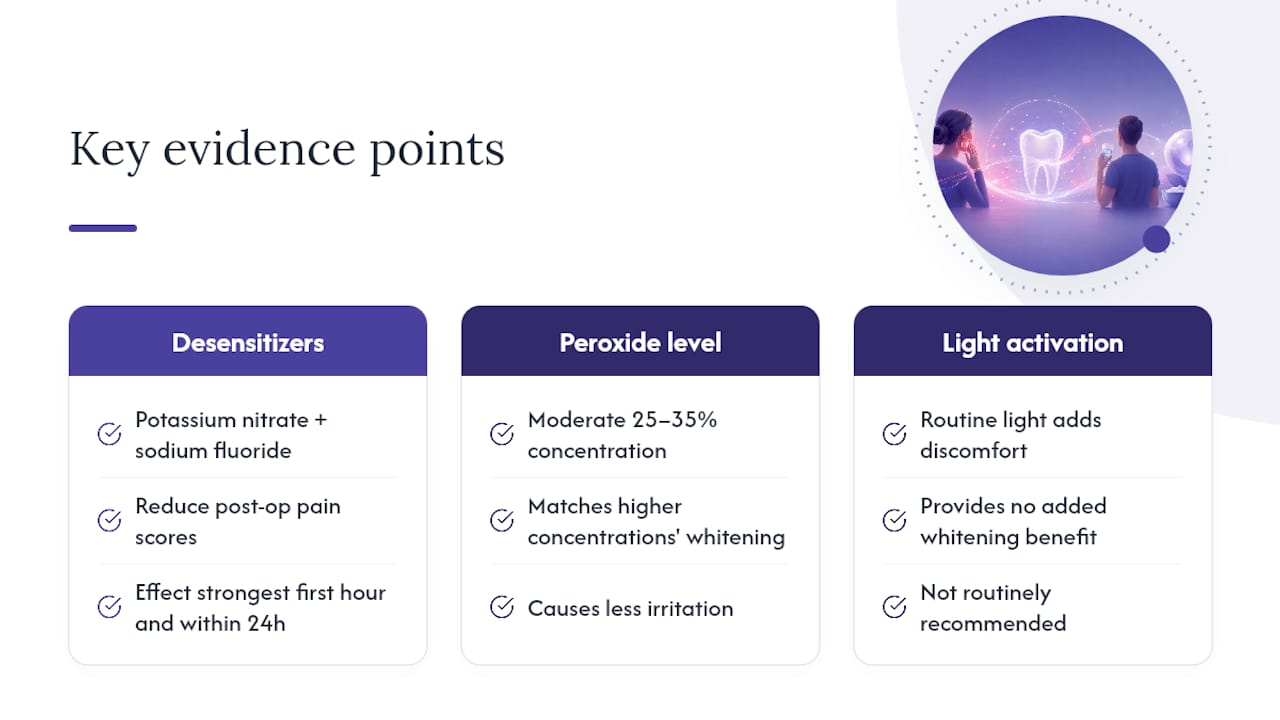
Trials reviewed in a systematic review of desensitizing agents consistently showed reduced post-operative pain scores when potassium nitrate and sodium fluoride were applied before or during in-office bleaching, with effects most pronounced in the first hour and within 24 hours of treatment.
A separate umbrella review of bleaching protocols reinforces the concentration point: moderate peroxide levels around 25% to 35% match higher concentrations on whitening results while causing less irritation, and routine light activation typically adds discomfort without adding benefit.
The whitening products are made from FDA-approved materials and produced under the supervision of experienced orthodontic technicians, following a direct-to-consumer model that skips the markup of a traditional dental office visit without skipping the clinical standards behind the products.
What Most Whitening Advice Gets Backwards
Most whitening guidance treats sensitivity as a cost of doing business, something you simply grit your teeth through for whiter results. That framing is backwards. The clinical evidence points to a different conclusion: sensitivity isn’t the unavoidable price of a bright smile, it’s usually a sign the protocol was set too aggressively.
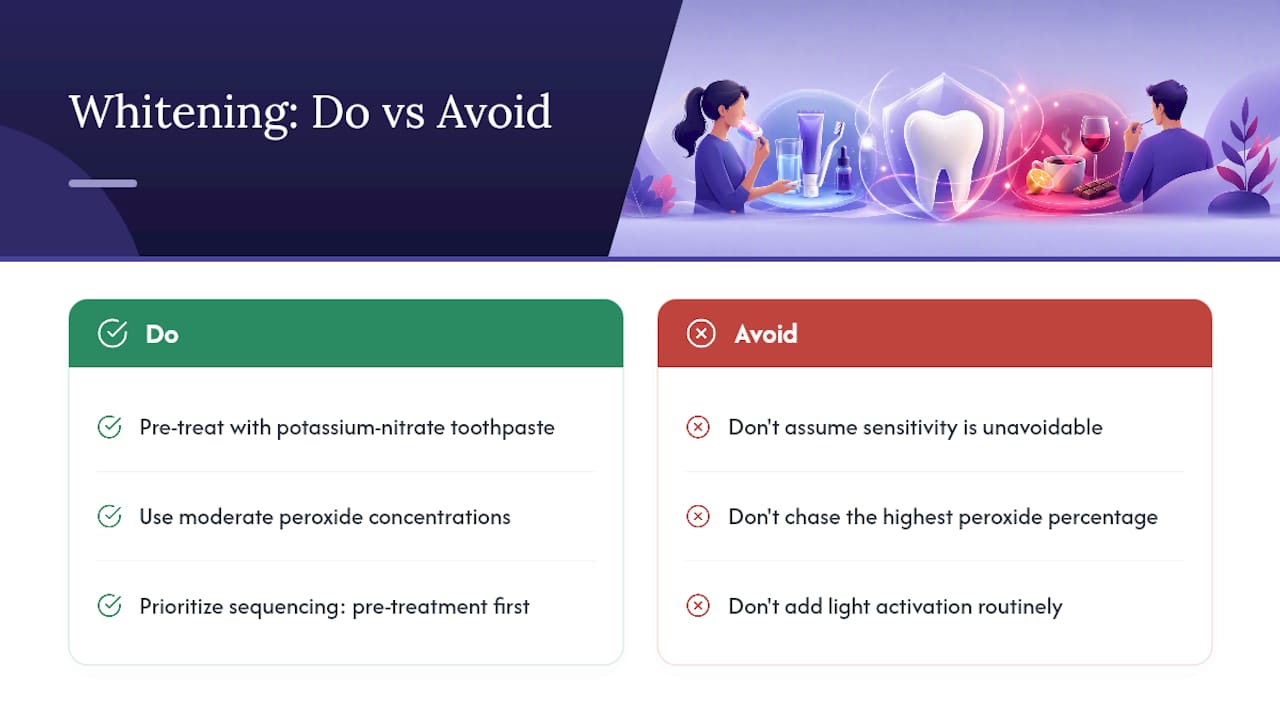
Chasing the highest peroxide percentage or adding light activation because it sounds more powerful is where a lot of unnecessary discomfort comes from. The research is fairly blunt about it: moderate concentrations get you nearly the same result with meaningfully less pain, and light activation frequently adds irritation without adding whiteness.
If there’s one thing worth prioritizing above all else, it’s sequencing. Pre-treat with a potassium-nitrate toothpaste before you start, not after your teeth are already aching. That single habit, backed by the clinical literature on desensitizing agents, does more to prevent a bad experience than any amount of troubleshooting after the fact.
— Clear
ClearRetain’s Whitening Lineup for Sensitivity-Conscious Whitening
If you’re planning ahead to avoid the sting rather than treating it after the fact, the whitening products are built around exactly the moderate, controlled approach the research supports.
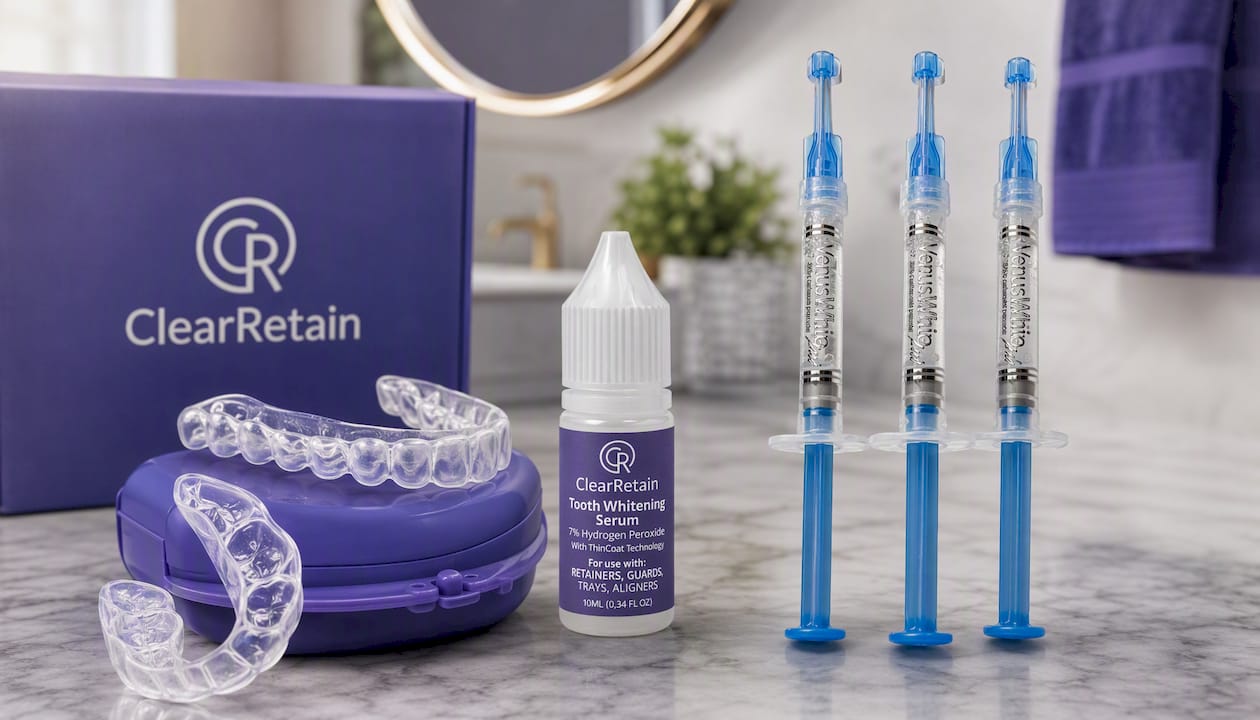
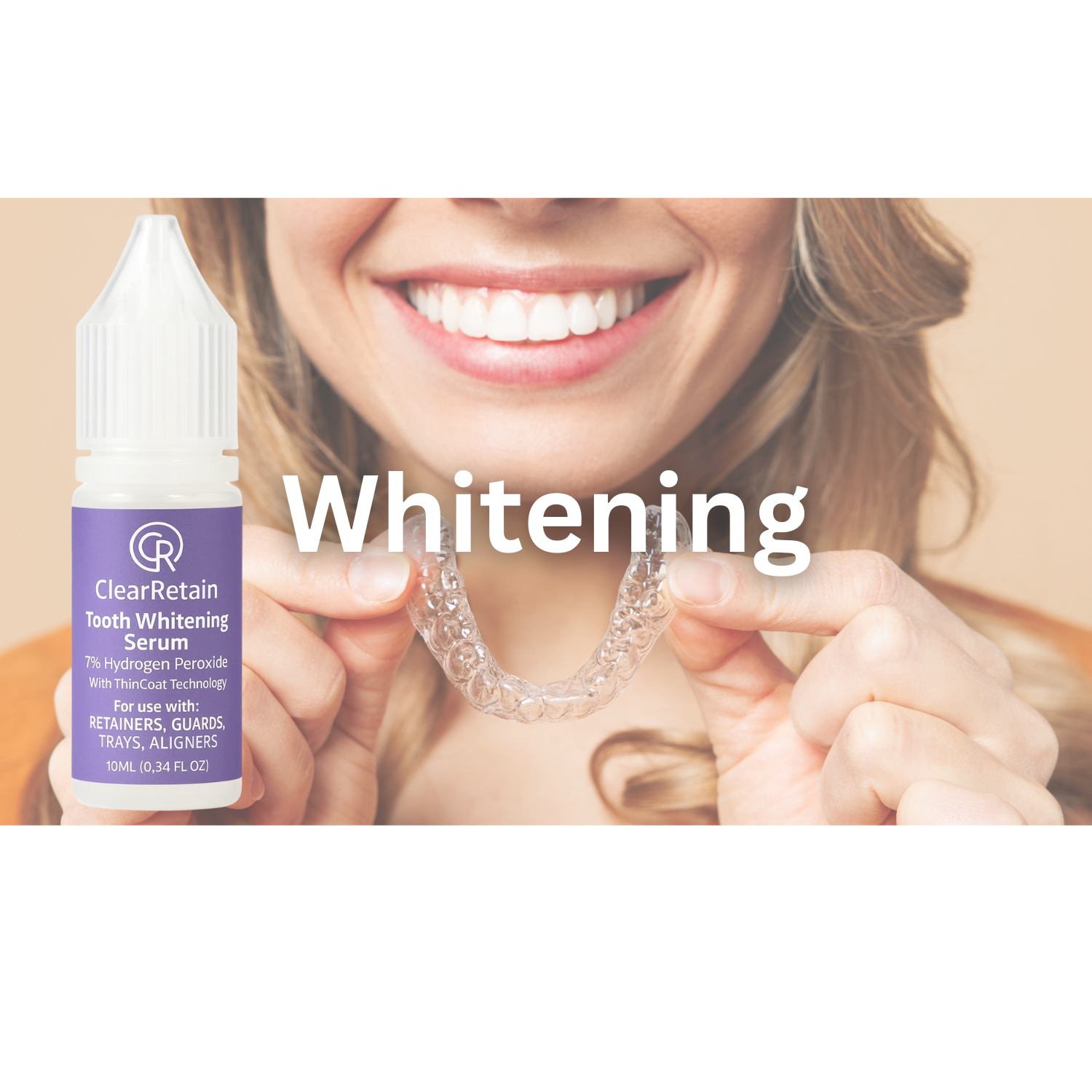
The tooth whitening serum is designed to pair with your existing clear retainer or night guard, letting you whiten during hours you’re already wearing your appliance instead of adding a separate tray to your routine. For a dedicated whitening setup, the custom-fit bleaching trays hold gel evenly against your teeth, which matters because trays that fit loosely let gel spread onto gum tissue and raise irritation. Once you’ve found a comfortable routine, the whitening gel 3-pack restocks your trays without requiring a new impression or a new order from scratch.
Whichever product you start with, follow the same prevention steps covered above: pre-treat with desensitizing toothpaste, follow the included directions on timing and frequency, and pause if sensitivity turns sharp rather than mild. If you have restorations or a history of sensitive teeth, a quick dental exam before your first session is worth the ten minutes. Ready to start? Order your bleaching trays or grab a whitening serum and follow the self-impression kit instructions to get your custom fit underway.
This article is general information, not a substitute for advice from a qualified doctor. Consult a qualified healthcare professional about your own circumstances before acting on anything here.
Sources
- Whitening | American Dental Association
- Post-Operative Sensitivity and Color Change Due to In-Office Bleaching With the Prior Use of Different Desensitizing Agents: A Systematic Review
- Umbrella review: in-office tooth bleaching protocols and effects on efficacy and sensitivity
- Systematic review: desensitizing agents and post-operative sensitivity after in-office bleaching