


Cut Night Guard Cost Per Night: Compare $15 OTC vs $600 Dentist
Expect to pay in the range of low tens of dollars for an over-the-counter or boil-and-bite guard, substantially less than a direct-to-consumer custom guard made from a self-taken impression, with dentist-fitted guards generally costing the most. Light, occasional grinders usually do fine with a boil-and-bite. Most moderate-to-heavy grinders get the best value from a DTC custom guard. Complex bites, TMJ symptoms, or unusual wear patterns call for a dentist. Dental insurance, HSA, or FSA funds often knock down whichever price you land on.
TL;DR:
- Boil-and-bite guards last three to six months, making them less cost-effective over time for moderate to heavy grinders.
- Custom DTC guards cost less than dentist-made options but still require impression kits and lab work, with adjustments sometimes incurring extra fees.
- Insurance often covers about 50% of the cost if classified as an occlusal guard, but coverage limits may restrict frequency to every three to five years.
- Heavier grinders benefit most from durable, hard acrylic or premium guards, which can last several years and justify higher initial costs.
- The true cost depends on user severity, guard durability, and lifespan, with long-term savings often favoring higher-quality, longer-lasting custom options.
Table of Contents
- How Much Does A Night Guard Cost By Type?
- What Actually Drives The Price Difference?
- Will Insurance Or HSA/FSA Cover A Night Guard?
- Is A Cheaper Night Guard Actually Cheaper Long-Term?
- How Do You Choose The Right Night Guard For Your Budget?
- How Does ClearRetain Deliver Custom Quality At Lower Prices?
- What Actually Matters When You’re Pricing A Night Guard
- Get A Custom Night Guard Without The Dentist Markup
- Sources
How Much Does A Night Guard Cost By Type?
Night guard pricing splits into three clear tiers, and the gap between the bottom and top of the range is bigger than most people expect. A generic drugstore mouthpiece and a dentist-fabricated hard acrylic guard aren’t really competing products. They’re solving different problems at different price points.
Here’s how the main options stack up:
| Guard type | Typical price | Best for |
|---|---|---|
| Store-bought/stock | low tens of dollars | Very light, occasional grinding |
| Boil-and-bite | low tens of dollars | Mild grinding, short-term use |
| DTC custom (impression kit) | mid to high hundreds (less than dentist) | Moderate to heavy grinding |
| Dentist-made custom | higher hundreds to around a thousand | Complex bites, TMJ concerns |
| Specialty devices (NTI, MAD) | usually more expensive | Prescribed cases, sleep apnea overlap |
The American Association of Orthodontists notes that mouthguard costs vary widely because customization and intended use change the equation so much. A guard meant to survive nightly clenching from a heavy grinder needs thicker, denser material than one worn a couple of nights a week. Specialty devices like NTI splints or mandibular advancement devices (MADs) sit above standard custom guards because they target specific conditions, sometimes including a sleep apnea link, and usually require a prescription or clinical sign off.
If you’re shopping by price alone, the boil-and-bite category looks like the obvious winner. It rarely is, once you factor in how fast those guards wear out.
What Actually Drives The Price Difference?
Three things separate a $15 mouthpiece from a $600 dental appliance: the material, who takes the impression, and who fabricates the guard.
Material is the most visible factor. Soft guards flex more and cost less but wear through faster under heavy grinding. Hard acrylic holds up longer and costs more to mill. Dual-laminate guards, soft on the inside and hard on the outside, split the difference and tend to sit in the middle of the price range.
Fabrication is where the real cost gap opens up. A boil-and-bite guard skips a lab entirely. You mold it yourself in hot water. A custom guard, by contrast, requires:
- An impression or digital scan of your teeth
- Lab time to pour a model and mill or press the guard
- Clinician chair time for delivery and fit checks (dentist route only)
- Possible follow-up adjustments if the bite feels off
That third item is the hidden cost driver. A dental lab can produce a night guard for a DTC company and a dental office for roughly the same lab fee. The dentist route costs more mainly because of office overhead, chair time, and the visits wrapped around it, not because the plastic itself is different.
Watch for add-on charges too: some DTC companies charge separately for the impression kit, shipping, or a second kit if your first impression comes out wrong.
Pro Tip: Ask any provider, dentist or online, whether adjustments after delivery are included in the price. A guard that needs reshaping for a proper bite shouldn’t cost extra just because the first fit was off.
Will Insurance Or HSA/FSA Cover A Night Guard?
Dental insurers typically file night guards under CDT codes D9944 and D9945, classifying them as occlusal guards rather than cosmetic devices. That classification matters because it determines whether your plan treats the guard as a covered “major service,” which commonly gets reimbursed at around 50% after your deductible.
Before you buy, run through this:
- Call your insurer and ask about predetermination. Many plans will pre-approve a guard and tell you the exact allowed amount before you spend anything.
- Check frequency limits. Most policies only cover one guard every three to five years, so time your purchase if you’re near a renewal.
- Use HSA or FSA funds regardless of insurance status. Night guards typically qualify as an eligible medical expense, which effectively gives you a discount equal to your tax rate.
- Ask whether TMJ or sleep apnea applies. If a guard treats a jaw disorder or sleep-breathing issue, medical insurance sometimes covers it, separate from your dental plan.
Our guide to insurance coverage for night guards walks through how to phrase the call to your insurer so you get a straight answer instead of a runaround.
Is A Cheaper Night Guard Actually Cheaper Long-Term?
Upfront price tells you almost nothing about what a night guard actually costs you over a year of use. Cost-per-night does.
A boil-and-bite guard typically lasts three to six months under regular grinding before it flattens out or cracks. A DTC custom guard usually holds up one to three years. A dentist-made hard guard can last three to five years or longer with proper care, according to cost breakdowns from TMJ-focused dental resources.
Over time, replacing inexpensive boil-and-bite guards regularly can add up to a comparable or higher total cost than investing in a direct-to-consumer custom guard, which typically lasts longer and offers better protection.
- Light grinders: OTC or boil-and-bite often wins on cost-per-night since replacement is infrequent.
- Moderate grinders: DTC custom usually wins, since durability outpaces the price gap.
- Heavy grinders: dentist-made or premium hard guards often justify their price through drastically longer lifespan and better bite stability.
Check our breakdown on how long night guards last before assuming a bargain price is actually the cheaper option.
How Do You Choose The Right Night Guard For Your Budget?
Match the guard to your grinding severity, not just your budget. Here’s the decision path that keeps most people from overspending or underprotecting:
- Light, occasional grinder (you notice jaw tightness once in a while): start with an OTC or boil-and-bite guard.
- Moderate to heavy grinder (you or a partner hear grinding, wake with a sore jaw, or see visible tooth wear): go with a DTC custom guard.
- Complex bite issues, TMJ pain, or suspected sleep apnea overlap: see a dentist before buying anything, since a poorly fitted guard can worsen jaw alignment.
Before ordering from anyone, ask about materials, lab origin, return policy, and whether adjustments are included. Walk away from any provider that’s vague about where the guard is fabricated or refuses returns outright, since that usually signals a mass-produced product dressed up as custom. Our custom versus boil-and-bite comparison breaks down the fit differences in more detail.
Pro Tip: If you’re not sure how severe your grinding is, ask a partner or roommate. Grinding sound at night is often the clearest early signal, well before you notice jaw soreness yourself.
How Does ClearRetain Deliver Custom Quality At Lower Prices?
The direct-to-consumer model cuts out the office visit that inflates dentist pricing. You skip the chair time and overhead, but the guard still comes from the same kind of lab process. ClearRetain’s guards are FDA-approved and fabricated under the supervision of experienced orthodontic technicians, not stamped out on an assembly line.
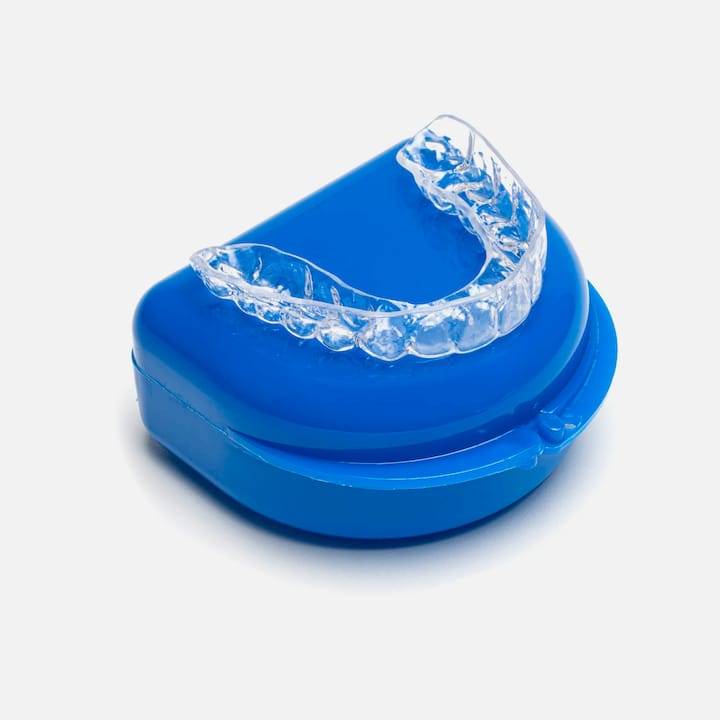
The lineup covers different needs: the Hard Night Guard for standard moderate-to-heavy grinding, the Premium Hard Night Guard for maximum durability under heavy nightly wear, and the Lower Retainer-Night Guard for anyone who wants retention and grinding protection combined in one appliance. Ordering starts with a self-impression kit, moves to lab fabrication, and ends with delivery to your door. Reorders are simple too, since your digital impression stays on file.
What Actually Matters When You’re Pricing A Night Guard
Most advice on this topic focuses on the wrong number. People fixate on the sticker price of a guard instead of asking what it costs them per night of actual use, and that’s how a lot of grinders end up buying the same $25 boil-and-bite guard four times a year while telling themselves they’re saving money.
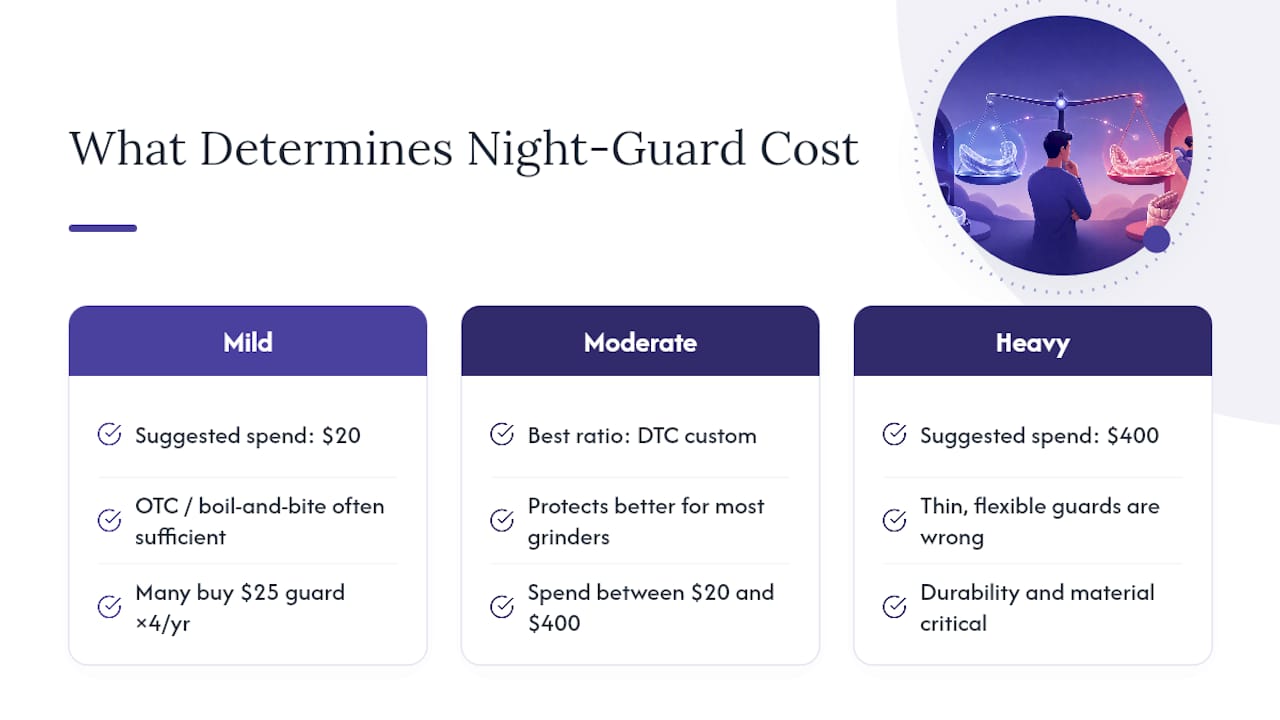
The NCBI review on occlusal appliances makes a point that gets lost in most consumer guides: durability and materials vary enormously across devices, and that variability has real consequences for how well a guard actually protects your teeth over time, not just how long it lasts before falling apart. A thin, flexible guard that survives six months isn’t automatically a bad deal. But if you’re a heavy grinder, it’s the wrong tool, regardless of price.
Here’s what we’d tell a friend: figure out your grinding severity honestly before you shop. That single decision determines whether you should spend $20 or $400, far more than any comparison shopping will. Once you know that, the DTC custom lane offers the best ratio of protection to price for the majority of moderate grinders, and it’s not close.
— Clear
Get A Custom Night Guard Without The Dentist Markup
ClearRetain gives you the same lab-fabricated guard a dentist would order, without paying for the office visit, the chair time, or the markup that comes with it. If you’re a heavy grinder, the Hard Night Guard is built to handle nightly wear without flattening out in a few months. Want the longest-lasting option available? The Premium Hard Night Guard uses a denser material spec designed for years of heavy use. If you also need a retainer, the Lower Retainer-Night Guard combines both in one appliance so you’re not paying for two separate products.
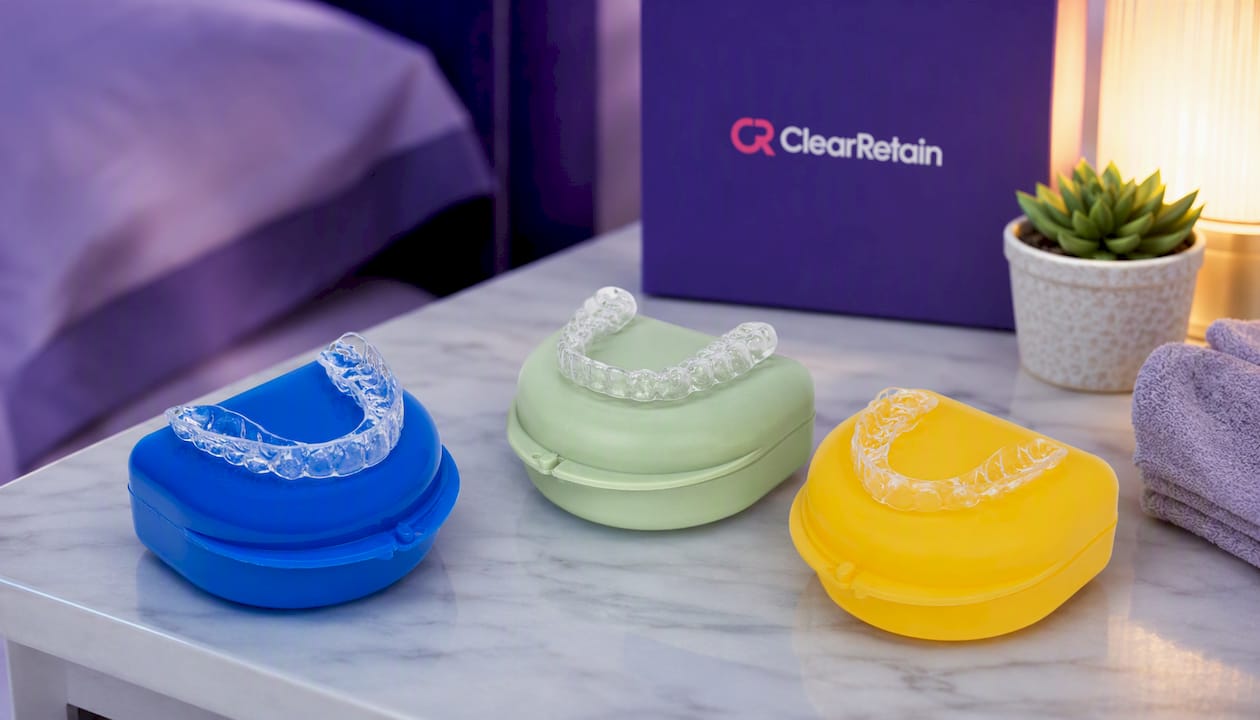
Ordering starts with a self-impression kit that ships to your door with clear instructions, and most people complete it in under 15 minutes. Your impression goes to a lab supervised by experienced orthodontic technicians, using FDA-approved materials, and your guard ships back typically within a couple of weeks. If sleep quality is part of what’s driving you to fix your grinding, this guide on sleep and oral health is worth a read too. Browse the full night guard lineup and order the one that matches how hard you actually grind.
This article is general information, not a substitute for advice from a qualified doctor. Consult a qualified healthcare professional about your own circumstances before acting on anything here.
Sources
- NCBI — review article on occlusal appliances (bruxism)
- Night Guard Cost Guide 2026: Custom, Dentist, Boil-and-Bite Compared - TMJ Mouthguard
- Does Dental Insurance Cover Night Guards: Plans & Costs - LegalClarity