


How Long Do Night Guards Last Before Replacement?
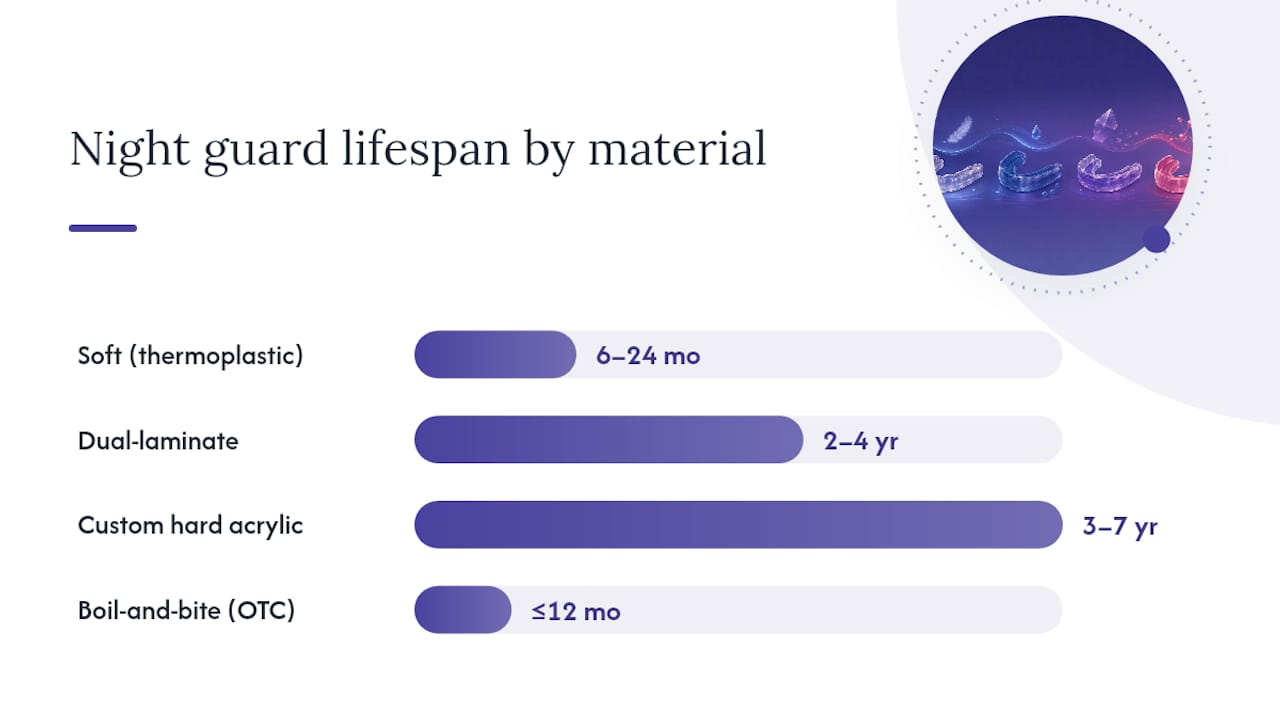
Most night guards last 6 months to 7 years, and the exact number depends almost entirely on what they’re made of and how hard you grind. Soft thermoplastic guards wear out in 6 to 24 months. Dual-laminate guards typically hold up 2 to 4 years. Custom hard acrylic guards, the most durable option, run 3 to 7 years. Boil-and-bite drugstore versions generally need replacement within about a year or less.
Grinding severity and how well you care for the guard push you toward the short or long end of these ranges. A heavy grinder can wear through a soft guard in a matter of weeks.
The real rule that matters more than any of these numbers: replace your guard when it stops protecting your teeth or stops fitting properly, not just because a certain number of months passed.
- Soft/thermoplastic: 6 to 24 months
- Dual-laminate: 2 to 4 years
- Custom hard acrylic: 3 to 7 years
- OTC boil-and-bite: 6 to 12 months
Key Takeaways
Night guard lifespan runs from 6 months to 7 years depending on material, and replacement should follow fit and function, not a fixed date.
| Point | Details |
|---|---|
| Lifespan varies by material | Soft guards last 6 to 24 months; dual-laminate 2 to 4 years; hard acrylic 3 to 7 years. |
| Grinding severity shortens timelines | Heavy grinders often need replacement every 6 to 12 months regardless of material. |
| Watch for functional signs | Cracks, thinning, poor fit, or new jaw pain mean replace now, not later. |
| Daily care extends life | A rinse-and-clean routine plus proper storage measurably slows wear. |
| ClearRetain offers custom options | The Hard Night Guard, Upper Retainer-Night Guard, and Lower Retainer-Night Guard cover different grinding levels with fast, affordable reordering. |
Table of Contents
- How Long Does Each Type of Night Guard Really Last?
- What Makes a Night Guard Wear Out Faster?
- What Are the Signs You Need a New Night Guard?
- How Do You Extend the Life of a Night Guard?
- When Should You See a Dentist About Your Night Guard?
- How ClearRetain’s Night Guards Fit Into the Replacement Picture
- A Publisher’s Take on Cost, Fit, and Protection
- Ready to Replace Your Night Guard? Here’s the Faster, Cheaper Path
- Frequently Asked Questions
- Sources
How Long Does Each Type of Night Guard Really Last?
The material determines the ceiling on your guard’s lifespan, but your grinding pattern determines whether you hit that ceiling or fall way short of it. Here’s what to actually expect from each category.
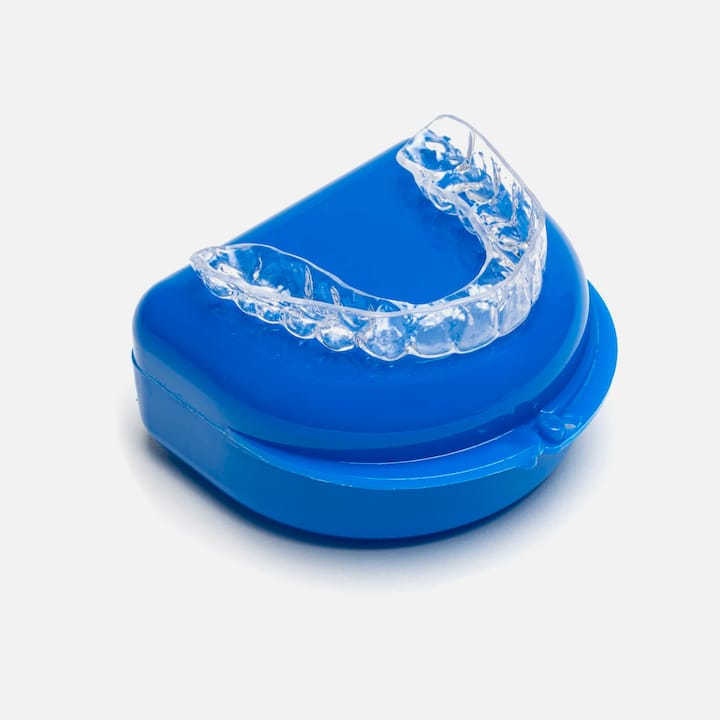
Custom hard acrylic guards are the workhorses. Made from rigid dental-grade plastic and molded to your exact bite, these typically last 3 to 7 years with proper care. They resist puncture and compression better than any other type, which is why dentists usually recommend them for moderate-to-heavy grinders.
Dual-laminate guards split the difference: a hard outer shell with a softer inner lining for comfort. Expect 2 to 4 years out of these, though the soft lining tends to break down faster than the hard shell, which can leave the guard feeling loose even while the exterior looks fine.
Soft or thermoplastic guards trade durability for comfort and lower upfront cost. They typically last 6 months to 2 years. Heavy grinders chew through these faster because the material is designed to flex, not resist.
OTC boil-and-bite guards last 6 to 12 months at best, and that’s assuming a decent initial fit. Since they’re never truly custom-molded, they tend to loosen, shift, or crack sooner.
A few groups burn through guards faster than average: heavy bruxers, children (whose mouths are still changing shape), and orthodontic patients whose bite shifts during treatment. Clinics note that heavy grinders often need a fresh guard every 6 to 12 months, regardless of material. Fit and function matter more than the calendar.
What Makes a Night Guard Wear Out Faster?
Four factors decide whether your guard hits the high end or the low end of its expected range, and grinding force is the biggest one. Someone with mild clenching might get years out of a soft guard; someone with severe nighttime bruxism can crack the same guard in a season. Frequency matters too. Grinding every single night accelerates wear far more than occasional clenching during stressful weeks.
Material properties explain the rest. Hard acrylic resists the compressive forces of grinding because it doesn’t flex much, while soft linings absorb impact by giving way, which is exactly what makes them wear thin over time. You’re trading longevity for comfort no matter which you pick.
Poor fit accelerates everything. A guard that’s slightly loose lets your teeth shift and grind against unsupported areas, concentrating force on weak spots instead of distributing it evenly. Heat exposure, chewing on the guard out of habit, and sloppy storage (tossed loose in a bag, left in a hot car) all shorten lifespan independent of how much you actually grind.
- Heavy, nightly grinding wears guards faster than occasional clenching
- Hard acrylic resists force better than soft or laminate materials
- A loose fit concentrates wear on specific spots instead of spreading it out
- Heat and rough handling degrade materials even with light grinding
Pro Tip: Bring your guard to every dental checkup, even if nothing feels wrong. Dentists can spot early thinning or bite shifts you won’t notice on your own until the guard actually fails.
What Are the Signs You Need a New Night Guard?
Waiting until your guard visibly falls apart is a mistake, because protection can fail well before the guard looks ruined. Here’s what actually signals it’s time.
- Visible cracks or fractures, even hairline ones, compromise the guard’s ability to absorb grinding force evenly.
- Thinning spots, especially over your molars, mean the material has worn down exactly where you need protection most.
- Missing chunks or rough, chewed edges create sharp areas that can irritate gums and cheeks.
- A loose or shifting fit means the guard no longer stays put overnight, which defeats the purpose entirely.
- A bite that feels different, like your teeth meet unevenly with the guard in, often signals warping or wear.
- New or worsening jaw pain, headaches, or tooth sensitivity can mean the guard is no longer absorbing grinding force the way it should.
Common replacement triggers documented by dental practices line up almost exactly: cracks, distortion, thinning, rough edges, and poor fit. None of these require the guard to be broken in half before you act. A thinned-out spot you can barely see under a light is often the first sign of failure, not the last.
How Do You Extend the Life of a Night Guard?
Good daily habits routinely add months, sometimes years, to a guard’s usable life, and the whole routine takes less than two minutes a day.
Every morning, rinse your guard with cool or lukewarm water and brush it gently with a soft toothbrush and mild soap or a non-abrasive cleanser. Skip hot water entirely. It warps thermoplastic materials, which ruins fit permanently.
Once a week, soak the guard in a diluted denture-cleaning solution or an antimicrobial rinse made for dental appliances. Avoid bleach and abrasive toothpaste. Both break down plastic surfaces faster than normal wear would.
For storage, use a ventilated case, not a sealed plastic bag, and keep it away from direct heat, sunlight, and pets (dogs especially love chewing these). Never wrap a guard in a tissue. It gets thrown away more often than you’d think.
- Rinse and brush gently every morning; skip hot water
- Soak weekly in a denture solution or antimicrobial rinse
- Store in a ventilated case away from heat and sunlight
- Avoid chewing on the guard between uses
Pro Tip: Keep a dedicated case in your travel bag. Guards tossed loose into luggage crack far more often than ones that stay protected in transit.
For a full breakdown of daily and weekly cleaning steps, Clearretain’s guide on mouth guard cleaning routines walks through the specifics.
When Should You See a Dentist About Your Night Guard?
Book an appointment as soon as you notice a fit change, worsening jaw or tooth symptoms, or any visible damage. Don’t wait for your next scheduled cleaning if something feels off tonight.
At that visit, your dentist will check the fit, evaluate how your bite meets the guard, and look for uneven wear patterns that hint at shifting teeth or a growing grinding problem. Depending on what they find, they might adjust the guard, reline a worn section, recommend full replacement, or discuss whether an underlying issue like TMJ dysfunction is driving the wear.
Insurance coverage for night guards varies widely by plan, so bring the guard itself and any paperwork from your original purchase to the appointment.
- Schedule a visit for fit changes, new pain, or visible cracks
- Expect a bite and wear-pattern check, not just a visual glance
- Bring the guard and your purchase documentation to the appointment
How ClearRetain’s Night Guards Fit Into the Replacement Picture
Clearretain builds three night guard options around exactly the wear patterns described above. The Upper Retainer-Night Guard suits moderate grinders who want reliable nightly protection. The Hard Night Guard targets heavy grinders who need maximum durability. The Lower Retainer-Night Guard covers people who need lower-arch coverage instead.
Every guard is made from FDA-approved materials under the supervision of experienced orthodontic technicians, and stored digital impressions make reordering fast once yours wears out. If your bite has changed significantly or you have a complex TMJ issue, an in-office dentist-made guard with hands-on adjustment may still be the better call.
A Publisher’s Take on Cost, Fit, and Protection
Fit beats everything else on this list. A guard that fits loosely fails faster and protects less, no matter how expensive the material. Get the fit right first, care for it consistently, and treat replacement as routine maintenance rather than a financial gut punch.
Ready to Replace Your Night Guard? Here’s the Faster, Cheaper Path
A worn night guard doesn’t announce itself with a dramatic crack most of the time. It just quietly stops doing its job, and by the time you notice jaw pain again, the damage to your teeth may already be underway. Clearretain built its ordering process around that reality: a self-impression kit you complete at home, no office visit, and pricing that runs a fraction of what traditional orthodontic practices charge for the same custom fit.
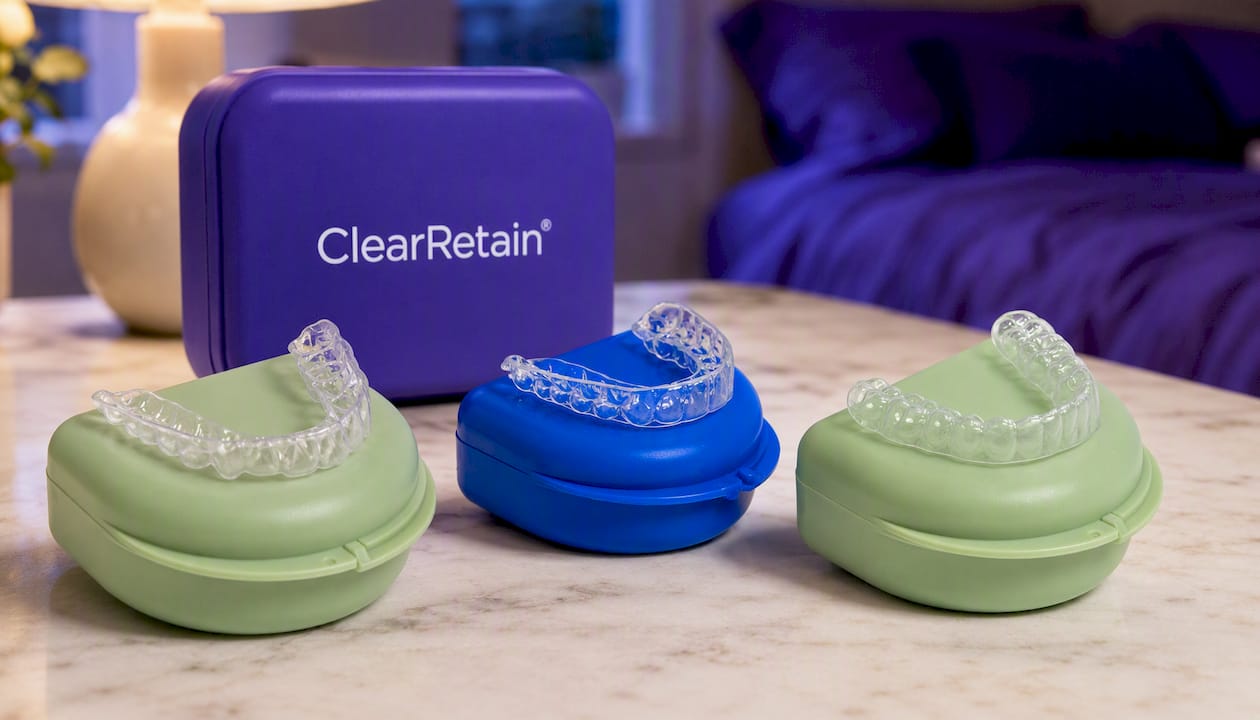
If you’re a heavy grinder, the Hard Night Guard gives you the acrylic durability that holds up 3 to 7 years with proper care. Moderate grinders do well with the Upper Retainer-Night Guard, and if you need lower-arch coverage specifically, the Lower Retainer-Night Guard is built for that. Once you’ve ordered, Clearretain keeps your digital impressions on file, so reordering when your next guard wears out takes minutes, not another full impression appointment. Browse the full night guard lineup and order your self-impression kit today.
Frequently Asked Questions
How long do night guards last on average? Most night guards last between 6 months and 7 years. Soft guards fall on the short end, custom hard acrylic guards on the long end, with grinding severity and care habits determining where you land within that range.
Do night guards wear out even with light use? Yes. Even light grinders eventually see thinning or a loosening fit as materials break down over time, though it happens far more slowly than for heavy grinders.
How often should you replace a night guard for heavy grinding? Heavy grinders often need a new guard every 6 to 12 months, even with a durable hard acrylic material, because the grinding force accelerates wear regardless of guard type.
Is it worth getting a custom night guard instead of a store-bought one? For most people who grind regularly, yes. Custom guards last years longer than boil-and-bite versions and fit more precisely, which improves both comfort and protection.
Can a cracked night guard still protect your teeth? Not reliably. A crack changes how force distributes across the guard, which can leave certain teeth unprotected even though the guard still technically sits in your mouth.
This article is general information, not a substitute for advice from a qualified doctor. Consult a qualified healthcare professional about your own circumstances before acting on anything here.
Sources
- Mouth Guards: Types & Purpose — Cleveland Clinic
- Nightguard cleaning & care guide — Skyline Dental Care
- When to Replace a Mouthguard or Night Guard — Minnetonka Dental