


Does Dental Insurance Cover Night Guards? What to Know
Dental insurance sometimes covers a custom night guard, but rarely in full and almost never automatically. Coverage depends on your specific plan, and the key condition is medical necessity: your dentist must document bruxism, excessive wear, or fractured restorations. Without that documentation, most carriers deny the claim outright.
Quick cost snapshot before you call your insurer:
- OTC boil-and-bite guards: $10–$50 retail, typically not covered
- Online custom guards (direct-to-consumer): $100–$200, may qualify for HSA/FSA reimbursement
- Dentist-fabricated custom guards: $300–$1,000 before insurance; when covered, plans often pay roughly 50% after your deductible
- Your immediate next step: Ask your dentist’s office to request a predetermination using CDT codes D9944, D9945, or D9946 before any fabrication begins. That one step prevents most billing surprises.
As Humana’s consumer guidance notes, many dental plans do not automatically pay for night guards, and coverage varies enough that checking your specific plan is not optional — it’s the only way to know.
Key Takeaways
Most dental plans cover a custom night guard partially when bruxism is documented and the correct CDT code is submitted with a predetermination, but your specific plan document is the only definitive answer.
| Point | Details |
|---|---|
| Verify codes and benefits first | Call your insurer and confirm D9944–D9946 coverage, coinsurance rate, and remaining annual maximum before fabrication. |
| Predetermination prevents surprises | Submit a predetermination with a dentist narrative and clinical photos before the guard is made. |
| Document wear thoroughly | Intraoral photos showing wear facets and a dentist narrative linking findings to functional harm are the strongest appeal evidence. |
| HSA/FSA covers what insurance won’t | Night guards qualify as eligible medical expenses; pre-tax dollars reduce your net cost even when your dental plan excludes the claim. |
| Clearretain cuts the baseline cost | A Clearretain custom guard using FDA-approved materials costs well under $200, with a receipt you can submit for HSA/FSA reimbursement. |
Table of Contents
- Does insurance cover a night guard? Typical costs and real scenarios
- Which types of night guards does insurance actually cover?
- How insurers decide whether your night guard claim gets approved
- The billing codes and documentation that make or break a claim
- How to get your night guard covered, step by step
- How often will insurance pay for a replacement guard?
- HSA, FSA, and other ways to pay when insurance falls short
- Practical tactics to lower your out-of-pocket cost
- What insurer policies and clinical research actually say
- A note on how Clearretain fits into this picture
- Clearretain custom night guards: a lower-cost path worth considering
- Sources
Does insurance cover a night guard? Typical costs and real scenarios
Understanding the price gap between insured and uninsured situations helps you decide whether to pursue a claim or use an HSA/FSA instead.
Three scenarios show how the math plays out in practice.
Scenario 1 — Uninsured shopper. You pay full retail: $400–$700 for a dentist-made hard guard. An online custom guard from a direct-to-consumer provider cuts that to $100–$200 with no insurance needed.
You pay $300 out of pocket. If your annual maximum is nearly exhausted, you pay more.
Scenario 3 — Medical crossover (sleep apnea). A physician diagnoses obstructive sleep apnea and prescribes a mandibular advancement device. Your medical insurer may cover it under durable medical equipment (DME) benefits, which have a different deductible and coinsurance structure than dental plans. The documentation burden is higher, but the benefit ceiling is often larger.
Which types of night guards does insurance actually cover?
Not all guards are equal in an insurer’s eyes. The type you choose directly affects whether a claim gets approved.
- OTC and boil-and-bite guards ($10–$50): No clinical impressions, no dentist involvement. Insurers almost universally exclude these because they lack the custom fit required for a covered appliance.
- Soft custom guards (D9945): Fabricated from a dentist’s impression. Covered by some plans for mild bruxism; less durable than hard guards and sometimes excluded under policies that only cover hard appliances.
- Hard acrylic custom guards (D9944): The most commonly covered type. Requires clinical impressions and lab fabrication. This is the guard Mayo Clinic’s bruxism overview describes as standard clinical management for enamel wear and fractures.
- Dual-laminate guards (D9946): Hard outer shell, soft inner lining. Covered by some plans; check whether your plan’s policy language includes D9946 specifically.
- Mandibular advancement devices (MADs): Used for sleep apnea or TMJ. May be billed through medical insurance under DME codes rather than dental CDT codes. Requires a physician prescription and often a sleep study.
Pro Tip: If you plan to file an insurance claim, get your dentist to take impressions and document clinical findings before any guard is fabricated. A guard made without a clinical record is almost impossible to get covered after the fact.
How insurers decide whether your night guard claim gets approved
The decision comes down to four factors: medical necessity, benefit category, frequency limits, and network status.
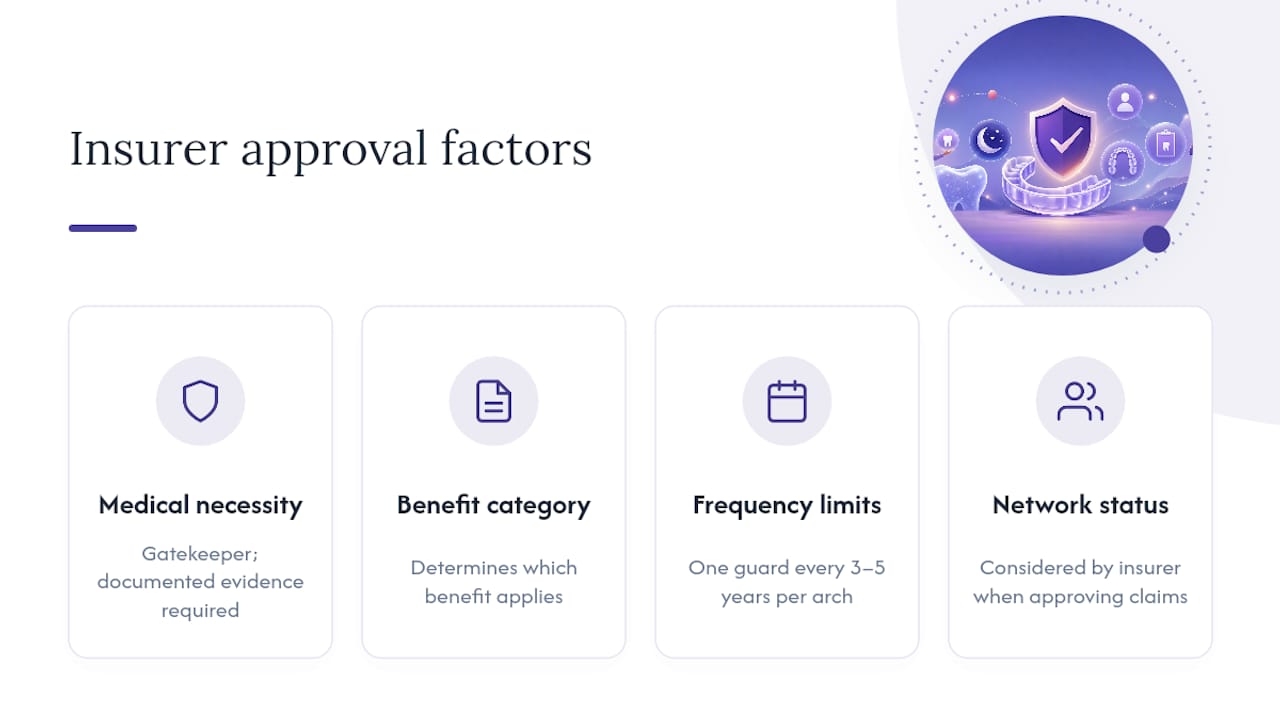
Medical necessity is the gatekeeper. Insurers want documented evidence that a guard is clinically required, not elective. Mayo Clinic’s bruxism resource and peer-reviewed clinical literature both support the use of occlusal guards to prevent enamel wear, tooth fractures, and restoration damage. Those same clinical findings are what your dentist’s narrative should reference.
Benefit category matters more than most patients realize.
Frequency limits are common. Most carriers allow one guard every 3–5 years per arch. Some plans specify per-condition limits rather than calendar-year windows.
A critical nuance: many insurer policies explicitly state that occlusal guards protect dentition but are not a treatment for temporomandibular disorders (TMD). That distinction matters because it affects which benefit category applies and whether a TMJ diagnosis helps or complicates your claim. The UnitedHealthcare policy makes this separation explicit.
Predetermination is your best tool. Submit a predetermination request before fabrication, and the insurer will tell you in writing what they expect to pay. It’s not a guarantee, but it surfaces exclusions and documentation gaps before you’re holding a $600 bill.
The billing codes and documentation that make or break a claim
Your dentist’s office controls the billing, but knowing these codes yourself means you can catch errors before they become denials.
CDT codes for occlusal guards:
- D9944 — Hard occlusal guard, by report. The most commonly billed code for a full-arch hard acrylic guard.
- D9945 — Soft occlusal guard, by report. Used for soft custom appliances.
- D9946 — Dual-laminate occlusal guard, by report. Hard exterior, soft interior.
When medical billing applies: If bruxism is linked to a TMJ diagnosis (ICD-10 code M26.60–M26.69) or obstructive sleep apnea (G47.33), a medical claim may be possible. HCPCS code E0486 covers oral devices for sleep apnea under some medical plans. This pathway requires a physician’s prescription, often a sleep study, and sometimes a letter of medical necessity (LOMN) from both a dentist and a physician.
Documentation checklist for a strong submission:
- Dentist’s narrative describing symptoms, clinical findings (wear facets, fractured restorations), and functional impact
- Intraoral photos or X-rays showing wear patterns
- Impressions or digital scans used for fabrication
- Copy of any prior guard if requesting a replacement
- Sleep study or specialist referral when billing through medical insurance
- Predetermination approval letter (attach to the claim)
Missing a narrative of medical necessity is the single most common reason for an auto-denial. A billing code alone, without supporting documentation, rarely clears a major-service claim.
How to get your night guard covered, step by step
Step 1 — Verify your benefits. Call the member services number on your insurance card and ask specifically: Is D9944 a covered benefit? What is the coinsurance rate? Has my deductible been met? What is my remaining annual maximum?
Step 2 — Get a diagnosis on record. Your dentist must document bruxism or a related condition in your chart. Clinical signs include wear facets, enamel loss, and fractured restorations. The ADA’s MouthHealthy resource recommends consulting your dentist if you suspect grinding, precisely because that clinical visit creates the record insurers require.
Step 3 — Request predetermination before fabrication. Have your dentist submit a predetermination with the proposed CDT code, a narrative, and supporting documentation. Allow 2–4 weeks for a response.
Step 4 — Confirm in-network lab use. Some plans require that the lab fabricating the guard be in-network or that the dentist use a plan-approved lab. An out-of-network lab can reduce your benefit or void it entirely.
Step 5 — Submit the claim and track your EOB. After the guard is delivered, the dentist submits the claim. Review your Explanation of Benefits (EOB) carefully. Confirm the code billed matches what was predetermined.
If your claim is denied: Request the denial reason in writing. Common reasons include “not a covered benefit,” “lacks medical necessity,” and “frequency limit not met.” For a medical-necessity denial, your appeal should include annotated intraoral photos showing wear facets, a dentist narrative linking clinical signs to functional harm, and a timeline of symptoms. Most plans allow 180 days to file an appeal. If the internal appeal fails, you can request an external review through your state insurance commissioner.
Pro Tip: When bruxism is connected to a sleep apnea diagnosis, coordinate dental and medical claims simultaneously. Submit the dental claim under D9944 and the medical claim under E0486 with the physician’s prescription attached. Dual-pathway claims require more paperwork but can significantly reduce your net cost.
How often will insurance pay for a replacement guard?
Most dental plans cover one occlusal guard per arch every 3–5 years. The exact window varies by carrier and plan tier. Some plans reset the clock from the date of delivery; others use a calendar-year window.
Getting an early replacement approved requires documentation:
- Broken appliance: Photos of the fractured guard plus a dentist note confirming it cannot be repaired
- Significant dentition change: Major restorations, extractions, or orthodontic treatment that altered the arch enough to make the existing guard non-functional
- Safety concern: A guard that has worn through to a sharp edge or poses a soft-tissue risk
Pro Tip: Proper care extends a guard’s life and delays the replacement clock. The UCI Student Health Center’s nightguard care instructions recommend rinsing with cool water after each use, brushing gently with a soft toothbrush, and storing in a ventilated case. A well-maintained hard acrylic guard can last 3–5 years, which aligns with most plan frequency limits.
For an expedited replacement, submit an expedited predetermination with photos and a dentist narrative. Most carriers process expedited requests within 72 hours when a safety concern is documented.
HSA, FSA, and other ways to pay when insurance falls short
Night guards generally qualify as eligible medical expenses under both Health Savings Accounts (HSA) and Flexible Spending Accounts (FSA). The IRS classifies dental appliances used to treat a diagnosed condition as medical expenses, which means you pay with pre-tax dollars regardless of whether your dental plan covers the guard.
Key differences between HSA and FSA:
- FSA: Use-it-or-lose-it by plan year (some plans allow a small rollover). If your FSA balance is expiring, timing a night guard purchase before year-end is a straightforward way to avoid losing those funds.
- HSA: Rolls over indefinitely. Paired with a high-deductible health plan (HDHP), an HSA lets you accumulate funds and use them when the expense arises.
The tax advantage is real.
Other payment options:
- Office financing: Many dental practices offer in-house payment plans or work with third-party financing for larger appliances.
- Discount dental plans: Not insurance, but membership-based plans (like those offered through some employers or associations) can reduce the dentist’s fee for a guard by 10–30%.
- Direct-to-consumer custom guards: A Clearretain custom night guard costs a fraction of a dentist-office guard, uses FDA-approved materials, and ships with a self-impression kit. You can submit the receipt to your insurer or HSA/FSA administrator for potential reimbursement.
The sleep-oral health connection is worth noting here: if your bruxism is tied to disrupted sleep, the relationship between sleep quality and oral health may support a medical crossover claim, since sleep apnea documentation can open the medical insurance pathway described earlier.
Practical tactics to lower your out-of-pocket cost
- Request predetermination in writing before any guard is made. This surfaces coverage gaps before you’re committed to the cost.
- Time your purchase to your plan year. If your deductible is already met late in the year, your net cost drops. If your annual maximum resets January 1, waiting until after the reset may not help if the deductible resets too.
- Use FSA funds before they expire. A night guard is one of the cleaner FSA purchases: clear medical purpose, easy documentation.
- Ask for an in-network lab. Some dentists use out-of-network labs by default. Requesting an in-network lab can keep the allowed amount higher.
- Request a superbill. If you pay out of pocket (for a DTC guard or an out-of-network provider), ask for an itemized superbill with the CDT code and diagnosis code. Submit it to your insurer for potential reimbursement or to your HSA/FSA administrator.
- Compare DTC custom guards. A Clearretain hard night guard runs well under $200 with FDA-approved materials and a self-impression kit. That’s often less than your out-of-pocket share after insurance on a dentist-made guard.
- Bundle with whitening products. If you’re already ordering a custom guard, products like teeth bleaching trays or whitening gel can be added to the same order, since the tray fits over the same impressions.
What insurer policies and clinical research actually say
Two major insurer clinical policies are worth reading directly if you’re preparing a predetermination or appeal.
UnitedHealthcare’s occlusal guard policy lists bruxism and protection of natural teeth and restorations as covered indications, references CDT codes D9944–D9946, and explicitly states that coverage is determined by the member’s specific benefit plan. Critically, the policy notes that occlusal guards are intended to protect dentition, not to treat temporomandibular disorders. That language matters: a claim framed around TMD treatment rather than tooth protection may be categorized differently or denied.
Anthem Blue Cross’s occlusal guard policy similarly describes indications, lists CDT codes, and outlines exclusions and frequency limits. Anthem stresses that plan documents govern coverage, meaning the clinical policy sets the floor but your specific plan document may be more restrictive.
On the clinical side, peer-reviewed literature on bruxism management supports the use of protective appliances to prevent tooth wear, which is the same rationale insurers cite when approving claims. Annotated intraoral photos showing wear facets and a dentist narrative linking those findings to functional harm are the documentation formats that align most directly with what both insurers and clinical reviewers look for.
| Insurer | Covered Indications | Key Exclusions | Frequency Limit |
|---|---|---|---|
| UnitedHealthcare | Bruxism, protection of natural teeth/restorations | TMD treatment, OTC appliances | Per member benefit plan |
| Anthem Blue Cross | Bruxism, documented wear | Cosmetic use, OTC appliances | Per plan document |
A note on how Clearretain fits into this picture
Clearretain’s direct-to-consumer model cuts the cost significantly by removing the office markup. The guards use FDA-approved materials and are made under orthodontic technician supervision, so the clinical quality is there for the documentation you’d need to submit a reimbursement claim.
That said, always verify your plan’s specific benefits before assuming any guard will be covered. A predetermination request, a dentist’s diagnosis on record, and the correct CDT code are non-negotiable steps whether you order through a dental office or use a DTC provider. This article provides general information about insurance coverage; it is not a substitute for reviewing your actual plan documents or consulting a licensed dental or insurance professional.
Clearretain custom night guards: a lower-cost path worth considering
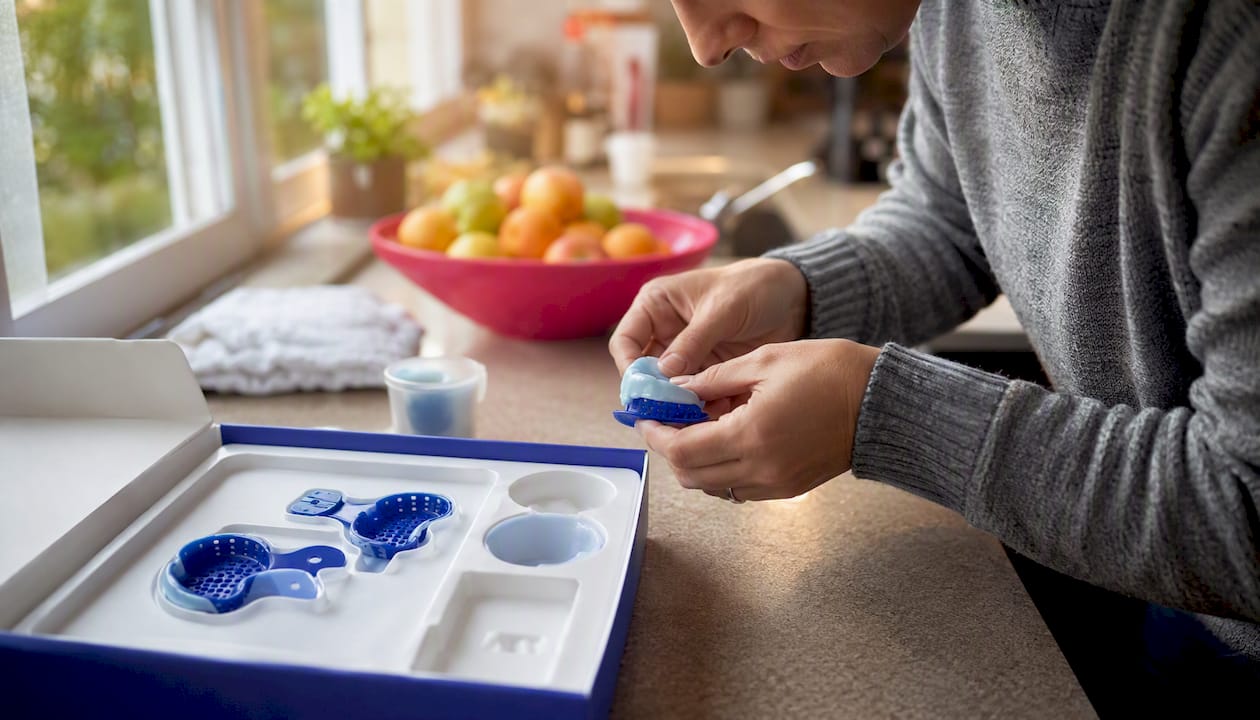
If your dental plan covers little or nothing, or if you’ve already hit your annual maximum, a Clearretain custom night guard is worth a serious look. The price is a fraction of what a dental office charges, the materials are FDA-approved, and the self-impression kit ships directly to you with clear instructions.
Order online, take your impressions at home, and Clearretain fabricates a custom-fit guard under orthodontic technician supervision. When you receive your guard, request an itemized receipt with the applicable CDT code and your diagnosis information from your dentist. Submit that as a superbill to your dental insurer or HSA/FSA administrator for potential reimbursement. Clearretain also stores your digital impressions, so reordering when your plan’s frequency window resets is straightforward.
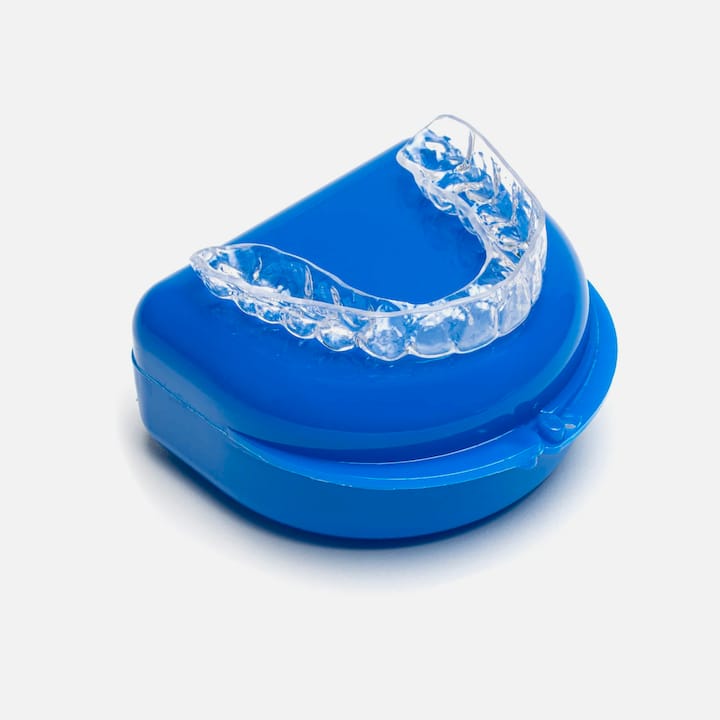
The premium hard night guard is the closest DTC equivalent to the dentist-office D9944 appliance. If you also need a retainer, the upper and lower retainers set bundles both arches at a lower combined cost. Pair either with a tooth whitening serum designed for use with clear trays and guards to get more from the same impression.
Sources
- Occlusal Guards (UnitedHealthcare provider policy)
- Bruxism - Symptoms and causes (Mayo Clinic)
- PMC article on bruxism and dental management
- Does Dental Insurance Cover Night Guards? | Humana
Save or print the insurer policy PDFs before filing a predetermination or appeal. Policies update periodically, and having the version in effect at the time of your claim strengthens your documentation.