



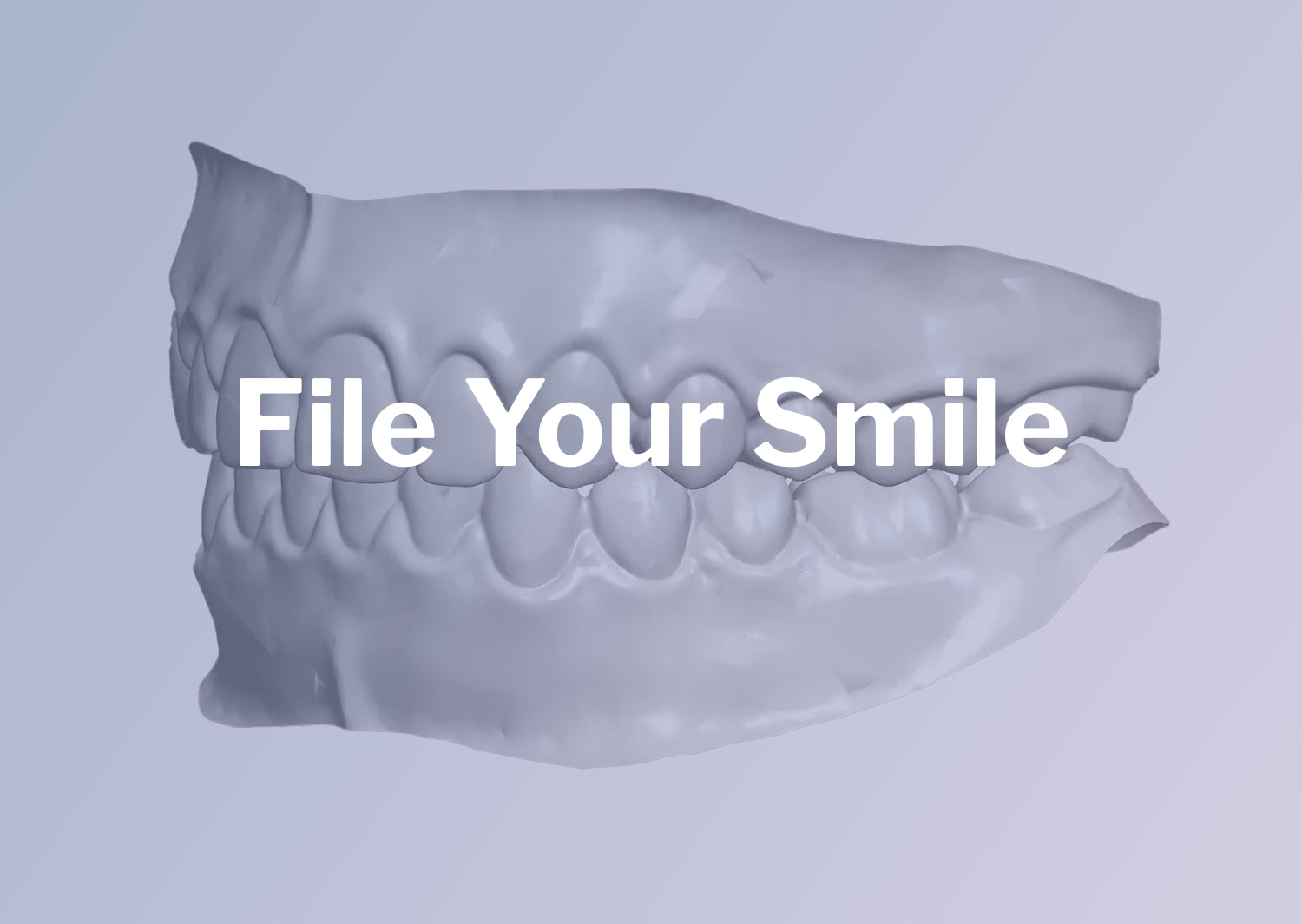
24–72 Hour Risk: What Parents Do When a Child's Retainer Is Lost
Search the obvious spots first (backpack, lunch tray, napkin in the trash), and don’t try to fix a broken or lost retainer at home. If you find it, clean it gently and check that it still seats without forcing. If it’s gone, call the orthodontist or order a verified replacement the same day, and have your child wear an old backup retainer in the meantime if one still fits comfortably.
TL;DR:
- Replacing a lost retainer quickly is crucial because teeth can begin shifting within 24 to 72 hours, especially in recent orthodontic cases.
- Online mail-order replacements are faster and cheaper when no shift or damage has occurred, but urgent issues like cracks or tooth movement require an in-office assessment.
- Keeping a backup retainer, preferably a slightly loose one from previous treatment, can prevent urgent situations while waiting for a new device.
- Costs vary: online clear retainers are generally less expensive than wire-and-acrylic types, and insurance rarely covers replacement, so HSAs or FSAs are often used.
- Proper retainer habits, such as using a labeled case and designated storage spots, significantly reduce the risk of losing retainers in the first place.
Table of Contents
- Lost Kids Retainer: What to Do in the First Minutes and Hours
- How Fast Do Teeth Actually Move Without a Retainer?
- Orthodontist Visit or Online Replacement: Which Is Faster?
- What Does a Retainer Replacement Actually Cost?
- Simple Habits That Stop This From Happening Again
- When Does a Lost or Broken Retainer Need Urgent Care?
- Why ClearRetain Works When Teeth Haven’t Shifted
- Found the Retainer After Ordering a Replacement? Here’s What to Do
- Why Most Retainer Advice Skips the Real Decision Parents Face
- Order the Right Replacement Without Guessing
- Sources
Lost Kids Retainer: What to Do in the First Minutes and Hours
Panic wastes time you don’t have. Work through this list before anything else:
- Check the last three places it was used: bathroom counter, lunch bag or backpack pocket, and any napkin near the trash can. Retainers get wrapped in tissue and tossed out constantly.
- If you find it, clean it in lukewarm water with a soft toothbrush and a drop of mild soap. Skip hot water, it warps clear plastic, and skip bleach or mouthwash soaks, which can degrade the material.
- Test the fit gently. If it seats without pressure, your child can wear it. If it feels tight or won’t seat at all, stop and don’t force it.
- Never glue, tape, or bend a broken retainer back into shape. DIY repairs cause injury and often ruin any chance of a clean professional fix.
- Call the orthodontist’s office with specifics ready: when treatment ended, whether they have a digital scan on file, and whether your child has noticed any tightness or shifting.
Having that information ready on the call often shortens the whole process, since staff can check records before you even hang up.
How Fast Do Teeth Actually Move Without a Retainer?
Faster than most parents assume. Orthodontic tissue doesn’t wait around.
- 24 to 72 hours: microscopic movement begins at the cellular level, not yet visible.
- Within about one to two weeks, visible shifting may begin, especially in kids who finished braces recently.
- After one to three months, noticeable relapse can occur, sometimes requiring more than a simple retainer to correct.
Teeth can begin shifting within 24 to 72 hours of going without a retainer, and the risk climbs faster in kids whose braces came off within the last year. Younger patients and those with rotated teeth (rather than simple spacing) tend to relapse quicker too.
If a retainer suddenly feels tight, that’s not a defect. It’s an early signal that teeth have already started drifting, and it means the situation has moved from routine to urgent.
Orthodontist Visit or Online Replacement: Which Is Faster?
Both routes work, but they solve different problems.
An orthodontist visit makes sense when your child has a bonded retainer with a detached wire, has noticed a visible gap or shift, or reports pain when trying to seat the old retainer. A partially detached bonded retainer can create uneven forces on teeth and needs in-office correction, not a mail-order fix. The upside of going in person is that orthodontists can often build a new retainer straight from digital records or old impressions already on file, skipping a new molding appointment entirely.
Mail-order replacement is the better move when nothing has shifted and the old retainer simply vanished or cracked from age. Here’s roughly how it works:
- You order a self-impression kit, which walks your child through molding their own teeth at home.
- You mail the impressions back, or upload a scan if the orthodontist already has one on file.
- Services like this tend to be faster and cheaper than a full in-office replacement when there’s no need for a clinical exam.
In the gap between losing a retainer and getting a new one, an older retainer that still fits without pressure, or even a sports mouthguard for a night or two, beats wearing nothing at all.
Pro Tip: If your child has an older retainer from a previous phase of treatment, keep it. Even a slightly loose fit is better than zero retention while you wait for a replacement.
What Does a Retainer Replacement Actually Cost?
Prices swing based on retainer type and whether you go through a clinic or order online.
- Clear Essix-style retainers: generally the least expensive option per arch, and the type most online services specialize in.
- Hawley retainers (the wire-and-acrylic kind): typically cost more due to lab time and metal components.
- Bonded (fixed) retainers: require an office visit to repair or replace, since they’re cemented to the teeth.
Online replacements tend to run cheaper than in-office ones, and having a digital scan already on file, whether at the orthodontist or through a mail-order provider, cuts out an extra visit entirely. Dental insurance rarely covers retainer replacement, since it’s usually classified as a lost personal item rather than active treatment. FSA and HSA funds, on the other hand, typically qualify and are the most common way families cover the cost. Cheaper isn’t always the better call, though: replacing a retainer promptly costs far less than paying for retreatment later if you delay and teeth actually shift.
Simple Habits That Stop This From Happening Again
Most lost retainers aren’t lost so much as thrown away by accident.
- Buy a bright, labeled case. A neon orange case with your child’s name on it doesn’t blend in with a lunch tray or get mistaken for trash.
- Never let a retainer touch a napkin. A huge share of lost retainers get wrapped in tissue and swept into the garbage at school cafeterias.
- Designate one spot at home (a specific bathroom shelf, a bedside drawer) and one spot at school (a backpack pocket, never a pocket in pants or a jacket).
- Ask the orthodontist for a backup retainer at the end of active treatment. Many clinics will make two sets for a modest add on cost.
- Pair the routine with toothbrushing. Case goes in the same spot every night, right next to the toothbrush, so it becomes automatic instead of optional.
Pro Tip: Set a recurring phone reminder for the first two weeks after getting a new retainer. That’s the window when new habits either stick or fall apart.
Our guide to cleaning a retainer properly covers safe products if the case habit slips and it needs a deeper clean anyway.
When Does a Lost or Broken Retainer Need Urgent Care?
Some situations call for a phone call to the orthodontist before you order anything online.
- Physical damage: cracks, sharp broken edges, or a bent or snapped wire.
- Fit problems: the retainer won’t seat fully, or seating it causes real pain rather than mild pressure.
- Visible tooth changes: new gaps, a rotated tooth, or a bite that feels different when biting down.
- Bonded retainer issues: any wire that’s detached from one or more teeth, since it can pull unevenly and worsen alignment.
If any of these apply, skip the online order and get eyes on the situation first. Our rundown of signs a retainer needs replacement breaks these down further, and a clinical evaluation for aligners or retention issues is worth booking if you’re unsure whether the shift is minor or significant.
Why ClearRetain Works When Teeth Haven’t Shifted
If your child’s teeth are still sitting where they should, a lost retainer doesn’t automatically mean a trip to the orthodontist’s chair. Clearretain builds Upper Teeth Retainers and Lower Teeth Retainers from FDA-approved materials under the supervision of experienced orthodontic technicians, using the same self-impression process labs have relied on for years.
Here’s how to think about the choice:
- Order online when nothing has shifted, the old retainer was simply misplaced or worn out, and you want a faster, lower-cost option than an in-office refit.
- See the orthodontist when there’s pain, visible movement, or a bonded retainer problem, none of which a new removable retainer alone will fix.
- Expect a turnaround measured in days, not the weeks that a full lab order through a clinic can sometimes take, since the impression kit skips a chair appointment entirely.
Our rundown of retainer types can help you match the right product to your child’s situation before you order.
Found the Retainer After Ordering a Replacement? Here’s What to Do
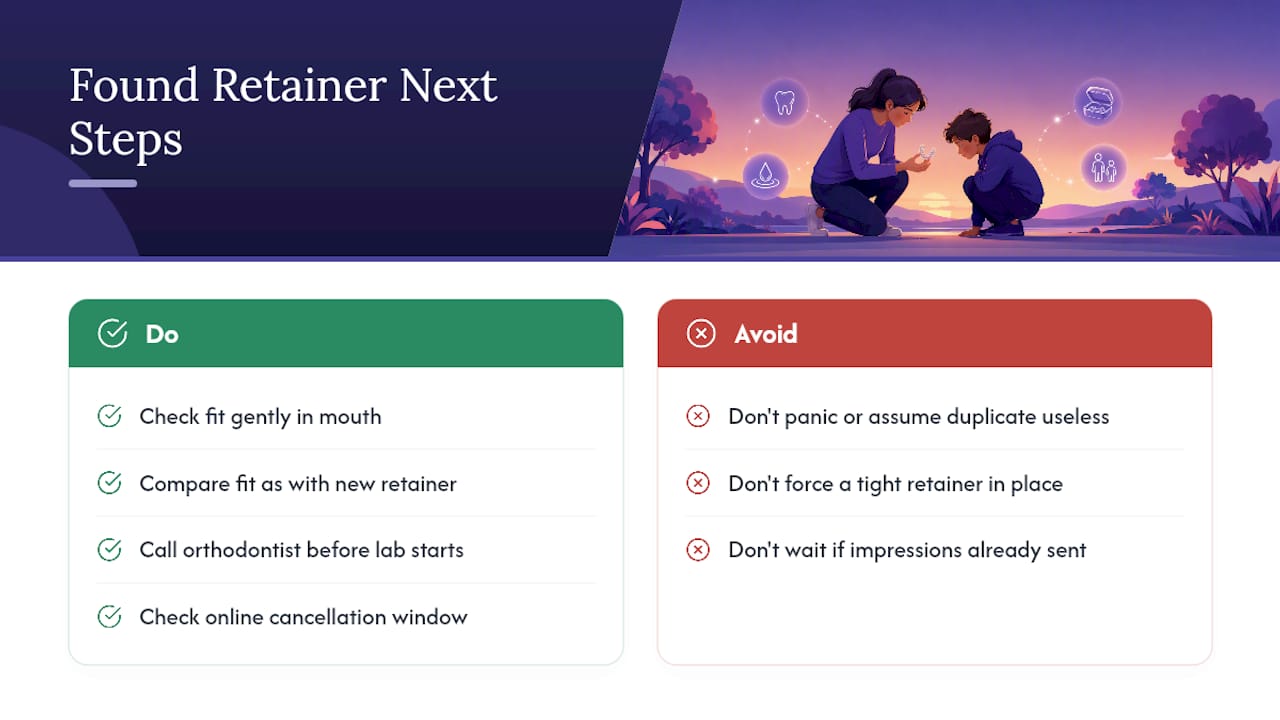
It happens more often than you’d think: your child locates the missing retainer in a jacket pocket two days after you’ve already placed an order. Don’t panic, and don’t assume you’re stuck with a duplicate you’ll never use.
First, check the fit of the retainer you found. If it seats cleanly with no pressure or gaps, and your child hasn’t gone more than a week or two without wearing anything, it’s likely still usable. Compare it against your child’s mouth the same way you would test a brand new one, gentle pressure, no forcing, checking for any tightness that suggests movement already happened.
If you ordered directly from an orthodontist’s office, call before the lab starts fabrication. Most offices can pause or cancel an order that hasn’t entered production yet, though some may still charge a partial fee if impressions were already sent to a lab.
If you ordered online through a service like Clearretain, check the order confirmation for cancellation windows. Orders that haven’t shipped or entered production are usually cancellable with a quick email or account update. Once a custom retainer has been fabricated to your child’s impressions, though, it typically can’t be resold or refunded the way an off-the-shelf item can, since it’s molded to one specific mouth.
Either way, keep the found retainer as a backup even if you decide to let the replacement order finish. Two working retainers means one less emergency the next time a lunch tray gets bussed too quickly.
Why Most Retainer Advice Skips the Real Decision Parents Face
The internet’s default advice on a missing retainer is technically correct and practically useless: “call your orthodontist.” That’s fine if you can get an appointment this week and your insurance situation is simple. For a lot of families, it means a two-week wait and a bill insurance won’t touch.
The better framework is the one this article actually walks through: assess urgency first, then pick a channel. A kid with a bonded retainer wire poking loose needs a chair, not a mailing kit. A kid who simply misplaced a removable retainer three days ago and has zero pain or visible shift is a perfectly reasonable candidate for an online replacement.
What gets underestimated is how much the FSA/HSA payment angle changes the math for families. Once you know insurance likely won’t cover it anyway, the cost gap between “wait weeks for an office slot” and “order online this week” starts to look less like corner cutting and more like the obvious choice. Prioritize the urgency check first, always. The channel you pick after that should follow from what you actually find, not from habit.
— Clear
Order the Right Replacement Without Guessing
Clearretain replaces the cost and wait of a traditional orthodontic office visit with a self-impression kit you complete at home and a turnaround measured in days.

Match the product to what your child actually lost. A missing upper retainer means the Upper Teeth Retainer; a missing lower one means the Lower Teeth Retainer. If only one tooth needs retention, the Upper Partial Denture Retainer covers that single-tooth case without the cost of a full arch. Ordering is straightforward: request a self-impression kit or reorder using stored digital impressions if your child has ordered from Clearretain before, then ship it back and let the lab handle fabrication under FDA-approved materials and technician supervision.
Pause and call a clinician instead if you notice visible relapse, a painful fit, or a bonded retainer wire that’s come loose. Those aren’t self-impression situations. For everything else, browse Clearretain’s retainer and night guard options and get a replacement moving today.
Sources
- Lost retainer or orthodontic relapse (Varallo Orthodontics)
- How to replace a lost retainer (Dr. Dixon Orthodontics)
- Lost retainer: what to do (Becker Orthopa)