

HSA Reimbursement for a Night Guard in the U.S.: 4 Documents You Need
Yes, a night guard is HSA or FSA eligible when your dentist confirms you need it to treat bruxism or TMJ disorder, not just to protect your teeth in general. The catch isn’t the guard itself. It’s the paperwork. Plan administrators often want a prescription or letter of medical necessity before they’ll release funds, and even then, the merchant’s payment coding can trip up your card at checkout.
TL;DR:
- A night guard is eligible for HSA or FSA reimbursement only if prescribed for diagnosed conditions like bruxism or TMJ, not for general protection.
- Documents such as a prescription or letter of medical necessity, an itemized receipt, and clinical notes are essential to justify the claim, regardless of purchase location.
- Over-the-counter night guards are suitable for mild cases but require proper documentation if claimed as medical expenses, while custom guards better serve diagnosed TMJ or severe grinding cases.
- Card declines at checkout often result from merchant coding errors; paying with a different method and submitting a manual claim typically resolves reimbursement issues.
- Filing with dental insurance or HSA/FSA depends on coverage details, but double-dipping is prohibited, so coordinate claims carefully and keep all documentation for at least three years.
Table of Contents
- HSA for Night Guard: How the IRS Actually Defines Eligibility
- What Documents Do You Need for Reimbursement?
- OTC vs. Custom Night Guards: Which One Should You Buy?
- What to Do When Your HSA Card Gets Declined
- Should You File With Dental Insurance or Just Use Your HSA?
- How to Avoid a Denied Claim
- Clearretain’s Perspective on Claim-Ready Documentation
- Pick the Night Guard That Fits Your Diagnosis
- Where to Verify the Rules Yourself
- Sources
HSA for Night Guard: How the IRS Actually Defines Eligibility
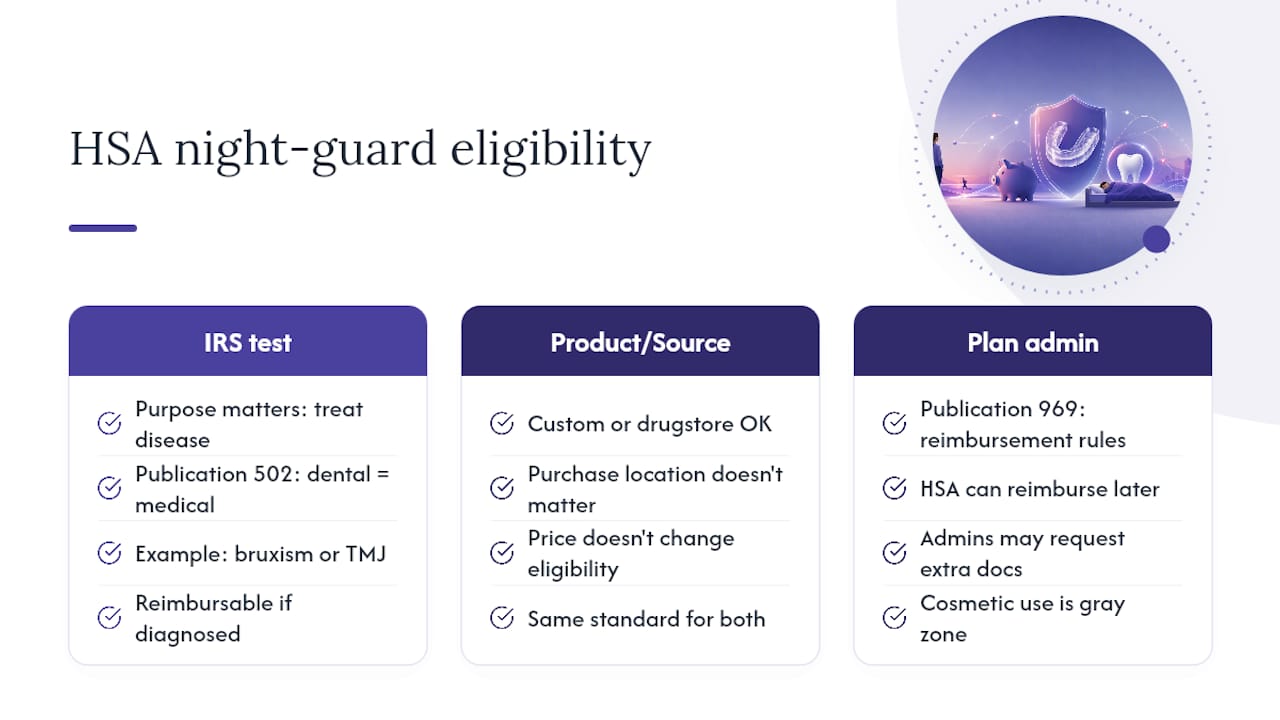
The IRS doesn’t publish a line item that says “night guards are covered.” Instead, Publication 502 defines qualified medical expenses as costs for the diagnosis, treatment, or mitigation of disease, and dental treatment falls squarely inside that definition. A night guard clears that bar when it treats a diagnosed condition, most often bruxism (teeth grinding) or temporomandibular joint disorder, commonly called TMJ.
That’s the whole test: purpose, not product. A custom guard from a dental lab and a $25 guard from the drugstore aisle qualify under the exact same standard if both are used to manage a diagnosed condition. Where you bought it doesn’t change your eligibility. What changes it is whether you can show a legitimate medical reason for using it.
Publication 969 covers the account side of this. It explains how HSAs reimburse qualified expenses under federal tax rules, and it’s worth knowing that your HSA can reimburse an expense incurred any time after the account was opened, even if you pay out of pocket first and file for reimbursement weeks later.
Here’s where people get tripped up. A night guard bought purely to protect a chipped tooth from cosmetic wear, with no diagnosed grinding or joint issue behind it, sits in a gray zone. Preventive comfort items without a medical diagnosis are far harder to justify if your plan administrator ever asks questions. Benefits platforms like HSAstore list night mouth guards as generally eligible, but they’re also upfront that individual plan administrators can layer on extra documentation requirements beyond what the IRS technically requires.
What Documents Do You Need for Reimbursement?
Every third-party administrator (TPA) runs its own claims desk a little differently, but the paperwork they ask for tends to follow the same pattern. Build your file before you buy, not after a claim gets rejected.
- A prescription or letter of medical necessity (LMN) from your dentist, stating the diagnosis (bruxism or TMJ) and recommending a night guard as treatment.
- An itemized receipt showing the date of purchase, the item description, the amount paid, and the seller’s name and contact information.
- Clinical notes or a superbill, if your dentist’s office provides one, tying the diagnosis to the treatment plan.
- Your claim form, filled out per your specific administrator’s process, with the LMN and receipt attached.
A solid letter of medical necessity should name the diagnosis, state that a night guard is recommended treatment (not an elective add-on), and include the dentist’s name, license information, and signature.
You have two ways to pay. Use your HSA or FSA card directly at checkout when the merchant is coded correctly, or pay another way and file a manual reimbursement claim afterward. When in doubt, keep the receipt either way.
Pro Tip: Ask your dentist’s office to keep a digital copy of your LMN on file. If your plan ever asks for it again during an audit or appeal, you won’t be stuck calling around trying to track it down two years later.
Hold onto every document for at least three years. That’s the IRS’s general recommendation for substantiating medical deductions and reimbursements, and it’s also the window most TPAs give you to appeal a denied claim.
OTC vs. Custom Night Guards: Which One Should You Buy?
Cost and durability tell most of this story. Over-the-counter guards are generally less expensive but may not last as long as custom guards, which are made from dental impressions and tend to be more durable.
- Mild, occasional grinding with no bite misalignment: an OTC guard is often enough, and it’s still HSA or FSA eligible with the right documentation.
- Diagnosed TMJ, significant grinding, or bite issues: dentists generally recommend custom guards because a poor fit can worsen jaw pain rather than relieve it.
- Budget-conscious buyers who need coverage now: some people buy OTC for immediate relief, then move to custom once they’ve secured a diagnosis and started the reimbursement paperwork.
Whichever route you take, save the receipt and, if the guard was recommended after a dental exam, ask for a note referencing that visit. A $25 OTC purchase without any tie to a diagnosis is the easiest kind of claim for a TPA to bounce back. Our breakdown of night guard costs walks through the price gap between drugstore and custom options in more detail if you’re still deciding.
What to Do When Your HSA Card Gets Declined
Card declines at checkout are common with dental appliances, and they’re almost never about your account balance. Retailers get assigned a merchant category code (MCC), and if a seller is coded as general retail instead of medical or dental, your HSA or FSA card may simply refuse the charge, even for an eligible item.
- Check the merchant’s coding before you buy, if the retailer’s site lets you preview payment methods; dental and orthodontic sellers are usually coded correctly, general marketplaces often aren’t.
- If the card declines, pay another way and keep the itemized receipt immediately. Don’t wait.
- File a manual reimbursement claim through your HSA or FSA administrator’s portal, attaching the receipt and your letter of medical necessity if the item requires one.
- Contact your administrator directly if the online portal doesn’t have a straightforward upload option; many will accept a scanned claim form by email or fax.
Manual claims usually process within a few business days to two weeks, depending on your administrator’s volume and whether your documentation is complete on the first submission.
Pro Tip: Submit your LMN and receipt together in a single upload, not as two separate submissions. Split documentation is one of the more common reasons manual claims sit in a review queue longer than they need to.
Should You File With Dental Insurance or Just Use Your HSA?
Dental insurance and HSA reimbursement aren’t the same thing, and they don’t have to compete with each other. Most dental plans cap night guard coverage tightly, sometimes only paying a percentage after you hit a deductible, and some exclude night guards from coverage entirely if they’re classified as an appliance rather than a treatment.
That leaves a straightforward decision: if insurance covers part of the cost, file with insurance first, then use your HSA or FSA to cover whatever’s left out of pocket. If insurance doesn’t cover it at all, or your deductible resets and covering it out of insurance doesn’t make sense, HSA or FSA reimbursement works on its own with no insurance claim required.
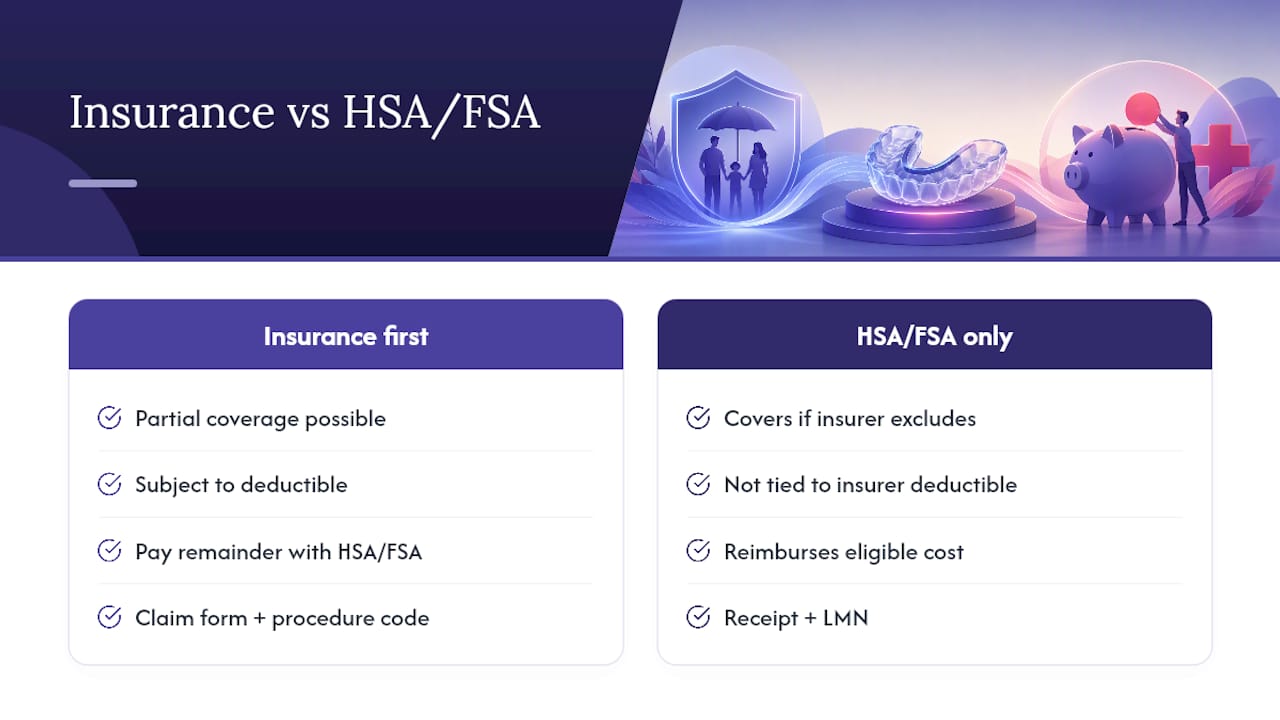
The one rule to watch is double-dipping. You can’t get reimbursed by insurance and by your HSA for the exact same dollar amount. Keep your explanation of benefits from your insurer alongside your HSA documentation so the numbers reconcile if anyone ever asks. Insurers typically want a claim form tied to a procedure code, while TPAs want a receipt and an LMN. They’re different systems asking for overlapping proof of the same underlying facts. If you’re unsure whether your plan even covers night guards, our guide on dental insurance and night guards breaks down common coverage patterns, and this reimbursement checklist for out-of-network costs is a useful reference for structuring a manual claim packet.
How to Avoid a Denied Claim
Most denials come down to weak documentation, not ineligible products. Fix the paperwork before you submit, not after.
- Ask your dentist for a written diagnosis, not a verbal recommendation. “Patient exhibits signs of bruxism” on paper carries far more weight than a chairside comment.
- Request the LMN at the same visit where the guard is recommended, so dates line up cleanly.
- Avoid vague receipts. “Dental appliance, $350” with the seller’s contact info beats a receipt that just says “merchandise.”
- Keep records for at least three years in case of an audit or a delayed appeal.
Pro Tip: If a claim gets denied, ask your administrator exactly which document was missing or insufficient before resubmitting. Guessing and resending the same packet wastes another review cycle.
Clearretain’s Perspective on Claim-Ready Documentation
We built Clearretain’s ordering process with reimbursement in mind. Every order includes an itemized receipt with product details and seller information, the kind of documentation TPAs ask for when you file a claim. Our guards are made from FDA-approved materials under the supervision of experienced orthodontic technicians, at a fraction of typical in-office dental pricing.
Customers preparing an HSA or FSA claim generally need two things from us: the receipt we provide automatically, and a letter of medical necessity from their own dentist. That combination covers most administrators’ requirements.
— Clear
Pick the Night Guard That Fits Your Diagnosis
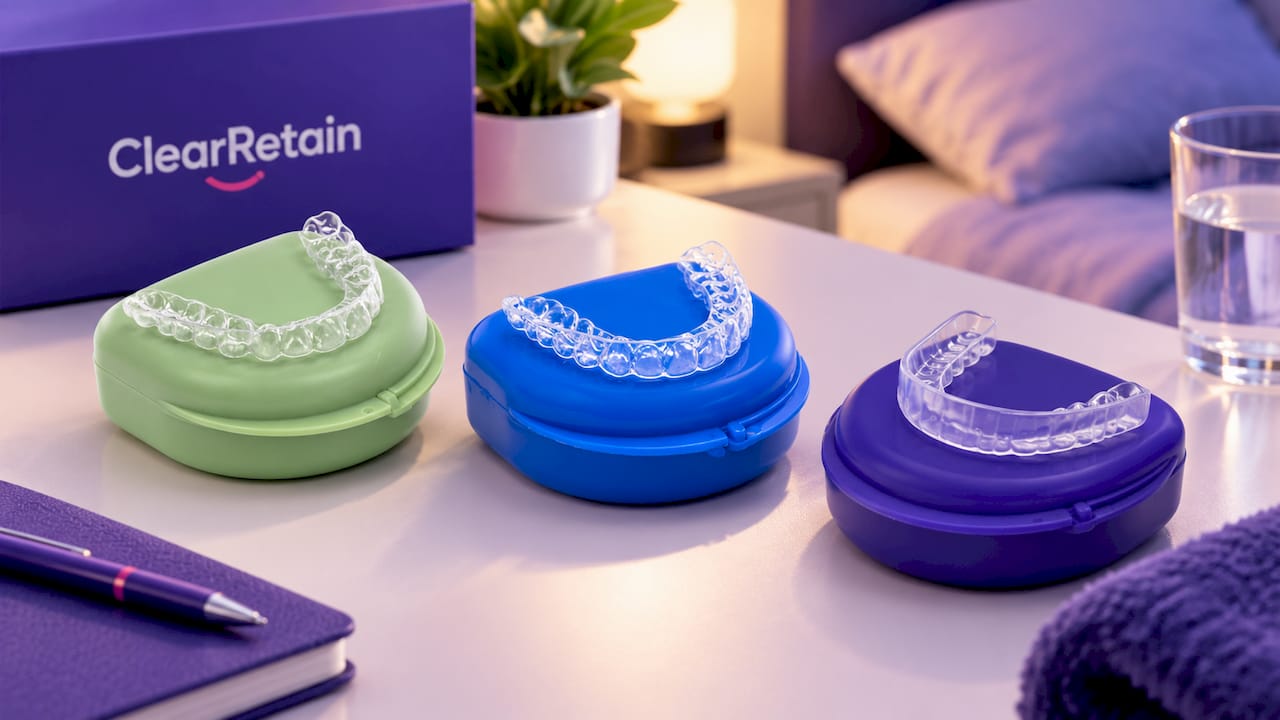
You can obtain custom-fit night guard protection without paying dental office markups, while still having documentation that HSA or FSA administrators typically require. If your dentist has flagged grinding on your lower arch, the Lower Retainer-Night Guard is built for heavier wear patterns. For upper-arch protection or a general bruxism diagnosis, the Upper Retainer-Night Guard covers the more common case dentists see. If you grind hard enough that softer materials wear through fast, ask your dentist whether the Hard Night Guard fits your situation better.
At checkout, save your order confirmation and itemized receipt. Both include the product description and our business information, which is what most TPAs want alongside your dentist’s letter of medical necessity. Before you buy, it’s still worth a quick call to your plan administrator to confirm your specific documentation requirements, since coverage rules vary by employer and by TPA. Once you know what your plan needs, place your order and start your claim with the paperwork already in hand.
Where to Verify the Rules Yourself
For the official standard, read the IRS’s own language in Publication 502 and Publication 969. If your situation doesn’t fit neatly into what’s covered here, your plan administrator or a tax adviser can confirm how your specific plan handles it. When in doubt, ask before you buy, not after your claim gets denied.
This article is general information, not a substitute for advice from a qualified financial advisor. Consult a qualified financial professional about your own circumstances before acting on anything here.