


What Is a Secondary Retainer Set? A Clear Guide
A secondary retainer set is a backup or complementary orthodontic device worn alongside or after your primary retainer to protect your teeth from shifting. Most people finish braces or clear aligners and receive one retainer. That single device is your only line of defense, and the moment it breaks, warps, or goes missing, your teeth start moving. A secondary dental retainer set solves that problem directly. It gives you a ready replacement and, in many cases, adds a second layer of retention that your primary device alone cannot provide.
What is a secondary retainer set and why does it matter?
A secondary retainer set is defined as one or more additional retainers kept as a backup or used in combination with a fixed primary retainer to maintain orthodontic results long term. The industry term for this approach is combination retention or hybrid retention, and orthodontic guidelines increasingly treat it as standard practice rather than optional.
The core function of a secondary retainer is protection against relapse. Teeth can begin shifting within 24–48 hours without retention. That timeline is not an exaggeration. It reflects how quickly the periodontal ligaments and surrounding bone tissue respond when pressure is removed. A secondary set closes the gap that opens the moment your primary retainer fails.
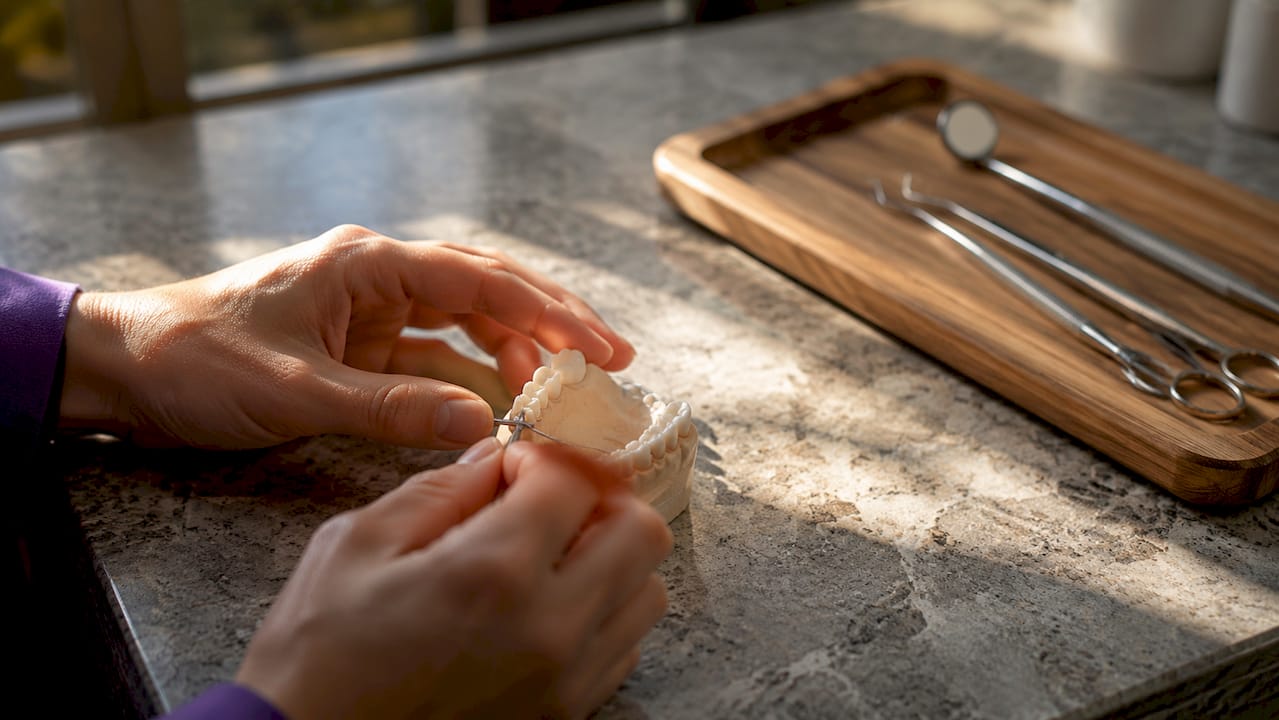
Orthodontic experts treat retention as ongoing therapy, not a phase that ends after the first year. Your teeth have a biological tendency to drift back toward their original positions, and that tendency never fully disappears. A secondary retainer set is the practical answer to that reality.
What functions does a secondary retainer serve?
The function of a secondary retainer goes beyond simple backup. It serves three distinct roles in a complete retention plan.
- Relapse prevention during primary retainer failure. Permanent bonded retainers require occasional repair or replacement. When a fixed wire debonds unexpectedly, a removable secondary retainer worn that night prevents any movement from occurring.
- Complementary arch coverage. Fixed retainers typically bond to the lower front teeth only. They cannot cover the entire arch. A removable secondary retainer covers the full upper or lower arch, filling the gap a fixed wire leaves behind.
- Long-term stabilization support. Bone and soft tissue continue adapting for months after treatment ends. A secondary retainer worn during this period adds stability while your jaw settles.
Pro Tip: If you wear a fixed lower retainer, keep a removable lower retainer in your nightstand. The moment your wire breaks, you have immediate protection while you schedule a repair appointment.
The relapse risk timeline is the most compelling argument for a secondary set. Orthodontists at Torres Orthodontics note that immediate backup wearing is necessary to maintain results after braces or aligners. Waiting even a few days for a replacement can undo months of progress, particularly in the first two years after treatment.
What types of retainers make up a secondary set?
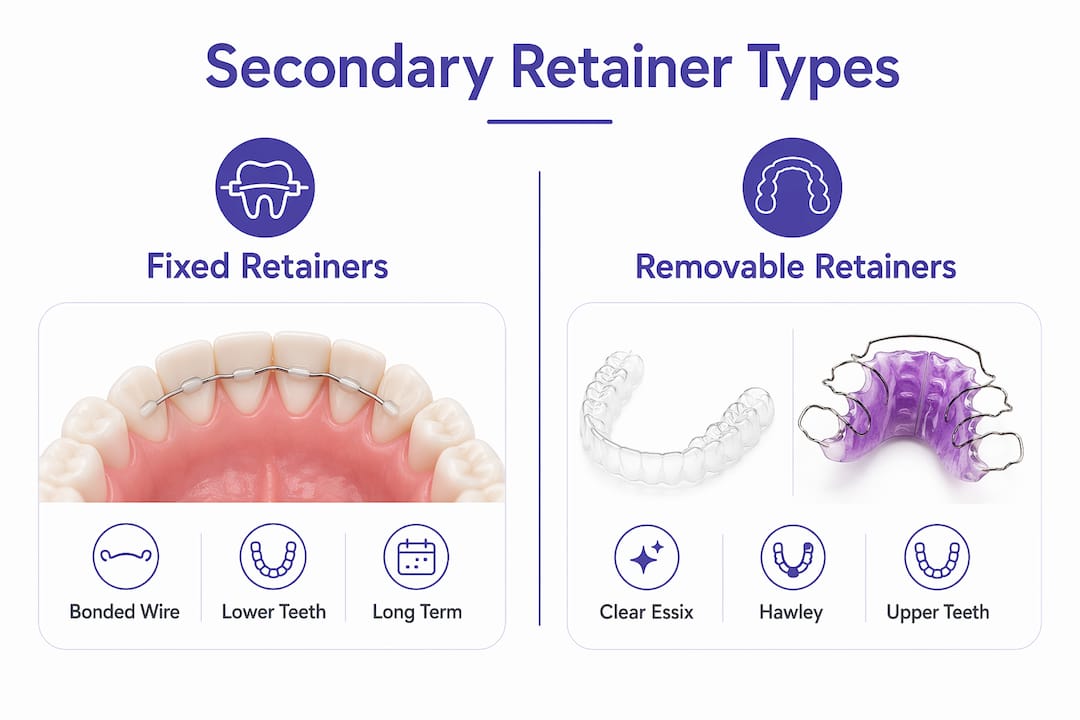
Understanding the types of retainer sets helps you choose the right combination for your situation. There are two main categories: fixed (bonded) retainers and removable retainers. Most secondary sets draw from both.
Fixed (bonded) retainers
A fixed retainer is a thin wire bonded directly to the back surfaces of your teeth, usually the lower front six. It works without any action from you, which makes compliance a non-issue. The limitation is coverage. Fixed retainers cannot cover the entire arch, so removable secondary retainers complement coverage and ease hygiene. Fixed wires also require professional repair when they break, which is why a removable backup is critical.
Removable retainers: clear (essix) and hawley
Clear Essix retainers are vacuum-formed plastic trays that fit over your teeth. They are nearly invisible, comfortable, and the most common type used in secondary sets. Hawley retainers use an acrylic plate with a metal wire across the front. They are more durable than Essix trays and can be adjusted by an orthodontist if minor tooth movement occurs. Both serve well as secondary retainers, though Essix types are more popular for their low profile.
The hybrid approach
The most widely recommended secondary retainer configuration pairs a fixed lower retainer with a removable clear upper retainer. This hybrid strategy minimizes the risk of shifting if one component fails or is lost. It offers stronger protection than any single retainer type alone. Many patients also keep a second removable retainer as a true backup, stored safely in a case.
| Retainer Type | Placement | Key Advantage | Main Limitation | Best Use Case |
|---|---|---|---|---|
| Fixed (Bonded) Wire | Lower front teeth, bonded | No compliance needed | Limited arch coverage; needs professional repair | Primary lower retention |
| Clear Essix | Full upper or lower arch | Invisible, full coverage | Can warp or crack; needs replacement every 1–3 years | Secondary or backup retainer |
| Hawley | Full upper or lower arch | Durable, adjustable | More visible; bulkier feel | Long-term secondary retainer |
| Hybrid Set | Both arches combined | Maximum protection | Requires managing two retainer types | Comprehensive retention plan |
Pro Tip: Order a complete upper and lower set at the same time as your primary retainer. Storing a backup set immediately after treatment costs far less than emergency replacement later.
How do orthodontists decide when to use secondary retainer sets?
Retention planning is not one-size-fits-all. Retention strategy should be tailored individually, weighing factors like oral hygiene capacity, relapse history, and lifestyle to decide the optimal combination. Orthodontists typically follow a structured decision process when recommending secondary retainers.
- Assess relapse risk. Patients who had severe crowding, significant jaw discrepancies, or previous orthodontic treatment are at higher relapse risk. They benefit most from a secondary set worn consistently.
- Evaluate lifestyle and compliance. A patient who travels frequently, plays contact sports, or has a history of losing retainers is a strong candidate for a backup set kept at home and one carried while traveling.
- Review oral hygiene habits. Patients who struggle with flossing around fixed wires may need a removable secondary retainer to maintain hygiene without compromising retention.
- Plan from the start of treatment. Retention should be planned from the beginning of orthodontic treatment rather than as an afterthought. Early planning allows for better patient education and higher compliance rates.
- Schedule monitoring appointments. Regular professional check-ups are important for monitoring retainer fit and need for repairs or replacement. Orthodontists recommend periodic reviews to catch unnoticed damage, especially for bonded retainers.
The goal of this process is a retention plan that works with your life, not against it. A secondary set is not a sign that your primary retainer failed. It is a sign that your orthodontist is thinking ahead.
How to use and care for a secondary retainer set
Knowing how to use a secondary retainer correctly determines how much protection it actually provides. These practical guidelines apply to both clear Essix and Hawley removable retainers used as secondary devices.
- Wear your secondary retainer every night if your primary device is removable and you wear it full time. If your primary is a fixed wire, wear the removable secondary retainer nightly as standard practice.
- Clean removable retainers daily with a soft toothbrush and mild dish soap or a retainer cleaning tablet. Avoid toothpaste, which is abrasive enough to scratch the plastic and create bacterial hiding spots.
- Store your backup retainer in a hard case away from heat. Leaving a clear retainer on a bathroom counter or in a car exposes it to temperatures that warp the plastic and ruin the fit.
- Replace removable retainers every 1–3 years. Removable retainers typically require replacement within that window depending on wear and tear. Having a secondary set means you never face a gap in protection while waiting for a new one.
- Check your fixed retainer weekly by running your tongue along the wire. A loose or broken bond feels different immediately. Catching it early means faster repair and less risk of movement.
Pro Tip: Label your retainer case with your name and a contact number. Retainers left in restaurant napkins or gym bags are the most common cause of unexpected relapse. A label gives someone a reason to return it.
You can explore removable retainer options to find the right fit for your secondary set before your current retainer shows signs of wear. Proactive replacement is always cheaper than emergency treatment for shifted teeth.
Key takeaways
A secondary retainer set is the most reliable way to protect your orthodontic investment from relapse caused by retainer failure, loss, or wear.
| Point | Details |
|---|---|
| Definition is clear | A secondary retainer set is a backup or complementary device that prevents relapse when a primary retainer fails. |
| Teeth move fast | Shifting can begin within 24–48 hours without retention, making an immediate backup non-negotiable. |
| Hybrid sets work best | Combining a fixed lower retainer with a removable upper retainer provides the strongest long-term protection. |
| Replacement is scheduled | Removable retainers need replacement every 1–3 years, so a secondary set prevents any gap in coverage. |
| Cost is manageable | A second set of retainers typically costs $150–$600, far less than retreatment for relapsed teeth. |
Why i think secondary retainers are non-negotiable
Most patients leave their orthodontist’s office with one retainer and the assumption that it will last forever. That assumption is the single biggest threat to their results. Fixed wires break. Clear trays crack. Life happens. The patients I see who maintain their results years after treatment almost always have a backup retainer within reach.
The mindset shift that matters most is treating retention as ongoing care, not a finished chapter. Your teeth are not static. They respond to pressure, aging, and habit every single day. A secondary retainer set is not a sign of failure. It is the same logic as keeping a spare tire in your trunk. You hope you never need it, but you are glad it is there.
My honest recommendation: order your secondary set at the same time as your primary retainer. The cost is lower, the fit is accurate while your teeth are freshly aligned, and you never face the panic of a broken retainer with no backup plan. That peace of mind is worth more than most people realize until the moment they need it.
— Clear
Protect your smile with Clearretain
If you have finished orthodontic treatment or are planning ahead, Clearretain makes ordering a secondary retainer set straightforward and affordable. Clearretain provides FDA-approved, custom-fit retainers made under the supervision of experienced orthodontic technicians, delivered directly to your door at a fraction of typical office prices.
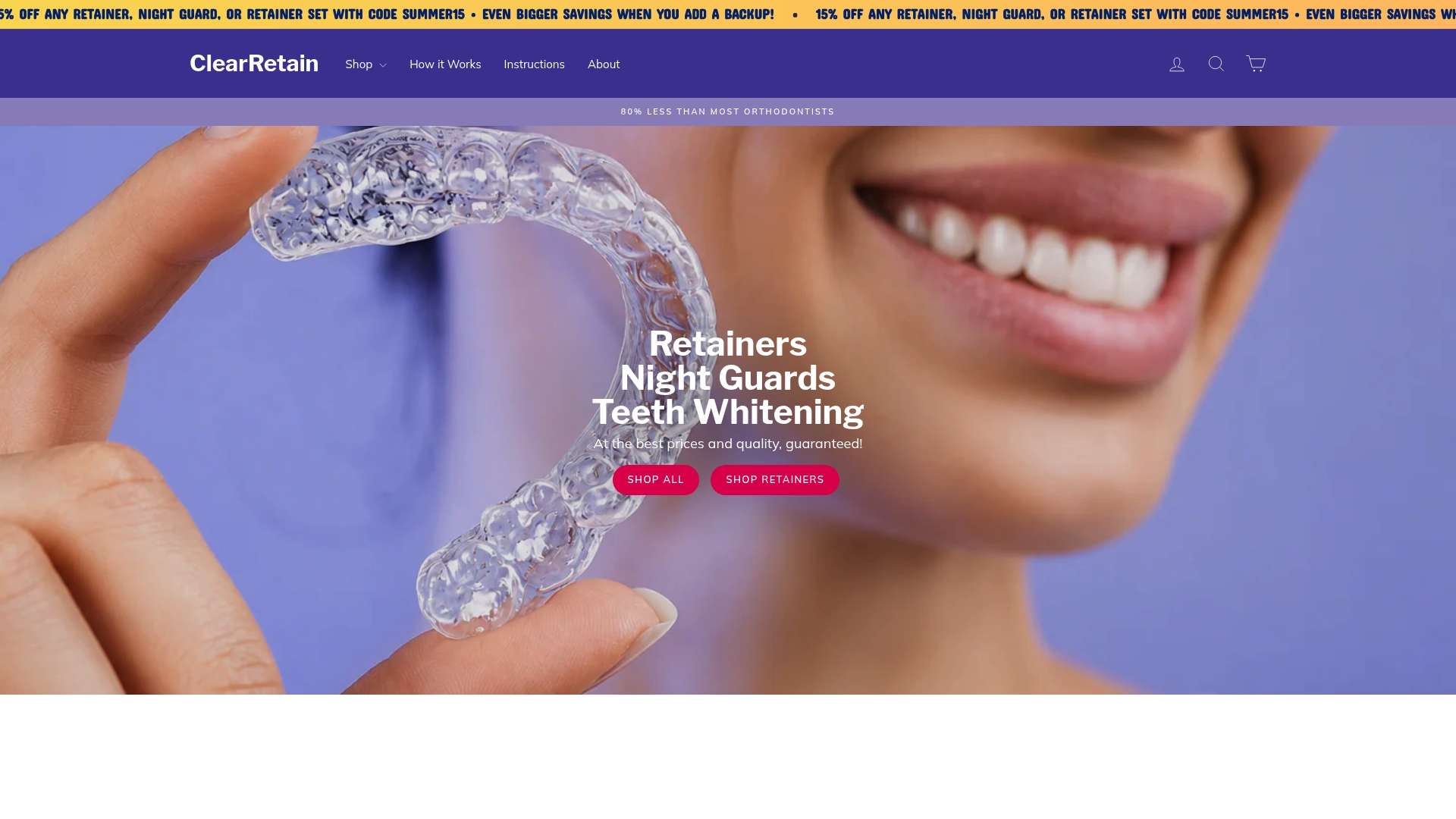
You can order a custom upper retainer, a custom lower retainer, or a complete upper and lower retainer set as your backup. Clearretain also offers teeth whitening solutions compatible with your retainer routine, so you can maintain both your alignment and your smile’s appearance. Savings of up to 80% compared to standard orthodontic office pricing make it easy to invest in the protection your results deserve.
FAQ
What is a secondary retainer set exactly?
A secondary retainer set is one or more additional retainers kept as a backup or used alongside a fixed primary retainer to maintain tooth alignment. It protects against relapse when the primary retainer is lost, broken, or under repair.
How quickly do teeth shift without a retainer?
Teeth can begin shifting within 24–48 hours without retention. This makes having a secondary retainer available immediately after primary retainer failure critical to preserving orthodontic results.
How much does a secondary retainer set cost?
A second set of retainers typically costs between $150 and $600 depending on retainer type and provider. Insurance rarely covers replacement retainers, so ordering through a direct-to-consumer provider like Clearretain reduces out-of-pocket costs significantly.
How often should i replace my secondary retainer?
Removable retainers generally need replacement every 1–3 years depending on how often they are worn and how well they are maintained. Keeping a secondary set means you always have a fresh, well-fitting retainer ready when the primary one wears out.
Can i use a secondary retainer as my only retainer?
A removable secondary retainer can serve as your sole retainer if you wear it consistently every night. However, a combined approach using both a fixed and removable retainer provides stronger, more reliable protection than either type alone.