

6–12 Months or 3–4 Months? How Often to Whiten Without Damaging Enamel
The safe range is every 6 to 12 months for in-office bleaching, an initial 7 to 14 day run followed by occasional touch-ups for dentist-dispensed trays, and short 2 week courses spaced 3 to 4 months apart for over-the-counter strips and gels. The rule that overrides every schedule: stop immediately if sensitivity or gum irritation lasts more than a few days, and follow the product label or your dentist’s instructions over any generic timeline you find online.
TL;DR:
- Whitening frequency depends on the method and peroxide concentration, with in-office treatments spaced 6 to 12 months apart and at-home routines every 3 to 4 months.
- Signs of over-whitening include persistent sensitivity, gum irritation, chalky enamel appearance, or texture changes, which require stopping or adjusting treatment immediately.
- Managing sensitivity during recovery involves using desensitizing toothpaste, avoiding acidic foods, and consulting a dentist if symptoms persist or recur at the same intensity.
- Maintaining good daily habits like brushing after staining foods and drinks, using a straw, and avoiding tobacco can significantly reduce the need for frequent whitening.
- A thorough dental assessment before starting whitening and using custom-fit trays improve comfort, safety, and the longevity of whitening results.
Table of Contents
- How Often to Whiten Depends on Which Method You Use
- What’s a Realistic Whitening Schedule?
- Signs You’re Whitening Too Often
- How to Manage Sensitivity Between Whitening Cycles
- Maintenance Habits That Cut Down How Often You Need to Whiten
- A Conservative, Dentist-Informed Take on At-Home Whitening
- ClearRetain’s Approach to Safe Whitening Maintenance
- Sources
- FAQ
How Often to Whiten Depends on Which Method You Use
Peroxide concentration and contact time drive almost everything about safe frequency. Higher concentrations work faster but demand longer gaps between sessions; lower concentrations are gentler but need repeating more often to reach the same result.
- In-office bleaching uses the strongest peroxide concentrations under professional supervision, which is why it delivers visible change in a single visit but also why dentists generally space it out 6 to 12 months.
- Dentist-dispensed at-home trays use controlled concentrations, commonly around 10% carbamide peroxide, in a custom tray that limits gel contact with your gums. The American Dental Association notes daily treatment times can range from 2 to 10 hours over 6 to 28 days depending on concentration.
- OTC strips, gels, and whitening toothpaste sit at the lower end of the concentration scale. They take longer to match professional results and their schedules vary by brand, so the label matters more here than any general rule.
The reason concentration matters isn’t just speed. Higher peroxide levels temporarily raise enamel permeability, and that window is when sensitivity and gum irritation are most likely.
What’s a Realistic Whitening Schedule?
Most people can build a sane routine around three benchmarks: how long the initial treatment takes, how long results last, and how much time to leave before repeating anything.
- Initial treatment length. Custom trays typically run 7 to 14 days. Strips are usually applied once or twice daily for about two weeks per course. In-office bleaching is often finished in a single appointment.
- How long results hold. Most people see whitening last for several months before noticeable rebound, depending on diet, tobacco use, and how well they maintain the color afterward.
- Minimum wait before repeating. Clinical guidance summarized by Scientific American recommends waiting six months to a year between professional sessions, and treats three to four months as a reasonable floor for many lower-concentration at-home cycles.
Six months to a year is the conservative benchmark dentists cite for repeating professional whitening, and three to four months is the shortest interval generally considered safe for milder at-home routines.
Not every stain follows this timeline. Intrinsic discoloration, the kind that lives inside the tooth rather than on its surface (think old antibiotic staining or trauma-related darkening), often needs a staged approach over months rather than one aggressive course. A dentist can tell you which category you’re dealing with before you commit to a schedule.
Signs You’re Whitening Too Often
Your mouth tells you when a schedule has gone too aggressive, and the signs are consistent enough to watch for.
- Sensitivity that lingers beyond a few days instead of fading, rather than the mild, short-lived zing that’s common right after treatment.
- Gum irritation, white patches, or a burning sensation where gel touched soft tissue.
- Enamel that looks chalky, translucent, or oddly patchy instead of uniformly brighter.
- New roughness or texture change on the tooth surface.
These symptoms trace back to a few mechanisms: temporary dehydration of the enamel, a spike in enamel permeability from the peroxide itself, or gel making direct contact with gum tissue it wasn’t meant to touch. Cleveland Clinic points out that sensitivity is the most common whitening side effect and usually resolves within days to weeks. Beyond that window, it’s a signal to stop.
Pro Tip: If sensitivity shows up on the second or third day of a strip or tray course, don’t push through to finish the box. Pause, switch to a desensitizing toothpaste, and resume only after the discomfort is fully gone.
How to Manage Sensitivity Between Whitening Cycles
Recovery time between treatments isn’t wasted time. It’s when your enamel remineralizes and your gums settle down, so what you do in that window shapes how well the next cycle goes.
- Switch to a toothpaste with potassium nitrate or stannous fluoride for a week or two after finishing a whitening course.
- Ask your dentist about a topical fluoride treatment if sensitivity runs high. Supervised approaches with custom trays reduce soft-tissue exposure compared with ill-fitting, one-size boil-and-bite kits.
- Skip acidic foods and drinks (citrus, soda, wine) for the first 24 to 48 hours after whitening, when enamel is most vulnerable.
- Avoid extreme hot or cold temperatures and abrasive whitening toothpaste while you’re still recovering.
If sensitivity keeps recurring at the same intensity cycle after cycle, that’s not something to push through with more desensitizing toothpaste — it’s worth consulting with experts about options like Dental, Vision & Hearing for Medicare to ensure your oral health needs are properly addressed. It’s worth a conversation with your dentist about a lower-concentration gel or a tray adjustment. Our breakdown of post-whitening sensitivity covers what’s typical and what isn’t.
Maintenance Habits That Cut Down How Often You Need to Whiten
The single biggest lever for reducing how often you need a full whitening course isn’t a product. It’s what you do every day between them.
- Brush soon after staining meals and drinks, not immediately, and use a straw for coffee, tea, or dark soda to limit contact with your front teeth.
- Drop tobacco products if you use them. Nothing undoes whitening results faster than nicotine staining.
- Use touch-up ladders instead of full restarts. A one to three night tray session, a short strip course, or a single in-office visit can refresh color without repeating a full multi-week protocol.
- Set a realistic shade goal. A natural, slightly brighter shade holds up better over time than chasing an extreme white, which tends to look uneven as it fades and tempts people into whitening more often than their enamel can handle.
A Conservative, Dentist-Informed Take on At-Home Whitening
The biggest mistake we see isn’t whitening too often exactly, it’s whitening without a baseline check first. If you have restorations, existing sensitivity, or heavy intrinsic staining, get a dentist’s read before your first cycle, since bleaching won’t change the shade of a crown or filling and can make sensitivity worse if your enamel is already compromised.
Custom-fit trays matter more than people assume. A tray molded to your teeth keeps gel where it belongs and off your gums, which is most of what separates a comfortable routine from a painful one.
— Clear
ClearRetain’s Approach to Safe Whitening Maintenance
Once you’ve settled into a conservative schedule, the products you use for touch-ups matter as much as the timing. Teeth Bleaching Trays built from your own impressions fit tighter than generic kits, which keeps gel off your gums during those short 1 to 3 night refresh sessions instead of a full restart.
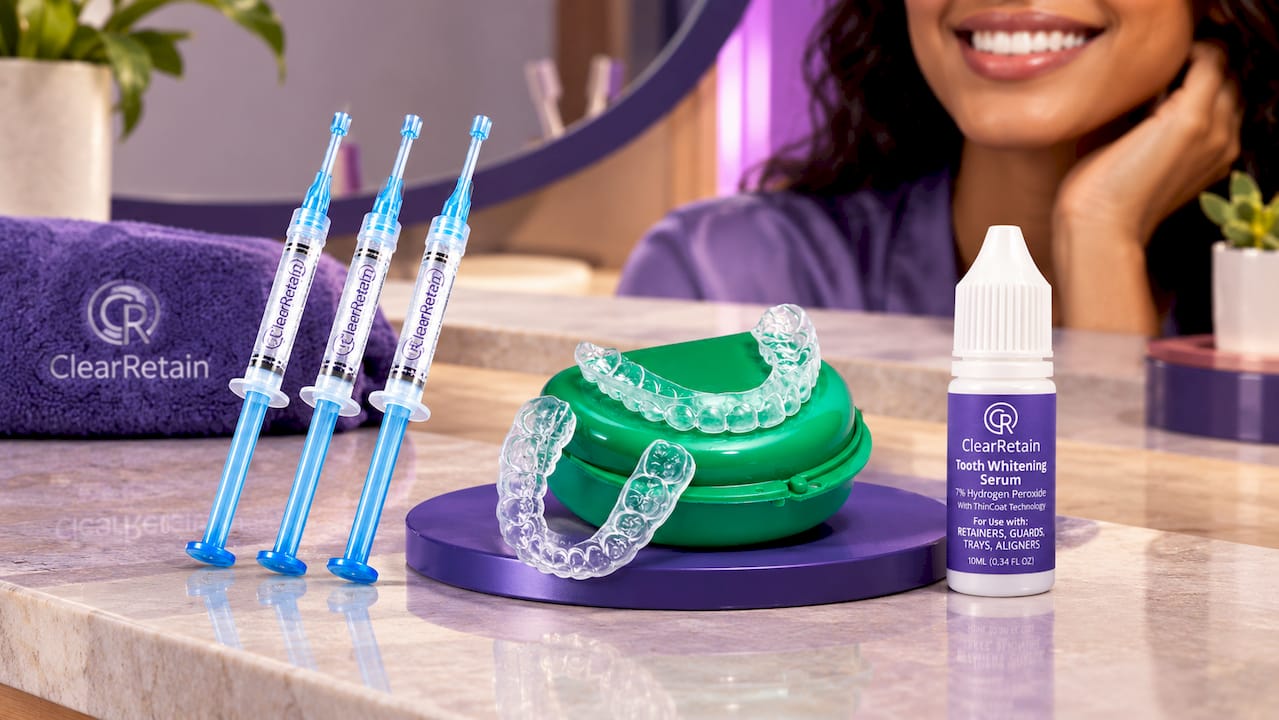
ClearRetain pairs custom trays with Teeth Whitening Gel formulated for controlled at-home use, and a Tooth Whitening Serum designed to pair with your existing retainer or night guard for targeted touch-ups between full cycles. If you’re ready to build a maintenance routine around your own schedule instead of an office visit, browse the bleaching tray collection and order your impression kit today.
This article is general information, not a substitute for advice from a qualified doctor. Consult a qualified healthcare professional about your own circumstances before acting on anything here.
Sources
- Whitening | American Dental Association
- When is too much teeth whitening harmful to oral health? | Scientific American
- Is teeth whitening safe? | Cleveland Clinic (Health Essentials)
- Health
FAQ
How often am I supposed to whiten my teeth?
In-office whitening is generally spaced 6 to 12 months apart, while lower-concentration at-home cycles can often be repeated every 3 to 4 months as a conservative floor, according to guidance summarized by Scientific American.
What is the 2 2 2 rule for teeth?
There’s no dental-association standard behind a “2 2 2 rule,” and definitions circulating online vary widely, so it’s better to follow your product’s label instructions or your dentist’s specific schedule than a catchy shorthand.
How long should I wait between whitening treatments?
Wait at least 6 months to a year between professional sessions and a minimum of 3 to 4 months between most at-home cycles, adjusting shorter or longer based on sensitivity and your dentist’s advice.
Do teeth turn yellow again after whitening?
Yes, results typically fade over 6 to 12 months as new surface stains accumulate from food, drinks, and tobacco, which is why gentle touch-up sessions using ClearRetain’s whitening gel work better than repeating a full course from scratch.