



4 Places to Spot Bruxism Symptoms Before They Wear Your Teeth
If you wake up with a sore jaw, notice flattened or chipped teeth, or your partner complains about grinding noises at 2 a.m., you’re likely dealing with bruxism. Add tension headaches at the temples or new tooth sensitivity, and the picture gets clearer. Plenty of people grind for years without knowing it, since the habit usually happens during sleep.
TL;DR:
- Bruxism symptoms include worn teeth, enamel erosion, jaw soreness, headaches at the temples, and partner-reported grinding noises, often unnoticed.
- Diagnosis relies on dental exams for wear and damage, combined with symptom history and partner observations; sleep studies are rarely needed.
- Risk factors such as stress, sleep disorders, medications, and caffeine can cluster and worsen bruxism episodes.
- Untreated bruxism causes progressive tooth damage, TMJ pain, sleep disruption, and daytime fatigue, increasing long-term dental and health risks.
- Custom night guards from online providers like Clearretain offer an affordable, effective protection option after diagnosis, especially alongside behavior modifications.
Table of Contents
- What Are the Main Symptoms of Bruxism?
- How Is Bruxism Diagnosed, and When Should You See a Dentist?
- What Causes Bruxism, and Who’s at Risk?
- What Happens if Bruxism Goes Untreated?
- How Do You Manage Bruxism Day to Day?
- How Does a Night Guard Fit Into Bruxism Care?
- Why Tracking Beats Guessing
- Protect Your Teeth Without the Dental Office Markup
- Where to Read More on Bruxism
- Sources
What Are the Main Symptoms of Bruxism?
Bruxism symptoms show up in four places: your teeth, your jaw muscles, your head and face, and sometimes secondhand, through whoever shares your bed. Recognizing the pattern across all four areas is far more reliable than fixating on one symptom alone.
On the dental side, the National Institute of Dental & Craniofacial Research lists flattened, chipped, or loose teeth and enamel worn down enough to expose the dentin underneath as classic signs of teeth grinding. Sudden sensitivity to hot, cold, or sweet foods often means the protective enamel layer has thinned.
Jaw and muscle clues tend to show up first thing in the morning:
- Stiffness or soreness in the jaw muscles right after waking
- Difficulty opening your mouth fully
- Popping or clicking near the jaw joint
- A tired, clenched feeling in the muscles along your cheeks
Head and face symptoms are the ones people most often misread. Tension-type headaches that start at the temples, facial muscle tenderness, and earache-like pain that has nothing to do with your ears are all documented effects of bruxism on the jaw and surrounding tissue.
Then there’s the evidence you can’t observe yourself. A partner reporting grinding noises overnight, or finding indentations along your tongue or the inside of your cheeks, are strong signs of bruxism even if you feel fine when you wake up.
How Is Bruxism Diagnosed, and When Should You See a Dentist?
Diagnosing bruxism starts with a dental exam, not a lab test. Dentists look for specific physical evidence, then decide whether anything more is needed.
- Exam findings: dentists check for wear facets (flat, shiny patches on the biting surfaces of teeth), tooth mobility, and cracked or damaged fillings and crowns.
- History and reports: your own symptom timeline, plus anything a partner has noticed about nighttime noise, helps confirm a pattern the exam alone can’t always show.
- Sleep referral, if warranted: when snoring or daytime fatigue accompanies the grinding, your dentist may suggest a referral for sleep evaluation.
- Instrumental testing, rarely: tools like polysomnography or electromyography are considered the gold standard for confirming bruxism, but they’re typically reserved for complex or unclear cases because of cost and complexity.
See a dentist promptly if you notice a tooth becoming loose or shifting, a jaw that locks or won’t open, or pain that’s severe and doesn’t ease up. Self-reported symptoms are useful, but they’re not always enough for a full diagnosis on their own.
What Causes Bruxism, and Who’s at Risk?
Bruxism comes in two forms. Awake bruxism usually involves clenching without much grinding motion, often tied to concentration or stress. Sleep bruxism involves rhythmic jaw movement and is linked to brief arousals during sleep.
Several factors raise your risk:
- Stress and anxiety: emotional tension is one of the most consistently reported triggers for both awake and sleep bruxism.
- Sleep disorders: sleep bruxism frequently coexists with obstructive sleep apnea, and loud snoring paired with grinding is a signal worth mentioning to a doctor.
- Medications: some SSRIs, including certain common antidepressants, have been associated with medication-induced bruxism.
- Substances: smoking, alcohol, and high caffeine intake are all linked to increased grinding frequency.
None of these factors act alone. A useful way to think about it: bruxism causes and symptoms tend to cluster, so a stressful stretch combined with a few extra cups of coffee can make grinding noticeably worse.
What Happens if Bruxism Goes Untreated?
Left alone, bruxism does progressive damage. Tooth wear gets worse over time, existing fillings and crowns can fracture, and what starts as a cosmetic concern can turn into a need for more extensive restorative dentistry.
The jaw joint takes a hit too. Chronic clenching and grinding contribute to temporomandibular joint pain, muscle tension that radiates into headaches, and tightness that can extend into the neck and shoulders.
There’s also a quieter cost. Grinding disrupts sleep quality, not just for the person doing it but for a partner lying next to them. Daytime fatigue and irritability often trace back to a night of undetected clenching rather than an obvious cause.
How Do You Manage Bruxism Day to Day?
Management works best as a combination of habit changes and physical protection, not one or the other.
Start with behavior. Jaw relaxation exercises, cutting back on late-day caffeine and alcohol, and basic stress reduction techniques (even short breathing breaks during a tense workday) reduce clenching frequency for a lot of people.
Protective devices matter for the teeth themselves. Custom-made night guards are considered the primary protective tool for preventing further wear once damage has started. Over-the-counter boil-and-bite guards can help in a pinch, but they’re not a substitute for a dental evaluation, especially if wear is already visible.
- Track when symptoms happen and how severe they feel
- Ask a partner to note grinding sounds or restlessness
- Bring both to your next dental visit
Pro Tip: A night guard protects your teeth while you sleep, but it does nothing for daytime clenching. If you catch yourself grinding at your desk, pair the guard with a conscious habit, like relaxing your jaw every time you check your phone.
If snoring, choking sounds, or excessive daytime sleepiness show up alongside grinding, ask about a referral to sleep medicine rather than treating it as a dental issue alone. Any medication changes should happen only under a clinician’s guidance.
How Does a Night Guard Fit Into Bruxism Care?
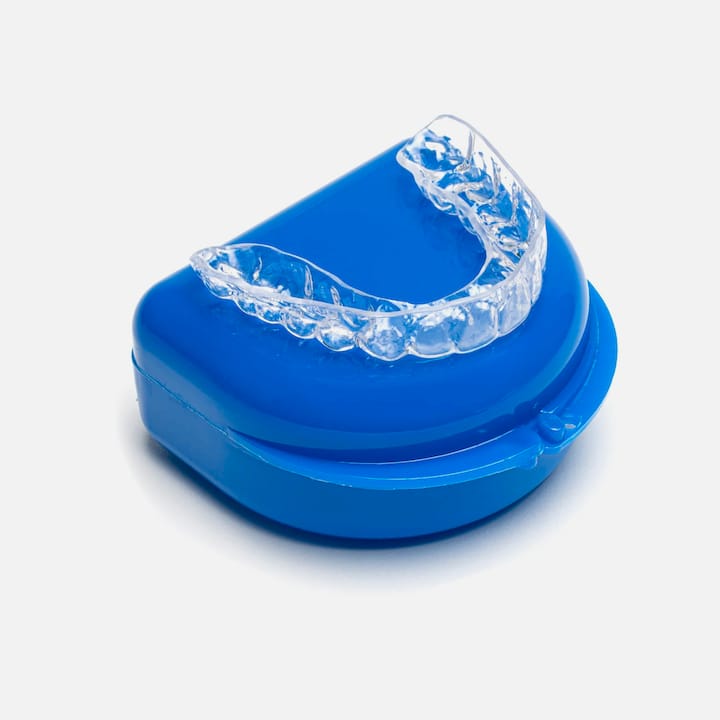
Custom oral appliances remain the standard for shielding teeth from nightly grinding, and that’s the exact gap Clearretain fills. Clearretain makes FDA-approved custom night guards and retainers built from your own impressions, at a fraction of what a traditional dental office charges. Digital impressions get stored for easy reordering later. None of this replaces a dental evaluation for severe wear, TMJ pain, or suspected sleep apnea. Think of it as the protective step you take once a dentist has confirmed what you’re dealing with.
Why Tracking Beats Guessing
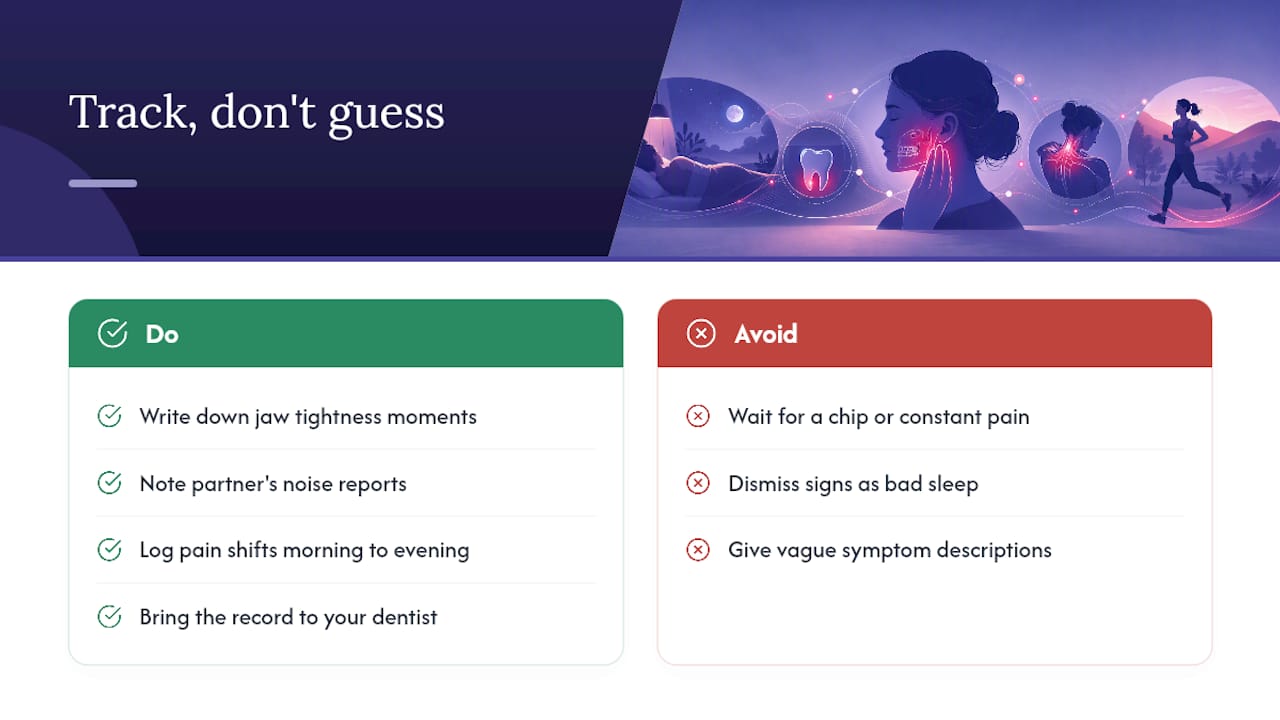
Most people wait until a tooth chips or a headache won’t quit before taking bruxism seriously. That’s backwards. The signs are usually there months earlier, they’re just easy to write off as a bad night’s sleep or a stressful week.
Write down what you notice: when your jaw feels tight, whether a partner mentions noise, how the pain pattern shifts from morning to evening. That record is worth more to a dentist than a vague “my jaw hurts sometimes.” Early signs, caught and reported clearly, tend to prevent the bigger, more expensive problems down the line.
— Clear
Protect Your Teeth Without the Dental Office Markup
Clearretain delivers custom protective appliances online, offering an alternative to traditional dental office pricing. For heavy grinders, the Hard Night Guard is built from your own impressions for a precise fit. Need a lighter option or daytime retention too? The Upper Teeth Retainer, Lower Teeth Retainer, and Upper and Lower Retainers Set cover both arches, while the combined Upper Retainer-Night Guard and Lower Retainer-Night Guard handle grinding and alignment in one appliance.

Missing a tooth? The Upper Partial Denture Retainer covers single-tooth cases. Once your grinding is under control, brighten things up with the Teeth Whitening Gel - 3 Pack or Teeth Bleaching Trays, and use the Tooth Whitening Serum alongside your existing retainer or guard. Every order stores your impressions digitally, so reordering later takes minutes, not a new dental visit. If your grinding is severe or paired with jaw locking, see a dentist first. Otherwise, browse night guard options and get fitted from home.
Where to Read More on Bruxism
- NIDCR: Bruxism overview
- Mayo Clinic: Teeth grinding symptoms and causes
- Cleveland Clinic: Bruxism symptoms and treatment
- Merck Manual: Bruxism, professional notes
Sources
- Bruxism | National Institute of Dental & Craniofacial Research
- Medications and bruxism (systematic/clinical review) — PMC
- Merck Manual — Bruxism
- Clinical perspectives on sleep bruxism and comorbid sleep disorders — PMC