

Why Custom Retainers Outperform Generic Options
Custom retainers are dental appliances precisely crafted to match an individual’s unique mouth contours, delivering superior fit, comfort, and long-term effectiveness compared to generic retainers. The core reason why custom retainers outperform generic alternatives comes down to one factor: precision. A retainer that fits your exact bite holds teeth in place more reliably, stays comfortable enough to wear consistently, and resists the biological forces that push teeth back toward their original positions. Generic retainers, made to approximate an average mouth, simply cannot replicate that level of accuracy.
Why custom retainers outperform generic retainers: the fabrication difference
The gap in performance starts in the lab, long before a retainer ever touches your teeth. Generic retainers are produced from standard molds designed to fit a broad population. Custom retainers, by contrast, are built from a precise impression or digital scan of your specific dental arch.
Modern custom fabrication has advanced significantly. 3D-printed retainers use CAD software and biocompatible resins to eliminate physical impressions entirely, producing appliances with uniform thickness and precise edge definition. That consistency matters because uneven thickness creates pressure points that cause discomfort and accelerate wear.
The production advantages of 3D printing go beyond speed. Digital workflows allow targeted adjustments to appliance geometry, reinforcing areas under heavy bite stress while keeping other zones flexible for comfort. A thermoformed sheet cut from a generic blank cannot offer that kind of zone-specific engineering.
Key fabrication advantages of custom retainers include:
- Exact arch replication from digital scans or physical impressions
- Uniform material thickness across the entire appliance
- Zone-specific reinforcement where bite forces are highest
- Biocompatible resin materials that meet FDA standards
- Reduced lab waste through digital precision
Pro Tip: When ordering a custom retainer, ask whether the lab uses 3D printing or thermoforming. 3D-printed options typically deliver more consistent thickness and a tighter fit, especially along the gumline.
What specific benefits do custom retainers offer over generic options?
The benefits of custom retainers show up in four areas that directly affect your daily experience and long-term dental health: comfort, durability, aesthetics, and clinical effectiveness.
Comfort that encourages consistent wear
A retainer that fits poorly creates pressure on specific teeth, causes soreness, and gets left on the nightstand. Custom-fit retainers demonstrate significantly lower rates of tooth movement relapse, largely because patients actually wear them. Comfort drives compliance, and compliance drives results.
Durability built for your bite
Generic retainers use one-size material thickness regardless of your bite force. If you clench or grind, a standard thin retainer can fail within months. Nipissing Dental notes that patients with bruxism require custom retainers made from harder or thicker materials to prevent premature failure. A custom lab can specify material hardness based on your clinical profile.
Aesthetics that support daily life
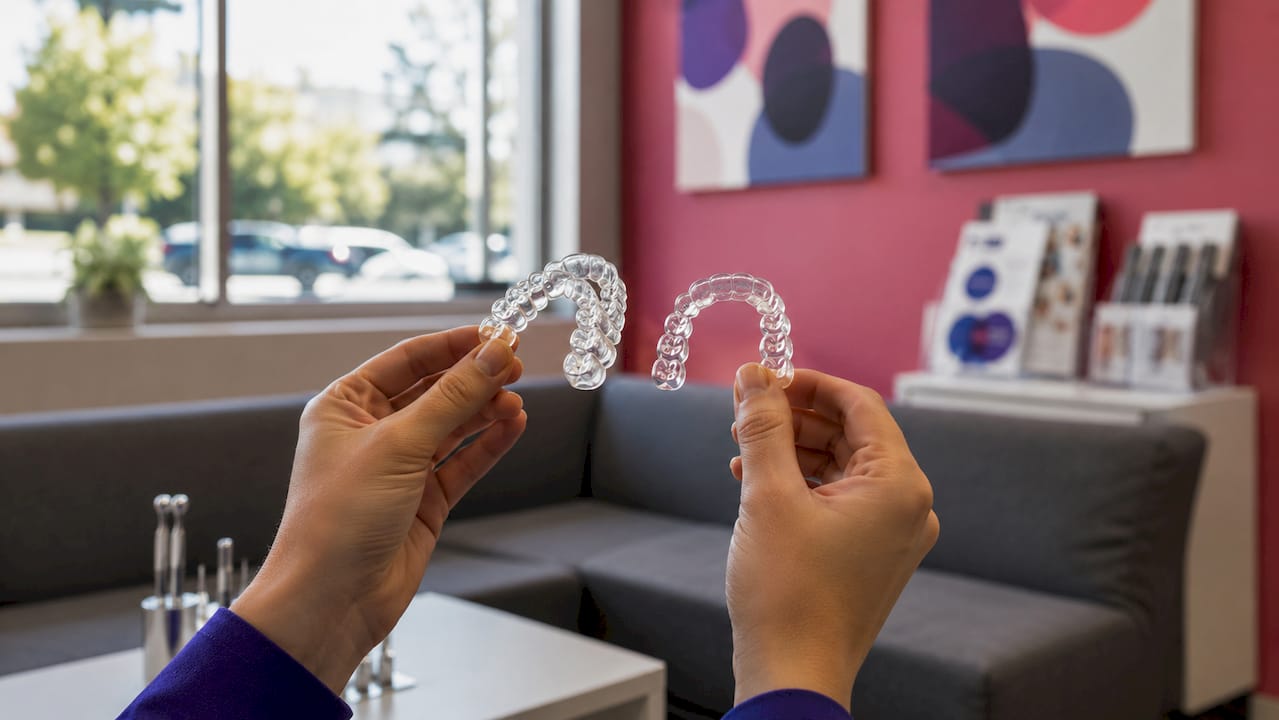
Clear custom retainers encourage continuous wear because they do not interfere with social interactions. Patients prefer discreet appliances, and that preference directly improves adherence. A retainer you are willing to wear in public or at work is a retainer that does its job.
The full list of advantages over generic options:
- Superior comfort from exact fit to your mouth contours
- Higher durability through material selection matched to your bite
- Near-invisible appearance that supports consistent wear
- Clinical effectiveness backed by lower relapse rates
- Tailored design for patients with bruxism, crowding, or bite irregularities
Pro Tip: If you have had orthodontic treatment in the past and your retainer no longer fits well, do not force it. A retainer that gaps at the gumline is no longer providing effective retention. Order a new custom set based on your current dental arch.
How do patient factors and compliance affect retainer effectiveness?
No retainer, custom or generic, works without consistent wear. Understanding the biology behind tooth movement helps explain why the advantages of personalized retainers matter so much over the long term.
-
Teeth relapse toward original positions. Periodontal fibers and occlusal forces drive teeth back toward where they started unless retention is maintained. This is not a flaw in orthodontic treatment. It is a biological reality that requires a lifelong response.
-
Compliance drops sharply after year one. Consistent retainer wear is critical to effectiveness, and data shows adherence falls significantly after the first year of post-treatment retention. The more comfortable and discreet the retainer, the better the odds of long-term compliance.
-
Patient non-compliance is the leading cause of retention failure. Even small gaps caused by infrequent wear allow tooth movement and cause the retainer to misfit over time. A misfit retainer then becomes uncomfortable, which further reduces wear. It is a cycle that custom retainers are better positioned to prevent.
-
Bruxism and bite patterns require tailored materials. Standard generic retainers are not designed for heavy grinders. A custom lab can specify a harder acrylic or thicker thermoformed material based on your documented bite force, extending the functional life of the appliance significantly.
-
Material fatigue is real and measurable. Studies show up to 7.5% absorption of substances in clear retainers over time, leading to decreased structural integrity. Custom retainers made from higher-grade resins resist this degradation better than generic alternatives using commodity-grade plastics.
Understanding retainers after braces as a continuation of therapy, not just a finishing step, changes how you approach compliance. Retention is treatment. Treating it as optional is how relapse happens.
Custom vs generic retainers: materials, fit, cost, and longevity
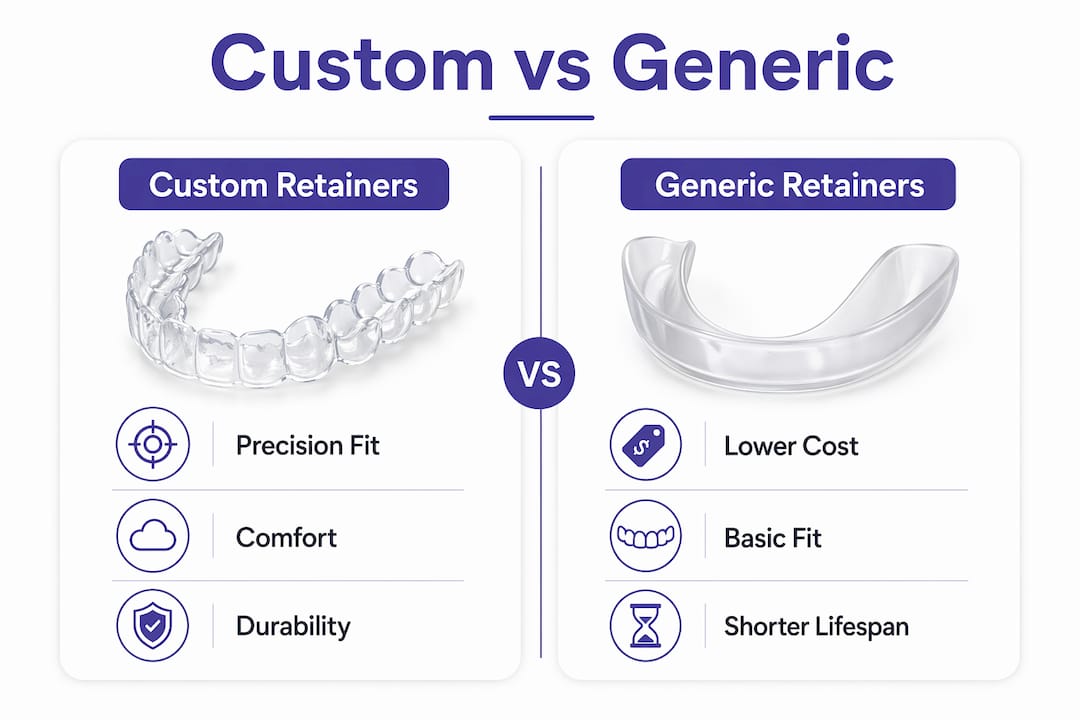
The clearest way to evaluate the custom vs generic retainers question is a direct comparison across the factors that matter most to your long-term dental health.
| Factor | Custom retainers | Generic retainers |
|---|---|---|
| Fit precision | Exact match to your dental arch | Approximate fit based on standard sizing |
| Material options | Selected by bite profile and habits | Fixed material, one thickness |
| Durability | Higher, especially for grinders | Lower, prone to cracking under heavy use |
| Aesthetics | Clear, discreet, near-invisible | Variable, often bulkier |
| Initial cost | Higher upfront | Lower upfront |
| Long-term value | Better, fewer replacements needed | Lower, more frequent replacement |
| Relapse risk | Lower due to consistent fit and wear | Higher due to comfort and fit issues |
Hawley retainers offer superior durability and adjustability compared to vacuum-formed clear retainers, but they cover less occlusal surface, which affects how teeth settle. That tradeoff illustrates why material and design choices are not universal. The right retainer depends on your specific bite, habits, and treatment history.
The cost argument for generic retainers weakens when you factor in replacement frequency. A custom retainer that lasts three to five years with proper care costs less per year than a generic retainer replaced every twelve to eighteen months. You can explore the full types of dental retainers comparison to see how materials and designs stack up across the full range of options.
Pro Tip: If you grind your teeth at night, a standard clear retainer is not your best option. Ask your provider specifically about retainers designed for bruxism, or consider a dual-purpose night guard retainer that protects your teeth and maintains alignment simultaneously.
How to choose and care for a custom retainer
Choosing the right custom retainer starts with an honest assessment of your dental history and daily habits. The best retainers for teeth alignment are the ones you will actually wear, so comfort and lifestyle fit matter as much as clinical specs.
Factors to evaluate before ordering:
- Bruxism history: If you grind, specify it. The lab needs to select a harder material.
- Previous orthodontic treatment: Share your original treatment records if available.
- Bite irregularities: Crossbites or deep bites affect which retainer design holds best.
- Lifestyle: If you play contact sports, a dual-purpose retainer or separate night guard may be more practical.
Proper care extends the life of any retainer significantly. Clean your retainer daily with a soft toothbrush and mild soap. Avoid hot water, which warps thermoplastic materials. Store it in a ventilated case when not in use. Do not wrap it in a napkin at meals. That is how retainers end up in the trash.
Signs you need a professional check-up include visible cracks, a retainer that no longer seats fully, persistent soreness after wearing, or any visible discoloration that does not clean off. These are not cosmetic issues. They signal that the retainer is no longer providing effective retention.
You can review removable retainer options to understand which designs work best for different dental profiles before making a decision.
Pro Tip: Build retainer wear into an existing habit, like brushing your teeth before bed. Habit stacking is the most reliable way to maintain nightly compliance over the long term.
Key takeaways
Custom retainers outperform generic options because precise fit drives comfort, compliance, and clinical effectiveness in ways that standardized appliances cannot replicate.
| Point | Details |
|---|---|
| Precision fit is the core advantage | Custom retainers match your exact dental arch, reducing relapse risk and improving comfort. |
| Fabrication method determines quality | 3D-printed retainers deliver uniform thickness and zone-specific reinforcement that thermoformed generics cannot match. |
| Compliance drives results | The most effective retainer is the one you wear consistently; comfort and aesthetics directly affect adherence. |
| Material selection matters for bruxism | Patients who grind need harder materials; generic retainers often fail within months for heavy grinders. |
| Long-term value favors custom | Higher upfront cost is offset by fewer replacements and lower relapse risk over a three to five year period. |
What I have learned from watching patients choose between custom and generic
The debate over custom vs generic retainers is often framed as a cost question. From where I sit, it is actually a compliance question. The patients who struggle most with retention are not the ones who chose the wrong material. They are the ones who stopped wearing their retainer because it was uncomfortable, bulky, or embarrassing to wear in public.
Generic retainers solve a real problem at a lower price point. I understand the appeal. But the hidden cost shows up six to twelve months later when teeth have shifted enough to require intervention. At that point, the savings from the cheaper retainer are gone, and then some.
What the 2026 advances in 3D printing have done is close the price gap significantly. Custom retainers are no longer exclusively the domain of expensive orthodontic offices. Direct-to-consumer labs now produce precision appliances at prices that make the custom vs generic comparison much less dramatic than it was five years ago.
The one thing I would push back on is the idea that any retainer is a set-and-forget solution. Retention is ongoing therapy. The biology does not stop. Teeth will move if given the opportunity. A well-fitted custom retainer worn consistently is the most reliable tool available to prevent that from happening. Prioritize the fit, maintain the habit, and replace the retainer on schedule. That is the full picture.
— Clear
Get a custom retainer built for your smile
Clearretain provides premium custom retainers made from FDA-approved materials under the supervision of experienced orthodontic technicians. Every retainer is built from your own impression kit, so the fit is specific to your dental arch, not an average approximation. The direct-to-consumer model means you get lab-quality precision without the office visit markup, typically saving up to 80% compared to traditional orthodontic pricing. If you are ready to protect your smile with an appliance that actually fits, the upper and lower retainer set is the place to start.
FAQ
What makes custom retainers more effective than generic ones?
Custom retainers are built from an exact impression of your dental arch, producing a fit that holds teeth in position more reliably. Generic retainers use standard sizing that approximates the average mouth, which creates gaps and pressure points that reduce both comfort and retention effectiveness.
How long do custom retainers typically last?
With proper daily cleaning and consistent use, a well-made custom retainer lasts three to five years. Generic retainers made from thinner or lower-grade materials typically require replacement every twelve to eighteen months, making custom options more cost-effective over time.
Are custom retainers worth it for people who grind their teeth?
Custom retainers are the only practical option for bruxism patients. Standard thin clear retainers often fail within months for grinders, while custom labs can specify harder or thicker materials designed to withstand heavy bite forces.
How often should I replace my custom retainer?
Replace your custom retainer every three to five years under normal use, or sooner if you notice cracks, gaps at the gumline, or persistent soreness. Compliance drops significantly after the first year, so scheduling a check-up annually helps catch fit issues before they cause tooth movement.
Can I order a custom retainer without visiting an orthodontist?
Yes. Direct-to-consumer services like Clearretain provide detailed self-impression kits that allow you to take your own dental mold at home. The impression is sent to a supervised lab where your retainer is fabricated to your exact specifications, without an in-office appointment.