

Whitening Gel on Gums: Stop a Burn and Prevent It with a Custom Tray
A small amount of whitening gel on the gums usually causes short-lived irritation that fades within a day or two. Prolonged exposure can chemically burn the soft tissue, so stop using the product immediately if you feel burning. Rinse your mouth with water, remove any tray or strip, and gently wipe away excess gel with a damp cloth before reapplying anything.
TL;DR:
- A 2025 review found greater sensitivity risk with 20% to 22% carbamide peroxide and 14% to 16% hydrogen peroxide, though evidence quality was often low.
- Use a snug tray, place a pea sized dot in each tooth well, follow the package timing, and wipe away overflow immediately.
- Consult a dentist before whitening if you have gum disease, bleeding, recent surgery, recession, ulcers, many restorations, or are pregnant or breastfeeding.
- Stop treatment, rinse with water, and avoid irritating foods; seek prompt dental care for worsening pain, enlarging ulcers, persistent bleeding, pus, or fever.
- Peroxide lightens natural enamel but not crowns, veneers, or fillings, so ask a dentist about shade matching rather than applying extra gel.
Table of Contents
- How whitening gel irritates gums and common application mistakes
- How concentration and contact time affect risk
- Step-by-step safe application to keep gel off your gums
- Who should delay or avoid whitening
- Symptoms, timeline, and home care for gum irritation
- What whitening gel can’t do for gums and restorations
- Custom trays and controlled dosing cut down on gum exposure
- A clinician-minded take on whitening safely
- Get a tray that actually fits before you whiten again
- FAQ
- Sources
How whitening gel irritates gums and common application mistakes
Peroxide, whether carbamide peroxide or hydrogen peroxide, works by breaking down stains on tooth enamel. Enamel can tolerate this reaction because it is dense, mineralized tissue. Gum tissue is soft and vascular, so direct peroxide contact irritates it almost immediately, producing a whitish patch, stinging, or mild swelling.
Most of the irritation people experience has nothing to do with the whitening reaction itself. It happens because gel reaches tissue it was never meant to touch. According to the American Dental Association, gingival irritation is one of the most common side effects of whitening, and it is typically tied to poor-fitting trays or careless application rather than the bleaching agent working as intended.
A few habits make this far more likely:
- Overfilling trays so gel squeezes out over the gum line when you bite down.
- Using a generic, ill-fitting tray that leaves gaps where gel pools against tissue.
- Applying whitening strips slightly off-center so the adhesive edge touches gum rather than tooth.
How concentration and contact time affect risk
Stronger gel left in place longer raises the odds of irritation, though the relationship isn’t purely linear. A 2025 systematic review and network meta-analysis of at-home bleaching agents found that higher concentrations, specifically carbamide peroxide at 20 to 22% and hydrogen peroxide at 14 to 16%, carried greater sensitivity risk than lower-concentration options like hydrogen peroxide at 2 to 4%. The review covered 77 studies, with 50 included in the meta-analysis itself, and noted that evidence quality was often low and that reported sensitivity, even at higher concentrations, was usually mild.

Higher-concentration at-home gels carry greater sensitivity risk than low-concentration formulas, according to the 2025 network meta-analysis, though the effect was generally mild and protocols varied widely across the studies reviewed.
Separately, trial evidence on thin, concentrated gel strips suggests that a well-designed delivery system can offset some of that risk. A randomized trial on a thin peroxide gel strip found that a 14% hydrogen peroxide strip whitened faster than a 6% control without increasing clinical soft-tissue irritation, because the thin layer limited how much gel actually reached tissue. Strength alone does not predict what happens to your gums. How the product is delivered, and how carefully you apply it, matters just as much.
Step-by-step safe application to keep gel off your gums
Getting whitening gel onto enamel and off gum tissue is mostly a matter of technique. Here’s a sequence that minimizes contact:
- Read the product instructions fully before opening the gel, and check your tray for cracks, warping, or a loose fit.
- Load a small, pea-sized dot of gel into the center of each tooth well, never along the edges that meet the gum line.
- Seat the tray gently, pressing just enough to make full contact without forcing it, which can push gel outward.
- Wipe away any gel that overflows at the gum line immediately with a dry finger or cotton swab.
- Leave the tray in for the exact time stated on the packaging, never longer in hopes of faster results.
- Remove the tray carefully and rinse your mouth thoroughly before eating or drinking.
If gel does touch your gums during this process, stop immediately. Rinse with water, then use a damp cotton swab to lift away any remaining residue. Avoid numbing gels or topical anesthetics at this stage. They mask the pain signal that tells you tissue is still exposed, which can let irritation progress further before you notice.
Pro Tip: Trim a tray’s edges slightly with clean scissors if it’s riding onto your gums: a tray that stops just short of the gum line is safer than one that covers it entirely.
Who should delay or avoid whitening
Some dental and medical situations call for a conversation with your dentist before you start any at-home whitening routine. Skipping that check increases the odds of a painful or prolonged reaction.
- If you have active periodontal disease, unexplained bleeding, recent periodontal surgery, significant gum recession, or open ulcers, see your dentist before whitening.
- If you have many crowns, veneers, or fillings, ask your dentist about shade planning first, since gel will not lighten those surfaces and uneven results can be frustrating to fix later.
- If you are pregnant or breastfeeding, talk to your care provider about deferring elective whitening until afterward, consistent with general ADA guidance on elective dental procedures during pregnancy.
Symptoms, timeline, and home care for gum irritation
Irritation from gel contact usually shows up within a day of exposure. It tends to look like a pale or whitish patch, mild soreness, or slight puffiness, and most cases resolve within a few days to about two weeks without any lasting damage.
- Stop using the whitening product and rinse thoroughly with water as soon as you notice irritation.
- Apply a cool compress to the outside of your cheek and rinse with saline or an ADA-recommended mouth rinse to soothe the area.
- Avoid acidic, spicy, or very hot foods for a day or two while the tissue settles, since these can prolong discomfort.
- See a dentist promptly if pain worsens, an ulcer grows larger, bleeding won’t stop, or you notice signs of infection like pus or fever.
What whitening gel can’t do for gums and restorations
Peroxide gel lightens enamel, the hard mineral layer of your teeth. It has no whitening effect on gum tissue, and it does not change the color of crowns, veneers, or fillings. The American Dental Association notes that restorations keep their original shade no matter how much bleaching gel touches them, which explains why some people end up with a mismatched smile after repeated whitening cycles.
If your results look uneven after a normal course of treatment, applying more gel will not fix a restoration that was never going to lighten in the first place. That pattern just adds unnecessary gum exposure. Talk to a dentist about replacing or matching the restoration instead.
Custom trays and controlled dosing cut down on gum exposure

Most of the irritation described above traces back to delivery, not the chemistry itself, which is where a custom-fit approach helps. Our Teeth Bleaching Trays are built from a self-impression kit, so the tray follows the exact shape of your teeth rather than a generic mold, leaving far less room for gel to pool against your gum line the way it can with boil-and-bite trays.
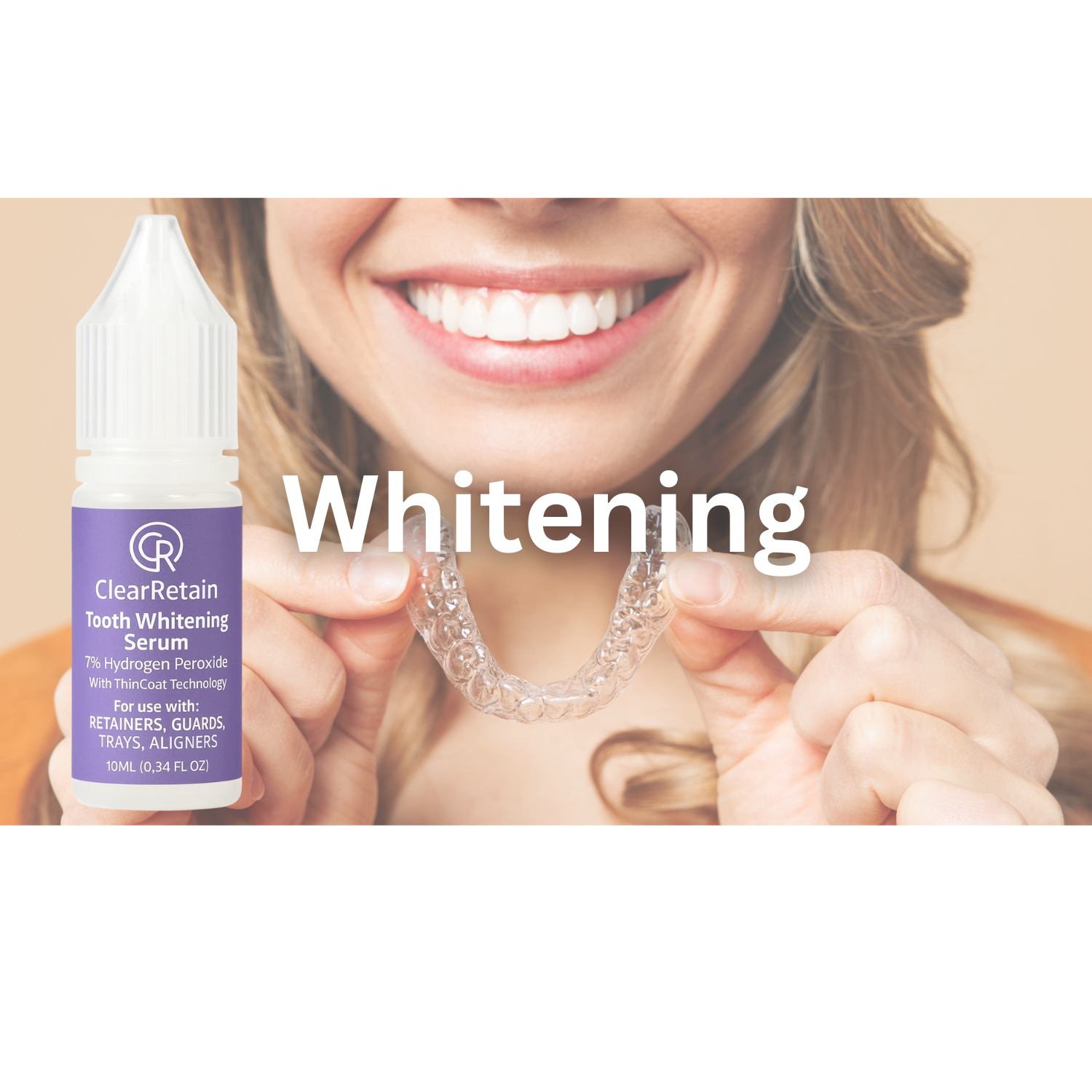
We pair those trays with our Teeth Whitening Gel - 3 Pack, formulated and produced under the supervision of experienced orthodontic technicians using FDA-approved materials, and our Tooth Whitening Serum, a lower-dose topical option for use with a clear retainer or night guard when a full gel application feels like more than you need.
- Load gel sparingly into the center of each tooth well, never along the tray’s edge.
- Seat the tray fully, then wipe any overflow right away before it sits against tissue.
- Reorder using your stored digital impression if your current tray ever stops fitting snugly.
| Product | Role in reducing gum contact |
|---|---|
| Teeth Bleaching Trays | Custom fit from a self-impression kit limits overflow against gums |
| Teeth Whitening Gel — 3 Pack | Made under orthodontic technician supervision with FDA-approved materials |
| Tooth Whitening Serum | Lower-dose topical option used with a retainer or night guard |
A clinician-minded take on whitening safely
The evidence on at-home whitening points to one consistent theme: concentration gets the attention, but fit and technique decide whether your gums pay the price. I’d rather see someone use a lower-strength gel in a tray that actually fits than a stronger one in a tray that doesn’t.
If you have gum disease, deep restorations, or you’re pregnant, treat whitening as something to plan with a dentist, not something to try first and ask about later. A custom tray and a careful hand with the gel syringe solve most of the risk before it starts.
— Clear
Get a tray that actually fits before you whiten again
Most gum irritation from whitening comes down to a tray that doesn’t match your mouth, and a custom fit fixes that at the source. Our self-impression kit lets you order a tray built around your own teeth, paired with FDA-approved gel made under the supervision of experienced orthodontic technicians, so you spend less time wiping overflow and more time actually whitening.

- Order our Teeth Bleaching Trays for a custom fit that limits gel overflow at the gum line.
- Pick up our Teeth Whitening Gel - 3 Pack to pair with your tray for a full at-home routine.
- Review the usage instructions on each product page, and reach out to our support team if you have questions about fit before you start.
This article is general information, not a substitute for advice from a qualified doctor. Consult a qualified healthcare professional about your own circumstances before acting on anything here.
FAQ
How to whiten teeth fast?
The fastest legitimate results come from a well-fitted tray with a properly concentrated gel, used exactly as directed rather than left on longer than instructed. Dentist-supplied or custom trays limit gum contact and tend to produce more even results than rushing the process with over-the-counter strips, according to JADA coverage of custom tray whitening.
Has in-office whitening damaged my teeth?
In-office bleaching can cause temporary tooth sensitivity and gum irritation, which are common and usually resolve on their own, but lasting enamel damage from a properly performed procedure is not typical. If you’re experiencing ongoing pain or visible changes to your teeth or gums after treatment, see your dentist to rule out a fit or application issue rather than the gel itself.
Does teeth whitening gel expire?
Whitening gel does lose potency over time once opened or past its printed expiration date, which can make treatment less effective rather than more dangerous. Check the date on your product and replace it if it has expired, since degraded peroxide won’t whiten well even with longer contact time.
What are the potential side effects of tooth whitening?
The most commonly reported side effects are temporary tooth sensitivity and gingival irritation from gel contacting gum tissue, both described as common and usually short-lived by the American Dental Association. Less often, people notice uneven results around crowns or fillings, since those surfaces don’t respond to peroxide the way natural enamel does.
How do I soothe gum irritation from whitening gel at home?
Stop using the product, rinse your mouth with water, and apply a cool compress or a saline rinse to the affected area. Most irritation from brief gel contact improves within a few days; see a dentist if pain worsens, an ulcer grows, or bleeding doesn’t stop.
Sources
- Whitening | American Dental Association
- Effect of at-home bleaching agents and concentrations on tooth sensitivity: A systematic review and network meta-analysis