

Upper vs Lower Retainer: What's the Real Difference?
An upper retainer is typically a removable appliance, while a lower retainer is commonly a permanent bonded wire designed to hold your front teeth in place after orthodontic treatment. This distinction is not arbitrary. The upper and lower arches face different relapse pressures, and the types of dental retainers used for each arch reflect those specific risks. Understanding the difference between upper and lower retainers helps you ask better questions, make smarter choices, and protect the results you worked hard to achieve.
What is an upper vs lower retainer?
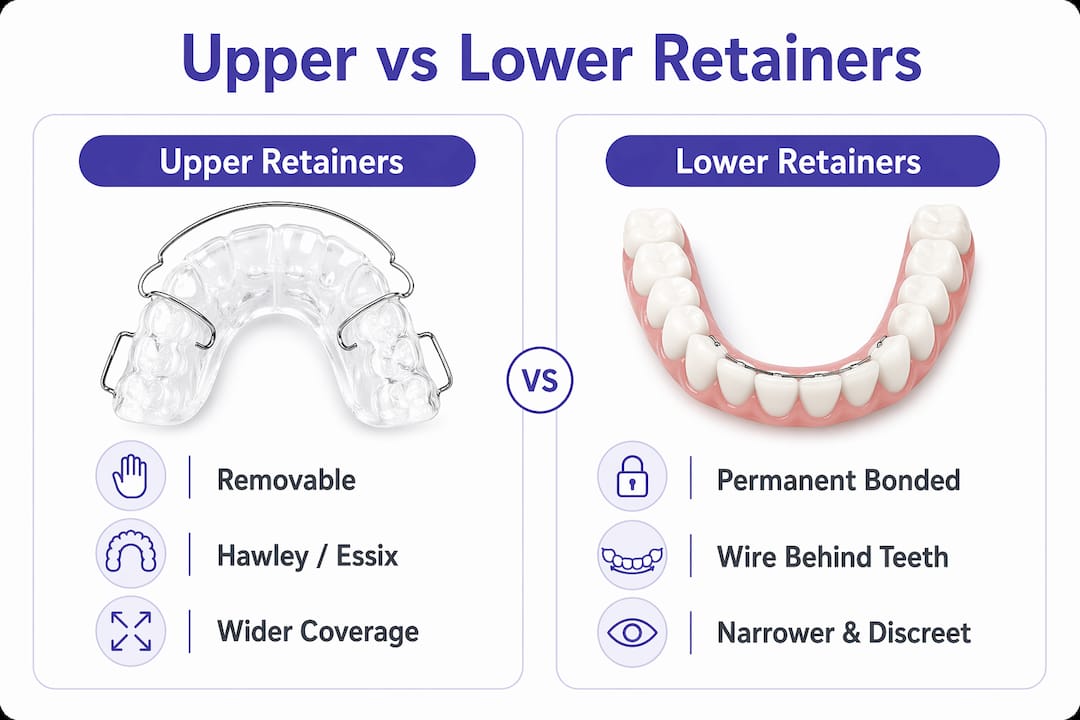
An upper (maxillary) retainer covers the top arch and is most often removable, coming in two main forms: the Hawley retainer and the Essix retainer. A lower (mandibular) retainer is most often a fixed bonded wire glued behind the front teeth. The core reason for this split is relapse risk. Lower incisors are among the highest relapse risk teeth in the mouth, prone to crowding back together without constant pressure. A permanent wire removes the need for patient compliance entirely, which is exactly why orthodontists favor it for the lower arch.
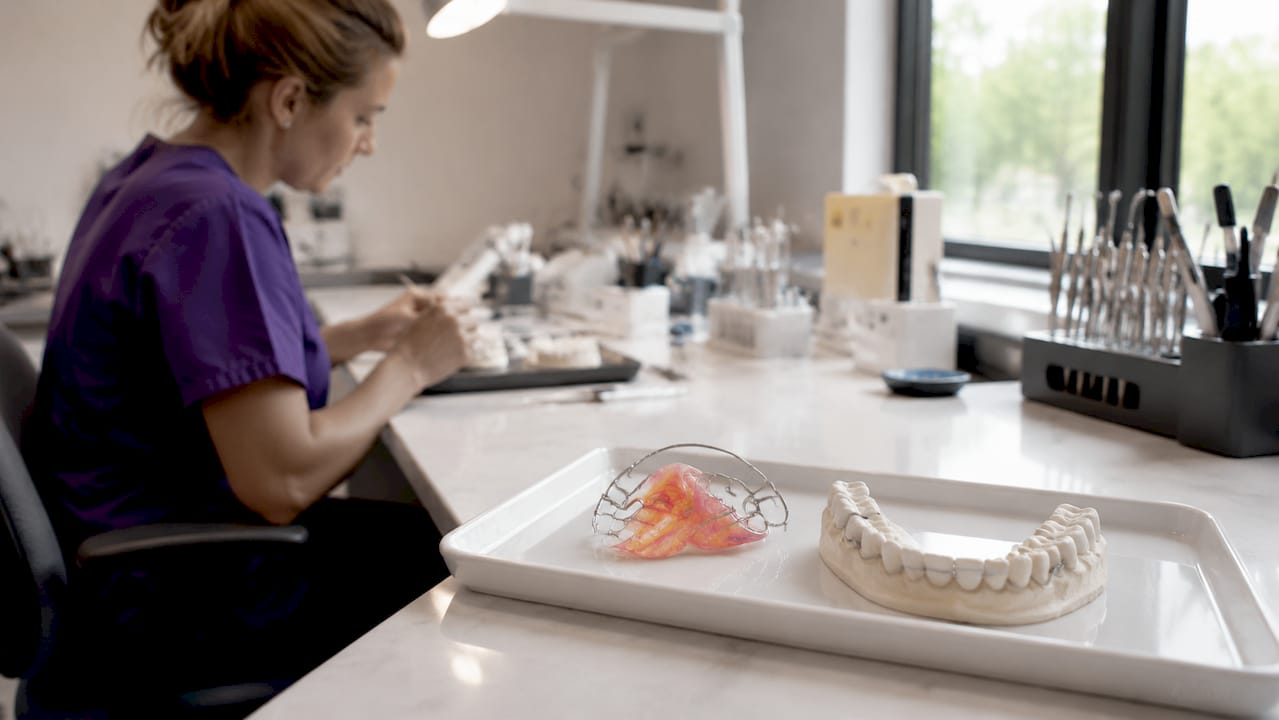
The Hawley retainer uses an acrylic plate and a metal wire that wraps around the front teeth. The Essix retainer is a clear plastic tray that fits over the entire arch. Both are removable and commonly prescribed for the upper teeth. The bonded wire retainer, by contrast, is cemented directly to the back surfaces of the lower front teeth and stays there indefinitely.
What are the design differences between upper and lower retainers?
Upper retainers cover a wider surface area. A Hawley retainer includes an acrylic plate that rests against the palate, giving it structural support across the full upper arch. An Essix retainer wraps around every upper tooth with a thin clear shell. Both designs account for the broader, curved shape of the upper jaw.
Lower retainers are narrower and more discreet. A bonded wire retainer sits behind the lower front teeth, typically spanning from canine to canine. You cannot see it when someone smiles. It does not require removal for eating or drinking, but it does require special cleaning tools to keep the gumline healthy.
Here is a direct comparison of the two:
| Feature | Upper retainer | Lower retainer |
|---|---|---|
| Most common type | Hawley or Essix (removable) | Bonded wire (permanent) |
| Coverage area | Full arch including palate | Front teeth only (canine to canine) |
| Visibility | Slight wire or clear tray visible | Hidden behind teeth |
| Removal | Patient removes daily | Fixed, cannot be removed at home |
| Hygiene method | Rinse and brush the appliance | Floss threaders, interdental brushes |
| Durability | Essix wears faster; Hawley lasts longer | Long-lasting if bonds stay intact |
Hawley retainers are adjustable and durable, while Essix retainers are nearly invisible but wear faster. That trade-off matters when you are choosing a retainer you will wear for years, not months.
Why is a permanent retainer often used on the lower teeth?
Permanent retainers provide continuous, compliance-free retention and are mostly bonded to lower front teeth because of their high relapse risk. Lower incisors tend to drift inward and crowd together after braces come off. A fixed wire prevents that movement around the clock without requiring the patient to remember anything.
Compliance with removable retainers drops significantly after 12 months. That drop-off is one of the most common causes of relapse in adults. A bonded lower retainer removes that variable entirely.
The upper arch is a different story. The palate provides natural structural support, and the upper teeth face less aggressive relapse pressure than the lower front teeth. A removable retainer worn nightly gives the upper arch the stability it needs without the hygiene complications of a fixed wire across a wider surface.
Key reasons orthodontists prefer a fixed lower retainer:
- Lower incisors face the highest crowding relapse risk of any teeth
- Patient compliance with removable retainers declines over time
- A bonded wire works continuously without any effort from the patient
- The lower arch is easier to maintain with a wire than the broader upper arch
Pro Tip: Check your lower bonded wire at every dental cleaning. If a bond breaks on even one tooth, teeth can shift quickly. Prompt repair is not optional.
What are the wear and maintenance differences?
Removable retainers must be worn full-time for the first 2–3 months after treatment, then nightly for a minimum of 10 years, and often for life. That schedule applies to upper retainers in most cases. Missing nights consistently is enough to let teeth drift back toward their original positions.
Lower bonded retainers require no wear schedule because they never come out. What they do require is a daily cleaning routine that most people underestimate. Fixed retainers complicate flossing, requiring floss threaders or interdental brushes to clean under the wire. Skipping that step leads to plaque buildup along the gumline, which can cause gum disease over time.
Here is a practical maintenance checklist for each type:
- Upper removable retainer. Rinse it with cool water every morning after removal. Brush it gently with a soft toothbrush and mild soap. Store it in its case when not in your mouth. Never leave it in a hot car or wrapped in a napkin.
- Lower bonded retainer. Use a floss threader or water flosser daily to clean under the wire. Brush along the gumline behind the lower front teeth carefully. Visit your dentist regularly to check that all bonds are secure.
- Both types. Avoid biting into hard foods directly with front teeth if you have a bonded wire. Replace your upper retainer when it cracks, warps, or no longer fits snugly.
If a bonded wire’s bond breaks, treat it as urgent. Teeth can shift within days. Contact your orthodontist or dentist immediately for repair.
How do upper and lower retainers complement each other?
Most orthodontists recommend a dual approach: a fixed lower retainer to hold the front teeth, plus a removable upper retainer for full-arch stability. This combination covers the weaknesses of each type individually. The lower wire handles the high-risk crowding zone without relying on patient memory. The upper removable retainer maintains the broader arch shape and allows for normal hygiene.
Permanent retainers only stabilize the teeth they are bonded to. A removable upper retainer is recommended to maintain full arch stability because a wire alone cannot hold the entire upper jaw in position.
| Approach | Pros | Cons |
|---|---|---|
| Fixed lower only | No compliance needed; continuous retention | Does not protect upper arch; hygiene is harder |
| Removable upper only | Easy to clean; full-arch coverage | Relies entirely on patient compliance |
| Combined (both) | Best overall retention; covers both arches | Requires two maintenance routines |
A hybrid retention approach offers the best balance between no-effort retention and hygiene flexibility. That is why it has become the standard recommendation in most orthodontic practices.
Pro Tip: Before your braces or aligners come off, ask your orthodontist specifically which retainer combination they recommend for your bite and arch shape. The answer should be personalized, not generic.
What do upper and lower retainers cost?
Cost varies by retainer type and whether you are buying for one arch or both. A single arch removable retainer (Hawley or Essix) typically costs $100–$300. A permanent bonded retainer runs $250–$500 per arch. Full sets double those figures when purchased through a traditional orthodontic office.
Direct-to-consumer providers like Clearretain offer custom retainers at significantly lower prices by cutting out office visit markups. That matters when you consider that removable retainers need periodic replacement due to wear, cracking, or loss.
Key cost factors to keep in mind:
- Essix retainers wear out faster than Hawley retainers and need more frequent replacement
- A broken bonded retainer requires professional repair, which adds to long-term costs
- Buying a set (upper and lower together) is almost always more cost-effective than purchasing arches separately
- Losing a removable retainer and delaying replacement is one of the most expensive mistakes patients make
Understanding retainer wear schedules and replacement timelines upfront helps you budget realistically for long-term retention.
Key Takeaways
The most effective post-orthodontic retention plan combines a fixed lower retainer for continuous crowding prevention with a removable upper retainer for full-arch stability.
| Point | Details |
|---|---|
| Upper retainer design | Upper retainers are typically removable Hawley or Essix appliances covering the full arch. |
| Lower retainer design | Lower retainers are most often permanent bonded wires fixed behind the front teeth. |
| Why the split exists | Lower incisors face the highest relapse risk, making compliance-free fixed retention the safer choice. |
| Combined approach wins | Most orthodontists recommend both types together for complete upper and lower arch protection. |
| Cost and replacement | Removable retainers cost $100–$300 per arch; bonded retainers cost $250–$500 and require prompt repair if bonds fail. |
What I’ve learned from watching patients choose the wrong retainer
The most common mistake I see is patients treating the upper and lower arches as interchangeable. They assume one type of retainer works the same everywhere. It does not. The lower front teeth move faster and more aggressively than almost any other teeth in the mouth. A removable retainer on the lower arch is a gamble on your own consistency, and most people lose that bet within a year or two.
Compliance is the single most common factor affecting removable retainer effectiveness. That is not a criticism of patients. Life gets busy. Retainers get left on nightstands. The bonded wire exists precisely because orthodontists know this.
What I also see is patients dismissing the upper retainer once they feel their teeth are stable. That is the second mistake. The upper arch needs ongoing support too. A removable retainer worn nightly is not a burden. It is a five-second habit that protects years of treatment.
Retainer choice depends on clinical needs, oral hygiene, lifestyle, and relapse risk. There is no universal best option. But the hybrid approach, fixed lower and removable upper, comes closer to universal than anything else. If your orthodontist recommends something different, ask why. A good clinician will explain the reasoning based on your specific bite, not a one-size-fits-all protocol.
— Clear
Get your upper and lower retainers from Clearretain
Protecting your orthodontic results should not cost a fortune. Clearretain offers custom clear retainers for the upper arch, the lower arch, or both together, made from FDA-approved materials and crafted under the supervision of experienced orthodontic technicians.

The ordering process is straightforward. You receive a detailed self-impression kit, make your impressions at home, and send them back. Clearretain handles the rest. Patients report savings of up to 80% compared to traditional orthodontic office prices. Whether you need a replacement upper retainer, a lower retainer, or a complete upper and lower retainer set, Clearretain has a direct-to-consumer option ready for you.
FAQ
What is the main difference between upper and lower retainers?
An upper retainer is typically a removable Hawley or Essix appliance, while a lower retainer is most often a permanent bonded wire fixed behind the front teeth. The difference reflects the higher relapse risk of the lower incisors compared to the upper arch.
Do I need both an upper and a lower retainer?
Most orthodontists recommend both. A fixed lower retainer handles the high-risk crowding zone, while a removable upper retainer maintains full-arch stability that a wire alone cannot provide.
How long do I need to wear my upper retainer?
Removable upper retainers require full-time wear for the first 2–3 months after treatment, then nightly use for at least 10 years, and ideally for life.
What happens if my lower bonded retainer breaks?
A broken bond is urgent. Teeth can shift within days of a bond failure, so contact your orthodontist or dentist immediately for repair rather than waiting.
Are upper and lower retainers expensive?
A single arch removable retainer typically costs $100–$300, and a permanent bonded retainer runs $250–$500 per arch through a traditional practice. Direct-to-consumer providers like Clearretain offer custom retainers at significantly lower prices.